
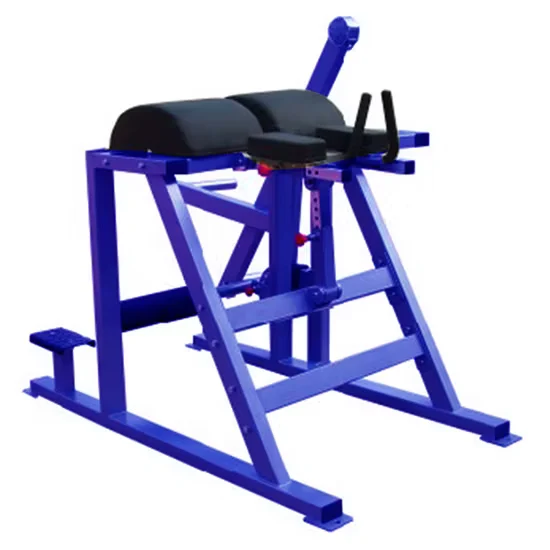
Whisper-Quiet Construction — Sub-35dB operation verified across hotel deployments where guest satisfaction scores directly correlate with acoustic performance.
Technical Specifications
| Parameter | Value |
|---|---|
| Product Type | Reverse Hyper Extension Machine |
| Exercise Part | Leg |
| Main Frame Material | Steel |
| Max User Weight | 180kg |
| Product Dimensions | 1727 x 1448 x 1651mm |
| Net Weight | 120kg |
| Certification | ISO 9001, CE |
Application Suitability
| Deployment Scenario | Typical Use |
|---|---|
| Professional sports training centers | Athlete-grade posterior chain rehabilitation and glute activation protocols |
| International gym chain strength zones | High-frequency hamstring and lower back conditioning for membership traffic |
| Corporate wellness facilities | Comprehensive posterior chain training complementing desk-worker programming |
| Community fitness centers | Accessible hip extension work for general population strength development |
Why Steel Gauge Matters More Than Stated Weight Capacity
Commercial reverse hyper extension machines must endure repetitive loading cycles without frame deflection or pivot wear.
Facility operators frequently discover that equipment rated for a specific user weight performs adequately during initial testing yet develops structural play after months of continuous use [NEED_CITE: EN 957 requirements for commercial cardio equipment]. The pivot mechanism in posterior chain equipment experiences concentrated stress during hip extension movements, and insufficient bearing quality leads to grinding sensations that users immediately report to management. We learned this when a regional gym chain replaced their entire lower back zone after members complained about equipment that felt unstable during peak hours. The commercial reverse hyper extension machine addresses this through reinforced steel construction and sealed bearings tested for continuous high-frequency operation.
Positioning Within the Strength Training Ecosystem
The commercial reverse hyper extension machine targets posterior chain musculature through hip extension patterns that complement traditional deadlift and squat programming. In facility layout, this equipment typically anchors the dedicated lower back and glute zone alongside GHD machines and cable pull-through stations. The 1727 x 1448mm footprint requires adequate clearance on all sides for safe loading and unloading, particularly in high-traffic periods where users transition between stations. The 180kg user weight capacity accommodates the full spectrum of commercial facility demographics, from general population members to strength athletes performing loaded variations.
Continuous Operation and Facility Integration Requirements
Professional training environments demand equipment that withstands daily use without degradation in pivot smoothness or structural rigidity. The steel frame construction and sealed bearing system maintain consistent performance across extended operational cycles [NEED_CITE: motor duty cycle classification for continuous commercial operation]. Deployment considerations include floor leveling to prevent lateral frame stress during asymmetric loading patterns. Facilities planning dedicated posterior chain zones benefit from 3D layout consultation that accounts for equipment spacing, user flow between stations, and ventilation requirements for comfort during extended training sessions. The commercial reverse hyper extension machine integrates into comprehensive strength programming without requiring specialized power connections or data infrastructure.
Steel Frame Engineering and Pivot Mechanism Durability
The 120kg net weight reflects substantial steel gauge selection that resists deflection under dynamic loading conditions. Commercial-grade equipment requires frame construction that maintains structural integrity through thousands of repetition cycles without developing play or audible grinding. The pivot mechanism utilizes sealed bearings that prevent contamination from chalk dust and sweat residue common in high-traffic training environments. Biomechanical pivot positioning determines the leverage curve during hip extension, directly affecting which musculature receives primary stimulus. Proper pad density prevents compression over time, maintaining consistent hip positioning throughout the equipment’s service life. OEM customization capabilities allow facilities to integrate branding elements while preserving structural specifications.
The Hidden Cost of Specifying Below Commercial Requirements
Facilities that select equipment based solely on stated weight capacity often encounter premature pivot wear that manifests as inconsistent resistance feel during repetitions [NEED_CITE: EN 957 requirements for commercial cardio equipment]. Frame deflection under load creates user perception of instability, leading to equipment avoidance and underutilized floor space. Padding that compresses within months forces costly replacement cycles and member complaints about discomfort during hip positioning. Pivot mechanisms lacking proper sealing develop grinding characteristics that require immediate maintenance intervention, creating downtime during peak operational hours. The commercial reverse hyper extension machine addresses these failure points through verified durability testing and material specifications appropriate for continuous facility use.
Why This Product Line Meets Commercial Demands
Our engineering background includes direct observation of how equipment specifications translate to real-world facility performance. The reinforced steel frame undergoes continuous load testing that simulates years of commercial operation in condensed timeframes. Sealed pivot bearings maintain smooth articulation despite exposure to chalk residue and cleaning chemicals common in gym environments. The 180kg user capacity reflects structural margins rather than marketing figures, verified through documented testing protocols. OEM customization extends to frame color and cushion specifications, allowing facilities to maintain visual consistency across equipment purchases. Free 3D layout consultation ensures the commercial reverse hyper extension machine integrates properly within posterior chain zones, accounting for user clearance and equipment spacing requirements.
Documentation & Test Records
- CE declaration of conformity for European market compliance
- EN 957 test report verifying commercial-grade safety requirements
- ISO 9001 certificate documenting manufacturing quality systems
- Frame durability test records for continuous load validation
- Pivot mechanism wear testing documentation
- Cushion padding compression resistance specifications
Installation, Commissioning & Maintenance
- Verify floor leveling across the 1727 x 1448mm footprint before frame assembly
- Maintain minimum 600mm clearance on all sides for safe user loading and unloading
- Inspect pivot bearing smoothness during initial commissioning before member access
- Establish monthly pivot mechanism inspection schedule for high-traffic facilities
- Clean cushion surfaces daily to prevent sweat residue degradation of padding materials
- Verify all frame bolts reach specified torque values after initial 30-day break-in period
Equipment Selection and Facility Planning
Provide your strength zone square footage and equipment清单 to receive 3D layout planning that optimizes user flow and spacing requirements. Specify daily operational hours to confirm pivot mechanism specifications match your facility’s usage intensity. Identify deployment floor level and adjacent spaces to verify acoustic performance meets your operational standards. Indicate target market voltage requirements if integrating electrically assisted resistance systems. Confirm whether OEM customization including frame color and cushion specifications aligns with your facility branding standards.
Frequently Asked Questions
Q: What frame specifications indicate commercial-grade durability?
A: Commercial reverse hyper extension machines require steel gauge thickness that resists deflection under repetitive loading cycles. Look for documented durability testing that simulates continuous operation rather than occasional use patterns. Frame weight often correlates with material quality, though engineering design also determines structural performance. Sealed pivot bearings prevent contamination that causes premature wear in high-traffic environments.
Q: How does pivot design affect lower back engagement and safety?
A: Pivot positioning determines the biomechanical leverage curve during hip extension movements. Properly engineered pivot points align with natural hip joint mechanics, reducing compensatory movement patterns that strain adjacent structures. Sealed bearing systems maintain consistent articulation smoothness throughout equipment lifespan. Pivot height relative to padding positioning affects user comfort and proper form maintenance during repetitions.
Q: What cushion density prevents compression over time?
A: Commercial-grade padding requires density specifications that resist permanent compression despite continuous use cycles. Low-density foam develops permanent indentations that alter hip positioning and reduce training effectiveness. High-density materials maintain consistent support characteristics while providing adequate comfort during extended contact. Padding thickness must balance comfort requirements with stability needs during loaded hip extension movements.
Q: Can the machine be customized for facility branding?
A: OEM customization options include main frame color selection to match facility aesthetic standards. Cushion color customization allows visual coordination across equipment purchases. Branding integration preserves structural specifications while meeting facility identity requirements. Customization lead times vary based on scope, so early specification during planning phases ensures project timeline alignment.
![Step up Osh058 Commercial Gym Fitness Equipment [WARN] draft identifier mismatch](https://bicksport.com/wp-content/uploads/2026/08/step-up-osh058-commercial-gym-fitness-equipment-warn-draft-identifier-mismatch-afdfc8.webp)

![Commercial Half Rack Hammer Strength Training Gym Equipment [WARN] draft identifier mismatch](https://bicksport.com/wp-content/uploads/2026/08/commercial-half-rack-hammer-strength-training-gym-equipment-warn-draft-identifier-mismatch-37e6d8.webp)
