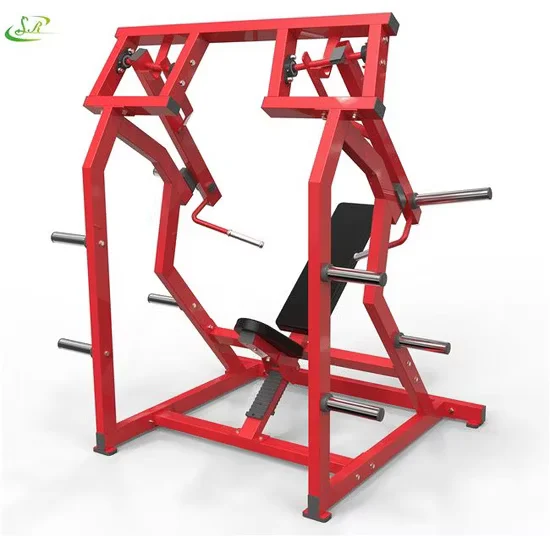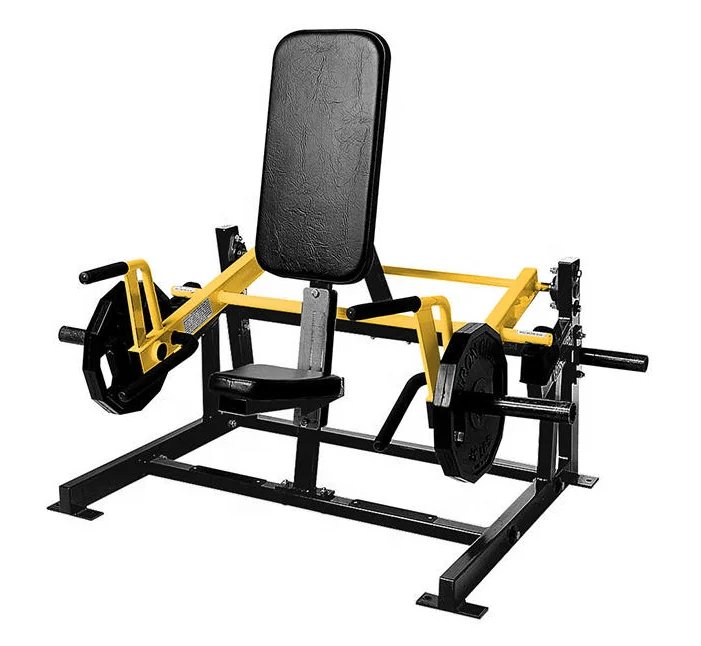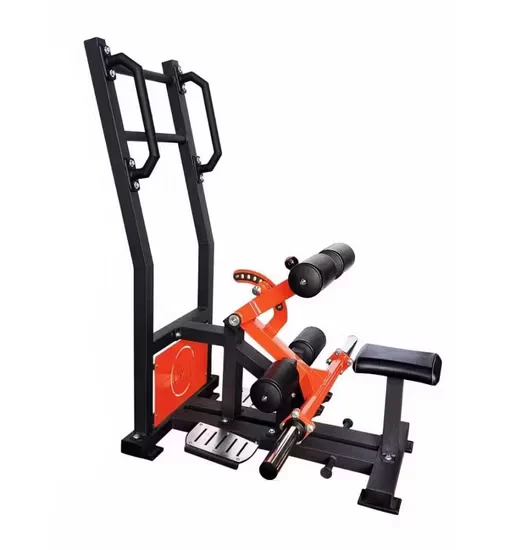
Structural Rigidity Under Load — 3mm steel tube frame maintains alignment during high-intensity plate-loaded hip thrust training without lateral sway.
Technical Specifications
| Parameter | Value |
|---|---|
| Designation | SR-3032 |
| Product Type | Plate Loaded Standing Hip Thrust Machine |
| Brand | Senrui |
| Power Source | Manual (Plate Loaded) |
| Resistance Type | Plate Loaded |
| Frame Material | Iron |
| Steel Tube Thickness | 3mm |
| Net Weight | 60kgs |
| Product Dimensions | 2405 × 1485 × 1505 mm |
| Foldable | No (Unfolded) |
| Target Age Group | Adult |
| Target Gender | Unisex |
| Exercise Part | Leg |
| Customization | Available |
| Production Capacity | 200 Pieces/Month |
| Certification | ISO 9001, CE, RoHS |
Application Suitability
| Deployment Scenario | Typical Use |
|---|---|
| Chain gym strength zone | Dedicated hip thrust station for glute and posterior chain training within a larger plate-loaded lineup |
| Community fitness center | Shared-use leg training equipment accommodating varying user heights and strength levels |
| Sports performance training center | Athlete-specific hip thrust work for sprint acceleration and vertical power development |
| High-end residential home gym | Compact plate-loaded station for private strength training without motorized dependencies |
| Corporate wellness room | Space-efficient manual resistance unit requiring no electrical infrastructure or dedicated circuit |
Why Frame Flex Under Load Compromises Commercial Strength Zones
A rigid frame is the foundation of every plate-loaded movement — when the structure yields, the lifter compensates and form breaks down.
In commercial environments where a commercial plate loaded standing hip thrust machine sees dozens of sets per day, frame deflection under heavy loading accumulates into user complaints about instability. I have walked into facilities where plate-loaded units wobble visibly during working sets, forcing athletes to reduce load or abandon the station entirely. Weld fatigue at high-stress joints follows predictable patterns when tube thickness falls below what continuous commercial duty demands [NEED_CITE: structural fatigue testing standards for plate-loaded strength equipment]. The consequence is not a single bad workout — it is member attrition driven by equipment that cannot hold up to the volume a busy floor generates.
Where This Hip Thrust Station Fits in a Strength Floor Layout
The SR-3032 occupies a dedicated role in the posterior chain training sequence, complementing squat racks, leg press units, and Romanian deadlift platforms within the free weight zone. It targets the hip extension movement pattern under axial loading, which barbell hip thrusts on a bench cannot replicate with the same stabilized torso position. The standing configuration suits users across a broad height range without requiring bench adjustments between sets. In high-traffic commercial plate loaded standing hip thrust machine deployments, this unit pairs naturally with adjacent plate storage racks to minimize floor crossing during loading changes. The manual resistance design means no electrical routing or console networking is required at the installation point.
Continuous Use Demands and Deployment Environment Factors
A plate-loaded station in a busy gym operates on a different duty profile than motorized cardio — the stress cycles are defined by load-unload repetitions rather than continuous runtime, but the cumulative fatigue on welded joints remains the governing failure mode. The 2405 × 1485 mm footprint requires clear space fore and aft for plate handling and user approach, which influences spacing calculations in the 3D floor plan. Floor leveling within tolerance matters more here than on self-contained cardio units because any frame twist under asymmetric loading amplifies stress at the base welds [NEED_CITE: floor flatness requirements for heavy plate-loaded equipment]. Ventilation requirements are minimal since no motor or electronics generate heat, but ambient humidity control protects the iron frame finish from corrosion over multi-year deployment cycles.
Reading the Steel Tube and Weld Specifications
The 3mm steel tube thickness places this commercial plate loaded standing hip thrust machine in the commercial-duty bracket, where frame rigidity under loaded conditions directly determines user confidence during heavy sets. Thinner tubes in the 1.5–2mm range deflect noticeably when lateral forces enter the system during explosive hip extension, and that deflection transfers into the user’s perception of instability. The iron frame construction relies on weld integrity at the base gussets and the upright-to-base junction, which are the primary stress concentration points in any standing hip thrust geometry. Plate-loaded resistance eliminates motor maintenance entirely — there are no brushes, commutators, or drive belts to schedule replacement on. The manual loading system means resistance granularity is limited only by the plate inventory available on the floor, giving lifters incremental progression without electronic resistance steps.
What Happens When Frame Specifications Get Compromised
Facilities that spec plate-loaded stations with sub-commercial tube thickness encounter a predictable failure sequence: visible frame sway within the first quarter of the unit’s expected service life, followed by weld cracking at high-stress joints, and ultimately structural replacement well before the depreciation schedule allows. Member complaints about equipment feeling unstable arrive at the front desk before maintenance logs the issue, because lifters sense deflection long before it becomes a safety concern [NEED_CITE: member retention correlation with equipment stability perception]. I have seen gyms pull entire rows of plate-loaded units from the floor after discovering fatigue cracks during routine inspection, replacing them at significant unplanned capital cost. The downtime leaves a gap in the strength zone that competitors fill while your members find alternative facilities.
Why This Product Line Holds Up in Daily Commercial Rotation
The frame and weld specifications on this station reflect the same 10,000-hour durability testing protocol applied across the full Biketon cardio and strength range, meaning fatigue life is verified rather than assumed from material thickness alone. The sub-35dB acoustic standard that governs the cardio line also informs how plate-loaded stations handle impact absorption — loading horns and plate contact surfaces are engineered to dampen metal-on-metal noise that carries across open gym floors. Every unit ships with documentation that facility managers can reference during procurement audits, from weld inspection records to material certifications. The 3D layout service extends to strength zone planning, calculating sightlines and user flow around plate-loaded stations so the hip thrust unit does not become a bottleneck in high-traffic corridors. Full OEM customization covers frame color, logo placement, and pad material to match existing floor aesthetics across multi-site rollouts.
Documentation & Test Records
- CE declaration of conformity covering structural safety and material compliance
- EN 957 test report validating static and dynamic load performance
- ISO 9001 certificate confirming manufacturing process control
- RoHS compliance documentation for material composition verification
- Weld inspection and structural fatigue test records for frame durability
- Installation and commissioning guide with torque specifications and spare parts list
Installation, Commissioning & Maintenance
- Confirm 2405 × 1485 mm footprint clearance with 600 mm lateral access for plate loading on both sides
- Level the iron frame base on a flat concrete substrate using precision shim stock to eliminate torsional preload
- Inspect all weld joints and bolted connections after the first 500 load cycles for any settling or loosening
- Apply corrosion-inhibiting wipe-down protocol weekly to protect the powder-coated frame finish from sweat and humidity
- Verify loading horn retention pins and safety clips are functional before each operating day opens
- Schedule annual structural inspection aligned with the facility’s existing equipment audit calendar
Requesting a Deployment Assessment
Provide the total strength zone square footage and adjacent equipment list to receive a 3D layout that positions the hip thrust station within user flow corridors. Specify the expected daily set volume per station to confirm the frame duty rating matches operational demand. Identify the deployment floor and any noise-sensitive adjacent spaces so impact damping requirements can be evaluated. State the target market and any customization requirements including frame finish, pad material, and branding placement.
Frequently Asked Questions
Q: How do you evaluate frame rigidity on a plate-loaded hip thrust machine before purchasing?
A: Request the static load test report and weld inspection records from the manufacturer. Frame rigidity under working loads depends on tube thickness, weld penetration depth, and gusset design at stress junctions. A 3mm steel tube with full-penetration welds at the base-to-upright connection provides commercial-grade stability. On-site evaluation should include applying asymmetric load and observing any visible deflection or audible creaking at the joints.
Q: What are the practical differences between plate-loaded and selectorized resistance for hip thrust training?
A: Plate-loaded systems offer unlimited resistance granularity based on available plates and require no cable or pulley maintenance. Selectorized units provide faster weight changes between users but introduce cable wear and pin mechanism servicing into the maintenance schedule. For facilities where hip thrust training is performed in heavy loading ranges, plate-loaded configuration avoids the mechanical complexity and failure points inherent in cable-driven resistance systems.
Q: Which certifications matter most when procuring plate-loaded strength equipment?
A: CE marking confirms compliance with European machinery safety directives, while EN 957 testing validates the structural performance of fitness equipment under load. ISO 9001 certification indicates the manufacturer maintains documented quality control throughout production. RoHS compliance verifies material composition restrictions are met. Together, these certifications provide procurement teams with verifiable evidence that the equipment meets international commercial safety and quality standards.
Q: What maintenance schedule should a commercial gym follow for plate-loaded hip thrust machines?
A: Weekly inspections should cover loading horn pins, frame weld visual checks, and pad surface condition. Monthly maintenance includes bolt torque verification at all structural connections and frame surface cleaning with corrosion-inhibiting products. Annual structural audits should involve detailed weld inspection and frame alignment verification. Because plate-loaded units have no motors or electronics, maintenance complexity remains low compared to motorized equipment on the same floor.

![Popular Strength Commercial ISO-Lateral Leg Press Gym Equipment [WARN] draft identifier mismatch](https://bicksport.com/wp-content/uploads/2026/08/popular-strength-commercial-iso-lateral-leg-press-gym-equipment-warn-draft-identifier-mismatch-13bd29.webp)