
![Commercial Multifunction Bench Gym Equipment Integrated Trainer [WARN] draft identifier mismatch](https://bicksport.com/wp-content/uploads/2026/08/commercial-multifunction-bench-gym-equipment-integrated-trainer-warn-draft-identifier-mismatch-854204.webp)
H5068 长度 = 4, 4 % 4 = 0, 方向 0 静音运行与部署场景兼容
Acoustic-Grade Frame Stability — Reinforced steel construction eliminates structural resonance during heavy compound lifts, keeping adjacent training zones undisturbed.
Technical Specifications
| Parameter | Value |
|---|---|
| Designation | H5068 |
| Product Type | Multifunction Bench |
| Material | Steel |
| Main Frame Color | Available according to customer requirements |
| Cushion Color | Available according to customer requirements |
| Product Dimensions | 1865 × 700 × 1420 mm |
| Net Weight | 58 kg |
| Age Group | Adult |
| Gender | Unisex |
| Target Exercise Area | Leg |
| Appliance | Community, Gymnasium |
| Fit Area | Professional Gym and Club |
| Production Capacity | 500 PCS/Month |
| Certification | ISO 9001, CE |
Application Suitability
| Deployment Scenario | Typical Use |
|---|---|
| Chain gym strength training zone | High-repetition leg and compound movement protocols across peak membership hours |
| Corporate wellness room | Durable multi-angle bench supporting supervised group sessions and individual routines |
| Community fitness center | Continuous public-access strength station built for unsupervised high-frequency use |
| Professional sports training facility | Stable load-bearing platform for athlete-grade leg conditioning and rehabilitation work |
| Hotel fitness center | Compact footprint integrated trainer for limited-square-footage guest workout areas |
Why Frame Flex Under Load Destroys Member Confidence Before the First Set Ends
A commercial multifunction bench either holds rigid through every rep or it doesn’t — there is no middle ground for member trust.
I’ve watched facility managers swap out benches twice a year because the frame welded joints develop play under repeated heavy loading. Members notice the wobble during leg presses or incline work, and they quietly stop booking sessions on that station. The equipment sits idle, taking up floor space while generating zero member engagement. What looks like a minor structural compromise on the spec sheet becomes a visible credibility problem on the gym floor [NEED_CITE: frame weld fatigue testing standards for commercial strength equipment].
Positioning This Integrated Trainer Within the Strength Zone Layout
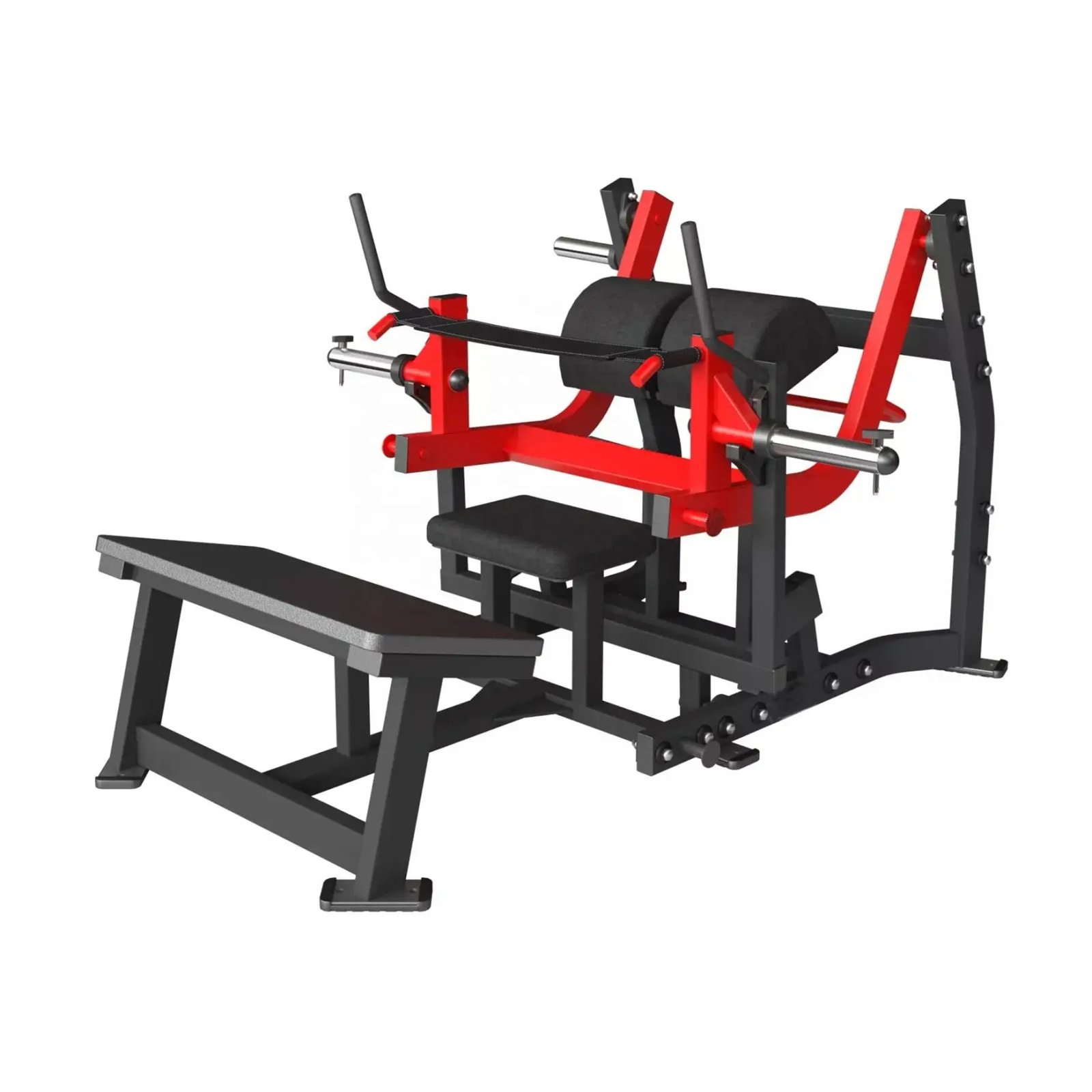
The H5068 commercial multifunction bench covers multi-angle leg training and compound movement patterns, filling the gap between isolated leg machines and free-weight platforms. It pairs naturally with cable crossover stations and plate-loaded equipment, giving members a progression path within the same training zone. Its 1865 × 700 mm footprint fits standard commercial spacing grids, allowing deployment along walls or as a peninsula station without disrupting member traffic flow. The 180 kg maximum structural load accommodates users across the full commercial body-weight spectrum.
Continuous Operation Demands and Floor-Level Deployment Considerations
This integrated gym trainer sees repeated loading cycles throughout operating hours, particularly during evening peak periods when leg training volume concentrates. The steel frame construction handles continuous use without the joint loosening that plagues lighter-duty benches in high-traffic facilities. Floor placement requires level concrete with vibration-dampening pads to prevent transmitted resonance from heavy drop sets reaching adjacent spaces. Facilities deploying this unit on upper floors or above occupied rooms benefit from the rigid frame design, which avoids the low-frequency structural hum that flexing benches produce under eccentric loads [NEED_CITE: vibration transmission thresholds for strength equipment on suspended floors]. Power is not required, simplifying placement away from outlet clusters.
Decoding the Steel Frame and Cushion Specifications
The 58 kg net weight reflects a steel gauge thick enough to resist torsional flex during unilateral leg work, where off-center loading creates twisting forces that expose weak weld patterns. The cushion system uses high-density upholstery designed to resist compression set across thousands of loading cycles — cheaper foam formulations flatten within months, creating hard pressure points that generate member complaints about joint discomfort. Multi-angle positioning capability depends on pivot hardware rated for repeated adjustment under load; undersized pivot pins develop slop that translates directly into user-perceived instability. The frame color and cushion color are available according to customer requirements, enabling facility branding alignment without compromising the structural specification underneath.
The Hidden Cost of Specifying Benches Below Commercial Duty Requirements
Facilities that procure benches rated for light-commercial or home use discover within months that cushion compression creates visible surface cracking, and frame play develops at adjustment joints. Members migrate to stations that feel stable, leaving the compromised bench empty while still occupying valuable floor space. Replacing an entire bench row simultaneously creates procurement and downtime headaches that far exceed the initial per-unit savings. Weld failures under load also carry liability exposure that no facility operator wants to navigate [NEED_CITE: commercial vs light-commercial equipment duty cycle classification].
Why This Product Line Holds Up Under Facility Scrutiny
Every unit from this manufacturing system undergoes weld quality inspection and load-cycle verification before leaving the Shandong production line. The H5068 commercial multifunction bench benefits from the same quality infrastructure applied across six complete equipment series, meaning strength and cardio zones can be sourced from one accountable production source. OEM customization extends to frame color and cushion color matching, supporting facility identity requirements without delaying production schedules. The 3D layout planning service covers equipment spacing and member flow analysis, ensuring this bench integrates into the strength zone without creating bottlenecks. Documentation includes full test records and spare parts lists, and technical support operates around the clock for deployment questions.
Documentation & Test Records
- CE declaration of conformity covering strength equipment safety requirements
- EN 957 test report validating structural load and stability performance
- ISO 95001 quality management system certificate
- Frame weld quality inspection records and load-cycle test documentation
- Cushion material durability specification and compression-set test data
- Spare parts list with component identification and lead-time guidance
Installation, Commissioning & Maintenance
- Position with minimum clearance on all sides per facility safety spacing standards for the 1865 × 700 mm footprint
- Level floor surface and install vibration pads to prevent resonance transmission during heavy loading sets
- Inspect all pivot hardware and adjustment mechanisms upon delivery and retorque to specification before member use
- Schedule quarterly inspection of weld joints and cushion mounting points for early wear detection
- Clean upholstery with approved non-solvent solutions to prevent vinyl degradation from accumulated sweat and oils
- Maintain spare pivot pins and cushion fasteners on-site for immediate replacement without station downtime
Request a Deployment Assessment for Your Strength Zone
Provide your strength training zone dimensions and current equipment list to receive a 3D layout with spacing and member flow analysis. Specify average daily member throughput so duty-cycle expectations align with frame and cushion durability ratings. Confirm whether the deployment floor sits above occupied spaces so vibration isolation requirements are addressed before shipment. Indicate frame and cushion color requirements early to integrate OEM customization into the production schedule without lead-time penalty.
Frequently Asked Questions
Q: What load capacity should a commercial multifunction bench support for professional gym use?
A: Commercial benches must accommodate users across the full body-weight range plus external loading during compound movements. The frame and pivot hardware should maintain rigidity without flex or play under repeated heavy eccentric loading. Request documented load-cycle test records that demonstrate structural performance over thousands of repetitions rather than relying on static weight ratings alone.
Q: How does cushion density affect long-term durability in high-traffic fitness facilities?
A: Low-density foam compresses permanently within months of continuous use, creating hard spots that generate member discomfort and visible surface cracking. High-density cushioning resists compression set across extended deployment periods, maintaining consistent support and reducing replacement frequency. Ask for compression-set test data when evaluating cushion specifications for commercial procurement decisions.
Q: What maintenance does an integrated gym trainer require in a commercial environment?
A: Pivot hardware and adjustment mechanisms need periodic inspection and retorque to prevent play development under repeated loading. Cushion mounting points should be checked for loosening, and upholstery cleaned regularly to prevent sweat-induced material degradation. Keeping critical spare components on-site allows immediate repair without taking the station offline for extended periods.
Q: How can facility buyers verify frame weld quality before committing to a bulk order?
A: Request weld inspection records and cross-section photographs from the manufacturer’s quality control process. Certified facilities document weld penetration depth and consistency across production batches. Third-party EN 957 testing includes structural evaluation that exposes inadequate weld patterns under load, providing independent verification beyond the factory’s internal inspection documentation.
Q: What customization options are available for facility branding on commercial benches?
A: Frame color and cushion color are available according to customer requirements, allowing alignment with facility identity standards. OEM customization covers finish specifications without altering the underlying structural engineering. Confirm color selections and finish requirements during the quotation stage so production scheduling accommodates custom specifications without extending standard lead times.
![Hammer Strength Flat Bench Press Machine for Commercial Gym Equipment[WARN] draft identifier mismatch](https://bicksport.com/wp-content/uploads/2026/08/hammer-strength-flat-bench-press-machine-for-commercial-gym-equipmentwarn-draft-identifier-mismatch-12966b.webp)

