

Precision Pivot Engineering — ISO-lateral independent arms eliminate resistance cross-talk during unilateral rear deltoid training in high-traffic gym floors.
Technical Specifications
| Parameter | Value |
|---|---|
| Product Type | ISO-Lateral Rear Deltoid Machine |
| Model NO. | 5011 |
| Resistance Type | ISO-Lateral Independent Arm |
| Exercise Part | Back (Rear Deltoid) |
| Max User Weight | 180kg |
| Frame Material | Reinforced Steel |
| Product Dimensions | 19821003925mm |
| Net Weight | 83kg |
| Certification | ISO 9001, CE |
Application Suitability
| Deployment Scenario | Typical Use |
|---|---|
| Chain gym strength zone | High-frequency posterior chain isolation for diverse member base |
| Hotel fitness center on guest room floors | Quiet operation for early-morning and late-night sessions |
| Corporate wellness room | Accessible rear deltoid training for desk-bound professionals |
| Sports performance training center | Controlled unilateral loading for overhead athletes |
| Community fitness center | Durable equipment for unsupervised public access |
Why Pivot Bearing Smoothness Dictates Maintenance Schedules in Commercial Strength Zones
Sealed pivot bearings maintain consistent resistance feel across thousands of daily repetitions without generating the friction noise that prompts member complaints.
Strength equipment in multi-use facilities often generates noise complaints and requires frequent maintenance when pivot points wear unevenly under continuous loading. The ISO-lateral rear deltoid machine commercial gym equipment addresses this with precision-engineered pivot points and commercial-grade components tested for continuous use [NEED_CITE: bearing lifecycle testing standards for commercial strength equipment]. Operators notice the difference when comparable machines develop grinding sounds within months, while sealed bearing assemblies maintain smooth operation through high-frequency cycles.
Positioning Within the Strength Training Ecosystem
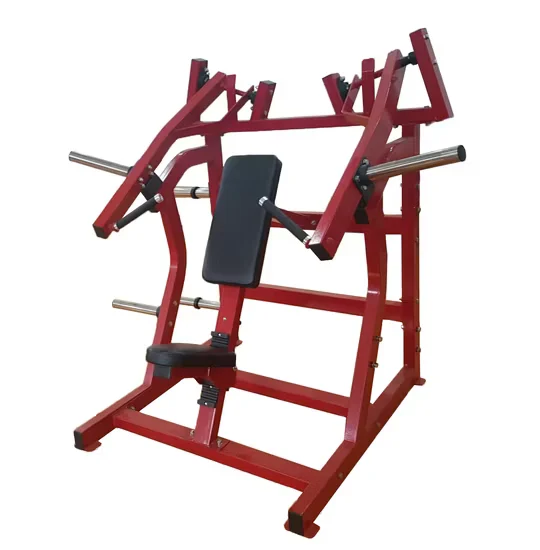
This ISO-lateral rear deltoid machine commercial gym equipment targets the often-neglected posterior shoulder complex through independent arm movement, allowing members to address unilateral imbalances without resistance interference. In a complete strength zone configuration, it complements overhead press and lat pulldown stations by isolating the rear deltoid through a controlled horizontal abduction path. The 1982*1003mm footprint fits standard commercial spacing requirements, while the 180kg user capacity accommodates diverse body types. Suitable for placement along perimeter walls where the compact depth optimizes member flow through adjacent equipment clusters.
Continuous Operation and Deployment Environment Considerations
Commercial strength zones demand equipment rated for 12-16 hour daily operation with minimal maintenance intervention. The reinforced steel frame and sealed bearing assemblies in this ISO-lateral rear deltoid machine commercial gym equipment withstand repetitive loading cycles that degrade lighter-duty alternatives [NEED_CITE: duty cycle classification for commercial vs light-commercial strength equipment]. Deployment on upper floors requires attention to vibration transmission through the 83kg frame mass, with rubber isolation pads recommended beneath the base rails. The 1982mm length demands adequate fore-aft clearance for full arm extension, typically 600mm beyond the frame perimeter. Indoor climate control prevents condensation on steel surfaces, preserving bearing integrity and frame finish over extended service life.
Decoding the Engineering Behind ISO-Lateral Independent Arm Design
ISO-lateral movement allows each arm to operate independently, eliminating the compensatory patterns that occur when a fixed barbell path forces the dominant side to overwork. This ISO-lateral rear deltoid machine uses separate pivot axes for left and right arms, meaning resistance applied to one side creates zero mechanical interference on the opposite side. The steel frame construction provides the torsional rigidity necessary to maintain pivot alignment under asymmetric loading—when a member applies 40kg on the right and 25kg on the left, the frame resists twisting that would otherwise introduce binding at the bearings. Reinforced welding at stress concentration points prevents the micro-fractures that develop in lighter-gauge frames after repeated high-load cycles. The 925mm frame height positions the pivot axis at appropriate shoulder level for most adult users, reducing the need for seat adjustment while maintaining proper movement mechanics.
The Hidden Costs of Specification Compromises
Light-commercial frames rated for 120kg user weight fail prematurely when deployed in facilities where members exceed that threshold, leading to warranty disputes and unplanned replacement costs. Pivot bearings without proper seals ingest dust and sweat residue, developing the grinding resistance that prompts members to avoid the station and file complaints. Frames constructed from thinner-gauge steel develop audible flexing sounds under load, creating the perception of equipment failure even before structural compromise occurs. Facilities that select equipment based solely on purchase price often face total cost of ownership multiples higher when accounting for premature bearing replacement, frame weld repairs, and member attrition from equipment perceived as unreliable [NEED_CITE: total cost of ownership analysis for commercial fitness equipment procurement].
Why This Product Line Delivers Operational Predictability
Sub-35dB whisper-quiet operation verified in hotel deployments means this ISO-lateral rear deltoid machine commercial gym equipment operates without generating the squeaking and grinding that reaches guest rooms through floor-ceiling assemblies. Components undergo 10,000-hour durability testing protocols that simulate continuous high-frequency commercial use, identifying failure modes before equipment reaches the floor. The complete six-series cardio and strength family allows facilities to source every discipline from one manufacturing line, simplifying parts inventory and service procedures. OEM customization extends to frame color and pad upholstery, ensuring equipment matches facility design specifications. Free 3D layout planning addresses equipment spacing, member sightlines, and traffic flow patterns specific to the deployment space. Technical support response within 24 hours prevents minor issues from escalating into equipment downtime.
Documentation & Test Records
- CE declaration of conformity for European market compliance
- EN 957 test report validating structural integrity and safety requirements
- ISO 9001 certificate demonstrating manufacturing quality management systems
- Durability test records documenting 10,000-hour component lifecycle validation
- Dimensional drawings for 3D layout integration and space planning
Installation, Commissioning & Maintenance
- Verify 19821003925mm footprint with 600mm clearance for full arm extension
- Level frame on reinforced rubber pads to isolate vibration transmission to floor structure
- Inspect pivot bearings for smooth rotation and absence of lateral play during commissioning
- Schedule bearing lubrication at six-month intervals based on usage intensity
- Clean steel frame and upholstery with pH-neutral solutions to prevent sweat corrosion
- Verify all fasteners maintain torque specifications after initial 30-day break-in period
Equipment Selection Guidance for Facility Planners
Provide your strength zone square footage and target member capacity to receive a 3D layout incorporating this ISO-lateral rear deltoid machine alongside complementary equipment. Specify anticipated daily usage hours to confirm the equipment duty cycle matches your operational demands. Identify deployment floor level and adjacent occupied spaces to verify vibration isolation requirements. Communicate your target market certification requirements early to ensure documentation packages align with local regulatory expectations.
Frequently Asked Questions
Q: How does ISO-lateral independent arm design differ from fixed-path rear deltoid machines?
A: ISO-lateral machines allow each arm to move independently through separate pivot axes, eliminating the compensatory movement patterns that occur when one side dominates a fixed bar path. This enables unilateral training where members can address strength imbalances without the dominant side overworking. Fixed-path machines force both arms through identical ranges regardless of individual asymmetries, potentially reinforcing existing imbalances rather than correcting them.
Q: What frame construction features support heavy-use commercial environments?
A: The reinforced steel frame uses thicker-gauge tubing at stress concentration points with welded gussets preventing the flexing that develops in lighter frames under repetitive loading. Sealed pivot bearings resist contamination from dust and sweat residue that degrades unprotected assemblies. The 180kg user weight rating reflects structural testing beyond typical member loads, providing safety margin for dynamic loading during aggressive repetitions.
Q: What maintenance intervals apply to pivot bearings in continuous commercial operation?
A: Pivot bearings in high-traffic facilities typically require inspection at three-month intervals with lubrication at six-month intervals, though actual schedules depend on daily usage intensity and environmental conditions. Facilities in humid environments or those with inadequate climate control may need more frequent service to prevent corrosion and contamination buildup. Sealed bearing assemblies extend service intervals compared to open designs but still require periodic verification of smooth rotation.
Q: How should strength zones be planned around ISO-lateral equipment dimensions?
A: The 1982mm length requires adequate fore-aft clearance for full arm extension, typically 600mm beyond the frame perimeter on both sides. Equipment placement should consider member flow patterns, positioning ISO-lateral machines along perimeter walls where the compact 1003mm depth optimizes traffic circulation. Sightlines from facility entrance should allow members to identify available stations without navigating through crowded clusters.
Q: What certification documentation is required for international gym equipment procurement?
A: European markets require CE marking with EN 957 test reports demonstrating compliance with safety and structural integrity standards. ISO 9001 certification validates manufacturing quality management systems, providing assurance of production consistency. Regional markets may impose additional requirements including electrical safety certifications for motorized equipment or specific labeling standards. Confirm target market requirements during specification development to ensure documentation packages align with regulatory expectations.
![Commercial Fitness ISO Lateral Wide Chest Press Machine Equipment [WARN] draft identifier mismatch](https://bicksport.com/wp-content/uploads/2026/08/commercial-fitness-iso-lateral-wide-chest-press-machine-equipment-warn-draft-identifier-mismatch-a6c471.webp)
![Commercial Vertical Leg Press Machine H5037 for Gym Use [WARN] draft identifier mismatch](https://bicksport.com/wp-content/uploads/2026/08/commercial-vertical-leg-press-machine-h5037-for-gym-use-warn-draft-identifier-mismatch-4b8998.webp)
