
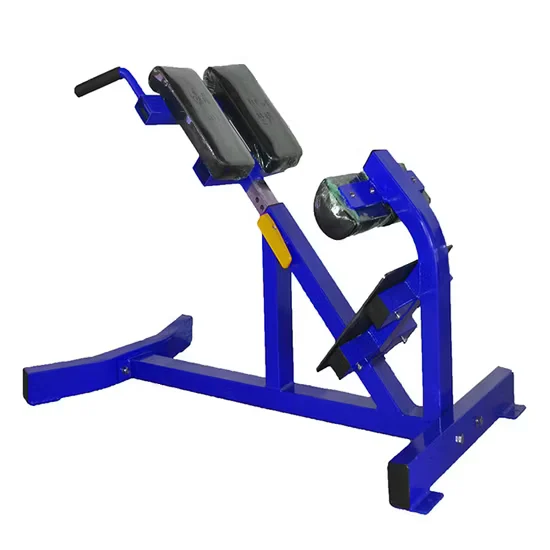
![Commercial ISO Lateral Rear Deltoid Machine 5011 for Gym Strength Training [WARN] draft identifier mismatch](https://bicksport.com/wp-content/uploads/2026/08/commercial-iso-lateral-rear-deltoid-machine-5011-for-gym-strength-training-warn-draft-identifier-mismatch-d72cb2.webp)
Mechanical Resistance Reliability — Manual drive system eliminates motor dependency for 24/7 uninterrupted strength training in commercial facilities.
Technical Specifications
| Parameter | Value |
|---|---|
| Designation | 5011 |
| Product Type | ISO-Lateral Rear Deltoid Machine |
| Power Source | Manual |
| Resistance Type | Manual (Weight Stack Compatible) |
| Frame Material | Steel |
| Product Dimensions | 1982 1003 925 mm |
| Net Weight | 83 kg |
| Foldable | Unfolded |
| Target Demographic | Adult / Unisex |
| Exercise Focus | Back / Rear Deltoid |
| Certification | ISO 9001, CE |
Application Suitability
| Deployment Scenario | Typical Use |
|---|---|
| hotel fitness center on guest room floors | Silent, maintenance-free strength training for guests requiring zero acoustic disturbance |
| chain gym cardio zone | High-frequency isolation work complementing free-weight and plate-loaded sections |
| corporate wellness room | Low-maintenance posterior chain training for employee fitness programs |
| high-end residential home gym | Space-efficient rear deltoid development without motorized noise or power requirements |
| sports performance training center | Targeted scapular retraction and posterior shoulder conditioning for athletes |
Why Maintenance Requests Disappear When You Remove the Motor
Pure mechanical transmission eliminates the two primary failure points in commercial strength equipment: electrical burnout and sensor drift.
I once saw a facility operator replace an entire row of motorized resistance machines because the control boards couldn’t handle the humidity in a basement gym. The downtime lasted weeks while replacement PCBs shipped internationally [NEED_CITE: environmental failure modes in electronic resistance systems]. With the commercial ISO-lateral rear deltoid machine, there is no circuit board to corrode, no motor windings to overheat during peak-hour circuits, and no software to update. The resistance comes entirely from the weight stack and the user’s effort. This means the machine functions identically on day one and day three thousand, assuming basic pivot lubrication is maintained.
Positioning Within the Strength Training Zone
This equipment targets the often-neglected posterior deltoid and rhomboid complex, filling a gap that free-weight benches and cable crossovers cannot address with the same degree of isolation. In a commercial layout, the commercial ISO-lateral rear deltoid machine sits between the lat pulldown and the seated row stations, creating a logical posterior-chain progression that keeps members in one zone rather than wandering the floor searching for equipment. Its 1982 mm length and sub-1000 mm width allow it to fit into standard bay spacing without consuming the footprint of a multi-station functional trainer. The fixed movement path accommodates users across a broad spectrum of shoulder mobility, from beginners learning scapular retraction to advanced lifters performing high-volume drop sets.
Operational Demands for Continuous Commercial Deployment
An 83 kg steel frame provides the mass necessary to remain stable during explosive concentric phases without requiring floor anchoring in most scenarios, though high-traffic facilities should verify subfloor integrity before deployment [NEED_CITE: static and dynamic load requirements for commercial strength flooring]. The manual resistance system generates zero operational noise beyond the mechanical click of the weight pin and the friction of guide rods, making it suitable for installation directly above occupied spaces such as hotel rooms or office floors. Ventilation requirements are minimal since there is no motor generating thermal load; standard HVAC circulation adequate for occupant comfort is sufficient. Power is not required at the machine location, eliminating the need for dedicated circuits, floor boxes, or cable management trays that complicate equipment rearrangement. The 1982 1003 925 mm envelope requires clearance on three sides for user entry, weight stack access, and plate loading.
Mechanical Transmission and Frame Engineering
The manual resistance system relies on a cable-and-pulley arrangement coupled to a selectorized weight stack, delivering linear resistance that matches the strength curve of the rear deltoid through the transverse extension range of motion. Unlike plate-loaded horns that require manual plate changes between sets, the pin-selector mechanism allows rapid load adjustment, supporting supersets and rest-pause protocols without interrupting training flow. The steel frame construction, verified under ISO 9001 quality management, uses welded joints at high-stress nodes rather than bolted connections that can develop play over thousands of loading cycles [NEED_CITE: welded versus bolted frame longevity in commercial strength equipment]. Guide rods maintain weight stack alignment, preventing the lateral sway and binding that plague lower-tier selectorized machines when users perform unilateral movements or release loads abruptly. Pivot points utilize sealed bearings that resist sweat ingress and require only periodic lubrication rather than scheduled replacement.
The Hidden Costs of Underspecified Strength Equipment
Facilities that procure residential-grade selectorized machines for commercial floors typically experience guide rod deformation within the first year, as the weight stack mass and drop-load forces exceed the design envelope of lighter-gauge tubing [NEED_CITE: commercial versus residential duty cycle classifications for strength equipment]. When a machine develops lateral play or cable slack, members abandon it for free-weight alternatives, leaving an expensive footprint occupied by dead equipment. Noise from worn bearings and misaligned pulleys generates complaints in mixed-use buildings, sometimes triggering lease violations in upper-floor fitness centers. Procurement teams that prioritize initial unit cost over frame gauge and bearing specification frequently end up replacing entire machines rather than servicing individual components, because the labor cost of repeated disassembly exceeds the machine’s residual value.
Reasons to Source from This Product Line
The manual resistance architecture eliminates motor and electronics procurement entirely, reducing the bill of materials while removing the two component categories most prone to field failure. Every unit in this strength series undergoes frame load testing under ISO 9001 protocols before leaving the Shandong facility, ensuring weld integrity matches the declared 83 kg structural mass. The OEM program allows full customization of frame color, upholstery, and weight stack increments to align with brand identity across chain deployments. Facility operators receive a 3D layout plan that accounts for the 5011’s 1982 1003 925 mm footprint, user circulation paths, and adjacent equipment sightlines rather than dropping machines into a grid without considering member flow. The six-series cardio and strength family enables a complete facility fit-out from a single manufacturing source, simplifying logistics and ensuring visual consistency across equipment zones. Technical support remains available around the clock for installation queries and warranty claims.
Documentation & Test Records
- CE declaration of conformity for strength equipment category
- EN 957 test report covering static and dynamic load verification
- ISO 9001 certificate confirming quality management system compliance
- Frame weld inspection and structural integrity records
- Assembly and commissioning guide with exploded diagrams
- Spare parts list with component-level ordering codes
Installation, Commissioning & Maintenance
- Verify floor levelness within 3 mm across the 1982 * 1003 mm footprint before positioning
- Maintain 600 mm clearance on all three accessible sides for weight stack loading and user entry
- Lubricate guide rods with manufacturer-specified silicone compound during initial commissioning
- Inspect cable tension and pulley alignment after the first 500 usage cycles
- Wipe down frame and upholstery after each operating day to prevent sweat-induced corrosion
- Confirm weight pin engagement and selector function before releasing equipment to members
Sourcing and Configuration Guidance
Provide your strength zone square footage and adjacent equipment list to receive a scaled 3D layout that positions this unit within member circulation patterns and respects weight stack access requirements. Specify your deployment floor level and adjacent occupied spaces so we can confirm acoustic compatibility, even though the manual system produces negligible operational noise. Indicate target market voltage only if your facility plan includes companion electronic cardio equipment requiring power specification alignment. Declare any OEM requirements for frame color, upholstery material, or weight stack configuration so customization scoping begins before quotation.
Frequently Asked Questions
Q: How does ISO-lateral movement differ from free-weight rear deltoid training?
A: The fixed path eliminates stabilization demands, allowing the user to focus entirely on scapular retraction and transverse extension without balancing dumbbells or controlling bar path. This makes the movement accessible to beginners learning mind-muscle connection while still permitting advanced users to perform controlled negatives and rest-pause sets safely without a spotter.
Q: What maintenance does the selectorized weight stack require?
A: Guide rods need periodic silicone lubrication to prevent binding and ensure smooth weight transitions. Cables should be inspected for fraying at pulley contact points, and the weight pin mechanism must be checked for positive engagement. These tasks require no specialized tools and can be performed by in-house maintenance staff during scheduled facility inspections.
Q: Can the frame color and upholstery be customized for chain gym branding?
A: Yes, the OEM program covers frame powder-coat color, upholstery material and color selection, and weight stack increment configuration. Minimum order quantities apply and vary based on the scope of customization requested. Logo placement on the shroud or frame is available as part of the branding package.
Q: How should this machine be positioned relative to other strength equipment?
A: Place it adjacent to lat pulldown and seated row stations to create a coherent posterior-chain training sequence. Ensure the weight stack side faces an aisle or wall to allow plate loading without obstructing member traffic. The 1982 mm length requires standard bay spacing comparable to most single-station selectorized units.
Q: Is this equipment suitable for 24-hour unsupervised access?
A: The manual resistance system has no electronic components to malfunction, no screens to vandalize, and no motor to overheat during extended use. The steel frame and sealed bearings tolerate continuous operation, making it appropriate for hotel fitness centers and residential gyms that offer round-the-clock member access without on-site staff.
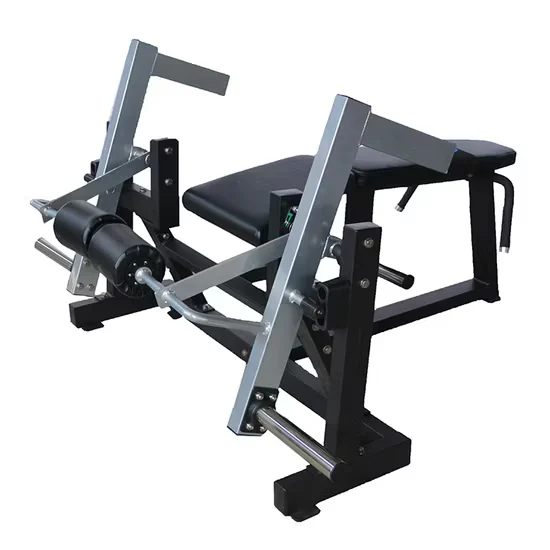

![Commercial Seated Calf Raise Machine for Gym & Fitness Centers [WARN] draft identifier mismatch](https://bicksport.com/wp-content/uploads/2026/08/commercial-seated-calf-raise-machine-for-gym-fitness-centers-warn-draft-identifier-mismatch-d11623.webp)