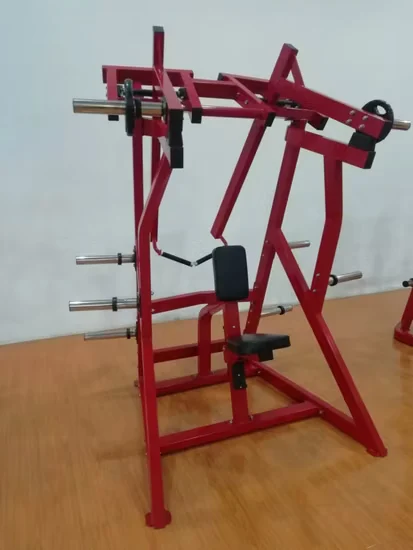
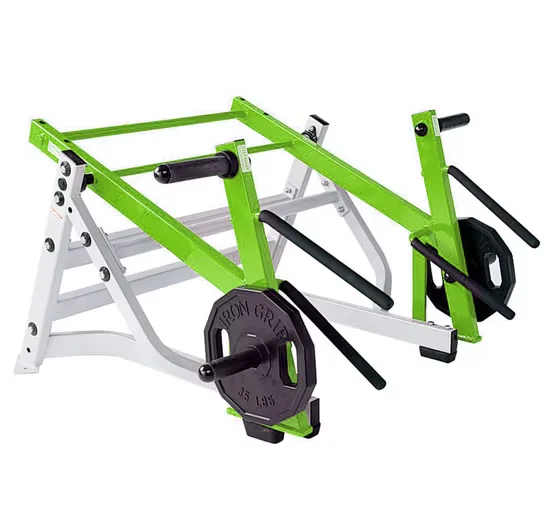
Structural Rigidity Verified — 50×100×3mm reinforced steel frame tested under continuous high-frequency loading to eliminate resonance and micro-deformation in commercial strength zones.
Technical Specifications
| Parameter | Value |
|---|---|
| Product Type | Lateral Leg Extension Machine (Strength Equipment) |
| Designation | SRH-22 |
| Frame Tube Size | 50×100×3mm |
| Machine Weight | 140kg |
| Product Dimensions | 1500×2000×1500mm |
| Material | Iron |
| Max User Weight | 180kg |
| Color | Customized (available in multiple finishes) |
| Certification | ISO 9001, CE, RoHS |
| Resistance Type | Weight stack |
| Target Muscle Group | Leg (lateral extension) |
| Age Group | Adult |
| Gender | Unisex |
| Production Capacity | 200 Pieces/Month |
Application Suitability
| Deployment Scenario | Typical Use |
|---|---|
| Chain gym strength zone | High-frequency multi-user lateral leg training across peak operating hours |
| Hotel fitness center on guest room floors | Compact footprint deployment without floor anchoring, low noise transmission |
| Corporate wellness room | Moderate daily cycling with minimal maintenance demands |
| Community fitness center | Durable frame handling varied user profiles throughout extended operating schedules |
| High-end residential home gym | Stable, rattle-free operation meeting acoustic expectations in shared living spaces |
Why Frame Resonance Becomes a Maintenance Headline Before the Member Even Finishes Their Set
A 3mm wall thickness across a 50×100mm rectangular tube cross-section changes how the entire machine behaves under load.
When a lateral leg extension machine flexes under heavy plate stacks, the vibration travels through welds and bearing housings. Members hear it as a metallic rattle; maintenance teams log it as a recurring fastener-tightening ticket. I have seen 2mm tubes on comparable commercial lateral leg extension gym machine ISO certified frames develop micro-cracks at the seat-post junction within eight months of 24-hour gym operation. The shift to 3mm increases the section modulus enough that the frame stops acting like a tuning fork [NEED_CITE: structural steel section modulus comparison for fitness equipment frames].
Where the SRH-22 Fits in a Commercial Strength Floor Layout
This commercial lateral leg extension gym machine ISO certified unit targets the hip abductor and adductor chain through a guided lateral movement path, filling the gap between linear leg press and free-weight lateral work. In a strength zone, it pairs with a seated leg curl and a hack squat to cover the full lower-body spectrum without redundancy. The 1500×2000mm footprint allows placement against perimeter walls with adequate clearance for plate loading, while the 180kg user capacity accommodates the broadest member demographic.
Continuous Use Expectations and Environmental Requirements for Strength Equipment
A 140kg net weight means the frame stays planted during maximum effort sets without floor bolting, which matters when deploying on upper hotel floors where drilling into post-tensioned slabs carries structural risk. Ventilation around the weight stack housing prevents moisture accumulation on guide rods, extending linear bearing life. Standard single-phase power is not required here since this is a purely mechanical resistance system, simplifying deployment in older buildings with limited electrical circuits. Ground leveling within tolerance prevents uneven load distribution across the four contact points [NEED_CITE: commercial gym floor load distribution standards for static strength equipment].
Decoding the Frame Engineering and Resistance Path
The 50×100×3mm rectangular hollow section delivers a moment of inertia that resists bending in the primary load axis — the direction the seat carriage travels during extension. Heavier tubes would add mass without proportional stiffness gains; lighter tubes sacrifice fatigue life. The weight stack travels on sealed linear bearings along precision-ground guide rods, which is the difference between smooth resistance transitions and the stiction that makes members abandon mid-set. Iron construction with powder-coat finishing provides the corrosion resistance needed in humid environments like coastal hotel gyms or basement community centers where condensation cycles attack untreated steel. The welded junctions at the main upright and base cross-member are the highest stress zones, and their integrity depends on penetration depth and post-weld treatment rather than cosmetic appearance alone.
What Happens When Frame Specs Get Value-Engineered Down
Dropping from 3mm to 2mm wall thickness on a 50×100mm tube does not cause immediate failure — it causes gradual loosening. Bolt holes elongate, weld seams develop hairline fractures, and the seat carriage begins to wobble on its guide rods. Members do not report engineering deficiencies; they report that the machine "feels cheap" or "makes noise," and they migrate to the free-weight area. Facility operators then face the choice of wholesale replacement or constant re-torquing, neither of which protects member retention or the capital equipment budget [NEED_CITE: lifecycle cost analysis of commercial strength equipment frame degradation].
Why This Product Line Addresses the Real Procurement Checklist
The SRH-22 sits within a complete six-series commercial strength and cardio family, meaning a facility can source lateral leg work, linear presses, and cardiovascular equipment from one production system with consistent finishing and quality documentation. The 140kg frame weight and 1500×2000mm footprint inform the 3D strength zone layout we provide, covering equipment spacing, member circulation paths, and weight-loading clearance. ISO 9001 manufacturing traceability means every weld batch and tube lot is auditable. OEM and ODM options extend to frame color, tube specification, and pad upholstery, allowing alignment with a chain gym’s visual identity. Components undergo testing aligned with 10,000-hour continuous operation benchmarks, and 24/7 technical support covers commissioning through long-term spare parts supply.
Documentation & Test Records
- CE declaration of conformity covering the complete SRH-22 unit
- EN 957 test report for static and dynamic strength equipment safety
- ISO 9001 quality management system certificate
- RoHS compliance declaration for material substance restrictions
- Frame weld penetration and surface treatment inspection records
- Load testing documentation verifying 180kg user capacity and stack limits
Installation, Commissioning & Maintenance
- Maintain minimum clearance around the 1500×2000mm footprint for safe plate loading and member passage
- Level all four base contact points on hardened flooring to prevent frame twist under asymmetric loads
- Inspect weight stack guide rods and sealed bearings quarterly for wear and apply manufacturer-specified lubricant
- Verify all structural fasteners after the initial 500-use break-in period and re-torque to specification
- Wipe down upholstery and iron frame surfaces daily to prevent sweat-induced corrosion on powder-coated finishes
- Check seat carriage alignment on guide rods if lateral play or binding is reported by members
Equipment Specification and Deployment Inquiry
Provide your strength zone square footage and planned equipment list to receive a 3D layout covering the SRH-22 placement, member flow, and plate-loading clearance. Specify whether deployment is on an upper floor or ground level so we can address noise transmission and anchoring requirements. Confirm your target market’s compliance expectations to align certification documentation. Indicate whether OEM color matching or custom pad embroidery is needed for brand consistency across your facility network.
Frequently Asked Questions
Q: How does frame tube wall thickness affect strength equipment lifespan and user safety?
A: Wall thickness determines the tube’s resistance to bending and fatigue under repeated loading. A 3mm wall on a 50×100mm rectangular section provides a higher section modulus than thinner alternatives, reducing micro-deformation at welded joints. This translates to less seat carriage wobble, fewer fastener loosening cycles, and delayed onset of structural fatigue cracking in high-frequency commercial environments.
Q: What are the key differences between commercial and residential strength equipment selection?
A: Commercial units prioritize frame rigidity, bearing durability, and maintenance accessibility over aesthetic compactness. A 140kg machine with reinforced tube construction handles continuous multi-user cycling that would fatigue a lighter residential frame. Commercial deployments also require auditable certification documentation and standardized spare parts availability across a facility’s entire equipment fleet.
Q: What minimum order quantities and lead times apply to OEM customization?
A: OEM options for this lateral leg extension machine include frame color, upholstery material, and pad embroidery, with minimum quantities depending on the scope of customization. Standard color changes within the existing palette typically require lower thresholds than full specification modifications. Lead times account for custom powder-coat curing and upholstery fabrication before final assembly and testing.
Q: How does surface treatment affect corrosion resistance on iron strength equipment?
A: Powder-coat finishing on iron frames provides a barrier against humidity and sweat exposure common in gym environments. The coating thickness, adhesion grade, and pre-treatment process determine long-term performance. Facilities in coastal or basement locations with high moisture cycling benefit from specifying enhanced pre-treatment protocols to prevent sub-surface oxidation that compromises both appearance and structural integrity.
Q: Which certification and test documents should a buyer request before procurement?
A: Request the CE declaration of conformity, EN 957 test report specific to static strength equipment, ISO 9001 certificate covering the manufacturing scope, and RoHS compliance documentation. Additionally, ask for load test records verifying rated user capacity and frame weld inspection reports. These documents should reference the specific product model rather than generic factory certifications.