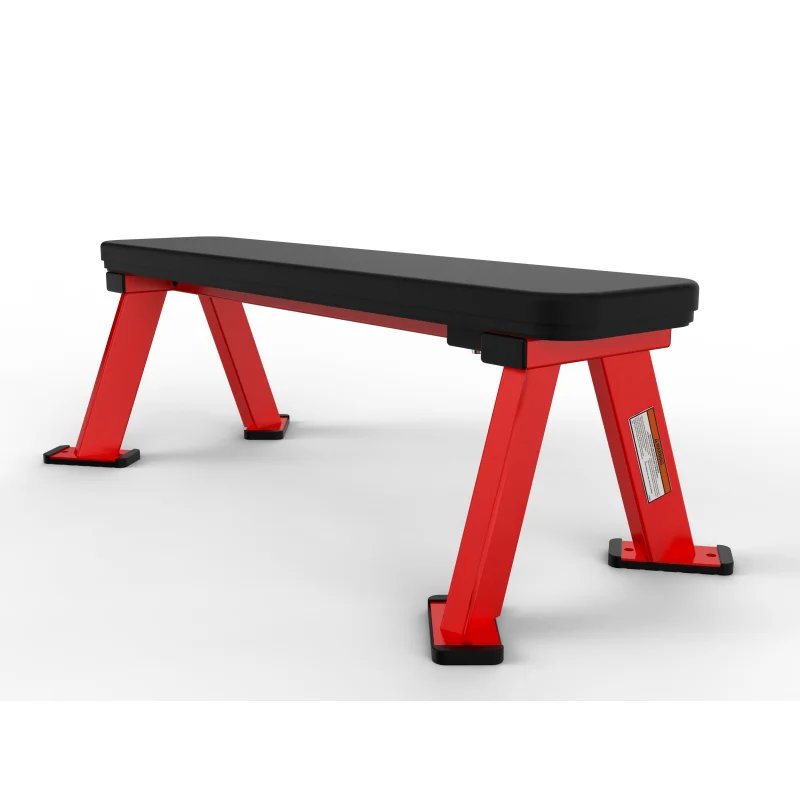
Steel-Frame Durability — Welded steel construction tested for continuous high-frequency commercial use in professional gym environments.
Technical Specifications
| Parameter | Value |
|---|---|
| Product Type | Incline Bench |
| Model NO. | 5063 |
| Material | Steel |
| Incline Angle | 30 Degree Fixed |
| Exercise Part | Chest |
| Gender | Unisex |
| Age Group | Adult |
| Product Dimensions | 1225549960mm |
| Net Weight | 36kg |
| Fit Area | Professional Gym and Club |
| OEM/ODM | Available |
| Certification | ISO 9001, CE |
| Production Capacity | 500 PCS/Month |
| Transport Package | Plywood Case |
Application Suitability
| Deployment Scenario | Typical Use |
|---|---|
| Chain gym free weight zone | High-frequency chest press and dumbbell work across peak hours |
| Corporate wellness room | Compact station for employee strength sessions between meetings |
| Community fitness center | Durable bench resisting daily multi-user loading with minimal upkeep |
| Hotel fitness center | Space-efficient fixed-angle bench for guest room floor weight areas |
| Sports performance training center | Stable platform for athlete chest isolation and accessory lifts |
Why Frame Rigidity Matters More Than Padding in Commercial Chest Stations
A welded steel frame outlasts every upholstery replacement cycle.
In professional gym environments, the commercial incline bench 30 degree chest press station endures hundreds of daily loading cycles. I have seen benches with compromised welds shift angle under heavy dumbbell sets, creating shoulder strain complaints within weeks. The issue is rarely cosmetic — it is structural fatigue propagating through bolt-on joints that were never rated for continuous commercial loading [NEED_CITE: structural fatigue testing standards for commercial weight benches]. When a frame deflects even slightly under load, the 30-degree angle drifts, and the biomechanical targeting that the incline is supposed to provide disappears.
Positioning Within the Free Weight Zone Layout
This 30-degree fixed incline bench fills a specific gap in the chest training continuum — between flat bench work and steeper 45-degree incline positions. In a commercial free weight zone, it pairs with flat benches and adjustable models to give members a complete pressing spectrum without requiring them to fiddle with adjustment pins between sets. The fixed angle eliminates setup errors during rush hours. The commercial incline bench 30 degree chest press station accommodates users across a wide height and limb-length range, with the 1225mm frame length providing adequate head and glute support. The 36kg net weight keeps the unit stable under load without requiring floor anchoring in most installations.
Continuous Loading Cycles and Floor Placement Requirements
A fixed-angle bench deployed in a chain gym free weight zone may see 150 or more loading cycles per day during peak membership hours. The steel frame and reinforced weld points are designed for this duty cycle without developing play at the joints. Floor placement matters: the 1225*549mm footprint requires adequate clearance on all sides for dumbbell handling and spotter movement. On upper floors, the 36kg mass transmits less vibration to adjacent spaces compared to heavier plate-loaded stations, but rubber matting beneath the bench protects flooring from dropped dumbbell contact [NEED_CITE: vibration transmission standards for upper-floor gym equipment]. Level flooring is essential — an uneven surface introduces lateral wobble that accelerates weld fatigue.
Reading the Steel Grade and Weld Specifications
The all-steel frame on this incline bench is the primary durability determinant. In commercial bench manufacturing, frame steel thickness and welding technique separate units that survive years of daily loading from those requiring replacement within months. Bolt-together frames develop play at connection points under repeated eccentric loading; welded frames distribute stress across the joint continuously. The 30-degree fixed angle eliminates moving parts — no adjustment pins, no sliding rails, no detent mechanisms to wear out. This simplicity is deliberate for commercial environments where maintenance crews cannot service every station weekly. The 36kg mass indicates adequate steel section thickness to resist deflection without being so heavy that repositioning during cleaning becomes impractical.
What Specification Compromises Cost in Strength Equipment
When facilities purchase benches based on lowest unit cost, the hidden expenses emerge within months. Lightweight frames with thin-wall tubing develop visible weld cracks under daily commercial loading. Padding bonded with adhesive rather than mechanical fasteners peels at the edges where sweat accumulates, creating hygiene complaints. Fixed-angle benches with imprecise jig welding deliver 28 or 32 degrees instead of the specified 30, subtly altering the chest activation pattern and generating member confusion about why their presses feel different across locations [NEED_CITE: angle tolerance requirements for commercial incline benches]. Replacing an entire bench fleet because the initial units failed structurally costs substantially more than specifying adequate construction from the start.
Why This Product Line Fits Professional Deployments
The steel frame construction on this bench matches the durability standards applied across our full commercial cardio and strength range. Every unit undergoes weld inspection and load testing before leaving the Shandong facility, consistent with ISO 9001 production controls. For facilities planning complete free weight zones, the 1225*549mm footprint allows precise spacing calculations in 3D layout plans that account for dumbbell swing radius and spotter clearance. OEM customization extends to frame color, padding material, and logo placement so the bench matches existing equipment aesthetics. The 500 units per month production capacity supports multi-location rollouts without extended lead times. Technical documentation includes frame load ratings and maintenance schedules aligned with commercial deployment expectations.
Documentation & Test Records
- CE declaration of conformity covering structural safety requirements for commercial weight training benches
- EN 957 test report validating frame strength and stability under prescribed static and dynamic loads
- ISO 9001 certificate confirming production quality management across welding and assembly processes
- Weld inspection records documenting joint integrity at critical stress points on the steel frame
- Padding material specifications including density, abrasion resistance, and flame retardancy ratings
- OEM customization scope document covering color, logo, and upholstery options with MOQ terms
Installation, Commissioning & Maintenance
- Verify 1225*549mm footprint clearance allows dumbbell handling radius and spotter access on all sides
- Place on level flooring with rubber matting to protect surfaces from dropped weight contact and reduce frame noise
- Inspect all weld joints upon delivery for transport damage before placing the 36kg bench into service
- Check frame level quarterly and reposition if floor settlement introduces lateral instability under load
- Clean padding with non-solvent disinfectant to preserve upholstery bonding and prevent edge peeling
- Schedule visual weld inspection every six months in high-volume facilities to catch early fatigue indicators
Requesting the Right Configuration for Your Facility
Provide your free weight zone square footage and planned bench count to receive a 3D layout showing optimal spacing and member flow around each station. Specify expected daily usage volume so we can confirm frame duty-cycle alignment with your membership density. Indicate whether OEM color matching or logo placement is required to maintain brand consistency across your equipment fleet. State your target market for documentation and compliance requirements, and note any adjacent occupied spaces where noise from dropped dumbbells may be a concern.
Frequently Asked Questions
Q: What is the practical difference between a fixed 30-degree bench and an adjustable incline bench in a commercial setting?
A: A fixed 30-degree bench eliminates adjustment mechanisms that wear out under high-frequency use, reducing maintenance requirements and setup errors during peak hours. Adjustable benches offer multiple angles but introduce moving parts — pins, rails, and detent mechanisms — that develop play and require regular servicing. Many professional facilities deploy both types, using fixed-angle benches for dedicated stations and adjustable models for versatile multi-use positions.
Q: How does commercial bench construction differ from residential-grade equipment?
A: Commercial benches use thicker steel sections and continuous weld joints rated for hundreds of daily loading cycles, whereas residential units often employ bolt-together frames with thinner tubing designed for lighter intermittent use. Commercial padding uses higher-density foam with mechanical fasteners to resist compression and edge peeling over years of service. The weight and construction reflect the expectation of continuous multi-user operation without structural degradation.
Q: What frame specifications should I verify before purchasing incline benches for a multi-location rollout?
A: Request weld inspection records confirming joint integrity at primary stress points, and review load test documentation validating the frame under maximum expected weight. Confirm the angle tolerance specification to ensure consistent biomechanics across all locations. Verify padding density and attachment method, as adhesive-bonded upholstery fails prematurely in high-sweat environments. Check OEM capabilities if brand consistency requires matched colors or logo placement across your fleet.
Q: What is the typical maintenance schedule for a commercial fixed-angle incline bench?
A: Fixed-angle benches require minimal maintenance compared to adjustable models since there are no moving parts to lubricate or calibrate. Quarterly visual inspections of weld joints and frame integrity catch early fatigue indicators. Padding should be cleaned regularly with appropriate disinfectants and checked for edge separation. In high-volume facilities, semi-annual structural reviews help identify units approaching replacement thresholds before failures occur during member use.
Q: What OEM customization options are available for bulk incline bench orders?
A: OEM options typically include frame color to match existing equipment palettes, logo placement via decal or embroidery on padding, and upholstery material selection for specific durability or hygiene requirements. Minimum order quantities apply depending on customization scope. Production lead times vary with order volume and complexity, so early specification during the inquiry process ensures alignment with facility opening or renovation timelines.