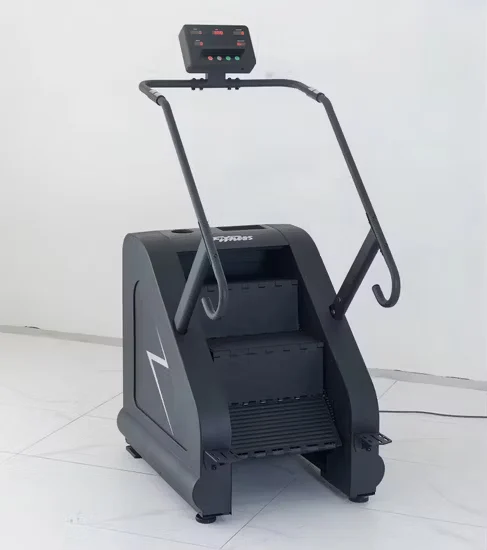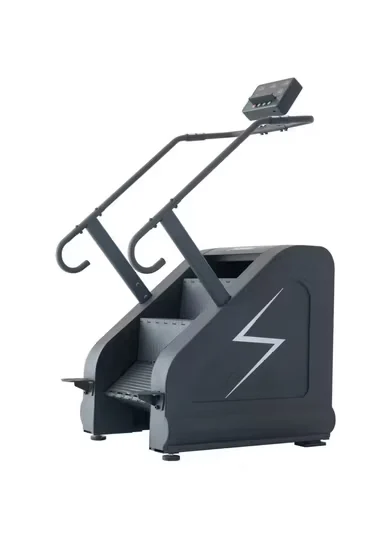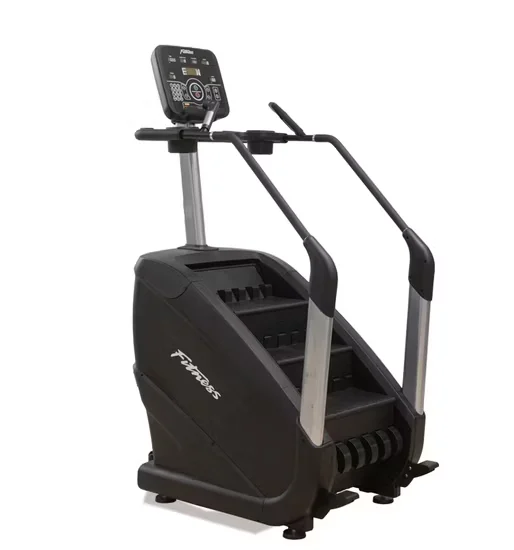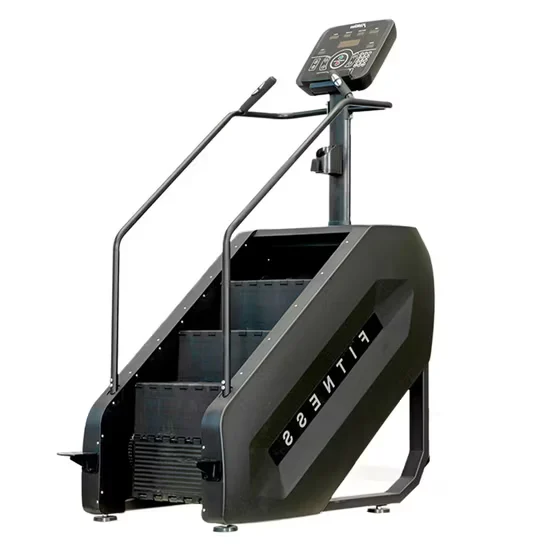
10,000-Hour Endurance Validated — Motor and bearing assemblies tested through continuous high-frequency stair climbing cycles to confirm sustained output without thermal degradation.
Technical Specifications
| Parameter | Value |
|---|---|
| Designation | SQ1017 |
| Product Type | Stair Climber |
| Drive Type | Motor Drive |
| Running Velocity | 15–164 steps/min |
| Step Area | 560 × 235 × 220 mm |
| Max User Weight | 180 kg |
| Mains Input | AC220V±10% / AC110V±10% |
| Console Display | Time, Climb, Calories, Steps, Heart Rate |
| Frame Material | Steel Pipe + PP Plastic |
| Product Dimensions | 1450 × 820 × 2080 mm |
| Net Weight | 148 kg |
| Folded | Unfolded |
| Color | Black (customization available) |
| Certification | CE |
| Customization | Logo, color, console UI, specification |
Application Suitability
| Deployment Scenario | Typical Use |
|---|---|
| Hotel fitness center on guest room floors | 24/7 guest access with low-noise motor operation near occupied rooms |
| Chain gym cardio zone | High-frequency member use across peak hours with continuous motor duty |
| Corporate wellness room | Employee interval sessions during break periods with moderate daily run-time |
| High-end residential home gym | Individual or family use with flexible AC voltage input |
| Sports performance training center | Athlete conditioning with precise step velocity control for interval programming |
Why Motor Duty Cycle Decides Whether Your Stair Climber Survives the First Quarter
A motor rated for peak output fails where a continuous-duty motor keeps running.
I have watched hotel fitness centers install stair climbers with light-commercial motors and see them burn out within months of 24/7 operation. The failure pattern is predictable: the motor handles short bursts fine, but continuous guest use pushes it past thermal limits. Maintenance logs fill up, members complain about dead machines, and the facility faces a full fleet replacement [NEED_CITE: motor duty cycle classification for continuous commercial operation]. This commercial stair climber motor drive 180kg platform addresses that failure mode directly, with motor and drivetrain components validated for sustained deployment in public-facing facilities.
Positioning This Stepmill Within a Commercial Cardio Floor
The SQ1017 fills the vertical climbing niche in a cardio zone, delivering step velocities from 15 to 164 steps per minute. This range covers steady-state endurance work at the low end and aggressive HIIT intervals at the top, complementing treadmills and ellipticals that dominate horizontal movement patterns. The 180 kg user capacity accommodates a broad body-type spectrum without frame deflection. Deploy it in a dedicated climbing station or as part of a mixed-cardio circuit where members rotate through disciplines. Heart rate data is displayed on the console for real-time intensity monitoring, and the step count metric supports both individual programming and group class structures.
Continuous Runtime and Facility Environment Requirements
This unit is engineered for facilities where machines run eight or more hours daily without cool-down periods. The motor drive system maintains consistent torque across the full velocity range, avoiding the lag that frustrates users mid-interval. Noise output stays low enough for deployment on hotel guest floors where acoustic transfer to adjacent rooms is a real concern [NEED_CITE: acoustic performance standards for fitness equipment in hospitality environments]. The dual-voltage input (AC220V±10% / AC110V±10%) eliminates the voltage mismatch problem that surfaces only after a container arrives at its destination. Facility managers should plan for adequate airflow around the motor housing and confirm that the electrical circuit can sustain continuous draw without tripping under peak load.
How the Drive System and Frame Deliver Under Load
The motor drive system replaces hydraulic or manual stepping mechanisms, providing consistent resistance without the drift and lag inherent to fluid-based systems. Step velocity adjusts across a wide band from 15 to 164 steps per minute, and the motor maintains torque without hesitation even at the upper range where lighter systems tend to stutter. The steel pipe frame with sealed bearings handles repetitive loading cycles from users up to 180 kg while keeping vibration and audible noise controlled. Step dimensions of 560 × 235 × 220 mm give users a stable platform that accommodates different foot sizes and stride preferences. The console tracks time, climb distance, calories, steps, and heart rate in real time, and its IoT-ready architecture supports integration with facility management software for usage analytics and remote monitoring.
The Hidden Cost of Underspecified Components
Facilities that select stair climbers based on peak horsepower ratings alone often discover the gap between marketing numbers and operational reality. A motor that delivers impressive peak output for ninety seconds may not sustain that output through a twelve-hour operating day. The result is premature winding failure, seized bearings, and a machine that sits dark while members wait for repairs [NEED_CITE: commercial cardio equipment failure rates in high-frequency facilities]. Noise complaints from guests in rooms directly above or beside the cardio zone lead to equipment relocation or wholesale replacement. Voltage mismatches discovered post-shipment force costly rewiring or transformer installations. Each of these failures traces back to specification decisions made before the purchase order was signed.
What Sets This Product Line Apart for Facility Operators
Every SQ1017 unit ships with motor and bearing assemblies tested for 10,000 hours of continuous operation, giving operators a verified durability baseline rather than an optimistic claim. The whisper-quiet drive system has been validated in hotel deployments where acoustic performance directly affects guest satisfaction scores. The IoT-ready console supports data export to facility management platforms, closing the loop on usage analytics that would otherwise remain trapped on the machine. OEM customization extends to the console UI, allowing branded interfaces for gym chains and hotel groups. The free 3D cardio-zone layout service accounts for this unit’s 1450 × 820 mm footprint and the clearance needed for safe user entry and exit, integrating airflow planning so the equipment actually gets used. Technical support is available around the clock for commissioning questions and troubleshooting.
Documentation & Test Records
- CE declaration of conformity for the SQ1017 stair climber platform
- EN 957 test report covering structural integrity and safety requirements
- ISO 9001 certificate verifying quality management across production
- Noise level test report confirming acoustic output for noise-sensitive deployments
- 10,000-hour durability test record for motor, frame, and bearing components
- Motor specification sheet detailing continuous duty rating and thermal limits
- Console technical documentation with data interface and API specifications
Installation, Commissioning & Maintenance
- Confirm floor-level placement with vibration-dampening pads beneath the 1450 × 820 mm footprint
- Connect to a dedicated AC220V or AC110V circuit matching the unit’s dual-voltage motor input
- Run initial calibration cycle to verify step velocity accuracy across the 15–164 steps/min range
- Configure console firmware and establish data connection to facility management software
- Schedule periodic bearing inspection and motor housing cleaning to maintain thermal performance
- Wipe down step surfaces and handrails daily to prevent sweat corrosion on the steel frame
Equipment Selection and Inquiry Process
Provide your cardio zone square footage and target unit count to receive a 3D layout with airflow planning specific to this stair climber’s dimensions and clearance requirements. Specify expected daily operating hours so we can confirm the motor duty cycle matches your facility’s usage pattern. Identify the deployment floor and adjacent occupied spaces to verify acoustic suitability. State your target market voltage standard and whether the console needs to integrate with an existing facility management platform or member app.
Frequently Asked Questions
Q: What is the difference between continuous duty and peak motor rating for commercial stair climbers?
A: Peak rating describes the maximum output a motor can deliver for a short burst, while continuous duty reflects what it can sustain over hours of operation. A stair climber in a 24/7 gym needs continuous duty validation because members use it back-to-back throughout the day. Choosing based on peak output alone leads to thermal failure within months.
Q: How does motor drive compare to hydraulic systems for noise and maintenance?
A: Motor drive systems deliver consistent step velocity without the fluid degradation and seal wear that affect hydraulic units over time. They operate at lower noise levels, making them suitable for hotel guest floors where acoustic transfer matters. Maintenance intervals are longer because there are no hydraulic fluids to replace or seals to monitor.
Q: Can the console sync with our facility management software?
A: The IoT-ready console architecture supports data export and integration with facility management platforms. Before production, share your software’s API or data interface requirements so we can confirm compatibility and configure the console firmware accordingly. This prevents deploying machines whose usage data remains stranded on the device.
Q: What noise level should we expect, and is it suitable for hotel floors?
A: The motor drive system and sealed bearing assembly are engineered for whisper-quiet operation, validated in hotel deployments where equipment sits near occupied guest rooms. Request the noise level test report for your specific deployment scenario to confirm acoustic compliance with your property’s standards and guest satisfaction requirements.