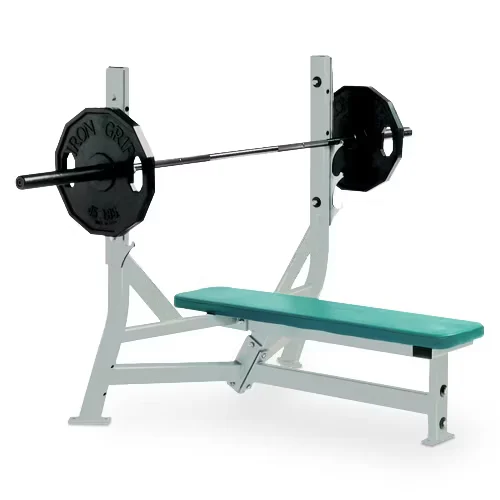
Steel Frame Load Stability — reinforced welding and 180kg user capacity verified under continuous pressing loads in commercial free weight zones.
Technical Specifications
| Parameter | Value |
|---|---|
| Designation | 5050 |
| Product Type | Flat Bench |
| Exercise Part | Chest |
| Frame Material | Steel |
| Max User Weight | 180kg |
| Product Dimensions | 1304 × 1300 × 1234 mm |
| Net Weight | 63kg |
| Certification | ISO 9001, CE |
| OEM/ODM | Available |
| Fit Area | Professional Gym and Club |
| Transport Package | Plywood Case |
| HS Code | 9506911900 |
| Production Capacity | 500 PCS/Month |
Application Suitability
| Deployment Scenario | Typical Use |
|---|---|
| Professional gym free weight zone | Heavy dumbbell and barbell chest pressing stations |
| Corporate wellness training room | Moderate-load strength circuits with quick user turnover |
| Community fitness center strength area | High-traffic bench work across varied user experience levels |
| Sports performance training center | Controlled pressing movements within athlete conditioning programs |
| Hotel fitness center strength corner | Compact bench deployment in limited-floor-space cardio and strength zones |
Why Pad Tear and Frame Wobble End Up on the Manager’s Desk
A commercial flat bench steel frame gym setup fails the moment the pad splits or the base shifts under load — and that failure reaches members before maintenance ever sees it.
I remember a batch of benches shipped to a chain gym where the vinyl padding cracked along the seam within months of heavy dumbbell work. Members started draping towels over the tears, then quietly moved to competitor benches across the floor. The facility manager pulled the entire order and asked for reinforced stitching specs we had not been asked to provide initially [NEED_CITE: pad durability standards for commercial strength equipment in high-frequency facilities]. Frame stability presents a parallel problem: if the base wobbles during a heavy set, users lose confidence and avoid the station entirely, leaving a dead zone on the gym floor.
Positioning the 5050 Within a Free Weight Zone Layout
The 5050 serves as the primary horizontal pressing platform in a commercial free weight zone, handling barbell and dumbbell chest work across all intensity levels. It pairs with incline and decline benches to form a complete pressing triangle, while its compact footprint of 1304 × 1300 mm allows placement between rack stations without disrupting traffic flow. The 180kg user capacity accommodates the full range of body types found in a commercial flat bench steel frame gym environment, from first-time lifters to advanced athletes loading heavy plates.
Continuous Throughput and Floor Deployment Requirements
This bench is built for facilities where members cycle through sets in rapid succession throughout operating hours. The steel frame and 63kg net weight keep the unit planted on rubber-matted floors without requiring anchor bolts, though a level surface remains essential for consistent pad contact during pressing. Ventilation is not a concern for passive strength equipment, but deployment planning should account for the 1300 mm lateral clearance needed on each side for dumbbell movement and spotter positioning [NEED_CITE: floor space clearance standards for commercial bench stations]. Facilities on upper floors should verify structural load ratings when placing multiple benches in a concentrated zone.
Steel Gauge, Weld Patterns, and Pad Density Decoded
The 5050 frame relies on steel construction with reinforced welding at the junction points where vertical legs meet the horizontal support rail — the areas experiencing the highest shear forces during loaded pressing. Net weight at 63kg signals a substantial gauge thickness; lighter benches in the 30–40kg range typically use thinner tubing that flexes under asymmetric dumbbell loads. The pad sits on a welded steel backing plate rather than flexible webbing, which prevents the sagging that develops over months of use. High-density foam core with commercial-grade vinyl covering resists compression set, meaning the pad maintains its firmness through thousands of daily repetitions without developing the soft spots that compromise spinal alignment during heavy sets.
What Happens When Bench Specs Are Undersized
Gyms that source benches rated for 120kg user weight in a facility serving 180kg lifters face frame deformation within the first year. The welds at the base junction develop hairline cracks that are invisible until the bench tilts mid-set — a liability event waiting to happen [NEED_CITE: structural failure modes in undersized commercial strength equipment]. Thin vinyl covers tear along stress points, exposing foam that absorbs sweat and develops odor complaints. Lightweight benches under 50kg shift across rubber flooring during explosive movements, forcing members to reset position between every rep and disrupting workout rhythm. These failures compound: one bad bench creates a dead zone, then members avoid the entire free weight section.
Why This Product Line Holds Up in Commercial Deployment
Every unit undergoes load-bearing verification at the 180kg threshold before leaving the Shandong facility, matching the user weight standard across the full cardio and strength range. The steel frame construction aligns with the 10,000-hour continuous-use testing protocol applied to all equipment in this catalog. OEM customization extends to frame color, pad vinyl selection, and logo placement, so facility branding carries through to the free weight zone. The 3D layout service covers bench placement alongside cardio equipment, calculating sightlines and member flow paths across the entire floor plan. Technical support covers pad replacement and frame inspection guidance around the clock, which matters when a facility runs unsupervised overnight hours.
Documentation & Test Records
- CE declaration of conformity covering strength equipment safety requirements
- EN 957 test report validating structural load and stability performance
- ISO 9001 certificate for manufacturing quality management systems
- Frame load-bearing test record at maximum user weight
- Pad material tear-resistance and compression set test documentation
- Installation guide with floor leveling and clearance specifications
Installation, Commissioning & Maintenance
- Position on level rubber-matted floor with 1300 mm clearance on each side for dumbbell movement
- Verify all frame bolts are torqued to specification before first member use
- Inspect weld joints and pad mounting points monthly for stress fractures or fastener loosening
- Clean vinyl pad surface with non-abrasive antibacterial solution after each operational day
- Replace pad when compression set creates visible depression under unloaded conditions
Equipment Selection and Floor Planning Inquiry
Provide your free weight zone dimensions and target bench count to receive a 3D layout with sightline and member flow analysis. Specify daily user volume to confirm the 5050 pad density matches your throughput requirements. Indicate whether the deployment floor requires additional vibration isolation for spaces below. Note any OEM requirements for frame finish, pad color, or facility branding on the steel frame.
Frequently Asked Questions
Q: What frame construction ensures commercial bench stability under heavy pressing loads?
A: The 5050 uses a steel frame with reinforced welding at high-stress junction points where vertical legs connect to the horizontal rail. At 63kg net weight, the tubing gauge provides sufficient mass to resist flex during asymmetric dumbbell work. Stability depends on both material thickness and weld penetration depth, which is why load-bearing test records should be reviewed before procurement.
Q: How should bench pad durability be evaluated for high-traffic commercial use?
A: Commercial pads must resist both surface tearing and internal compression set. Look for high-density foam cores with commercial-grade vinyl covers and reinforced stitching along stress seams. Pads that develop soft spots within months compromise user spinal alignment during pressing movements and force premature replacement orders that increase total cost of ownership.
Q: What weight capacity is required for benches in a commercial gym environment?
A: Commercial facilities serving diverse member populations should specify benches rated for at least 180kg user weight. This threshold accommodates heavier lifters plus the additional load of plates and dumbbells during chest pressing exercises. Undersized benches rated for lower capacities risk frame deformation and weld failure under sustained commercial loading patterns.
Q: How does bench footprint affect free weight zone layout efficiency?
A: The 5050 measures 1304 × 1300 mm, which allows placement between rack stations without obstructing member traffic flow. Adequate lateral clearance of 1300 mm on each side must be maintained for safe dumbbell movement and spotter positioning. Compact footprint design lets facilities fit more pressing stations into a given area without compromising safety zones.
Q: What maintenance extends the service life of a commercial flat bench?
A: Monthly inspection of weld joints and frame fasteners catches stress fractures before they develop into structural failures. Regular cleaning with non-abrasive solutions prevents sweat corrosion on the vinyl surface and steel contact points. Pad replacement should follow visible compression set rather than a fixed calendar schedule, as wear rate depends on daily user volume.