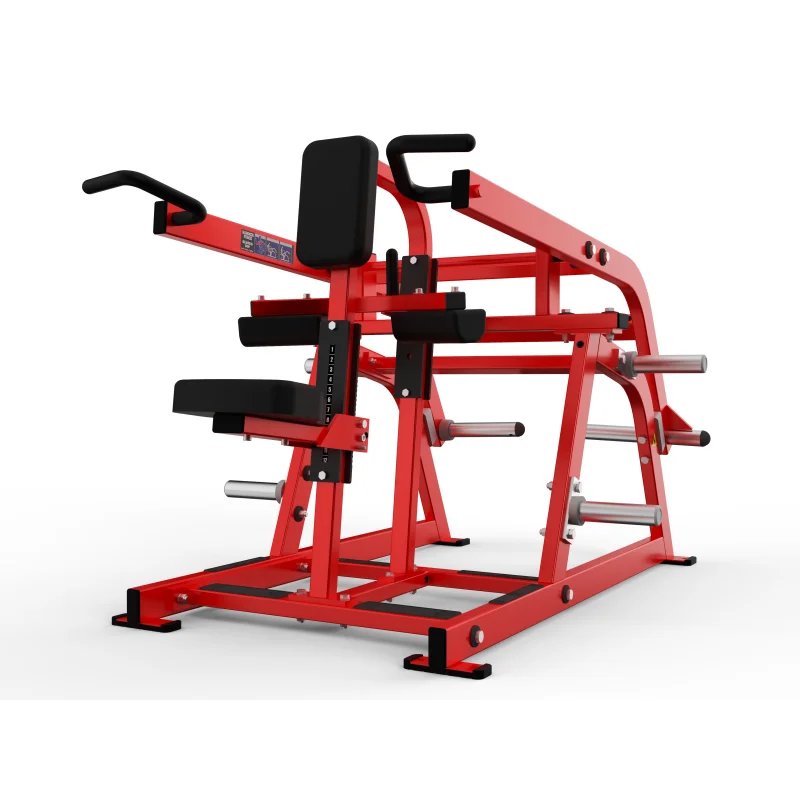
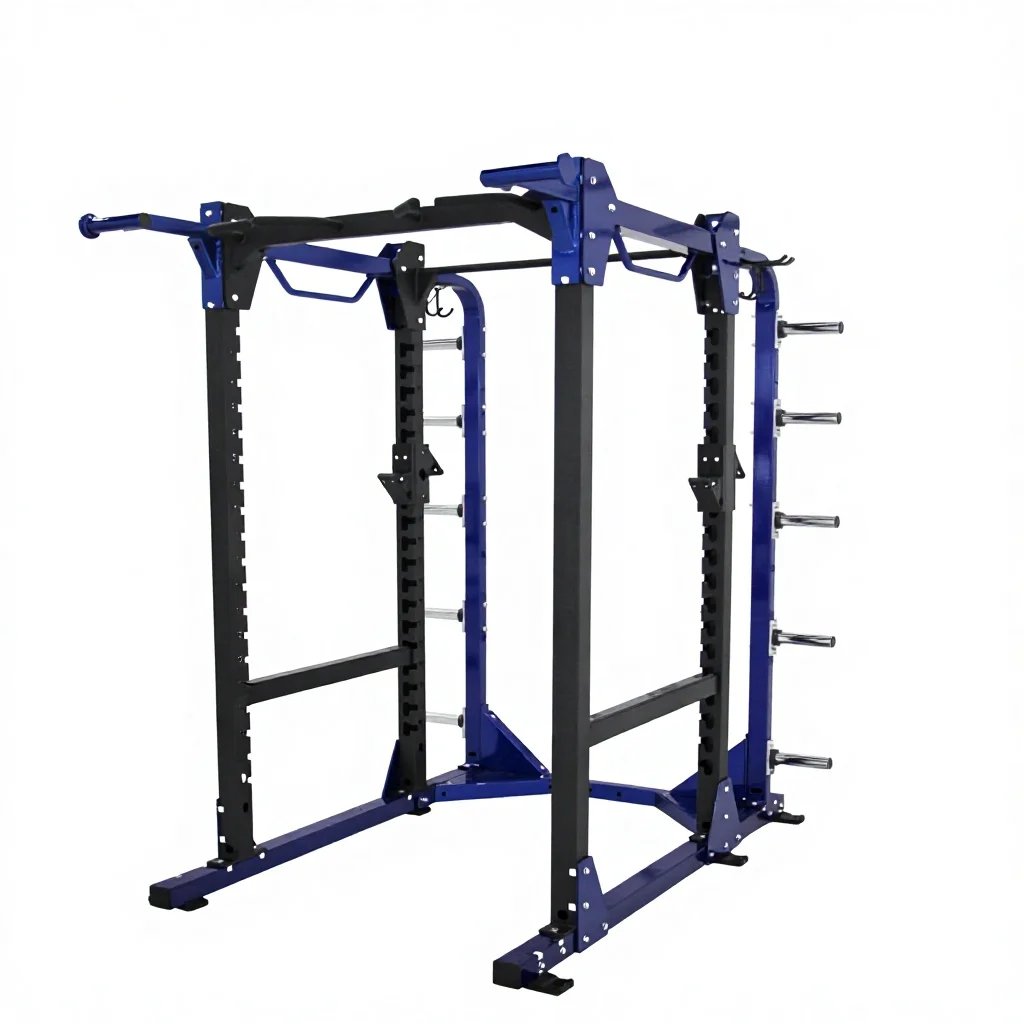
![Commercial Hammer Shoulder Press Bench Machine for Gym [WARN] draft identifier mismatch](https://bicksport.com/wp-content/uploads/2026/08/commercial-hammer-shoulder-press-bench-machine-for-gym-warn-draft-identifier-mismatch-d04e30.webp)
Verified Continuous Operation — Every unit undergoes 10,000-hour endurance testing on frame joints, guide rails, and bearings before leaving the production line.
Technical Specifications
| Parameter | Value |
|---|---|
| Designation | 5053 |
| Product Name | Shoulder Press Bench |
| Type | Integrated Gym Trainer |
| Exercise Part | Shoulder |
| Frame Material | Steel |
| Main Frame Color | Available per customer requirements |
| Cushion Color | Available per customer requirements |
| Product Dimensions | 1763 × 1210 × 1669 mm |
| Net Weight | 88 kg |
| OEM/ODM | Acceptable |
| Certification | ISO 9001, CE |
Application Suitability
| Deployment Scenario | Typical Use |
|---|---|
| Chain gym strength training zone | High-frequency shoulder and deltoid work during peak membership hours |
| Corporate wellness room | Moderate-volume pressing movements for employee fitness programs |
| Community fitness center | Durable shoulder training accessible to adult members across fitness levels |
| Sports performance training center | Controlled overhead pressing for athlete upper-body conditioning |
| Hotel fitness center | Compact shoulder press station for guest self-service strength routines |
Why Frame Weld Integrity Dictates Long-Term Member Retention
A cracked shoulder press frame shuts down the station and erodes trust in the entire strength floor.
When commercial gym operators select a commercial shoulder press bench machine gym, the first specification they check is rarely steel gauge or weld penetration depth. Yet those two factors determine whether the unit survives thousands of loaded repetitions without developing hairline fractures at the stress concentration points where the guide rails meet the main upright [NEED_CITE: structural fatigue patterns in commercial strength equipment frames]. I have seen budget-tier pressing stations pulled from gym floors within months because the weld seams at the base gussets failed under continuous loading cycles. The 5053 Shoulder Press Bench addresses this with a reinforced steel frame and full-penetration welding at every load-bearing junction, verified through cyclic load testing that simulates years of high-frequency use.
Role of the Shoulder Press Bench in a Commercial Strength Layout
The 5053 Shoulder Press Bench occupies a dedicated position in the fixed-resistance machine circuit, targeting the anterior and medial deltoids through a guided vertical pressing path. In a commercial strength zone, it complements free-weight dumbbell shoulder stations by offering a controlled movement pattern that accommodates users who are new to overhead pressing or recovering from rotator cuff strain. The machine fits facilities with moderate to high member throughput, and its footprint integrates into linear machine rows or standalone island placements. The 180 kg maximum user weight rating across the commercial range ensures the station accommodates a broad body-type spectrum without structural compromise. This commercial shoulder press bench machine gym unit supports progressive overload through standard plate loading, giving operators a low-maintenance strength asset.
Deployment Environment and Operational Duty Cycle
Facilities running this commercial shoulder press bench machine gym unit should account for daily throughput when planning station spacing and floor anchoring. In a chain gym averaging 400-plus member visits per day, the shoulder press station will see repeated loading and unloading cycles that demand a level, vibration-dampened floor surface [NEED_CITE: commercial gym flooring standards for heavy static load equipment]. Adequate clearance on all sides — typically matching the 1763 × 1210 mm footprint plus user entry and plate-loading zones — prevents congestion during peak hours. Unlike motorized cardio equipment, this unit has no electrical or ventilation requirements, simplifying placement in basement levels or interior rooms without dedicated HVAC circuits. Floor anchoring bolts secure the base frame against lateral shift during aggressive pressing sets.
Guide Rail Precision and Bearing Selection for Smooth Pressing Motion
The pressing trajectory on the 5053 Shoulder Press Bench depends on the tolerance between the guide rails and the carriage bearings. Sealed commercial-grade bearings reduce friction along the vertical travel path, which translates directly to a smoother concentric and eccentric phase for the user. When bearings are underspecified, the carriage develops lateral play that accelerates rail wear and produces grinding noise detectable by nearby members. The steel frame construction at 1763 mm height provides sufficient vertical travel for full-range overhead extension across most adult anthropometrics. Cushion density in the seat and backrest pad directly affects spinal support during loaded repetitions; high-density foam maintains its compression resistance over months of continuous use, preventing the pad collapse that generates user complaints about lower back discomfort.
The Hidden Cost of Underspecified Frame Steel
Operators who prioritize upfront cost over steel gauge specifications frequently encounter premature frame deformation at the guide rail mounting points. Once the uprights deflect under load, the pressing carriage binds against the rails, creating a sticking sensation that members immediately report to staff [NEED_CITE: member complaint patterns linked to equipment mechanical degradation]. Remediation at that stage requires pulling the unit off the floor, which disrupts the strength circuit layout and generates replacement costs far exceeding the original price differential. Low-density cushion foam compounds the problem: seats that compress and bottom out within the first quarter of use drive members to avoid the station entirely, reducing the return on the floor space it occupies.
Why This Product Line Addresses Those Failure Points
The 5053 Shoulder Press Bench benefits from a manufacturing system that runs 10,000-hour durability testing on structural components, ensuring the frame and guide rails withstand continuous high-frequency pressing loads. Full OEM and ODM capability lets operators specify frame color, cushion color, and brand标识 to match existing strength floor aesthetics without sacrificing build integrity. The six-series cardio and strength family means a facility sourcing this shoulder press can consolidate equipment procurement through a single production facility with integrated quality control. Free 3D layout planning accounts for the unit’s 1763 × 1210 mm footprint and the surrounding plate-loading clearance, preventing the congestion issues that arise when stations are placed without member flow modeling. Technical support remains available around the clock for any commissioning or maintenance questions.
Documentation & Test Records
- CE declaration of conformity covering the 5053 Shoulder Press Bench structural and safety requirements
- EN 957 test report validating mechanical integrity under cyclic loading conditions
- ISO 9001 certificate for the manufacturing quality management system
- Frame weld inspection and steel gauge verification records
- Cushion density and compression resistance test data
- Full spare parts list with bearing and guide rail replacement specifications
Installation, Commissioning & Maintenance
- Verify floor levelness across the 1763 × 1210 mm footprint before anchoring the steel base frame
- Maintain minimum 600 mm clearance on all sides for safe plate loading and user entry
- Inspect guide rail bearing play and apply manufacturer-specified lubricant at defined intervals
- Check seat and backrest cushion mounting bolts for torque retention after the first 500 use cycles
- Confirm all weld joints visually during quarterly preventive maintenance walkthroughs
- Clean cushion surfaces daily with non-solvent cleaner to prevent sweat-induced foam degradation
Equipment Selection and Inquiry Guidance
Provide your strength zone square footage and target machine count to receive a 3D layout that positions the shoulder press bench within your member flow plan. Specify daily member throughput to confirm the unit’s duty cycle matches your operational volume. Identify your target market voltage standards if integrating this station alongside motorized equipment on shared electrical circuits. Indicate whether OEM branding, custom frame color, or cushion color matching is required for your facility’s visual identity system.
Frequently Asked Questions
Q: What steel gauge and welding standards apply to commercial shoulder press frames?
A: Commercial strength equipment frames typically require minimum steel wall thickness verified through mill certificates, with full-penetration welding at all load-bearing junctions. The 5053 Shoulder Press Bench frame undergoes cyclic load testing that simulates years of pressing repetitions to validate weld integrity and upright rigidity under maximum user weight conditions.
Q: How often should guide rail bearings be inspected and lubricated?
A: Sealed commercial-grade bearings on the shoulder press guide rails should be inspected quarterly for lateral play and smooth travel. Lubrication intervals depend on facility throughput; high-volume gyms may require servicing every three months while moderate-use corporate wellness centers can extend to semi-annual checks based on carriage movement feel.
Q: How does cushion density affect long-term user comfort on the shoulder press?
A: High-density foam in the seat and backrest resists compression set over thousands of loading cycles, maintaining spinal support during overhead pressing. Low-density cushions compress and bottom out quickly, transferring load directly to the user’s vertebrae and generating discomfort complaints that reduce station utilization.
Q: What is the typical lead time for OEM custom frame and cushion colors?
A: OEM customization for the 5053 Shoulder Press Bench, including frame powder-coat color, cushion upholstery color, and brand logo application, follows the standard production cycle once color samples and artwork files are confirmed. Sampling approval typically occurs before full production run commencement.
Q: How should the shoulder press bench be positioned within a strength training zone layout?
A: The unit’s 1763 × 1210 mm footprint requires surrounding clearance for plate loading and user circulation. Placement within a linear machine row or island configuration should account for adjacent equipment swing zones and sightline requirements, ensuring members can access the station without navigating through active lifting areas.