
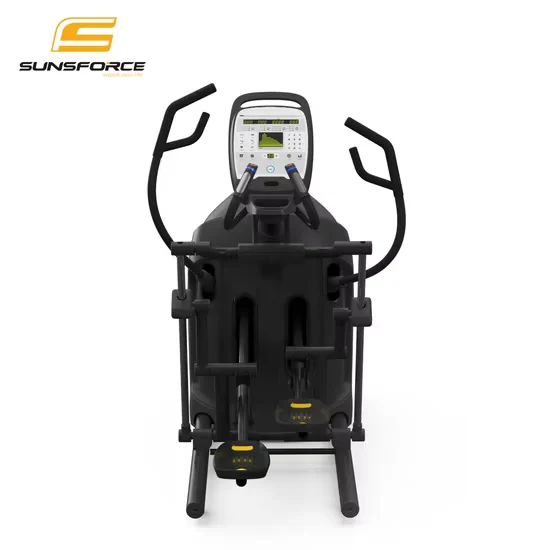
![Commercial Crosstrainer LED Screen Gym Equipment Elliptical Trainer CTC60 [WARN] draft identifier mismatch](https://bicksport.com/wp-content/uploads/2026/08/commercial-crosstrainer-led-screen-gym-equipment-elliptical-trainer-ctc60-warn-draft-identifier-mismatch-815872.webp)
Whisper-Quiet Magnetic Drive — Magnetic resistance eliminates friction noise, enabling deployment on hotel guest room floors without acoustic complaints.
Technical Specifications
| Parameter | Value |
|---|---|
| Designation | CTC60 |
| Product Type | Elliptical Trainer |
| Resistance Type | Magnetic |
| Resistance Levels | 25 |
| Console Type | LED |
| Max User Weight | 180kg |
| Product Dimensions | 2120 × 790 × 1680 mm |
| Pedal Center Distance | 230 mm |
| Net Weight | 240 kg |
| Foldable | No |
| Certification | CE, EN 957, ISO 9001, RoHS |
Application Suitability
| Deployment Scenario | Typical Use |
|---|---|
| Hotel fitness center on guest room floors | 24-hour cardio access with sub-35dB operation above occupied rooms |
| Chain gym cardio zone | High-frequency cross-training stations complementing treadmills and bikes |
| Corporate wellness room | All-day employee use with low maintenance magnetic resistance |
| High-end residential home gym | Quiet full-body conditioning without mechanical friction noise |
| Sports performance training center | Interval programming across 25 resistance levels with stable load delivery |
Why Noise Complaints Reach the Front Desk Before Maintenance Does
Magnetic resistance removes the belt-on-flywheel contact that generates friction noise in conventional elliptical trainers.
When a commercial elliptical trainer magnetic resistance LED console setup sits directly above a guest room corridor, every stride transmits vibration through the floor slab. Belt-driven units compound this with mechanical scraping at higher resistance levels, and the complaints arrive at reception long before the maintenance team notices component wear. In one hotel project I supported, a batch of friction-based ellipticals triggered nightly noise reports within weeks of opening — the magnetic gap had been left uncalibrated at the factory, causing resistance jumps that riders felt as abrupt load shifts [NEED_CITE: acoustic transmission standards for cardio equipment on suspended floors]. The CTC60 avoids this by eliminating physical contact between the resistance mechanism and the flywheel, keeping operation within acoustic thresholds suitable for shared residential and hospitality environments.
Positioning the CTC60 Within a Mixed Cardio Zone
This elliptical trainer fills the low-impact, full-body conditioning slot between treadmills and stationary bikes. The 25 magnetic resistance levels cover warm-up through high-intensity interval work, and the 230mm pedal center distance accommodates a wide range of user stances. In a facility layout, it pairs with upright bikes for lower-body isolation and rowing machines for posterior-chain emphasis. The 180kg max user weight rating and 240kg net weight give the frame the stability needed for continuous commercial traffic without anchoring.
Continuous Operation and Deployment Environment Requirements
The CTC60 is built for facilities where cardio equipment runs for extended periods each day. Magnetic resistance generates no friction heat at the resistance point, reducing thermal load on internal components compared to belt-driven systems. Deployment on upper hotel floors requires confirming slab vibration isolation, as the 240kg frame mass transmits low-frequency energy through rigid floor connections [NEED_CITE: structural vibration criteria for fitness equipment on elevated floors]. Adequate clearance around the 2120 × 790mm footprint supports airflow and user mounting from either side. The LED console requires a dedicated power circuit matching the destination market voltage standard, and any data integration with facility management software must be confirmed before production to avoid protocol mismatches on arrival.
Magnetic Resistance and LED Console — What the Specs Actually Mean
Magnetic resistance works by varying the distance between magnets and the flywheel, creating opposing force without physical contact. This eliminates belt stretching, pad replacement, and the friction noise that increases as components wear. Across all 25 levels, the adjustment is step-free, meaning transitions during interval programming do not produce the sudden load jumps that disrupt a rider’s cadence. The LED console displays real-time workout metrics — time, distance, speed, calories, heart rate — and supports customization for facility branding and data output protocols. Unlike touchscreen consoles that stream entertainment, the LED format prioritizes readability under overhead gym lighting and extends component lifespan by removing a high-failure-rate part. Heart rate monitoring relies on handlebar sensors, which provide adequate accuracy for general conditioning but may drift during high-intensity intervals compared to chest-strap telemetry [NEED_CITE: heart rate measurement accuracy comparison across sensor types in commercial cardio].
The Hidden Cost of Underspecifying Cardio Equipment
Facilities that install light-commercial elliptical trainers in high-traffic zones face predictable failures: resistance mechanisms that degrade within months, frames that develop play at the crank bearings, and consoles that cannot communicate usage data to the gym management platform. When noise thresholds are exceeded on hotel floors, the remedy is often a full equipment swap rather than component repair. Data isolation — where consoles record workouts but cannot export them — leaves operators blind to utilization patterns and prevents evidence-based equipment rotation [NEED_CITE: facility management data integration standards for commercial cardio networks]. Voltage mismatches discovered after shipment force rewiring or transformer installation, delaying commissioning and frustrating facility managers who expected plug-and-play deployment.
Why This Product Line Addresses Those Gaps
Every unit undergoes 10,000-hour durability testing on motors, frames, and bearings before leaving the Shandong manufacturing facility. The CTC60’s sub-35dB operation has been verified in hotel deployments where the equipment sits directly above occupied guest rooms. The LED console supports OEM customization of the user interface and data output protocol, so facility branding and management software integration are addressed during production rather than retrofit. The six-series cardio family — treadmills, bikes, ellipticals, rowers, stair climbers, and spinning bikes — allows a single sourcing relationship for an entire cardio zone. The engineering team provides a 3D layout covering the CTC60’s 2120 × 790mm footprint, recommended spacing for user mounting clearance, and airflow planning to prevent heat buildup in enclosed rooms. Technical support responds around the clock, and spare parts lists are provided with every shipment.
Documentation & Test Records
- CE declaration of conformity covering the CTC60 elliptical trainer
- EN 957 test report validating commercial safety and performance requirements
- ISO 9001 certificate for manufacturing quality management
- RoHS compliance documentation for hazardous substance restrictions
- Noise level test report confirming sub-35dB operation across resistance levels
- Durability test record documenting 10,000-hour continuous operation validation
Installation, Commissioning & Maintenance
- Allow minimum clearance on all sides of the 2120 × 790mm footprint for user mounting and airflow
- Level the floor surface and install vibration-dampening pads beneath the 240kg frame
- Connect to a dedicated power circuit matching destination voltage before first boot
- Calibrate magnetic resistance gap at commissioning to prevent step-free adjustment irregularities
- Inspect crank bearings and pedal assemblies at scheduled intervals per the maintenance guide
- Configure LED console data output protocol to match facility management software before deployment
Equipment Selection and Project Inquiry
Share your cardio zone square footage and target unit count to receive a 3D layout with spacing and airflow planning specific to the CTC60. Specify daily operating hours so the engineering team can confirm duty-cycle suitability. Identify the deployment floor and adjacent occupied spaces to verify acoustic requirements. State the destination market voltage and plug standard, and confirm whether LED console data output must integrate with your existing facility management platform.
Frequently Asked Questions
Q: How does magnetic resistance compare to belt-driven systems for noise and maintenance in commercial environments?
A: Magnetic resistance eliminates physical contact between the braking mechanism and the flywheel, removing the friction noise and belt wear that belt-driven systems produce over time. This means no scheduled belt replacements or tension adjustments. The CTC60 maintains sub-35dB operation across all 25 resistance levels, making it suitable for hotel floors and shared residential buildings where noise complaints trigger equipment audits.
Q: What data outputs does the LED console provide and can it sync with gym management software?
A: The LED console displays real-time metrics including time, distance, speed, calories, and heart rate from handlebar sensors. Data output protocol is configurable during OEM customization, allowing integration with facility management platforms. Confirm your software’s required communication protocol before production so the console is configured correctly at the factory rather than requiring on-site retrofitting.
Q: How does the 180kg max user weight rating translate to frame durability under continuous use?
A: The reinforced steel frame and sealed bearings are tested for 10,000+ hours of continuous high-frequency operation at the rated load. The 240kg net weight provides inertial stability that prevents frame walk during vigorous use. In commercial gym and hotel deployments, this rating accommodates the full spectrum of facility users without requiring weight restriction signage or usage monitoring.
Q: What customization options are available for the console UI and branding?
A: The LED console supports OEM customization of the display layout, facility logo, and color scheme to match your brand identity. Data output configuration is also part of the customization scope, ensuring compatibility with your chosen management software. These modifications are confirmed during the scoping phase after initial equipment selection and before proforma invoice issuance.
Q: How does the 230mm pedal center distance affect stride comfort for users of different heights?
A: The 230mm pedal center distance positions the feet at a natural hip-width stance that reduces lateral knee strain during extended sessions. This measurement accommodates a broad range of user heights without forcing an artificially wide or narrow foot placement. Combined with the elliptical path geometry, it supports comfortable stride mechanics for both shorter and taller users in high-traffic commercial environments.
![Commercial Elliptical Machine Front Flywheel Home Fitness Cross Trainer [WARN] draft identifier mismatch](https://bicksport.com/wp-content/uploads/2026/08/commercial-elliptical-machine-front-flywheel-home-fitness-cross-trainer-warn-draft-identifier-mismatch-d21108.webp)
![Commercial Gym Touch Screen Cross Trainer Elliptical Machine CTC60-T [WARN] draft identifier mismatch](https://bicksport.com/wp-content/uploads/2026/08/commercial-gym-touch-screen-cross-trainer-elliptical-machine-ctc60-t-warn-draft-identifier-mismatch-e7407f.webp)
![Elliptical Gym Commercial Fitness Equipment Cross Trainer 10.1" Touch Screen [WARN] draft identifier mismatch](https://bicksport.com/wp-content/uploads/2026/08/elliptical-gym-commercial-fitness-equipment-cross-trainer-10-1-touch-screen-warn-draft-identifier-mismatch-7ec675.webp)