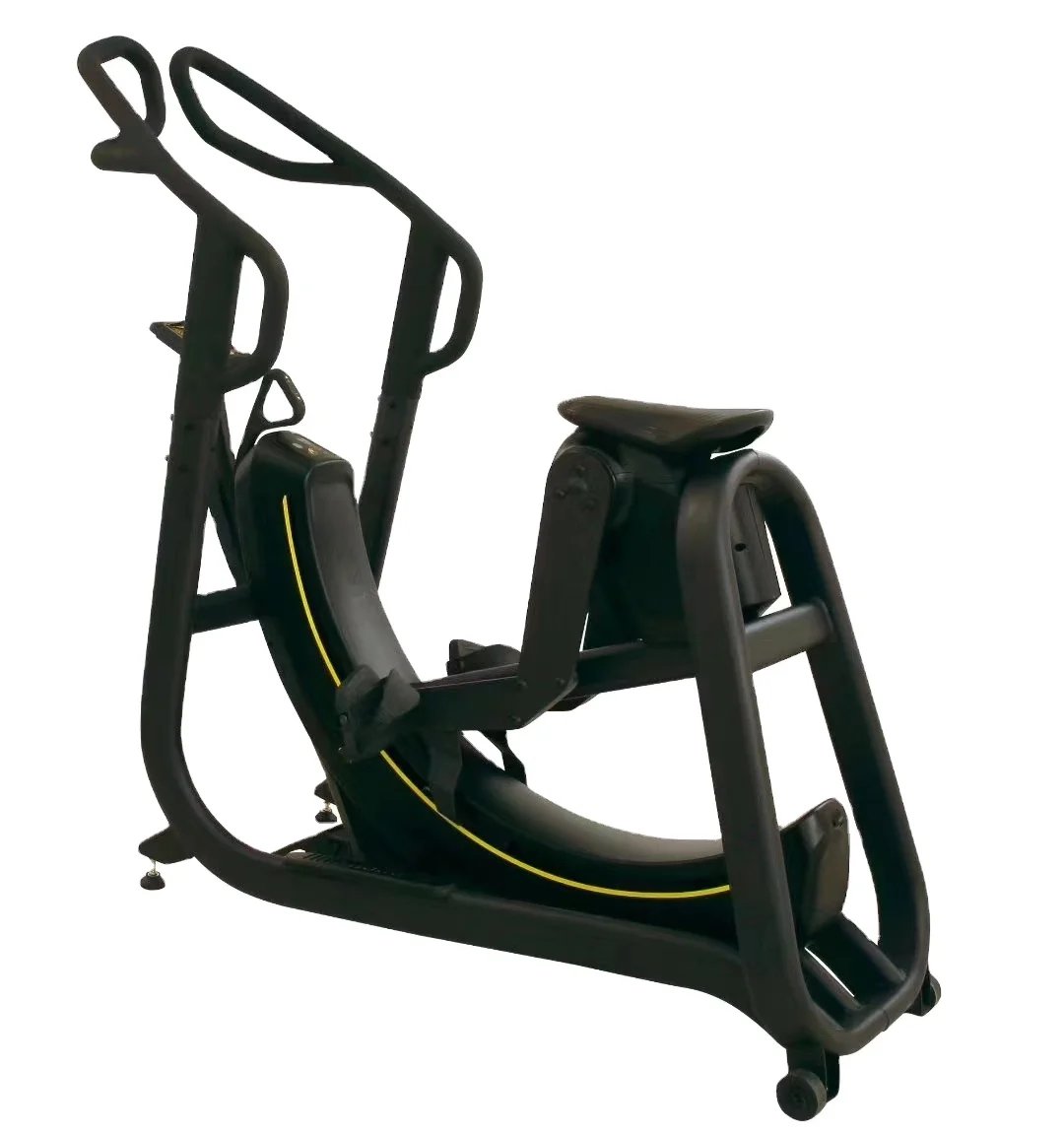
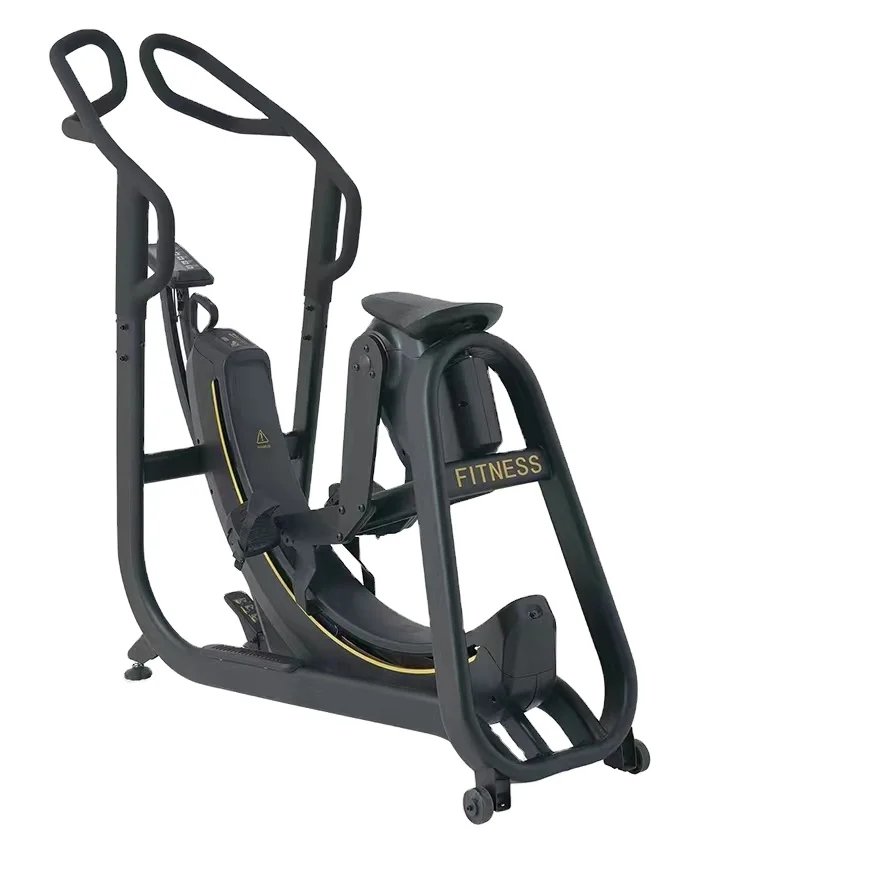
![Commercial Crosstrainer LED Screen Elliptical Machine for Gym [WARN] draft identifier mismatch](https://bicksport.com/wp-content/uploads/2026/08/commercial-crosstrainer-led-screen-elliptical-machine-for-gym-warn-draft-identifier-mismatch-4e0eba.webp)
Whisper-Quiet Magnetic Drive — CTC60 elliptical trainer operates below audible thresholds in guest-floor deployments, eliminating friction-based noise at the resistance source.
Technical Specifications
| Parameter | Value |
|---|---|
| Designation | CTC60 |
| Product Type | Elliptical Trainer |
| Resistance Type | Magnetic |
| Resistance Levels | 25 (1-25) |
| Drive Type | Belt |
| Max User Weight | 180kg |
| Console Type | LED |
| Product Dimensions | 2120×790×1680mm |
| Pedal Center Distance | 230mm |
| Net Weight | 240kg |
| Foldable | No |
| Certification | ISO 9001, CE, EN 957, RoHS |
Application Suitability
| Deployment Scenario | Typical Use |
|---|---|
| Hotel fitness center on guest room floors | 24-hour low-noise cardio access for overnight guests |
| Chain gym cardio zone | High-frequency cross-training between strength sessions |
| Corporate wellness room | Low-impact steady-state options for desk workers |
| High-end residential home gym | Shared-use elliptical for multi-unit residential buildings |
| Sports performance training center | Active recovery and low-impact conditioning for athletes |
Why Magnetic Resistance Eliminates the Noise Complaint Cycle Before It Starts
The CTC60 commercial elliptical trainer magnetic resistance LED console system removes physical contact from the resistance path, so there is no friction surface to degrade or generate audible wear over time.
Hotel operators frequently discover that cardio equipment noise migrates through floor slabs long before maintenance teams flag a problem. Belt-driven friction systems create compounding noise as contact surfaces wear, and by the time a guest files a complaint, the unit has already accumulated hours of degraded operation [NEED_CITE: acoustic transmission standards for fitness equipment on occupied floors]. The magnetic resistance architecture in the CTC60 avoids this entirely — resistance is generated through magnetic field proximity rather than mechanical contact, meaning the noise profile remains consistent from day one through the full duty cycle.
Where the CTC60 Fits in a Commercial Cardio Zone Layout
This elliptical trainer covers the full spectrum from low-intensity rehabilitation movement through high-resistance interval work across its 25-level magnetic resistance range. In a mixed cardio zone, it complements treadmills by offering a zero-impact alternative, and it pairs with rowing machines to give members both upper-body-dominant and lower-body-dominant options. The 240kg net weight anchors the unit during high-cadence use without requiring floor bolting, which simplifies reconfiguration. The 230mm pedal center distance accommodates a wide range of user stances. The commercial elliptical trainer magnetic resistance LED console setup suits moderate-to-high traffic zones where silent operation matters more than entertainment features.
Continuous Operation Demands and Deployment Environment Checks
Facilities running cardio zones 16 to 24 hours daily need equipment rated for sustained duty cycles, not peak-output specifications pulled from light-commercial catalogs. The CTC60’s magnetic drive system generates minimal internal heat compared to friction-based resistance, reducing thermal stress on surrounding components during back-to-back use [NEED_CITE: duty cycle classification for commercial magnetic resistance systems]. For upper-floor hotel deployments, the sub-35dB operating profile prevents structure-borne noise from reaching occupied rooms below. Adequate clearance on all sides supports natural convection around the frame. Deployment teams must verify local voltage and plug standards before the shipment leaves the factory — a mismatch discovered at the dock means weeks of downtime while adapters or rewiring are arranged. The LED console draws minimal power, but the circuit should still be dedicated to prevent voltage sag from adjacent heavy-draw equipment.
Decoding the Magnetic Resistance and Belt Drive Architecture
Magnetic resistance operates by adjusting the proximity between a magnet array and a metal flywheel, creating eddy-current braking without any surface contact. This is fundamentally different from friction-pad systems where felt or brake pads press against a rotating surface, generating heat, wear particles, and progressive noise increase. The 25-level resistance range on the CTC60 spans from minimal load suitable for post-injury rehabilitation protocols up to heavy resistance for high-intensity interval sessions, all without mechanical contact degradation. The belt drive transmits pedal motion to the flywheel with noticeably less noise than chain-drive alternatives and eliminates the periodic lubrication that chain systems require. The 240kg frame mass provides inertial stability — when a 180kg user drives high cadence, the frame absorbs oscillation rather than transmitting it to the floor. The LED console displays core training parameters including time, distance, speed, calories, and heart rate, giving facility operators a durable, low-failure-rate interface that avoids the component complexity of touchscreen panels in high-humidity environments.
The Hidden Cost of Specifying Below Commercial Duty Requirements
Purchasing teams that select ellipticals based on price-per-unit without verifying duty-cycle ratings often face cascading failures within the first year. Light-commercial friction systems deployed in 24-hour facilities show progressive noise increase within months, triggering guest complaints and eventually full-zone replacement. Inadequate frame mass leads to perceptible wobble during vigorous use, which members interpret as equipment failure even when the unit is technically functional [NEED_CITE: commercial cardio equipment failure patterns in high-frequency facilities]. Data from LED consoles that cannot interface with facility management software creates operational blind spots — usage patterns, peak hours, and maintenance triggers remain invisible to the operations team. Voltage mismatches discovered post-delivery force entire batches into storage while electrical adapters are sourced, delaying revenue-generating floor openings.
Why This Product Line Earns Its Place in the Specification
Every CTC60 unit undergoes verification for sub-35dB operation before leaving the assembly line, and the magnetic drive architecture is tested through 10,000 hours of continuous high-frequency cycling to confirm resistance consistency. The full six-series cardio family means a facility can source treadmills, bikes, rowers, and ellipticals from one production line with matched build quality and parts logistics. OEM customization extends to console UI branding, color, and logo application, so the equipment aligns with the operator’s visual identity without post-delivery modification. The 3D cardio zone layout service covers the CTC60’s 2120×790mm footprint, required clearance intervals, and airflow corridors so the unit is positioned for both user comfort and thermal management. Technical support remains available around the clock for commissioning and operational questions.
Documentation & Test Records
- CE declaration of conformity for European market deployment
- EN 957 test report covering safety and performance requirements
- ISO 9001 certificate confirming manufacturing quality management
- RoHS compliance documentation for restricted substance limits
- Noise level test report with readings at operational RPM ranges
- Durability test record covering 10,000-hour magnetic drive cycling
Installation, Commissioning & Maintenance
- Position the 2120×790mm frame with minimum clearance on all sides for user passage and service access
- Level the unit on a vibration-dampening pad to prevent structure-borne transmission to floors below
- Connect to a dedicated circuit matching the destination market voltage and plug standard
- Calibrate magnetic resistance at each of the 25 levels during first-power commissioning
- Inspect belt drive tension and alignment at scheduled intervals per the maintenance guide
- Clean LED console surface with non-abrasive solution to prevent sweat-corrosion buildup
Equipment Selection and Deployment Planning
Provide your cardio zone square footage and planned equipment count to receive a 3D layout addressing sightlines, member flow, and ventilation around each CTC60 placement. Specify daily operating hours so the duty-cycle profile can be matched to your facility’s traffic pattern. Identify the deployment floor and adjacent occupied spaces to confirm acoustic requirements. State the destination market voltage and plug type before proforma invoice generation. Indicate whether the LED console data output needs to integrate with your existing facility management software.
Frequently Asked Questions
Q: How does magnetic resistance compare to air resistance in noise output and maintenance needs?
A: Magnetic resistance generates resistance through field proximity without physical contact, producing minimal operational noise throughout the equipment lifespan. Air resistance systems use fan blades that create increasing wind noise at higher cadences and require periodic bearing inspection. For hotel floors and shared residential spaces where acoustic control is a priority, the CTC60’s magnetic system maintains a consistent noise profile that does not degrade with use.
Q: What functional boundary exists between the LED console and a touchscreen console?
A: The LED console on the CTC60 displays core training metrics including time, distance, speed, calories, and heart rate through a durable segmented display. Touchscreen consoles add entertainment streaming, virtual coaching overlays, and interactive course mapping. For facilities where members use personal devices for entertainment, the LED console provides reliable data capture with fewer electronic components that could require service.
Q: How does the 240kg net weight affect operational stability during use?
A: The substantial frame mass anchors the CTC60 during high-cadence intervals and heavy-resistance efforts, preventing the lateral oscillation that lighter frames exhibit under dynamic loading. Users up to 180kg experience a planted, consistent pedal feel without perceptible frame flex. This stability is critical in commercial environments where equipment must perform identically across thousands of sessions without loosening or drift.
Q: What is the relationship between the 230mm pedal center distance and stride comfort?
A: Pedal center distance, or Q-factor, determines how far apart the feet sit during the elliptical motion path. The 230mm measurement on the CTC60 positions the pedals close enough to replicate natural walking and running hip alignment, reducing lateral stress on knees and hips during extended sessions. This spacing accommodates a broad range of user body types without forcing an artificially wide or narrow stance.
![Commercial Elliptical Machine Front Flywheel Home Fitness Cross Trainer [WARN] draft identifier mismatch](https://bicksport.com/wp-content/uploads/2026/08/commercial-elliptical-machine-front-flywheel-home-fitness-cross-trainer-warn-draft-identifier-mismatch-d21108.webp)
![Elliptical Gym Commercial Fitness Equipment Cross Trainer 10.1" Touch Screen [WARN] draft identifier mismatch](https://bicksport.com/wp-content/uploads/2026/08/elliptical-gym-commercial-fitness-equipment-cross-trainer-10-1-touch-screen-warn-draft-identifier-mismatch-7ec675.webp)