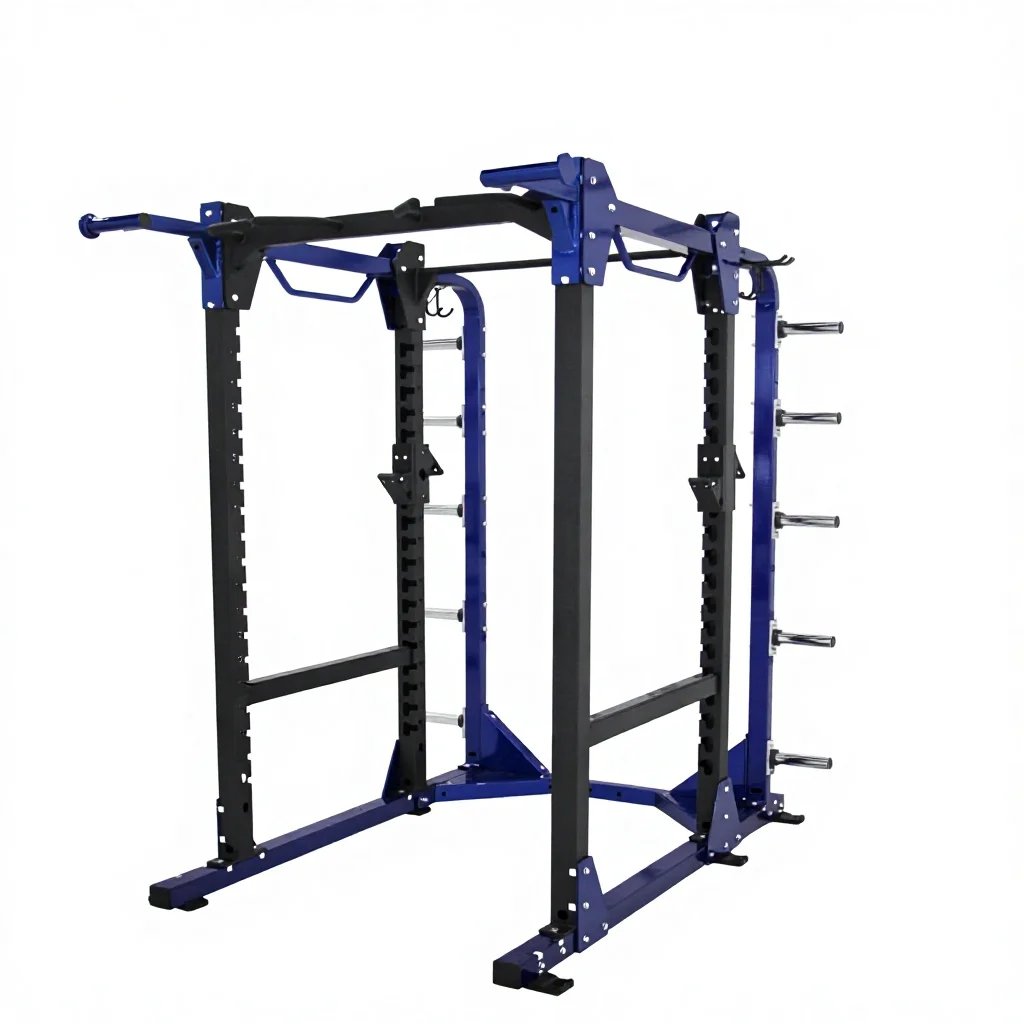
Whisper-Quiet Stability — Steel frame and multi-position locking mechanism engineered for high-frequency commercial adjustable bench use in noise-sensitive environments.
Technical Specifications
| Parameter | Value |
|---|---|
| Product Type | Adjustable Bench |
| Model NO. | 5069 |
| Material | Steel |
| Product Dimensions | 12156801070mm |
| Net Weight | 40kg |
| Exercise Part | Full Body / Adjustable Bench |
| Age Group | Adult |
| Gender | Unisex |
| Production Capacity | 500 PCS/Month |
| Certification | RoHS, ISO 9001, CE |
| Appliance | Gymnasium |
| HS Code | 9506911900 |
Application Suitability
| Deployment Scenario | Typical Use |
|---|---|
| Chain gym free weight zone | High-volume daily rotation between flat, incline, and decline pressing movements |
| Hotel fitness center on guest room floors | Compact footprint deployment where structural noise transmission is a primary concern |
| Corporate wellness room | Multi-user strength circuits requiring rapid adjustment between different exercise stations |
| High-end residential home gym | Dumbbell and barbell training in shared building spaces with strict acoustic limits |
| Sports performance training center | Athlete-specific accessory work demanding rigid back support under heavy external loads |
Why Structural Wobble Reaches the Trainer Before the Maintenance Team Does
Rigid locking pins and reinforced welds prevent the lateral shift that destroys member confidence.
When an adjustable bench shifts during a heavy dumbbell press, the spotter feels it first. In a busy commercial facility, a bench that rattles or sways under load gets pulled from the floor by trainers within a week, long before a formal maintenance ticket is filed. The structural integrity of the steel frame and the precision of the adjustment mechanism dictate whether a commercial adjustable bench steel frame gym deployment survives the first six months of continuous use or becomes a liability [NEED_CITE: EN 957 requirements for commercial strength equipment stability].
Positioning Within the Free Weight Zone Layout
The adjustable bench covers the essential flat, incline, and decline angles required for pressing and isolation movements, occupying a footprint that allows placement between dumbbell racks and plate-loaded stations. In a typical commercial floor plan, these units complement squat racks and cable crossovers by providing the primary horizontal and angled work surfaces. The 12156801070mm dimensions allow for adequate member clearance on three sides, which is critical when spotters need unobstructed access. The steel construction supports a wide range of user body weights without frame deflection, ensuring the commercial adjustable bench steel frame gym unit remains stable whether used for light rehabilitation sets or maximal strength testing.
Continuous Load Cycles and Floor Deployment Constraints
A commercial free weight zone operates near capacity during peak hours, meaning an adjustable bench may be adjusted and loaded dozens of times per day. The steel frame and net weight of 40kg provide a stable base that resists tipping when users shift weight abruptly, but floor leveling remains essential to prevent one corner from lifting under asymmetric loads. In hotel fitness centers located on upper floors, the 40kg mass helps dampen vibration transmission compared to lighter aluminum alternatives, though rubber isolation mats are still recommended to manage impact noise from dropped dumbbells [NEED_CITE: structural vibration transmission standards for fitness equipment on suspended floors]. Power requirements are nonexistent for this manual adjustment design, eliminating electrical infrastructure constraints, but the deployment area must account for the full extension length plus safety clearance for dumbbell arcs.
Decoding the Steel Frame and Adjustment Mechanism Specs
The 40kg net weight indicates a substantial steel gauge thickness in the main load-bearing members, which is the primary determinant of long-term rigidity under repeated heavy loading. Unlike home-grade benches that use thin-walled tubing and plastic bushings, this commercial adjustable bench steel frame gym specification points to a welded box-section or heavy-gauge round tube construction that resists the torsional forces generated during unilateral dumbbell work. The multi-position adjustment ladder, typically a pop-pin or pull-knob mechanism, must engage positively into welded gussets or precision-drilled holes to prevent the backrest from slipping under load. The 1215mm length provides adequate support for tall users in full decline positions, while the 1070mm maximum height accommodates steep incline angles for shoulder pressing. The absence of complex hydraulic or gas-spring adjustment systems means maintenance is limited to periodic inspection of the locking pins and weld integrity, which aligns with the operational reality of high-volume facilities where maintenance windows are brief.
The Hidden Cost of Compromised Frame Gauge and Locking Precision
Procurement decisions driven by initial unit cost often result in benches with thinner steel walls that develop permanent deformation within the first year of commercial use. The backrest support arm bends under repeated heavy loading, creating a visible sag that members interpret as structural failure. Locking pins that rely on friction rather than positive mechanical engagement gradually wear, leading to dangerous slippage during inclined pressing movements. In a chain gym environment, this results in entire batches of benches being pulled from circulation simultaneously, creating a capital replacement crisis rather than a planned refresh cycle [NEED_CITE: commercial fitness equipment lifecycle cost analysis]. The 40kg net weight of this unit serves as a proxy indicator for the material mass that prevents these failure modes, whereas lighter units almost invariably signal compromised gauge thickness in critical load paths.
Why This Product Line Addresses Facility-Level Pain Points
The sub-35dB operational target that defines our cardio engineering extends to the free weight zone, where structural rigidity directly correlates with noise generation from equipment movement and load shifts. The 10,000-hour durability testing protocol applied to motors and bearings is mirrored in the cyclic load testing of adjustment mechanisms and weld joints on this adjustable bench. Full OEM/ODM capability means the frame color, upholstery specification, and even the adjustment mechanism style can be matched to facility branding and operational preferences without disrupting production timelines. The 3D cardio zone layout service we provide includes sightline and member flow analysis for the free weight area, ensuring this commercial adjustable bench steel frame gym deployment integrates with rack placement and dumbbell storage to minimize congestion. The 24/7 technical support response covers structural warranty claims and mechanism troubleshooting, preventing a single failed unit from creating a cascade of member complaints. The complete six-series equipment family allows facilities to source both cardio and strength support equipment from a single manufacturing partner, simplifying logistics and warranty administration.
Documentation & Test Records
- CE declaration of conformity verifying compliance with European safety directives for stationary training equipment
- EN 957 test report documenting static load capacity and stability requirements for the adjustable bench frame
- ISO 9001 certificate confirming quality management system adherence throughout the steel fabrication and assembly process
- RoHS compliance documentation ensuring restricted substance limits are met in all frame coatings and upholstery materials
- Durability test record showing cyclic adjustment mechanism performance over the rated operational lifespan
- Weld inspection report and surface treatment specification for the steel frame corrosion protection system
Installation, Commissioning & Maintenance
- Verify the 1215*680mm footprint allows minimum 600mm clearance on all sides for safe dumbbell movement arcs
- Level the steel frame base using adjustable feet or shims to prevent racking and uneven load distribution during use
- Inspect all locking pins and adjustment ladder engagement points before placing the bench into member-accessible service
- Check upholstery fasteners and backrest pad attachment bolts quarterly to maintain rigid surface contact
- Clean vinyl or leather surfaces with pH-neutral solutions to prevent sweat-induced degradation of the padding material
- Document any frame weld cracks or adjustment mechanism play immediately and remove the unit from service until repaired
Inquiry Guidance for Facility Equipment Specification
Provide the total free weight zone square footage and planned dumbbell rack layout to receive a 3D placement plan that optimizes member flow and spotter access around each adjustable bench. Specify the anticipated daily user volume and peak-hour occupancy to confirm the 40kg steel frame specification matches the deployment intensity. Clarify whether the installation is on a ground-level slab or suspended floor to determine if additional vibration isolation measures are required for noise-sensitive adjacent spaces. Indicate any specific upholstery color or frame finish requirements to align the commercial adjustable bench steel frame gym units with existing facility branding standards.
Frequently Asked Questions
Q: What structural differences separate this commercial bench from residential-grade alternatives?
A: Residential benches typically use thinner gauge steel tubing and lighter locking mechanisms rated for intermittent personal use. This unit’s 40kg net weight reflects heavier steel sections and reinforced weld joints designed to withstand the continuous loading cycles and diverse user population of commercial environments. The adjustment mechanism is engineered for thousands of positive engagements without the wear-induced slippage common in lighter units.
Q: How does the 40kg net weight relate to load capacity and stability?
A: The mass indicates substantial material in the primary load-bearing frame members, which directly correlates with resistance to bending and torsional flex under heavy external loads. A heavier steel frame also lowers the center of gravity and increases the force required to tip or shift the bench during aggressive movements, providing the stability that spotters and users require in commercial training settings.
Q: What adjustment angles are available and how do they match training requirements?
A: The multi-position ladder allows selection of flat, incline, and decline angles to accommodate pressing, fly, and isolation movements across different muscle groups. The specific number of discrete positions determines the granularity of angle selection, enabling precise alignment with exercise biomechanics while maintaining the positive mechanical lock required for safe loaded training.
Q: How does upholstery density affect durability in a high-traffic facility?
A: High-density foam padding resists compression set and maintains surface support over years of continuous use, whereas low-density materials break down rapidly under commercial loads. The vinyl or leather c* repeated user contact, as upholstery degradation creates both member comfort complaints and hygiene concerns that impact facility reputation.
Q: What layout considerations apply when deploying multiple benches in a free weight zone?
A: Adequate lateral spacing between units prevents dumbbell arcs from overlapping during simultaneous use, while longitudinal clearance ensures spotters can access the head end of the bench without obstruction. Sightline planning should orient benches to allow trainers to monitor form across the zone, and placement relative to dumbbell racks should minimize member travel distance with loaded equipment.
![Multi Function Strength Gym Equipment Full Rack Machine for Commercial Gyms [WARN] draft identifier mismatch](https://bicksport.com/wp-content/uploads/2026/08/multi-function-strength-gym-equipment-full-rack-machine-for-commercial-gyms-warn-draft-identifier-mismatch-242e98.webp)