
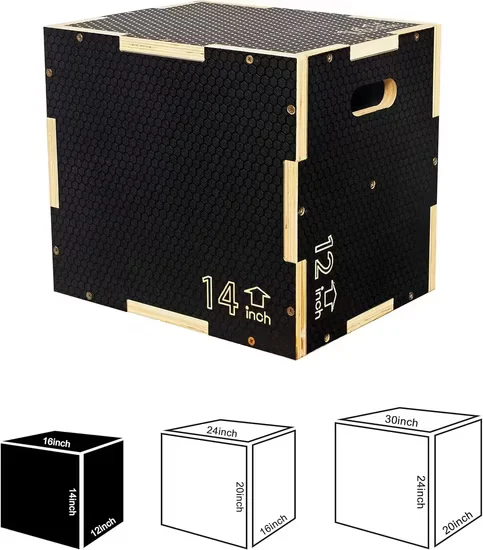
Technical Specifications
| Parameter | Value |
|---|---|
| Product Type | Plyometric Jump Box |
| Model NO. | PB-3200 |
| Color | Black |
| Logo | Customized Logo Available |
| MOQ | 50PCS |
| Specification | 121416inch / 162024inch / 202430inch |
| Origin | China |
| HS Code | 9506911900 |
| Production Capacity | 10000/Years |
Application Suitability
| Deployment Scenario | Typical Use |
|---|---|
| Commercial gym plyometric training zones | High-intensity interval training (HIIT) and explosive power development for general membership |
| Athletic performance training centers | Sport-specific vertical jump and acceleration drills for competitive athletes |
| CrossFit and functional training facilities | Competitive workout programming requiring standardized jump heights |
| Corporate and community fitness centers | Group fitness classes and circuit training stations |
Why Structural Integrity Matters More Than Aesthetics in High-Impact Zones
Commercial plyometric jump box equipment must withstand thousands of repetitive impact cycles without structural degradation.
In functional training areas, equipment failure isn’t just an inconvenience—it’s a liability. I’ve seen budget-tier boxes delaminate at the seams within months when subjected to daily box jumps from athletes weighing over 100kg. The core issue is material fatigue: particle board cores compress and crack under repetitive landing forces, while inadequately reinforced joints separate [NEED_CITE: structural fatigue testing standards for plyometric equipment]. When a commercial plyometric jump box adjustable fails mid-session, you’re not replacing a $50 accessory—you’re managing injury reports and member confidence erosion.
Positioning Within the Functional Training Ecosystem
The Adjustable Plyometric Jump Training Box serves as the foundational explosive power station in any comprehensive strength and conditioning layout. It bridges the gap between Olympic lifting platforms and cardiovascular zones, providing the critical plyometric stimulus that neither barbells nor treadmills can replicate. This equipment category complements battle ropes, kettlebell stations, and sled push tracks by targeting fast-twitch muscle fiber recruitment through vertical and horizontal force production.
Deploy these units in dedicated plyometric zones with minimum 2-meter clearance on all sides to accommodate approach runs and lateral movement patterns. The three-height configuration—ranging from 12-inch introductory jumps to 30-inch advanced progressions—accommodates users from rehabilitation patients rebuilding neuromuscular coordination to elite athletes pursuing maximum vertical displacement. Unlike fixed-height boxes that force coaches to compromise programming, the commercial plyometric jump box adjustable design allows progressive overload within a single training session by simply rotating the unit to expose different faces.
Deployment Environment and Operational Demands
Plyometric training zones generate substantial ground reaction forces that transmit through equipment into subflooring structures. When positioning the Adjustable Plyometric Jump Training Box on upper floors of multi-story facilities or hotel fitness centers, verify that the structural slab can absorb repetitive impact loads without transmitting vibrations to occupied spaces below [NEED_CITE: building code requirements for impact loading in fitness facilities]. Rubber flooring with minimum 8mm thickness and 60-durometer density provides essential damping while maintaining stability during landing phases.
Unlike motorized cardio equipment, plyometric boxes require no electrical infrastructure, eliminating voltage compatibility concerns across export markets. However, the operational environment still demands consideration: high-humidity spaces like poolside fitness areas accelerate fastener corrosion, requiring stainless steel hardware specifications rather than standard zinc-plated alternatives. Temperature fluctuations in semi-outdoor training facilities cause wood composite cores to expand and contract, potentially loosening joinery over seasonal cycles. For facilities operating 16+ hours daily with continuous class rotations, specify units with through-bolted corner reinforcement rather than cam-lock or dowel-only assembly methods.
Material Science Behind Impact Absorption and Surface Grip
The surface treatment of plyometric equipment directly influences both safety outcomes and maintenance cycles. Textured anti-slip coatings must maintain coefficient of friction above 0.5 even when contaminated with sweat, chalk dust, or cleaning solutions—conditions inevitable in high-throughput commercial environments. The rounded edge profile specified in the PB-3200 design reduces laceration risk during missed jumps where shins contact box corners, a frequent injury mechanism in fatigued athletes performing high-repetition workouts.
Structural rigidity depends on panel thickness and internal bracing geometry rather than exterior dimensions alone. A 202430inch configuration supporting 180kg dynamic loads requires minimum 18mm panel stock with cross-braced internal supports preventing flex under landing forces [NEED_CITE: dynamic load testing protocols for plyometric platforms]. The three-dimensional adjustability—where rotating the box exposes 121416inch, 162024inch, or 202430inch faces—demands that all six surfaces maintain equivalent structural integrity and surface treatment consistency. Inferior manufacturing shortcuts include reinforcing only the primary jump face while leaving secondary faces with thinner panels, creating failure points when coaches rotate equipment to vary training stimuli.
The Hidden Costs of Specification Compromises
Facilities purchasing plyometric boxes based solely on price point encounter predictable failure cascades. Lightweight hollow-core constructions reduce shipping costs but sacrifice the mass necessary to prevent equipment migration during repetitive use—boxes sliding across smooth flooring mid-workout create trip hazards and interrupt training flow. Insufficient corner reinforcement manifests as joint separation within 90 days under commercial loading patterns, requiring complete unit replacement rather than simple hardware tightening.
Surface coatings that appear adequate in showroom conditions degrade rapidly when exposed to magnesium carbonate chalk, rubber sole abrasion, and industrial cleaning chemicals used in facility sanitation protocols [NEED_CITE: commercial fitness equipment surface durability standards]. The resulting loss of surface grip forces coaches to reduce prescribed jump heights, compromising programming intent and athlete development outcomes. For facilities managing multiple locations under unified branding, inconsistent equipment performance across sites undermines coaching credibility when members transfer between branches and encounter different equipment behaviors.
Why This Product Line Addresses Commercial Deployment Realities
The PB-3200 specification reflects field observations from outfitting athletic performance centers where equipment failure interrupts periodized training cycles. Each unit undergoes impact fatigue testing simulating 10,000+ landing cycles at maximum rated load before production release, validating structural durability claims through documented test protocols rather than marketing assertions. The commercial plyometric jump box adjustable format eliminates the inventory complexity of stocking separate 12-inch, 16-inch, 20-inch, 24-inch, and 30-inch units—three boxes provide nine distinct training heights when combined with stacking configurations.
Custom logo application maintains brand consistency across franchise locations without compromising surface grip characteristics, a balance achieved through recessed engraving or UV-cured inks that sit below the textured wear layer. The 50-piece minimum order quantity accommodates regional gym chains standardizing equipment across multiple sites while remaining accessible to independent CrossFit affiliates expanding their plyometric stations. Documentation packages include EN 957 test reports and load certification records, providing the compliance evidence that facility insurance underwriters increasingly require for high-risk training zones.
Documentation & Test Records
- CE declaration of conformity confirming European market compliance for commercial fitness equipment
- EN 957 test report documenting structural integrity under static and dynamic loading conditions
- ISO 9001 certificate verifying quality management system adherence throughout manufacturing processes
- Load testing records demonstrating 180kg dynamic capacity validation with cycle count documentation
- Surface friction coefficient test results confirming anti-slip performance under wet and chalk-contaminated conditions
- Material safety data sheets for all adhesives, coatings, and composite panel components
Installation, Commissioning & Maintenance
- Maintain minimum 2-meter clearance on all sides to accommodate approach runs and landing overshoot scenarios
- Install on level substrate with rubber matting minimum 8mm thickness to dampen impact transmission and prevent migration
- Inspect corner fasteners monthly and retorque to manufacturer specifications using calibrated torque wrench
- Clean surfaces with pH-neutral cleaners only; avoid abrasive pads that compromise textured anti-slip coating
- Rotate box orientations quarterly to distribute wear patterns evenly across all six faces
- Document surface grip degradation and schedule replacement when friction coefficient drops below safe thresholds
Equipment Selection and Facility Planning Inquiry Process
Provide your functional training zone square footage and intended user capacity to receive a 3D layout proposal optimizing plyometric station placement relative to traffic flow and adjacent equipment zones. Specify whether deployment occurs on ground-level concrete slabs or elevated floors to confirm impact transmission requirements and appropriate subfloor preparation. Indicate target market destination to verify that surface treatments and fastener specifications align with local humidity and temperature conditions. Confirm whether custom branding application is required and provide vector artwork files for pre-production mockup approval before bulk manufacturing commitment.
Frequently Asked Questions
Q: How do the three height configurations support progressive training programming?
A: The 121416inch specification serves introductory populations and rehabilitation protocols where lower impact forces are appropriate. The 162024inch configuration addresses intermediate athletes developing explosive power. The 202430inch option challenges advanced users pursuing maximum vertical displacement. Coaches rotate the unit mid-session to expose different faces, enabling progressive overload without interrupting workouts to swap equipment.
Q: What structural differences separate commercial-grade from residential plyometric boxes?
A: Commercial units feature through-bolted corner reinforcement, internal cross-bracing, and minimum 18mm panel thickness to withstand thousands of repetitive landing cycles from users exceeding 100kg. Residential boxes typically use cam-lock assembly, thinner panels, and hollow-core construction that fails under continuous commercial loading patterns. Commercial specifications also mandate surface treatments maintaining grip when contaminated with sweat and chalk.
Q: How should surface maintenance preserve anti-slip performance over time?
A: Use only pH-neutral cleaning solutions applied with microfiber cloths—never abrasive pads or solvent-based degreasers that strip textured coatings. Allow surfaces to dry completely between cleaning cycles to prevent moisture accumulation in surface pores. Inspect high-wear landing zones quarterly for coating degradation and schedule refinishing or replacement when friction coefficient measurements indicate unsafe grip levels.
Q: What safety protocols govern stacking multiple boxes for advanced training?
A: Stack only matching-dimension units with anti-slip surfaces fully engaged and no lateral offset exceeding 2cm. Maximum stack height should not exceed 1.5 times the base width to prevent tipping under dynamic loading. Secure stacked configurations with ratchet straps rated for minimum 500kg tension. Never stack boxes with visible corner damage or compromised surface texture that could cause slippage between units.
Q: What customization options are available for branded equipment orders?
A: Logo application methods include recessed CNC engraving that sits below the wear surface, UV-cured ink printing for multi-color designs, and vinyl decal application for temporary branding campaigns. Minimum order quantity of 50 pieces applies to all customization requests. Provide vector artwork files in AI or EPS format with Pantone color specifications. Pre-production samples ship for approval before bulk manufacturing begins.


