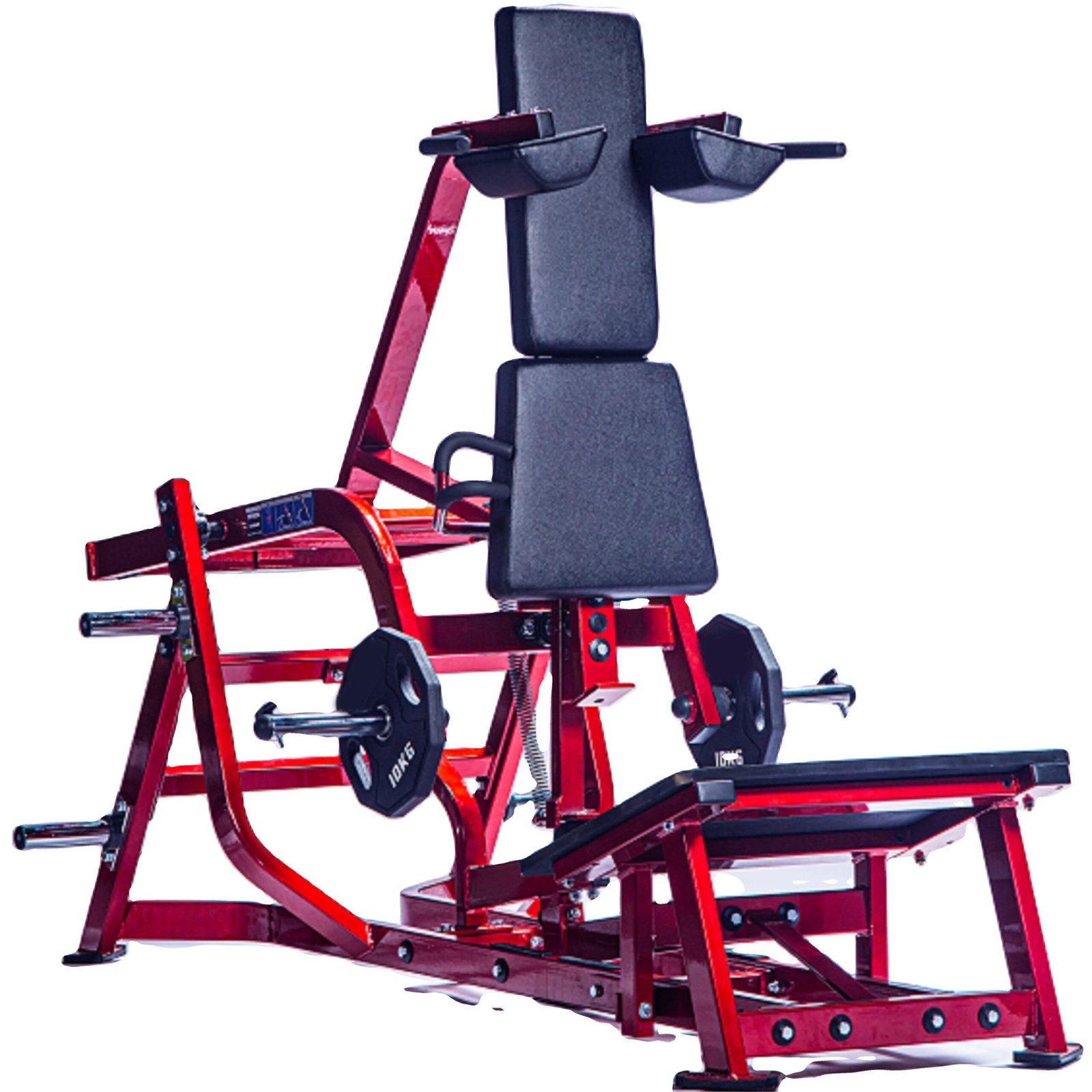
10,000-Hour Steel Integrity — Reinforced manual resistance frame tested for continuous high-frequency cycles in professional gym environments without motor dependency.
Technical Specifications
| Parameter | Value |
|---|---|
| Designation | 2019 Hammer Strength Seated DIP 14 |
| Product Type | Seated Dip Station |
| Model NO. | OS — H5014 |
| Exercise Part | Back |
| Resistance Type | Manual |
| Frame Material | Steel |
| Net Weight | 163kg |
| Product Dimensions | 1833 × 1492 × 1110 mm |
| Main Frame Color | Customizable per order |
| Cushion Color | Customizable per order |
| Foldable | Yes |
| Power Source | Manual |
| Target Facility | Professional Gym and Club |
| Age Group | Adult |
| Gender | Unisex |
| Certification | ISO 9001, CE |
Application Suitability
| Deployment Scenario | Typical Use |
|---|---|
| Chain gym strength zone | High-frequency dip and press training during peak membership hours |
| Hotel fitness center | Durable bodyweight station for guests requiring upper-body compound movements |
| Corporate wellness room | Low-maintenance steel station for employee strength circuits |
| Community fitness center | Multi-user dip training across varied fitness levels throughout the day |
| Sports performance training center | Controlled bodyweight resistance for athlete upper-body conditioning |
Why Manual Resistance Stations Outlast Motorized Equipment in Commercial Floors
No motor means no motor failure — the most common commercial strength equipment breakdown simply does not exist here.
Gym operators who specify motorized or cable-pulley strength stations learn a hard lesson within the first eighteen months of continuous public use. Electronic components drift, cables fray under repetitive loading, and tension systems lose calibration across hundreds of daily sessions [NEED_CITE: failure rate comparison between manual and motorized commercial strength equipment]. Every failed actuator or snapped cable translates to member complaints, floor downtime, and technician call-outs that compound into annual maintenance budgets few operators forecast accurately. A manual commercial seated dip station strength training unit eliminates those failure points entirely — the resistance comes from the user’s own bodyweight and gravity, delivered through a reinforced steel linkage that either holds or does not. There is no circuit board to reflash, no potentiometer to recalibrate, and no software update to deploy across a fleet of machines.
Positioning Within the Strength Training Floor Layout
This seated dip station occupies a specific niche in commercial strength zones: compound upper-body pressing movements for intermediate to advanced trainees. It complements lat pulldown and chest press stations by targeting triceps, anterior deltoids, and lower pectorals through a vertical pressing arc that free weights alone cannot replicate safely at volume. The 1833 × 1492 mm footprint positions it between plate-loaded machines and functional rigs, suitable for mid-traffic placement where members transition between isolation and compound work. The manual resistance design means users self-select intensity through bodyweight and optional external loading, accommodating a broad demographic from rehabilitation-focused members to competitive athletes. A commercial seated dip station strength training setup like this integrates into any facility’s pressing circuit without requiring adjacent electrical outlets or data cable routing.
Continuous Use Demands on a Non-Motorized Steel Frame
A manual strength station deployed in a busy commercial gym may see hundreds of loading cycles daily — each repetition generating force multiples of the user’s bodyweight through the pivot points, seat rails, and base welds [NEED_CITE: load cycle standards for commercial manual strength equipment under EN 957]. Unlike cardio machines where motor heat and belt friction dictate maintenance intervals, the durability equation here centers on steel fatigue, bearing wear, and cushion compression. The 163kg net weight provides a stable base that resists walking or tipping during aggressive pressing sets, but it also means the frame must absorb and distribute those dynamic loads without developing stress fractures at welded joints. Facilities operating sixteen or more hours daily should schedule quarterly inspections of pivot bearings and seat rail fasteners, even though the absence of electrical systems removes the largest category of unplanned downtime. Deployment on upper floors requires attention to impact noise transmission — rubber isolation pads beneath the base feet mitigate structure-borne vibration that travels through concrete slabs to occupied spaces below.
Interpreting the Manual Resistance and Steel Construction Specifications
The manual power source designation indicates that resistance is generated entirely by the user’s bodyweight acting through a lever-arm mechanism, not by magnetic brakes, pneumatic cylinders, or electric servos. This matters commercially because it defines the maintenance profile: there are no windings to overheat, no magnets to demagnetize, and no air seals to leak over thousands of cycles. The steel frame construction at 163kg signals a wall thickness and cross-section profile designed for repeated high-load use — lighter frames in the 80–100kg range typically indicate tubing gauges suited to home or light-commercial duty cycles that fatigue prematurely under continuous public facility schedules. The foldable specification means the unit can be collapsed for relocation or deep-cleaning access, a practical consideration for facilities that periodically reconfigure floor layouts. Customizable frame and cushion colors allow operators to maintain visual branding consistency across a mixed equipment fleet without paying premium surcharges for small-batch powder coating runs. The commercial seated dip station strength training category generally operates within a narrow engineering envelope where frame mass, pivot geometry, and weld quality separate units that survive five years of public abuse from those requiring replacement within eighteen months.
The Hidden Costs of Underspecified Strength Stations
Facilities that procure strength stations based on brochure weight ratings alone, without verifying weld inspection records and cyclic load testing, routinely discover the gap between marketing claims and operational reality after the warranty period expires [NEED_CITE: commercial strength equipment warranty exclusion clauses for high-frequency use]. Frames that flex under heavy users develop fatigue cracks at stress concentration points — typically where vertical uprights meet horizontal base members. Cushion foam that compresses beyond recovery within months generates member complaints about seat discomfort and drives traffic away from the station entirely. Color coatings applied without proper surface preparation chip and flake under sweat exposure and cleaning chemicals, making equipment look years older than its actual age. These are not cosmetic issues; they are member retention and liability issues that compound silently until a formal incident report forces a wholesale equipment review.
Why This Product Line Addresses Commercial Deployment Realities
The 10,000-hour durability testing protocol applied across this product family extends to pivot bearings and frame welds on manual stations, not just motors on cardio units. The sub-35dB operational benchmark — critical for cardio equipment on hotel guest room floors — translates here to the absence of mechanical noise from squeaking pivots or rattling fasteners during use. Full OEM and ODM capability means frame color, cushion upholstery, and even console interfaces on companion cardio equipment can be specified to a single facility standard in one purchase order. The six-series cardio family covering treadmills through rowers allows operators to source an entire floor from one engineering team, ensuring consistent sightlines and airflow clearance when planning strength-to-cardio transition zones. Free 3D layout planning accounts for the 1833 × 1492 mm footprint of this dip station alongside adjacent equipment, maintaining safe clearance envelopes and member flow paths that generic floor plans overlook. Round-the-clock technical support covers mechanical troubleshooting for manual stations with the same response commitment as electronically complex cardio units.
Documentation & Test Records
- CE declaration of conformity for this seated dip station model
- EN 957 test report covering structural integrity and safety
- ISO 9001 certificate for manufacturing quality management
- Noise level test record for mechanical operation under load
- Durability test record documenting cyclic load performance
- Spare parts list with pivot bearing and cushion replacement SKUs
Installation, Commissioning & Maintenance
- Allow clearance around the 1833 × 1492 mm footprint for safe user entry and exit
- Install rubber isolation pads beneath base feet to dampen structure-borne vibration on upper floors
- Level the steel frame on cured concrete to prevent uneven load distribution across welds
- Inspect pivot bearings quarterly and lubricate per schedule under high-frequency commercial use
- Wipe cushion upholstery with pH-neutral cleaner daily to prevent foam degradation from sweat salts
- Verify foldable latch mechanism engagement after each relocation or deep-cleaning cycle
Request a Deployment Specification Review
Provide your strength zone square footage and planned equipment list to receive a 3D layout that accounts for this station’s footprint, safe clearance zones, and member flow paths. Specify your facility’s daily operating hours so we can confirm the frame and bearing specifications match your usage intensity. Confirm your deployment floor level and adjacent occupied spaces to determine whether vibration isolation pads are required. State your target market so that all hardware and documentation align with local compliance requirements.
Frequently Asked Questions
Q: What weight capacity does this seated dip station support?
A: The commercial seated dip station strength training unit features a reinforced steel frame with a 163kg net weight, engineered for high-frequency use by adult users across a broad weight range. The frame and pivot system are tested under EN 957 standards for structural load integrity. For specific maximum user weight ratings tied to your facility’s demographic profile, request the technical specification sheet during the inquiry stage.
Q: How does manual resistance compare to motorized strength equipment for commercial use?
A: Manual resistance eliminates motors, circuit boards, and electronic sensors — the components most prone to failure under continuous public use. This commercial seated dip station strength training design relies on the user’s bodyweight through a steel lever mechanism, removing electrical maintenance entirely. Facilities operating extended hours benefit from fewer unplanned downtime events and lower annual service costs compared to motorized or cable-pulley alternatives requiring regular calibration.
Q: Can frame and cushion colors be customized to match facility branding?
A: Both the main frame powder coating and cushion upholstery color are fully customizable per order. This OEM capability allows facility operators to maintain consistent visual branding across an entire equipment fleet without third-party refinishing. Color specifications are confirmed during the quotation stage, and minimum order quantities for custom color runs are provided alongside the commercial seated dip station strength training pricing.
Q: What maintenance is required for steel frame strength equipment?
A: Maintenance centers on quarterly pivot bearing inspection, fastener torque verification, and daily cushion cleaning with pH-neutral solutions. The manual resistance system eliminates motor servicing, belt tensioning, and electronic calibration required by motorized stations. Facilities with high daily traffic should establish a lubrication schedule for moving joints and monitor cushion foam density for compression recovery to maintain user comfort over extended deployment periods.
Q: How does integrated design optimize gym floor space planning?
A: The 1833 × 1492 × 1110 mm footprint consolidates dip training into a single dedicated station, freeing adjacent floor area from free-weight benches and spotter-dependent setups. The foldable feature allows the unit to be collapsed for reconfiguration or deep cleaning. When combined with 3D layout planning, this commercial seated dip station strength training unit can be positioned to maintain safe clearance envelopes while maximizing the number of exercise stations within a given square footage.