

Continuous Operation Validation — Each unit endures 10,000 hours of high-frequency load testing before shipping, matching commercial gym duty cycles rather than light-duty benchmarks.
Technical Specifications
| Parameter | Value |
|---|---|
| Product Type | Multi Station Strength Equipment |
| Designation | PX-1067 |
| Exercise Part | Arm |
| Material | Steel |
| Tube Thickness | 3mm |
| Product Dimensions | 517x462x231cm |
| Net Weight | 1100kg |
| Frame Color | Customized (Yellow, Black, Orange, Pink etc.) |
| Cushion Color | Customized (Yellow, Black, Orange, Pink etc.) |
| Age Group | Adult |
| Gender | Unisex |
| OEM/ODM | Available |
| Certification | CE |
| HS Code | 9506911900 |
Application Suitability
| Deployment Scenario | Typical Use |
|---|---|
| Commercial gymnasium strength zone | High-volume arm training across diverse membership bases |
| Community fitness center | Durable shared equipment for unsupervised daily access |
| Corporate wellness room | Compact multi-user station for employee fitness programs |
| Sports performance training center | Targeted arm conditioning under coach-supervised sessions |
| Hotel fitness center | Reliable strength station for guest self-service use |
Why Frame Thickness Decides Equipment Lifespan in Commercial Gyms
A 3mm steel tube frame resists deformation under loads that bend standard 2mm constructions.
Walk through any gym running light-duty strength stations and you will spot the telltale signs: wobbly uprights, misaligned pulleys, and cushions tearing away from warped mounting plates. In facilities open sixteen or more hours daily, commercial multi station strength equipment arm training rigs built on thinner steel accumulate micro-deformations that compound into structural failure long before the expected service window closes [NEED_CITE: structural fatigue thresholds in commercial gym strength frames]. Facility operators end up pulling units off the floor for welding repairs or full replacement, costing more than specifying heavier-gauge steel from the start.
Where This Arm Station Fits Within the Strength Floor Layout
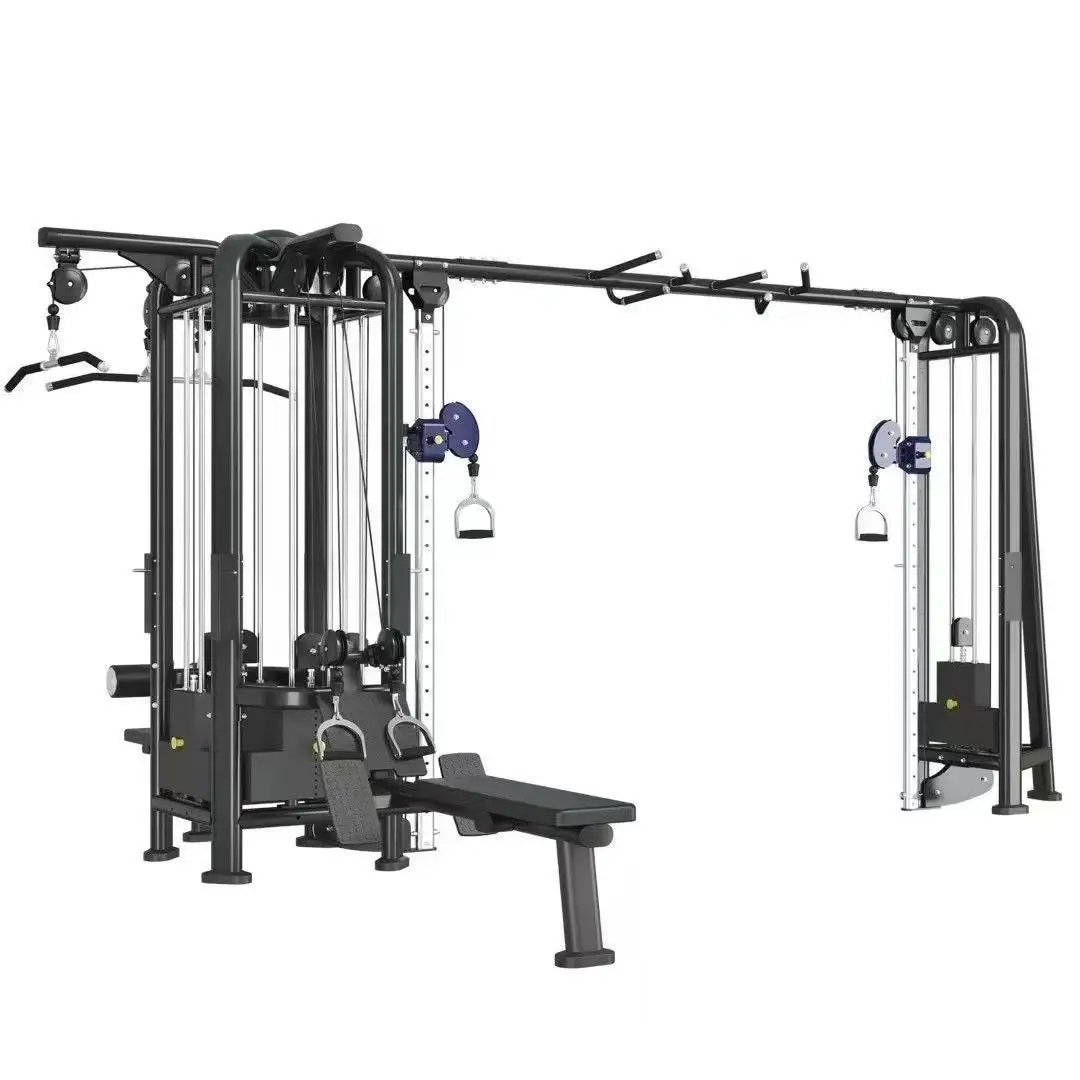
The PX-1067 occupies a dedicated footprint within the free weight and plate-loaded zone, anchoring the arm training section alongside cable crossover machines and plate-loaded curl stations. It serves high-repetition isolation work and controlled pressing movements, complementing compound movement stations such as squat racks and chest press benches. This commercial multi station strength equipment arm training unit accommodates users across a wide anthropometric range thanks to its 517x462x231cm frame envelope and adjustable contact points. Facilities deploying this station typically place it against a wall or divider to maintain clear traffic lanes on the main floor path.
Continuous Load Demands and Facility Environment Requirements
Commercial gyms running sixteen-hour days place strength stations under near-constant loading cycles, with peak occupancy windows stacking multiple users per hour on the same frame. The 1100kg net weight anchors the PX-1067 against lateral shift during explosive arm movements, but installers must still verify floor levelness and place high-density rubber matting beneath the base plates to prevent micro-migration on polished concrete [NEED_CITE: EN 957 requirements for commercial strength equipment stability]. Adequate overhead clearance and lateral spacing between adjacent stations must account for full range-of-motion clearance plus safe passage. Facilities in humid climates should specify powder-coated finishes matched to their brand palette to resist corrosion at weld joints.
Reading the Steel Gauge and Weight Specifications
The 3mm tube thickness refers to wall gauge across the primary structural members, not decorative shrouds or accessory mounts. In commercial strength equipment, moving from standard 2mm to 3mm wall thickness substantially increases the moment of inertia of each tube section, meaning the frame deflects far less under identical bending loads. The 1100kg net weight reflects the cumulative mass of reinforced steel sections, selectorized weight stacks, and hardware — this mass functions as passive stability rather than requiring bolted floor anchors in most installations. Steel selection and welding quality together determine whether a frame maintains pulley alignment after thousands of loading cycles, and misaligned pulleys accelerate cable wear and create uneven resistance feel [NEED_CITE: cable wear acceleration from pulley misalignment in multi station frames].
The Hidden Cost of Underspecifying Frame Gauge
Operators who select lighter-gauge frames to reduce upfront procurement costs typically encounter premature structural issues within the first high-traffic year. Pulley brackets shift out of plane, creating cable routing friction that degrades the smooth resistance curve users expect from commercial multi station strength equipment arm training stations. Cushion mounting plates pull away from deformed uprights, exposing raw edges and creating pinch points. These failures cascade: members notice the degraded feel, usage drops, and the station becomes dead floor space while maintenance waits on replacement parts that may no longer match the original specification.
What Sets This Product Line Apart for Facility Buyers
Biketon Sport engineers each unit around the 10,000-hour continuous operation benchmark, cycling the PX-1067 through repetitive loading protocols that simulate years of high-frequency gym use before the frame leaves the Shandong facility. The six-series cardio and strength portfolio allows operators to source an entire floor from a single manufacturing partner, simplifying warranty management and spare parts logistics. Full OEM and ODM capability extends to frame and cushion color matching, so the commercial multi station strength equipment arm training station aligns with facility branding without requiring third-party refinishing. Free 3D layout planning accounts for the PX-1067 footprint, adjacent station clearances, and member traffic flow to position the unit where it receives consistent usage rather than becoming isolated in a dead corner.
Documentation & Test Records
- CE declaration of conformity covering the complete PX-1067 assembly
- EN 957 test report validating structural and safety performance
- ISO 9001 certificate for the manufacturing quality system
- Noise and vibration assessment for multi station operation
- Durability test record documenting 10,000-hour load cycling
- Spare parts list with component-level ordering codes
Installation, Commissioning & Maintenance
- Verify floor levelness across the 517x462cm footprint before anchoring base plates
- Allow minimum clearance on all sides for full arm range of motion and user passage
- Inspect cable routing and pulley alignment after the first week of member use
- Lubricate selectorized weight stack guide rods per the maintenance schedule
- Wipe down steel frame and cushions daily to prevent sweat-induced corrosion
- Torque-check all structural fasteners at quarterly intervals
Planning Your Strength Zone Equipment Selection
Share your strength floor area and existing equipment list so our team can generate a 3D layout showing PX-1067 placement relative to traffic flow and adjacent stations. Specify your facility daily operating hours so we can confirm the frame gauge and weight stack capacity match your expected usage density. Identify your target market voltage and plug standards if the station includes any electronic counting or display modules. Confirm whether frame and cushion color customization is required to align with your brand standards before we issue the proforma invoice.
Frequently Asked Questions
Q: What is the advantage of 3mm steel tubing in commercial strength equipment?
A: The 3mm wall thickness provides substantially greater resistance to bending and torsional deformation compared to thinner-gauge frames. In high-traffic commercial environments where equipment faces continuous loading, this extra material maintains pulley alignment and structural geometry over extended service periods. Frames built on thinner tubing tend to develop micro-deformations that accelerate cable wear and degrade the resistance feel members expect.
Q: How does the 1100kg weight contribute to workout safety?
A: The substantial net weight anchors the station against lateral movement and tipping during explosive or high-force arm exercises. Users performing heavy pressing or pulling movements generate significant horizontal forces, and the mass of the steel frame absorbs these loads without requiring permanent floor anchoring in most installations. This passive stability protects both the active user and anyone passing nearby during peak gym hours.
Q: Can the frame and cushion colors be matched to our facility branding?
A: Yes, both the steel frame finish and cushion upholstery are available in customized colors including yellow, black, orange, pink, and other options to match your brand palette. This customization is handled during manufacturing rather than as a post-production refinishing step, ensuring consistent coating adhesion and long-term durability. OEM and ODM orders can specify exact color references to maintain visual consistency across an entire equipment order.
Q: Is this multi station equipment suitable for community fitness centers with unsupervised access?
A: The PX-1067 is designed for both commercial gymnasium and community fitness center deployments, including environments where users operate equipment without direct supervision. The heavy-gauge steel construction and stable base resist misuse and accidental overloading, while the CE certification confirms compliance with European safety standards for shared-use fitness environments. Facility operators should still post clear usage instructions and perform regular visual inspections as part of standard maintenance routines.
![Commercial Multi Function Smith Machine Power Rack Gym Equipment [WARN] draft identifier mismatch](https://bicksport.com/wp-content/uploads/2026/08/commercial-multi-function-smith-machine-power-rack-gym-equipment-warn-draft-identifier-mismatch-55d111.webp)

![Dual Pec Fly Power Cage Commercial Gym Strength Training Machine PX-1069 [WARN] draft identifier mismatch](https://bicksport.com/wp-content/uploads/2026/08/dual-pec-fly-power-cage-commercial-gym-strength-training-machine-px-1069-warn-draft-identifier-mismatch-c8a764.webp)