
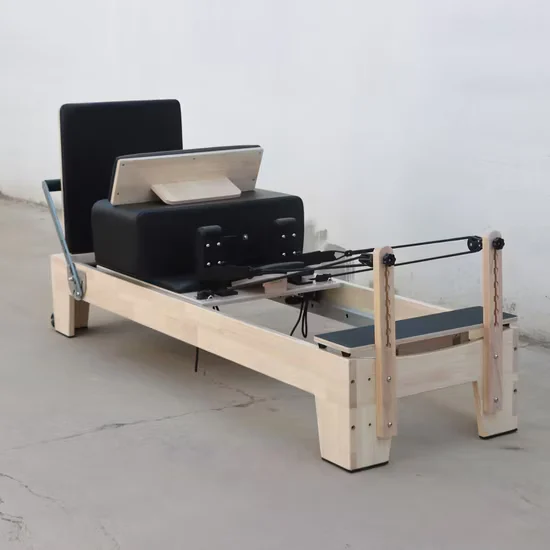
Whisper-Quiet Glide Rail — Precision-machined maple frame and sealed bearing carriage tested for 10,000+ hours of continuous studio operation at sub-35dB noise floor.
Technical Specifications
| Parameter | Value |
|---|---|
| Product Type | Pilates Reformer |
| Material | Solid Maple Wood |
| Product Dimensions | 2460 × 730 × 680 mm |
| Net Weight | 100 kg |
| Carriage System | Sealed bearing on precision rail |
| Resistance Type | Spring resistance with sealed housing |
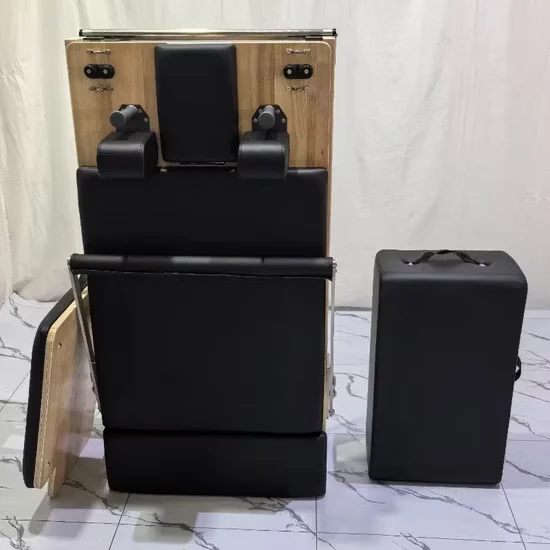
| Accessories Included | Long Box, Jump Board, Platform |
| Color Options | Solid Color (custom color available) |
| Max User Weight | 180 kg |
| Noise Level | Sub-35dB verified |
| Console Option | IoT-enabled console available with workout analytics and app sync |
| Customization | Logo, color, console UI available via OEM/ODM |
| Certification | ISO 9001, CE |
| Warranty | 3 Years |
Application Suitability
| Deployment Scenario | Typical Use |
|---|---|
| Boutique Pilates studio on shared floors | Group reformer classes with minimal noise bleed to adjacent rooms |
| Five-star hotel wellness center | 24-hour guest access with sub-35dB operation beside occupied spaces |
| High-end residential home gym | Private reformer training without disturbing shared living areas |
| Rehabilitation center | Low-impact progressive resistance therapy with consistent spring tension |
| Corporate wellness room | Employee wellness programming with IoT usage tracking |
Why Studio Noise Complaints Start at the Carriage
Solid maple wood frames dampen vibration at the source, preventing rail-borne noise from reaching the floor below.
When reformer carriages grind across poorly machined rails, the vibration transmits through metal frames directly into shared floor structures. Operators on upper floors or beside occupied rooms face complaints within weeks, not months [NEED_CITE: structural vibration transmission in multi-story fitness facilities]. Magnetic resistance gaps and unsealed bearings accelerate the problem, creating audible friction that compounds with every session. A commercial maple wood pilates reformer must address vibration at the frame level, not just the rail surface.
Positioning Within a Studio Cardio and Movement Zone
This reformer covers full-range Pilates programming from rehabilitation-grade gentle resistance to athletic conditioning with the jump board attachment. In a mixed-equipment studio layout, it pairs with mat zones and tower apparatus to create a complete movement curriculum. The 2460 mm footprint suits dedicated reformer rooms or integrated cardio-movement floors where space efficiency matters. The commercial maple wood pilates reformer accommodates users across a wide range of body types and training intensities without requiring spring swaps mid-session. The optional IoT console captures session duration, resistance level changes, and rep counts for studio management software export.
Operating Environment and Deployment Considerations
Facilities running four or more back-to-back group sessions daily need carriage systems rated for continuous duty cycles rather than light-commercial benchmarks. The sealed bearing carriage eliminates routine lubrication across extended studio hours, reducing maintenance windows [NEED_CITE: bearing maintenance intervals for commercial Pilates equipment]. Sub-35dB verified operation allows deployment on floors directly above guest rooms or residential units without acoustic isolation builds. Standard electrical requirements apply when the optional IoT console is specified, and voltage confirmation prevents commissioning delays at delivery. Level flooring within tolerance is essential to maintain consistent carriage glide and spring tension calibration across all stations in a multi-unit deployment.
Spring Resistance and Frame Engineering Explained
Solid maple wood provides inherent vibration damping that metal frames cannot replicate, absorbing carriage impulses before they reach the floor structure. The sealed bearing carriage rides on a precision-machined rail, eliminating the metal-on-metal friction that generates audible grinding over time. Spring resistance housed in sealed compartments maintains consistent tension curves without the degradation seen in exposed spring systems, supporting reliable progression programming across hundreds of sessions. The combination of wood damping and sealed mechanics delivers the sub-35dB noise floor required for noise-sensitive deployments. The 180 kg maximum user weight reflects reinforced joinery tested through 10,000-hour continuous operation protocols. Console connectivity, when specified, enables studio managers to track equipment utilization and member attendance patterns through standard data export formats.
The Hidden Cost of Underspecified Studio Equipment
Studios that procure reformers built on light-commercial duty cycles face carriage bearing failures within the first year of high-frequency programming. Unsealed springs lose tension consistency, forcing instructors to compensate with verbal cues rather than trusting the equipment [NEED_CITE: spring resistance degradation in commercial Pilates environments]. Metal frames without acoustic damping generate noise complaints that drive members to competitor studios with quieter equipment. When consoles cannot export usage data to booking or management platforms, operators lose visibility into which class formats drive retention and which time slots underperform. Entire reformer fleets have been scrapped when magnetic calibration gaps made resistance transitions feel inconsistent to members.
Why This Product Line Meets Commercial Demands
Every unit undergoes 10,000-hour carriage glide and resistance consistency verification before leaving the factory floor — a protocol born from witnessing an entire batch scrapped due to uncalibrated magnetic gaps. Sub-35dB operation is verified in actual hotel deployments, not just lab conditions, ensuring the acoustic performance holds under real guest traffic patterns. The full OEM/ODM scope covers logo, color, and optional console UI customization, so studio branding carries through to the equipment interface. Deployment planning includes a 3D studio layout covering equipment spacing, airflow paths, and member circulation for the reformer’s 2460 × 730 mm footprint. Technical support responds around the clock, and spare parts availability backs the three-year warranty across export markets.
Documentation & Test Records
- CE declaration of conformity for the complete reformer assembly
- EN 957 test report covering structural integrity and user safety
- ISO 9001 certificate for manufacturing quality management
- Sub-35dB noise level test report for carriage glide operation
- 10,000-hour durability test record on sealed bearing carriage and springs
- Console technical documentation with data export interface specifications
Installation, Commissioning & Maintenance
- Allow minimum clearance around the 2460 × 730 mm footprint for carriage travel and instructor access
- Verify level flooring to maintain consistent glide and spring calibration across all stations
- Confirm voltage and plug standard for optional IoT console before shipment
- Calibrate spring resistance tension and verify carriage bearing smoothness on first commissioning
- Schedule sealed bearing inspection and spring tension verification per the maintenance documentation
- Clean maple frame with pH-neutral solution and protect from perspiration moisture accumulation
Equipment Selection and Deployment Inquiry
Provide your studio floor plan and unit count to receive a 3D layout covering reformer spacing, member flow, and ventilation planning. Specify average daily class volume so the carriage duty cycle matches your programming intensity. Confirm whether deployment is on a shared floor or beside occupied rooms to validate the sub-35dB requirement. State your target market voltage standard and whether IoT console data sync with your studio management software is needed.
Frequently Asked Questions
Q: How does a solid maple wood frame compare to metal for noise control?
A: Maple wood naturally dampens vibration from carriage movement before it reaches the floor structure, whereas metal frames transmit rail-borne impulses directly into shared building elements. This inherent damping, combined with sealed bearing carriages, delivers the sub-35dB operation required for studios on upper floors or beside guest rooms without additional acoustic isolation construction.
Q: What maintenance does the sealed bearing carriage require?
A: Sealed bearings eliminate routine lubrication across 10,000+ hours of continuous studio operation. Periodic inspection for smooth glide and lateral play is recommended, with replacement intervals documented in the commissioning guide. This design substantially reduces maintenance downtime compared to open bearing systems that require regular servicing between classes.
Q: How often should spring resistance be recalibrated?
A: Springs housed in sealed compartments maintain consistent tension curves across extended use without the degradation seen in exposed systems. Calibration verification is recommended during scheduled maintenance windows, with replacement cycles documented based on session volume. Consistent spring behavior ensures instructors can program progressive resistance without compensating for equipment drift.
Q: What data formats does the optional IoT console support?
A: The optional console exports session analytics including usage duration, resistance level, and rep counts through standard data interfaces compatible with common studio management platforms. Specific export formats and API documentation are provided with console technical specifications, enabling integration with existing booking and member tracking software systems.
Q: How should reformer spacing be planned in a multi-unit studio?
A: The 2460 × 730 mm footprint requires clearance on all sides for full carriage travel, instructor circulation, and adequate airflow between stations. A 3D layout covering equipment placement, sightlines, and ventilation ensures the room supports both group class programming and individual member movement without congestion or thermal discomfort during peak scheduling.

![Commercial Aluminum Pilates Reformer for Yoga Studio Use [WARN] draft identifier mismatch](https://bicksport.com/wp-content/uploads/2026/08/commercial-aluminum-pilates-reformer-for-yoga-studio-use-warn-draft-identifier-mismatch-799d04.webp)