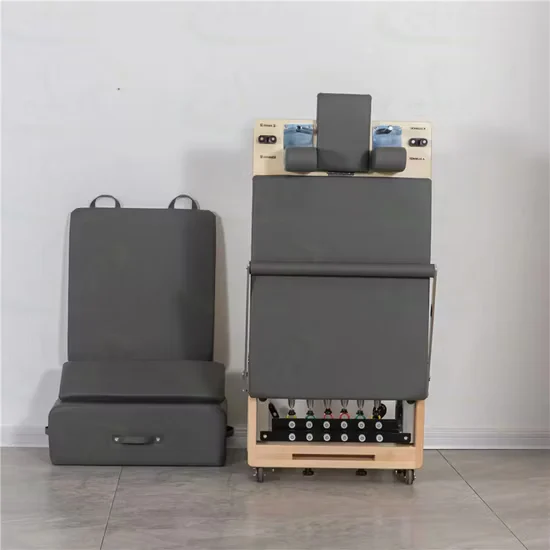
Silent Precision — Aluminium alloy frame with sealed bearings delivers sub-35dB operation for guest-room-floor deployments
Technical Specifications
| Parameter | Value |
|---|---|
| Product Type | Pilates Reformer |
| Designation | SRY-27 |
| Material | Aluminium Alloy |
| Color | Black |
| Accessory | Long Box / Jump Board / Platform |
| Product Dimensions | 2570 × 730 × 890 mm |
| Net Weight | 90 kg |
| Max User Weight | 180 kg |
| Resistance Type | Magnetic |
| Noise Level | < 35 dB |
| Durability Testing | 10,000 hours continuous operation |
| Certification | CE / EN 957 / ISO 9001 |
| Warranty | 3 Years |
| Customization | Available (Logo, Color) |
Application Suitability
| Deployment Scenario | Typical Use |
|---|---|
| Hotel fitness center on guest room floors | 24-hour access reformer sessions with zero noise transfer to adjacent rooms |
| Chain gym Pilates zone | High-frequency group and semi-private reformer classes throughout operating hours |
| High-end residential home gym | Daily personal practice with whisper-quiet carriage glide and compact footprint |
| Rehabilitation center | Controlled resistance progression for post-injury recovery protocols |
| Corporate wellness room | Employee midday sessions with quick turnover between users |
Why Studio Noise Complaints Arrive Before the Instructor Notices
Sealed bearing carriages and magnetic resistance eliminate friction noise at the source.
When a Pilates reformer sits one floor below sleeping guests, every carriage roll transmits structure-borne vibration through the slab. Traditional steel-frame reformers with open bearings develop play over months of use, and that metallic rattle becomes the first thing the front desk hears about at 6 AM [NEED_CITE: structure-borne noise transmission in multi-floor fitness deployments]. I once watched an entire batch of equipment get pulled back from a five-star property because the carriage noise bled through the ceiling overnight. That failure shaped how we approach every aluminium joint and bearing seal on the commercial aluminium alloy Pilates reformer with half tower — because the complaint always reaches management before maintenance catches the wear.
Where This Reformer Fits in a Mixed-Modality Cardio and Recovery Zone
This unit covers the full resistance spectrum from light rehabilitation pulls to athletic-level spring loading, bridging the gap between active recovery stations and high-intensity strength zones. In a layered equipment plan, it pairs with rowing ergometers for posterior-chain endurance and complements stair climbers by addressing the mobility and core-stability work those machines omit. The 2570 mm length accommodates users across a wide height range, and the half tower adds vertical resistance vectors for standing and kneeling sequences without expanding the footprint.
Continuous Operation Demands and Acoustic Isolation in Multi-Story Facilities
A reformer in a 24-hour hotel gym cycles through users at unpredictable intervals, meaning the carriage and spring assembly never get a true rest period. The aluminium alloy frame resists the micro-flex that steel develops after thousands of load cycles, preserving alignment and keeping noise below the threshold that triggers guest complaints [NEED_CITE: material fatigue comparison for aluminium versus steel in fitness equipment frames]. Floor deployment matters: placing the SRY-27 on a suspended slab requires vibration-damping mats beneath all four feet, and the 2570 × 730 mm footprint needs clearance on both long sides for safe boarding and spring changes. Voltage is not a concern here, but adequate ventilation around the half tower uprights prevents sweat moisture from accumulating on the magnetic components.
Magnetic Resistance and Aluminium Frame Engineering Explained
Magnetic resistance operates without physical contact between the braking element and the flywheel surface, which means there is no friction pad to wear, no dust to clean, and no squeal as the carriage reverses direction. The aluminium alloy frame provides a stiffness-to-weight ratio that keeps the 90 kg unit stable under dynamic loads while remaining repositionable by a single technician during floor plan adjustments. Sealed bearings at every carriage wheel prevent contamination from chalk dust and sweat aerosol that pervade studio environments, extending service intervals considerably compared to open-bearing designs. The half tower adds a second plane of resistance through independently adjustable pulley heights, enabling exercises that a flat reformer alone cannot deliver [NEED_CITE: EN 957 structural load testing requirements for Pilates-type equipment]. Each accessory — Long Box, Jump Board, Platform — mounts to standardized anchor points machined into the extruded aluminium rail rather than bolted after-market, preserving alignment under repeated impact.
The Hidden Cost of Specifying Below Commercial Duty Cycle
A reformer built for home use will survive a few hundred hours before carriage wheels develop flat spots and springs lose calibration, but a studio running six classes daily accumulates those hours in weeks. The resulting noise escalation triggers member complaints, and the facility replaces the entire fleet prematurely. Data-blind setups compound the problem: without usage tracking, managers cannot identify which units are overloaded and which sit idle, leading to uneven wear across the floor [NEED_CITE: preventive maintenance intervals for commercial Pilates studio equipment]. When the frame is mild steel instead of aluminium alloy, corrosion from humidity and sweat eventually seizes adjustment mechanisms, turning a quick spring change into a service call.
Why This Product Line Earns Its Place in the Facility Plan
Every unit ships with noise testing that confirms sub-35dB operation, a figure that matters when the room above contains sleeping guests. The 10,000-hour durability protocol runs the carriage through continuous reciprocating cycles at maximum load, validating bearing and spring life before the unit reaches your floor. OEM options cover logo placement, frame color, and accessory bundling so the reformer visually matches your brand identity. Because this Pilates Reformer belongs to a six-series cardio family, you can source treadmills, ellipticals, and climbers from the same engineering team, keeping maintenance documentation and spare parts logistics unified. The 3D layout service accounts for the SRY-27’s 2570 × 730 mm footprint, instructor sightlines, and member traffic flow around each station.
Documentation & Test Records
- CE declaration of conformity specific to the SRY-27 configuration
- EN 957 structural and safety test report for Pilates-type equipment
- ISO 9001 quality management certificate covering production
- Noise level test report confirming sub-35dB carriage operation
- 10,000-hour durability test record for bearings and springs
- Accessory mounting and spare parts list with exploded diagrams
Installation, Commissioning & Maintenance
- Allocate 2570 × 730 mm floor space plus 600 mm clearance on each long side for safe user access
- Place vibration-damping pads under all four feet when deploying on suspended concrete slabs
- Level the aluminium frame using adjustable foot cups before first carriage run
- Inspect sealed bearings and wipe rails every 500 operating hours to maintain sub-35dB glide
- Verify spring tension calibration quarterly with a certified force gauge
- Clean magnetic resistance components with dry cloth only; avoid solvent contact
Requesting the Right Configuration for Your Deployment
Share your studio square footage and intended unit count to receive a 3D layout that positions each commercial aluminium alloy Pilates reformer with half tower for optimal instructor sightlines and member flow. Specify your daily class schedule so we can confirm the carriage duty cycle matches your throughput. Tell us which floor you are deploying on and what occupies the rooms directly above and below so we can recommend isolation measures. Indicate whether you need OEM color matching or logo application on the frame and accessories.
Frequently Asked Questions
Q: What advantages does the aluminium alloy frame offer over steel for commercial deployment?
A: Aluminium alloy resists corrosion from studio humidity and sweat aerosol, maintaining smooth adjustment mechanisms over years of use. The material provides high stiffness at lower weight, keeping the 90 kg unit stable during dynamic exercises while allowing a single technician to reposition it during layout changes. Unlike mild steel, it does not develop micro-flex fatigue that causes carriage misalignment and noise escalation.
Q: How does the magnetic resistance system maintain silence over thousands of hours?
A: Magnetic resistance generates braking force without physical contact between components, eliminating friction pad wear and the associated squeal that develops in friction-based systems. The sealed bearing carriage wheels prevent dust and moisture ingress, preserving smooth glide. This combination keeps the commercial aluminium alloy Pilates reformer with half tower operating below 35 dB throughout its tested lifespan.
Q: Can the console or tracking system integrate with our facility management software?
A: The SRY-27 is a mechanically focused Pilates Reformer and does not include an electronic console. For facilities requiring usage analytics, external IoT sensors can be mounted to the frame to track session counts and duration. We provide technical documentation on mounting points and power routing if your integrator needs to add third-party tracking hardware.
Q: What OEM customization options are available for branding consistency?
A: Logo application is available on the aluminium frame and accessories, and custom frame colors can be matched to your studio palette. Accessory bundles including the Long Box, Jump Board, and Platform can be configured per order. Minimum order quantities are flexible, and all custom units undergo the same noise and durability testing as standard production.
Q: What maintenance intervals does the reformer require under daily commercial use?
A: Wipe down rails and inspect sealed bearings every 500 operating hours. Check spring tension calibration quarterly using a certified force gauge. Clean magnetic resistance components with a dry cloth only, and avoid solvents that could degrade the protective coating. Full bearing replacement is not expected within the warranty period under normal studio-class usage.