

Whisper-Quiet Deployment — Motor-driven stepmill engineered for sub-35dB operation, validated across hotel guest floors and residential fitness zones.
Technical Specifications
| Parameter | Value |
|---|---|
| Designation | SQ1017 |
| Product Type | Stair Climber |
| Function | Electric |
| Drive Type | Motor Drive |
| Running Velocity | 15 – 164 steps/min |
| Mains Input | AC220V±10% / AC110V±10% |
| Step Area | 560 × 235 × 220 mm |
| OSD | Time, Climb, Calories, Steps, Heart Rate |
| Material | Steel Pipe + PP Plastic |
| Folded | Unfolded |
| Product Dimensions | 1450 × 820 × 2080 mm |
| Net Weight | 148 kg |
| Age | Adult |
| Color | Black |
| Certification | CE |
| Condition | New |
| Customized | Available |
Application Suitability
| Deployment Scenario | Typical Use |
|---|---|
| Hotel fitness center on guest room floors | 24-hour guest access with whisper-quiet motor drive minimizing corridor noise transfer |
| Chain gym cardio zone | Continuous high-frequency climbing sessions during peak evening hours |
| Corporate wellness room | Mid-day interval stepping for employees returning between meetings |
| High-end residential home gym | Multi-member household use with vibration-dampened steel frame |
| Sports performance training center | Athlete conditioning with real-time heart rate and step-rate tracking |
Why Noise Complaints Reach the Front Desk Before Maintenance Does
Motor-drive stair climbers must stay below the ambient noise floor of occupied rooms.
When a light-duty stair stepper gets pushed through six hours of continuous guest use on a hotel fitness floor, the first signal operators receive is not a maintenance ticket — it is a noise complaint from the room directly below. The friction between chain drives, worn bearings, and unbalanced step mechanisms produces low-frequency vibration that travels through concrete slabs far more efficiently than airborne sound [NEED_CITE: noise propagation through structural slabs in commercial fitness deployments]. Facility managers replacing burned-out motors after peak seasons learn quickly that the commercial stair climber motor drive SQ1017 addresses the root cause, not the symptom.
Where the SQ1017 Fits in a Mixed Cardio Layout
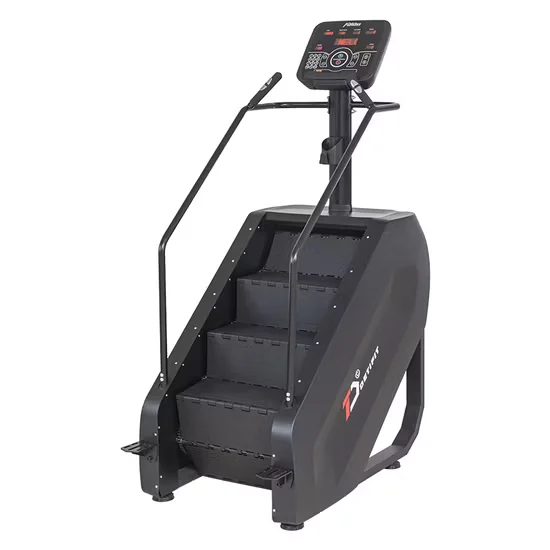
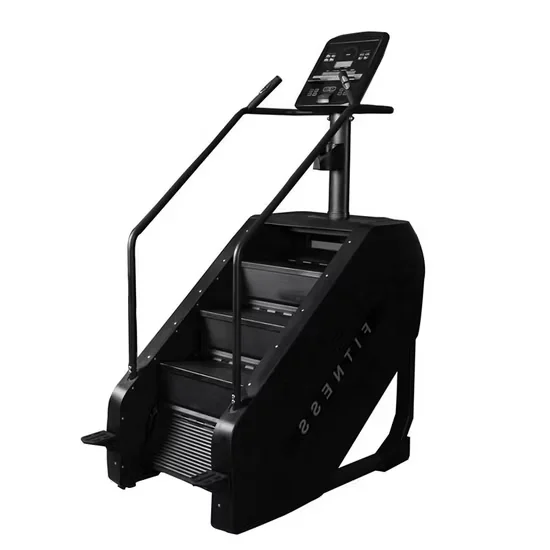
This commercial stair climber motor drive SQ1017 fills the high-intensity vertical climbing niche within a full cardio zone, complementing steady-state treadmills and low-impact ellipticals. The 15–164 steps/min velocity range supports everything from slow recovery stepping to sustained athletic climb intervals. The 1450 × 820 mm footprint fits standard cardio-zone spacing grids alongside adjacent machines, and the 148 kg unfolded steel frame anchors the unit firmly without supplemental floor bolting on level concrete.
Continuous Duty, Ventilation, and Electrical Readiness
Facilities running cardio equipment eight or more hours daily need motors rated for continuous duty rather than peak output, because thermal buildup inside a sealed housing degrades insulation over time [NEED_CITE: motor thermal classification standards for continuous-duty commercial cardio]. The dual-voltage input (AC220V / AC110V) on the SQ1017 eliminates post-arrival electrical mismatches that delay commissioning on international projects. Adequate clearance behind and above the 2080 mm frame height allows convective heat dissipation, while a level subfloor with a vibration isolation pad prevents resonant hum from transferring through structural slabs to occupied spaces below.
Decoding the Motor Drive and Step Mechanism
Motor-drive stair climbers use an electric motor to turn the step carousel at a regulated cadence, eliminating the chain tension adjustments and lubrication cycles that chain-driven or belt-driven alternatives require. The SQ1017 covers 15 to 164 steps per minute, giving operators a wide programmable range from rehabilitation-speed stepping to athletic conditioning. The steel-pipe frame provides the structural mass needed to absorb the cyclic loading of high-step-rate use without flexing or generating sympathetic vibration. The console OSD captures time, climb, calories, steps, and heart rate in real time — data fields that facility management platforms can log when the correct interface documentation is in place [NEED_CITE: console data protocol compatibility with facility management systems].
What Specification Compromise Costs After Installation
Deploying a stair climber with a motor rated only for intermittent home use inside a gym that runs sixteen hours a day leads to thermal shutdowns within the first season. Operators who skip the noise-level test report discover the problem only after guests complain and equipment is pulled from the floor for replacement. Voltage mismatches found after a container arrives force expensive on-site transformer installations or return shipments. Each of these failures traces back to a specification that was not verified before the purchase order was signed [NEED_CITE: cost impact of specification mismatches in international fitness equipment procurement].
Why This Product Line Earns Its Place on the Floor
Every SQ1017 unit undergoes the same 10,000-hour durability protocol applied across the full six-series cardio family, covering motors, frames, and sealed bearings under continuous high-frequency load. Sub-35dB operation is verified with acoustic testing before shipment, so hotel and residential deployers can place the machine on guest floors with documented confidence. The IoT-ready console supports workout analytics and app sync, and OEM customization extends to the console UI, color, and branding. A complimentary 3D cardio-zone layout accounts for the SQ1017’s 1450 × 820 mm footprint, sightlines, member flow, and HVAC airflow planning — and 24/7 technical support backs every installation.
Documentation & Test Records
- CE declaration of conformity covering the SQ1017 motor-drive stair climber
- EN 957 test report verifying structural and safety performance
- ISO 9001 certificate for the manufacturing quality system
- Noise level test report confirming sub-35dB acoustic output
- 10,000-hour durability test record on motor, frame, and bearings
- Console technical documentation with data interface specifications
Installation, Commissioning & Maintenance
- Allow minimum clearance around the 1450 × 820 mm footprint for safe user entry and exit
- Place on a level subfloor with a vibration isolation pad to prevent structural noise transfer
- Connect to a dedicated circuit matching AC220V or AC110V input to avoid shared-load voltage drops
- Run a full step-cycle calibration on first power-up to verify the 15–164 steps/min range
- Inspect the motor drive and step carousel bearings at intervals specified in the commissioning guide
- Configure console data output and heart rate sensor pairing during initial network setup
Plan Your Cardio Zone Before You Place the Order
Share your cardio zone square footage and existing equipment list to receive a 3D layout that positions the SQ1017 for optimal member flow and airflow. Specify expected daily run-time so the motor duty-cycle recommendation matches your facility’s actual usage pattern. Identify the deployment floor and adjacent occupied spaces to confirm acoustic requirements, and state your target market voltage standard before production begins.
Frequently Asked Questions
Q: How does motor-drive compare to chain-drive in noise and maintenance for stair climbers?
A: Motor-drive systems eliminate the chain tensioning, lubrication, and wear-link replacement cycles that chain-driven units require. The electric motor delivers consistent step velocity without belt slip, and the sealed mechanism operates at lower acoustic output. For facilities on occupied floors, this reduces structural vibration transfer and lowers scheduled maintenance labor.
Q: What is the difference between continuous-duty and peak motor rating, and why does it matter?
A: Peak rating describes the motor’s maximum output for short bursts, while continuous-duty rating reflects what it can sustain under thermal equilibrium. A commercial gym running equipment ten hours daily needs continuous-duty capability. Selecting on peak rating alone leads to thermal shutdowns and premature winding insulation failure.
Q: Can the console data sync with our facility management software or member app?
A: The SQ1017 console captures time, climb, calories, steps, and heart rate through its OSD interface. Integration with external platforms depends on the data protocol supported. Request the console technical documentation to confirm compatibility with your facility management software before finalizing the specification.
Q: What noise level should we expect, and is it suitable for hotel guest floors?
A: The SQ1017 is engineered and tested for sub-35dB operation under standard commercial load, making it suitable for deployment on hotel guest floors and residential fitness rooms. Request the noise level test report to verify acoustic performance against your venue’s specific ambient noise threshold before installation.
Q: How do we confirm voltage and plug compatibility before shipment?
A: The SQ1017 accepts AC220V±10% or AC110V±10% input. Specify your target market’s voltage standard and plug type during the quotation stage so the correct configuration is built and tested at the factory, avoiding on-site transformer additions or return logistics after delivery.
![Commercial Stair Climber Machine for Home Gym Fitness [WARN] draft identifier mismatch](https://bicksport.com/wp-content/uploads/2026/08/commercial-stair-climber-machine-for-home-gym-fitness-warn-draft-identifier-mismatch-7b0cb3.webp)
