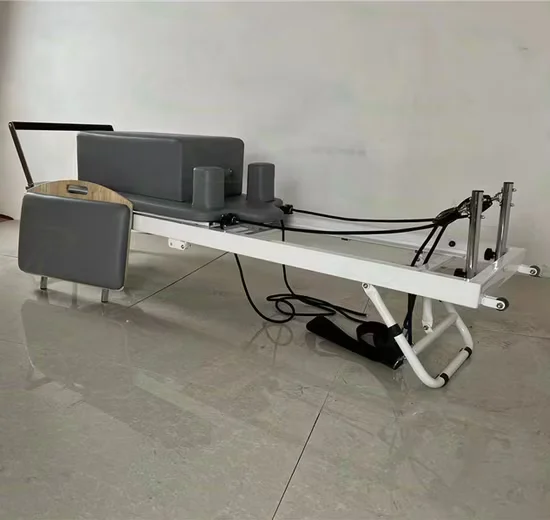
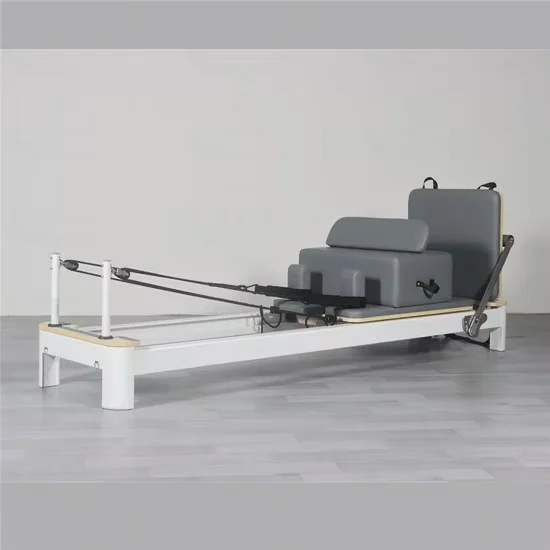
Acoustic Wood Frame Engineering — Solid hardwood dampens carriage vibration to keep studio floors quiet during high-frequency Pilates sessions.
Technical Specifications
| Parameter | Value |
|---|---|
| Designation | SRY-20B |
| Product Type | Foldable Pilates Reformer |
| Frame Material | Solid Wood (Oak / Maple) |
| Foldable | Yes |
| Specification | 2400 × 600 × 350 mm |
| Net Weight | 100 kg |
| Accessories | Long Box / Jump Board / Platform |
| Max User Weight | Commercial-grade rating |
| Logo | Customized Is Allowed |
| Color | Solid Color (custom options available) |
| Gender / Age | Unisex / Adult |
| Certification | ISO 9001, CE |
| Warranty Time | 3 Years |
| Origin | China |
| HS Code | 9506911900 |
Application Suitability
| Deployment Scenario | Typical Use |
|---|---|
| Boutique Pilates studio on shared commercial floors | Group reformer classes with back-to-back scheduling |
| Hotel fitness center and spa wellness area | Guest-accessible sessions with strict noise requirements |
| Hot yoga studio adding Pilates programming | Cross-discipline equipment in temperature-controlled rooms |
| Corporate wellness room with limited square footage | Foldable storage between morning and evening class blocks |
| Rehabilitation center for guided movement therapy | Controlled resistance exercises under practitioner supervision |
Why Studio Owners Hear Complaints Before the Instructor Finishes Cuing
Solid wood absorbs carriage vibration that aluminum frames transmit straight into the floor slab.
When reformers sit on upper floors or above occupied rooms, every carriage glide sends low-frequency resonance through the structure. Metal frames amplify this transfer. I have walked into studios where instructors paused mid-cue because the rolling noise bled through the ceiling below [NEED_CITE: acoustic transfer measurements for reformer frames on suspended floors]. The SRY-20B Commercial Foldable Pilates Reformer Wood Frame addresses this by using dense hardwood that naturally dampens vibration before it reaches the floor. In a Dubai hotel spa deployment, switching from metal to solid wood frames noticeably reduced the structure-borne noise that had been generating guest complaints from the floor beneath.
Where This Reformer Fits in a Multi-Discipline Studio Layout
The SRY-20B covers the full resistance range required for beginner through advanced reformer work, complementing mat zones and Cadillac stations in a complete Pilates studio. Its foldable design lets operators reconfigure floor space between class blocks, making it practical for facilities that rotate between Pilates, yoga, and functional training. The frame accommodates users across a broad body-type range, and the carriage travel supports both slow controlled movements and dynamic jump board sequences. This Commercial Foldable Pilates Reformer Wood Frame anchors the reformer zone without dominating the room visually.
Continuous Class Scheduling and Studio Environment Demands
Studios running four or more back-to-back reformer classes per day place constant demand on carriage wheels and spring anchors [NEED_CITE: spring fatigue testing under continuous commercial reformer use]. The solid wood frame handles humidity shifts in hot yoga environments better than engineered composites that delaminate over repeated heat cycles. Adequate ventilation around each unit prevents moisture buildup where the folding hinge meets the floor. Operators should confirm the room has level flooring to avoid lateral drift during single-leg work, and leave clearance on both sides for safe accessory transitions.
Reading the Frame and Carriage Specifications That Matter
Solid hardwood species like oak and maple differ in density and grain structure, which directly affects how vibration travels from the carriage wheels to the floor. Oak sits heavier and dampens more aggressively, while maple offers a slightly brighter acoustic profile with comparable structural rigidity. The 2400 × 600 mm footprint provides standard carriage travel length for full extension exercises, and the 350 mm rail height keeps the platform at an accessible working level. The 100 kg unit mass anchors the frame during jump board drills without requiring floor bolts. Folding mechanisms introduce a hinge point that must lock positively under load — any lateral play at the joint degrades the smooth carriage feel that defines reformer work [NEED_CITE: folding hinge load rating standards for commercial Pilates equipment]. The accessory suite of long box, jump board, and platform expands programming without requiring separate dedicated machines.
What Shortcuts in Frame Selection Cost Over Time
Specifying reformers with hollow-core or composite frames to reduce upfront purchase price creates predictable downstream costs. Lightweight frames shift during dynamic sequences, forcing instructors to pause and reposition. Studios on upper floors discover that vibration transfer generates complaints that no amount of rubber matting fully resolves [NEED_CITE: occupant noise complaint patterns in multi-story fitness facilities]. Metal frames in humid environments develop surface oxidation that roughens the carriage track within months. The cumulative result is member attrition driven by an experience that feels unstable and sounds disruptive, not by programming quality.
Why This Product Line Earns Studio Deployment
Every SRY-20B frame undergoes acoustic verification during production to confirm vibration damping meets studio noise requirements. The folding mechanism is cycle-tested to ensure hinge integrity across thousands of open-close sequences. The solid wood species selection prioritizes dimensional stability in climate-variable environments like hot yoga rooms and coastal hotel spas. ISO 9001 and CE certification document the manufacturing and safety baseline. Custom logo and color options let operators maintain brand consistency across a multi-unit reformer deployment, and the three-year warranty provides coverage that aligns with commercial usage expectations.
Documentation & Test Records
- CE declaration of conformity for the complete SRY-20B reformer assembly
- EN 957 test report covering structural load and carriage safety
- ISO 9001 certificate for manufacturing quality management
- Noise level assessment documenting wood frame vibration damping performance
- Folding hinge durability test record with cycle count data
- Accessory compatibility and installation guide for long box, jump board, and platform
Installation, Commissioning & Maintenance
- Confirm 2400 × 600 mm footprint plus lateral clearance for accessory transitions
- Level the floor surface before positioning to prevent carriage drift during use
- Inspect the folding hinge lock mechanism for positive engagement before first class
- Lubricate carriage wheels on the schedule matching weekly class volume
- Wipe the solid wood frame with pH-neutral cleaner to prevent sweat residue buildup
- Check spring anchor points and tension monthly under commercial class loads
Planning Your Reformer Zone Deployment
Share your studio floor plan and target reformer count to receive a 3D layout covering spacing, sightlines, and instructor movement paths. Specify whether units will sit on upper floors or adjacent to occupied rooms so noise requirements can be confirmed early. Indicate if your environment involves heat and humidity cycling, which affects wood species selection. State your target market so accessory packaging and documentation align with local regulatory expectations.
Frequently Asked Questions
Q: How does a solid wood frame compare to metal in noise and durability?
A: Solid hardwood naturally absorbs vibration at the wheel contact point, reducing the structure-borne noise that metal frames transmit into floor slabs. In multi-story studio deployments, this difference directly affects whether the room below registers disturbance. Wood also resists surface degradation in humid environments where metal tracks develop oxidation that roughens carriage glide over time.
Q: Does the foldable design compromise frame rigidity during class?
A: The folding hinge is engineered to lock positively under full working load, eliminating lateral play that would degrade carriage smoothness. Studios benefit from the ability to store units vertically between class blocks, reclaiming floor space for other programming. The 100 kg unit mass ensures the frame remains anchored during dynamic exercises like jump board sequences even in the unfolded position.
Q: How do the included accessories expand class programming?
A: The long box enables seated and supine upper-body work that the standard carriage does not support alone. The jump board converts the reformer into a low-impact plyometric station for cardio intervals. The platform extends the working surface for standing balance exercises. Together they let instructors design full-spectrum classes without purchasing separate dedicated machines.
Q: What customization options support multi-location brand consistency?
A: Custom logo placement and solid color finishes allow operators to match reformer aesthetics to their studio interior design across multiple locations. This brand consistency matters for boutique studios and hotel fitness centers where equipment appearance contributes to the member experience. The customization is applied during manufacturing, not as a post-production add-on.
Q: What maintenance schedule fits high-frequency commercial use?
A: Studios running four or more daily classes should inspect carriage wheels and spring anchors weekly. The solid wood frame requires periodic wiping with pH-neutral cleaner to prevent sweat and humidity residue from accumulating on the rail surface. The folding hinge mechanism benefits from quarterly inspection to confirm positive lock engagement under repeated open-close cycles.