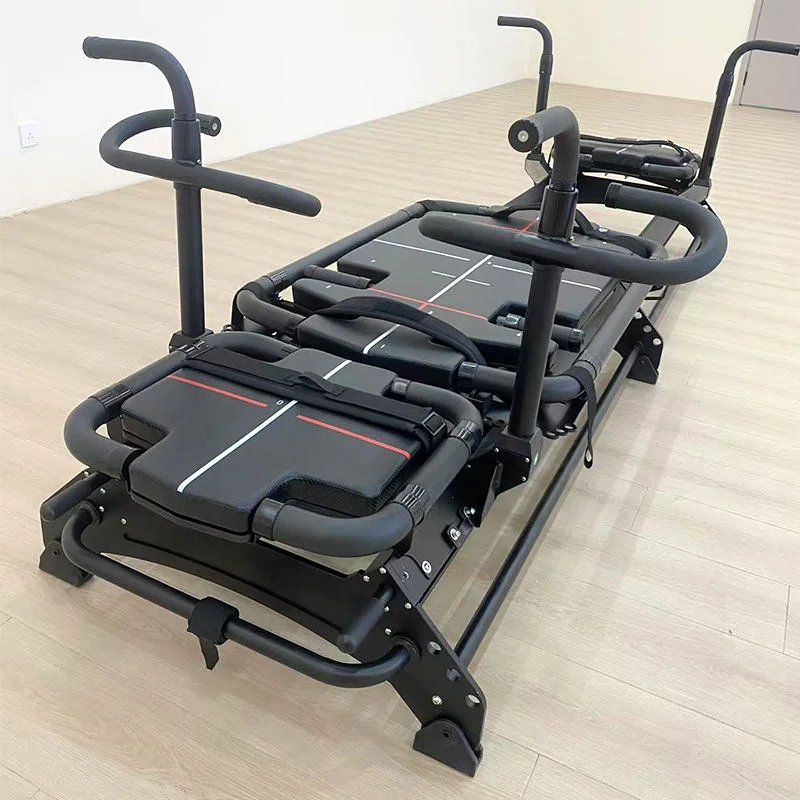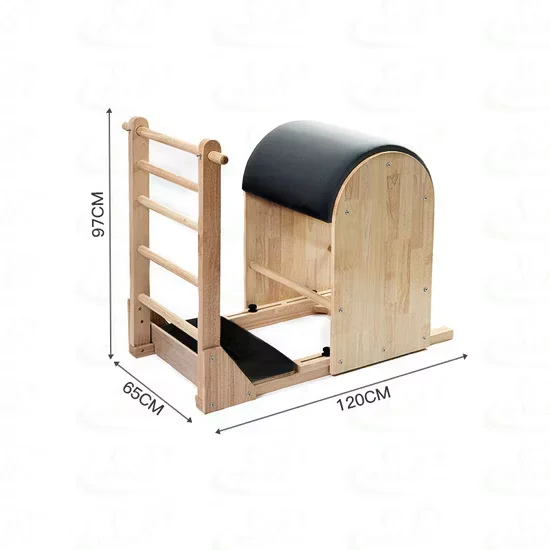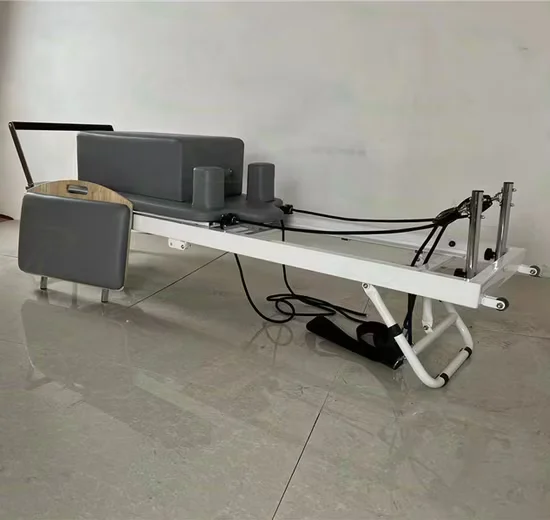
Engineered For Daily Studio Use — The SRY-11B folding reformer Pilates bed is tested for high-frequency class scheduling with a reinforced metal frame that maintains structural alignment under continuous loading.
Technical Specifications
| Parameter | Value |
|---|---|
| Designation | SRY-11B |
| Product Type | Folding Reformer Pilates Bed |
| Frame Material | Reinforced Metal |
| Specification | 2000 × 500 × 340 mm |
| Net Weight | 50 kg |
| Foldable | Yes |
| Accessories Included | Long Box, Jump Board, Platform |
| Color | Solid Color (customizable options available) |
| Logo | Customized Is Allowed |
| Target User | Adult, Unisex |
| Warranty | 3 Years |
| Production Capacity | 80 Pieces/Month |
Application Suitability
| Deployment Scenario | Typical Use |
|---|---|
| Boutique Pilates studio | Daily group reformer classes with frequent equipment reconfiguration |
| Multi-purpose fitness center | Pilates integrated into mixed class programming alongside cardio zones |
| Hotel wellness floor | Guest-accessible Pilates area requiring space-efficient storage between sessions |
| Corporate wellness room | Employee recovery and flexibility sessions during peak break hours |
| High-end residential home gym | Personal training and private Pilates practice with folding storage |
Why Studios Replace Reformer Beds Before the Frame Fails
Structural fatigue in folding mechanisms is the silent failure point that studio owners rarely inspect until a carriage misaligns mid-class.
When a Pilates reformer enters a commercial studio, the assumption is that the frame will outlast the springs and the upholstery. In practice, the folding hinge and carriage rail alignment degrade under daily repositioning — instructors fold and unfold units to switch between mat work and reformer sessions, and the repeated stress introduces micro-shifts in rail geometry. A carriage that does not track straight creates uneven resistance, and clients feel it in their shoulders before the studio notices it on the maintenance log [NEED_CITE: commercial Pilates equipment failure mode analysis]. The folding reformer Pilates bed commercial operators choose must address this cycle of deploy-store-deploy without compromising the rail-to-frame connection.
Where This Reformer Fits in a Studio Equipment Layout
The SRY-11B covers classical and contemporary reformer repertoire across beginner to intermediate-advanced class tiers. In a mixed-equipment studio, it pairs with tower units for comprehensive Pilates programming and sits between the mat zone and the cardio area as a transitional discipline station. The folding reformer Pilates bed commercial studios deploy for group classes benefits from the unit’s 2000 mm length, which accommodates taller users during footwork and long spine series. The foldable design allows facilities to reclaim floor space for mat sessions or workshops without moving equipment to storage.
Daily Class Scheduling and Room Environment Requirements
A reformer in a studio running four to six classes per day sees continuous loading cycles on the carriage, springs, and folding joints. The 2000 × 500 mm footprint demands adequate spacing between units — typically 800 mm lateral clearance for instructor walk-through and 1200 mm at the head end for jump board use. Studios on upper floors should consider vibration transmission through the metal frame during jump board sequences; a dense rubber mat beneath each unit manages both noise transfer and floor protection. Proper ventilation matters during intensive reformer classes where heat builds in tightly spaced rooms [NEED_CITE: ventilation requirements for group exercise studios with equipment density]. The 340 mm platform height positions the carriage at a comfortable transfer level for users of varying mobility.
Frame Construction and Resistance Behavior Under Load
The reinforced metal frame provides a rigid base that resists lateral flex during unilateral work — single-leg footwork and side-lying series demand a frame that does not twist under offset loading. At 50 kg net weight, the unit has sufficient mass to remain stable during jump board repetitions without walking across the floor, yet remains manageable for a single technician to fold and reposition. The included long box extends the carriage surface for supine and seated work, while the platform attachment provides additional exercise variation. Spring-based resistance systems require periodic tension verification to ensure the load curve remains consistent across the full range of carriage travel — a spring that loses tension over months creates a noticeable dead spot in exercises like long stretch and elephant.
What Happens When Equipment Specs Do Not Match Class Volume
Studios that purchase reformers rated for home or light-commercial duty and place them in six-class-per-day schedules encounter predictable failures: carriage wheels flatten on one side from constant loading, folding latches develop play that translates to carriage wobble, and spring anchor points fatigue. The consequence is not a sudden breakdown but a gradual degradation that clients perceive as a machine that feels different — less smooth, less stable. Instructors start routing students away from certain units, and those machines become dead inventory occupying floor space. A reformer that does not match the facility’s usage density will require premature replacement, and the cost of re-equipping a twelve-unit studio outweighs any initial savings on lighter-duty equipment [NEED_CITE: total cost of ownership for commercial Pilates studio equipment].
Why This Product Line Addresses Studio Procurement Needs
The SRY-11B enters Biketon’s broader portfolio of commercial fitness equipment, where the same manufacturing discipline applied to cardio durability testing informs the reformer’s frame engineering. The reinforced metal frame undergoes load cycling that simulates continuous commercial deployment. OEM customization covers logo application and color specification, allowing studio chains to maintain brand consistency across locations. The folding design and 50 kg weight align with facilities that reconfigure rooms between class formats, and the accessory package — long box, jump board, and platform — means studios source a complete reformer setup without separate procurement for attachments. Biketon’s engineering team provides deployment planning that accounts for spacing, sightline, and instructor circulation within the reformer studio layout. The three-year warranty reflects confidence in frame and component endurance under sustained professional use.
Documentation & Test Records
- CE declaration of conformity applicable to fitness equipment category
- EN 957 test report covering structural integrity and safety requirements
- ISO 9001 certificate for manufacturing quality management systems
- Frame load and durability test record for continuous commercial use
- Accessory compatibility and attachment specification documentation
- Installation, commissioning guide, and spare parts list included with shipment
Installation, Commissioning & Maintenance
- Position each SRY-11B with minimum 800 mm lateral clearance and 1200 mm head-end space for jump board exercises
- Place high-density rubber matting beneath the 2000 × 500 mm footprint to manage vibration transfer on upper-floor studios
- Verify carriage rail alignment and tracking smoothness upon first assembly before releasing to class schedule
- Inspect folding hinge mechanism and latch engagement at monthly intervals under daily fold-unfold cycles
- Check spring tension consistency across all resistance levels quarterly and replace springs showing deformation
- Clean metal frame and carriage rails with non-corrosive solution weekly to prevent sweat residue buildup
Planning Your Reformer Studio Deployment
Provide your studio floor area and intended unit count to receive a detailed layout covering equipment spacing, instructor circulation paths, and ventilation considerations. Specify the daily class schedule and expected usage intensity so the equipment configuration matches your operational demand. Indicate whether units will be folded and stored between sessions or remain permanently deployed. Note any branding requirements for logo placement and color matching across a multi-location rollout.
Frequently Asked Questions
Q: How does the folding mechanism hold up under daily commercial use?
A: The folding hinge on the SRY-11B is built into the reinforced metal frame and designed for repeated deployment cycles typical of studio environments that reconfigure rooms between class formats. Monthly inspection of the latch engagement and hinge pins ensures the mechanism remains tight. The design prioritizes structural rigidity in both the deployed and folded positions, so the frame does not develop play that would affect carriage alignment over time.
Q: What materials are used in the frame to ensure long-term durability?
A: The SRY-11B uses a reinforced metal frame engineered to resist lateral flex during unilateral exercises and maintain rail geometry under continuous loading. The frame’s 50 kg mass provides inherent stability during dynamic movements including jump board sequences. The metal construction resists the gradual deformation that lighter materials experience when subjected to daily commercial class schedules.
Q: Can the reformer accommodate different body types and fitness levels?
A: The 2000 mm carriage length accommodates taller users during full-extension exercises such as footwork and long spine series. The spring-based resistance system allows instructors to adjust load across the full spectrum from rehabilitation-level to advanced conditioning. The included long box and platform extend the exercise repertoire for users requiring modified positioning or additional support during supine and seated work.
Q: How does the resistance system compare in terms of noise and maintenance?
A: Spring-based resistance on the SRY-11B operates quietly during carriage travel, making it suitable for studios where multiple reformers run simultaneously. Maintenance centers on periodic tension verification and replacement of springs that show signs of fatigue or deformation. The carriage tracking system requires occasional alignment checks to ensure smooth, consistent movement across the rail surface.
Q: What customization options are available for branding and studio integration?
A: The SRY-11B supports customized logo application and color options, enabling studio chains and franchise operators to maintain consistent visual identity across locations. The solid color base specification can be adapted to match studio interior specifications. These OEM options are scoped during the inquiry stage alongside equipment quantity and accessory requirements.