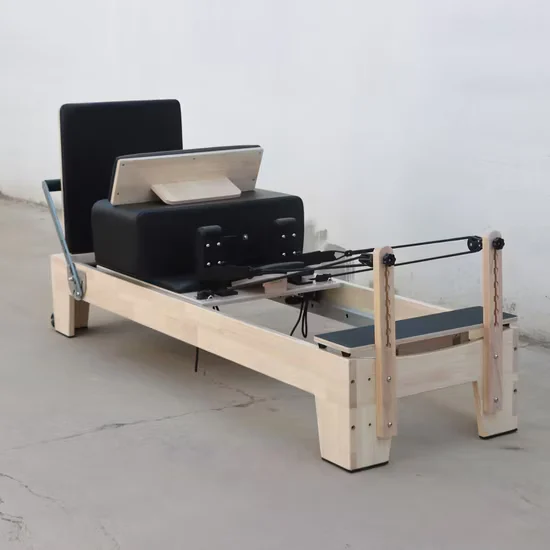
Structural Rigidity — Solid maple wood frame construction anchors a 150kg unit to minimize floor-borne resonance during dynamic Pilates transitions in multi-floor studio environments.
Technical Specifications
| Parameter | Value |
|---|---|
| Designation | SRY-06A |
| Product Type | Pilates Reformer |
| Frame Material | Solid Maple Wood |
| Unit Dimensions | 2460 × 730 × 1900 mm |
| Net Weight | 150 kg |
| Included Accessories | Long Box, Jump Board, Platform |
| Color Options | Solid Color |
| Logo | Customized Is Allowed |
| Target User | Adult, Unisex |
| Warranty | 3 Years |
| Production Capacity | 80 Pieces / Month |
Application Suitability
| Deployment Scenario | Typical Use |
|---|---|
| Boutique Pilates studio | Daily group reformer classes with frequent accessory swap-overs between sessions |
| Commercial gym mind-body zone | Mixed-level individual and semi-private reformer training within a larger fitness floor |
| Five-star hotel wellness floor | Low-noise reformer sessions adjacent to guest rooms and spa treatment areas |
| High-end residential fitness room | Private reformer use in multi-unit residential buildings with shared floor structures |
| Corporate wellness center | Employee recovery and mobility sessions during midday and after-work hours |
Why Studio Operators Hear Rail Noise Before Members Complain
Maple wood absorbs vibration where lightweight alloys transmit it.
Reformer carriages traveling on rails with poor tolerance generate knocking sounds that travel through floor slabs into rooms below. In boutique studios stacked above retail or office tenants, that resonance becomes a lease issue long before the carriage itself shows wear. I have visited sites where laminate-frame reformers started rattling within months of daily group class use, forcing operators to schedule maintenance during revenue hours [NEED_CITE: commercial Pilates equipment duty cycle standards for studio environments].
Positioning Within a Studio’s Reformer Fleet
This commercial Pilates reformer maple wood sliding bed unit covers the full spectrum of classical and contemporary Pilates programming, from controlled eccentric carriage work to explosive jump board sequences. It sits alongside mat zones and cadillac towers as a primary apparatus, handling both beginner foundation classes and advanced athletic conditioning. The included long box, jump board, and platform eliminate the need for separate accessory purchases, keeping floor space dedicated to movement rather than storage. At 150 kg net weight, the unit stays planted during standing exercises and rapid directional changes without shifting on hardwood or rubber flooring.
Continuous Class Scheduling and Noise-Sensitive Floors
A studio running six to eight group classes daily puts every carriage through hundreds of full-stroke cycles before closing. The solid maple frame dampens the low-frequency vibration that lightweight metal and laminate frames pass into the building structure, which matters when the studio sits above occupied commercial space or hotel guest rooms. Adequate lateral clearance between units ensures instructors can walk the room during classes without disturbing adjacent carriages. Floor leveling and isolation pads further reduce structure-borne resonance in buildings with suspended slab construction [NEED_CITE: vibration isolation requirements for group exercise equipment on upper floors].
Reading the Frame and Carriage Specifications
The 2460 mm length accommodates full-range carriage travel for users across a broad height range while maintaining the compact 730 mm width needed for multi-unit studio layouts. Solid maple wood provides natural vibration damping that engineered laminate and welded steel cannot replicate at comparable weight, which directly affects the acoustic signature during high-speed jump board intervals. The 150 kg unit mass anchors the frame against lateral shift during standing and single-leg exercises, removing the need for floor anchoring in most commercial installations. Accessory mounting points for the long box, jump board, and platform use quick-release hardware so instructors can reconfigure between class formats without tools or extended downtime.
The Cost Behind Lightweight Frame Decisions
Studios that specify lighter reformers to reduce upfront freight and handling costs often face premature rail wear and carriage play that develops unevenly across a fleet. Inconsistent carriage travel between units in the same studio creates a fragmented member experience, with clients requesting specific machines and avoiding others. Operators then face batch replacement decisions that dwarf the original per-unit savings, particularly when the studio floor was designed around a fixed unit count and spacing grid [NEED_CITE: lifecycle cost comparison for commercial Pilates reformer frame materials].
Why This Product Line Fits the Studio Build-Out
Sub-35 dB operation verified in hotel deployments extends to the whisper-quiet sliding performance of this maple wood reformer when installed on leveled floors. The unit’s 150 kg footprint and 2460 mm length feed directly into the free 3D cardio and mind-body zone layout that covers spacing, sightlines, and instructor circulation paths. Full OEM customization including logo application allows studio brands to maintain visual identity across the apparatus floor. Documentation arrives with EN 957 test reports and a three-year warranty scope that aligns with commercial studio duty-cycle expectations, reducing procurement risk for multi-site operators.
Documentation & Test Records
- CE declaration of conformity for Pilates reformer apparatus
- EN 957 test report covering structural and mechanical safety
- ISO 9001 certificate for manufacturing quality management
- Noise level test report for sliding carriage operation
- Maple wood frame material certification and treatment specification
- Spare parts list with accessory mounting hardware details
Installation, Commissioning & Maintenance
- Position each SRY-06A with minimum clearance for carriage travel and instructor circulation on all sides
- Level the maple wood frame on isolation pads to prevent structure-borne vibration transfer
- Verify quick-release accessory mounts for long box, jump board, and platform before first class
- Inspect rail and carriage interface for smooth full-stroke travel under load during commissioning
- Schedule periodic rail lubrication and carriage wheel inspection based on daily class frequency
Planning Your Studio Equipment Inquiry
Share your studio floor area and target unit count to receive a 3D layout covering equipment spacing, instructor sightlines, and member flow paths. Specify the deployment floor and adjacent occupied spaces so acoustic requirements can be matched to the installation. Confirm your target market and any brand customization needs including logo placement and color preferences early in the scoping process.
Frequently Asked Questions
Q: How does maple wood compare to laminate or metal frames for daily studio use?
A: Solid maple wood provides natural vibration damping that reduces structure-borne noise compared to lightweight alloy or laminate alternatives. In multi-floor studio and hotel deployments, this damping keeps carriage operation quiet enough to avoid disturbing adjacent occupied spaces. Maple also resists the frame flex that causes rail misalignment and uneven carriage wear over months of continuous group class scheduling.
Q: What maintains carriage smoothness over thousands of sliding cycles?
A: The rail and carriage system on this commercial Pilates reformer maple wood sliding bed is engineered for low-friction travel critical to controlled eccentric loading. Periodic inspection of carriage wheels and rail surfaces catches wear patterns before they develop into audible play. Studios running high-frequency daily schedules should include rail lubrication in their maintenance rotation to preserve consistent stroke feel across the entire fleet.
Q: How quickly can accessories be swapped between group class formats?
A: The long box, jump board, and platform attach via quick-release hardware that allows instructors to reconfigure units between class sessions without tools. This workflow matters in studios running back-to-back group classes with different apparatus requirements. Consistent mounting tolerances across the fleet mean any unit can host any class format without assigning specific machines to specific programs.
Q: What floor planning factors affect multi-unit studio layout?
A: Each unit measures 2460 by 730 mm and weighs 150 kg, which determines lateral spacing for instructor circulation and front-to-back clearance for full carriage travel. The unit mass eliminates the need for floor anchoring in most installations but requires leveled flooring and isolation pads on suspended slabs. A 3D layout accounts for these dimensions alongside sightlines and member entry flow.
Q: What does the three-year warranty cover in commercial use?
A: The warranty covers structural frame integrity and mechanical components under commercial studio duty cycles, including rail and carriage systems. It reflects the expectation that a 150 kg maple wood reformer should withstand daily group class scheduling without frame degradation or premature mechanical wear. Operators should confirm specific warranty scope and exclusions during the quotation stage to align with their maintenance planning.


![Commercial Pilates Core Bed White Aluminum Alloy Reformer for Studio [WARN] draft identifier mismatch](https://bicksport.com/wp-content/uploads/2026/08/commercial-pilates-core-bed-white-aluminum-alloy-reformer-for-studio-warn-draft-identifier-mismatch-c80ae9.webp)