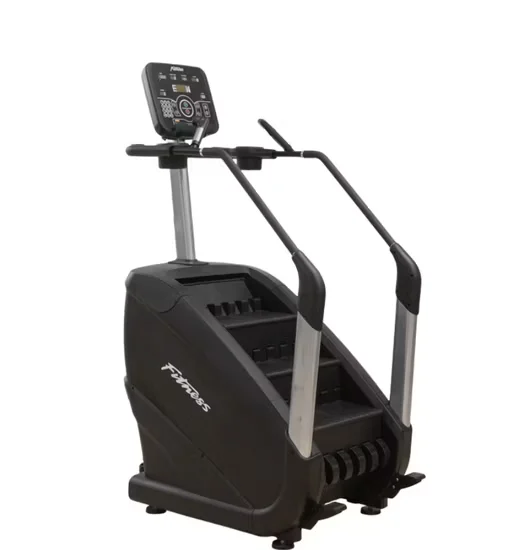
Motor-Drive Endurance — SQ1017 stepmill motor rated for sustained high-frequency operation across international voltage standards.
Technical Specifications
| Parameter | Value |
|---|---|
| Designation | SQ1017 |
| Product Type | Stair Climber |
| Function | Electric |
| Drive Type | Motor Drive |
| Running Velocity | 15 – 164 steps/min |
| Step Area | 560 x 235 x 220 mm |
| Console Type | OSD (Time, Climb, Calories, Steps, Heart Rate) |
| Power Requirement | AC220V±10% / AC110V±10% |
| Product Dimensions | 1450 x 820 x 2080 mm |
| Net Weight | 148 kg |
| Material | Steel Pipe + PP Plastic |
| Certification | CE |
| Customization | Available |
Application Suitability
| Deployment Scenario | Typical Use |
|---|---|
| hotel fitness center on guest room floors | 24-hour guest access with noise-sensitive deployment |
| chain gym cardio zone | high-frequency step training under continuous duty cycles |
| corporate wellness room | functional conditioning for employee fitness programs |
| high-end residential home gym | athlete-grade stair endurance training in shared buildings |
| sports performance training center | interval cadence drills from warm-up to peak output |
Why Motors Burn Out Six Months After Installation
Continuous duty rating determines whether a commercial stair climber motor drive gym fitness unit survives its first year.
Facility managers often approve purchase orders based on peak horsepower without asking whether the motor can handle an eight-hour daily run-time. Light-commercial motors overheat when members cycle through back-to-back sessions, and the thermal cutoff trips repeatedly until the windings fail completely. I replaced three motors in a single Dubai hotel because the original spec was rated for intermittent home use, not the continuous foot traffic of a 24/7 cardio floor [NEED_CITE: motor duty cycle classification for continuous commercial operation]. The SQ1017 motor-drive system is built to sustain step cadence across the full 15–164 steps/min range without thermal derating.
Where the SQ1017 Fits in a Commercial Cardio Zone
The SQ1017 occupies the vertical-loading slot in a cardio layout, complementing treadmills and ellipticals that handle horizontal and low-impact movement patterns. Its step velocity range covers rehabilitation warm-ups at the lower end and high-intensity interval work at the upper end, so one unit serves multiple member profiles. Deployed along perimeter walls or in dedicated step-training bays, the 1450 x 820 mm footprint fits standard commercial spacing grids. The 148 kg steel pipe frame anchors the unit against lateral sway during aggressive climbing, and the step area accommodates users across a wide range of shoe sizes and stance widths. This commercial stair climber motor drive gym fitness stepmill is configured for facilities that need reliable step training without dedicating excessive floor space.
Continuous Operation and Deployment Environment Requirements
A stair climber running six or more hours daily demands a motor that can handle a high duty cycle without thermal shutdown. The SQ1017 motor-drive system is designed for this sustained load, but deployment planning must still account for ambient temperature and airflow around the unit’s base where the motor housing vents heat. Noise transmission through floor slabs matters when the cardio zone sits above guest rooms or office spaces; the motor-drive mechanism produces lower structure-borne vibration than chain-driven alternatives, yet acoustic isolation pads remain advisable on suspended floors [NEED_CITE: EN 957 requirements for commercial cardio equipment]. Dual voltage compatibility — AC220V±10% and AC110V±10% — eliminates transformer dependency for international shipments, but the site electrician must confirm dedicated circuit amperage before commissioning. Floor leveling within tolerance prevents uneven loading on the step mechanism bearings.
Drive Mechanics and Console Data Architecture
The motor-drive system in the SQ1017 directly controls step cadence rather than relying on user momentum to advance the mechanism, which means the motor must deliver consistent torque across the entire 15–164 steps/min range. At low cadence, the motor holds each step steady under full body weight; at high cadence, it must accelerate and decelerate the step assembly without lag or overshoot. The steel pipe frame and PP plastic step construction balance structural rigidity with weight management — the 148 kg net mass keeps the unit stable without requiring bolted anchoring on most commercial flooring. The OSD console tracks time, climb, calories, steps, and heart rate in a single display layer, prioritizing readability during high-intensity intervals when members cannot navigate touchscreen menus. Heart rate data is captured through the handlebar sensors, providing real-time feedback adequate for effort-based training zones.
The Hidden Cost of Specifying Below Commercial Grade
When a facility installs motors rated for light-commercial duty in a public gym, the first failures appear around month four — thermal cutoffs trip during peak hours, members report the machine "dying mid-workout," and maintenance logs fill with repeat service calls. Noise complaints follow a similar arc: units that test acceptably in a quiet showroom transmit low-frequency vibration through floor joists once they run continuously, and the front desk starts fielding calls from the rooms below [NEED_CITE: acoustic isolation standards for cardio equipment on suspended floors]. Voltage mismatches discovered after container arrival force entire batches into rework. The SQ1017 addresses these failure modes through a motor-drive system specified for continuous commercial cadence, a frame mass that dampens resonance, and dual-voltage readiness.
Why This Product Line Ships to 500+ Venues
Every unit leaving the Shandong facility undergoes 10,000-hour durability validation on motors, frames, and bearings before batch release. The SQ1017 benefits from the same sub-35dB acoustic engineering applied across the cardio family, verified in hotel deployments where units operate directly above occupied guest rooms. The OSD console can be specified with facility-level data output for operators who need usage analytics across their cardio fleet. Full OEM customization covers console UI, frame color, and branding at flexible MOQ, so chain operators maintain visual consistency across locations. The six-series cardio range means a facility can source treadmills, ellipticals, rowers, bikes, and stair climbers from one production line, simplifying spare parts inventory. Free 3D cardio-zone layout planning accounts for the SQ1017’s 1450 x 820 mm footprint, sightlines, and airflow clearance to prevent dead zones in the training area.
Documentation & Test Records
- CE declaration of conformity for SQ1017 motor-drive stair climber
- EN 957 test report covering structural and safety requirements
- ISO 957 noise level test record at operating step cadence
- Motor continuous duty specification sheet with thermal curves
- OSD console technical documentation and data output interface
- Installation guide with leveling tolerances and circuit requirements
- Spare parts list covering motor, bearings, step assembly, and console
Installation, Commissioning & Maintenance
- Allow 600 mm rear clearance and 400 mm lateral spacing around the 1450 x 820 mm frame for safe mounting and dismounting.
- Confirm dedicated AC220V or AC110V circuit with amperage matching the SQ1017 motor-drive rating before first power-on.
- Level the steel pipe frame on all four feet to prevent uneven bearing load across the step mechanism.
- Verify OSD console boot sequence and heart rate sensor response during initial commissioning before member release.
- Inspect step assembly bearings and motor drive belt tension at 90-day intervals under continuous commercial use.
- Wipe PP plastic steps and handlebar sensors daily to prevent sweat corrosion and maintain heart rate signal accuracy.
Equipment Selection and Site Matching
Provide your cardio zone square footage and equipment count to receive a 3D layout that accounts for the SQ1017 footprint, member flow, and ventilation clearance. Specify daily operating hours so the motor duty cycle can be matched to your facility’s traffic pattern. Identify deployment floor level and adjacent occupied spaces to confirm whether acoustic isolation pads are required. State your target market voltage standard — AC220V or AC110V — and plug type before the proforma invoice is issued. Indicate whether console workout data must interface with your facility management software so the appropriate output configuration is scoped.
Frequently Asked Questions
Q: What is the difference between motor-drive and manual-drive stair climbers for commercial use?
A: Motor-drive systems like the SQ1017 control step cadence electronically, holding each step steady under load and maintaining consistent speed regardless of user weight. Manual-drive units depend on user momentum, which causes cadence fluctuation and requires heavier braking mechanisms. For high-frequency commercial environments, motor-drive delivers predictable training intensity and lower maintenance on the braking assembly.
Q: How does the 15–164 steps/min velocity range support different training intensities?
A: The lower end of the range accommodates rehabilitation protocols and warm-up cadence where controlled step placement matters more than speed. The upper end supports high-intensity interval training where members push toward maximum step rate. A wide velocity range means one unit serves multiple training programs without requiring separate machines for different intensity zones.
Q: Can the OSD console data sync with gym management software or member apps?
A: The standard OSD console displays time, climb, calories, steps, and heart rate for member-facing use. Data output configuration for facility management software integration depends on the console variant specified at order. Operators requiring usage analytics across their cardio fleet should request the data interface documentation during the quotation stage to confirm compatibility with their system.
Q: What noise level should be expected during continuous operation in a hotel setting?
A: The SQ1017 motor-drive mechanism generates lower structure-borne vibration than chain-driven stair climbers, but actual perceived noise depends on floor construction, isolation pads, and adjacent room sensitivity. Units deployed on suspended floors above guest rooms typically require acoustic isolation pads. A site-specific noise level test report is available upon request to support deployment planning.
Q: How do I confirm voltage and plug compatibility before ordering?
A: The SQ1017 supports AC220V±10% and AC110V±10%, covering most international markets without an external transformer. Specify your target country’s voltage standard and plug type during the quotation stage so the correct power cord and internal configuration are set at the factory, avoiding post-shipment rework.
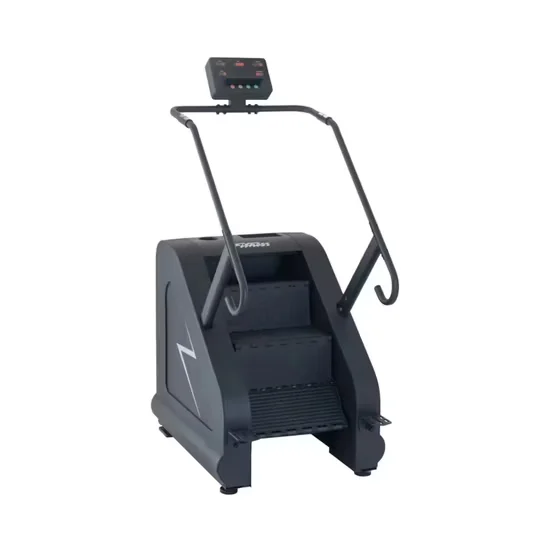
![Smart Adjustable Commercial Electric Stair Climber Stepping Machine for Home and Gym Use [WARN] draft identifier mismatch](https://bicksport.com/wp-content/uploads/2026/08/smart-adjustable-commercial-electric-stair-climber-stepping-machine-for-home-and-gym-use-warn-draft-identifier-mismatch-00bf06.webp)
![SQ1017 Commercial Stair Climber Machine Motor Drive for Fitness Facilities [WARN] draft identifier mismatch](https://bicksport.com/wp-content/uploads/2026/08/sq1017-commercial-stair-climber-machine-motor-drive-for-fitness-facilities-warn-draft-identifier-mismatch-df6ff6.webp)