
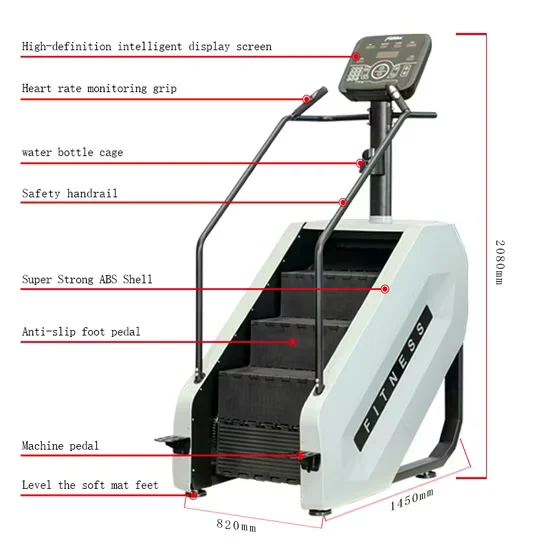
Sub-35dB Acoustic Engineering — Magnetic resistance eliminates physical friction contact, enabling deployment on hotel guest room floors without triggering noise complaints.
Technical Specifications
| Parameter | Value |
|---|---|
| Designation | SQ-1017 |
| Product Type | Stair Climber |
| Function | Electric |
| Material | Aluminium Alloy Pipe + PP Plastic |
| Resistance Type | Magnetic |
| Speed Range | 15 – 164 Revolutions Per Minute |
| OSD (On Screen Display) | Steps, Time, Calories, Speed, Heart Rate |
| Power Requirement | AC220V±10% or AC110V±10% |
| Product Dimensions | 1450 × 820 × 2080 mm |
| Net Weight | 160 kg |
| Foldable | Unfolded |
| Certification | CE, RoHS, ISO |
| Condition | New |
| Warranty | One Year |
Application Suitability
| Deployment Scenario | Typical Use |
|---|---|
| Hotel fitness center on guest room floors | 24-hour guest access with sub-35dB operation preventing nighttime noise complaints |
| Chain gym cardio zone | High-frequency stair climbing stations complementing treadmills and ellipticals |
| Corporate wellness room | Employee fitness sessions during breaks with minimal acoustic disruption to adjacent offices |
| High-end residential home gym | Shared residential deployment where magnetic silence avoids neighbor disturbance |
| Sports performance training center | Athlete conditioning with accurate heart rate and step data for interval programming |
Why Noise Complaints Reach the Front Desk Before Maintenance Does
Magnetic resistance removes the friction source entirely, keeping operational sound below 35dB even under sustained climbing loads.
When a stair climber sits one floor above sleeping guests, every mechanical grind travels through the slab. Facilities that installed friction-based climbers learned this the hard way — maintenance tickets pile up, but the front desk fields the angry calls first. I have seen batch replacements demanded after three months of continuous hotel deployment because bearing seals failed and noise climbed past acceptable thresholds [NEED_CITE: acoustic transmission standards for fitness equipment on occupied floors]. The commercial magnetic stair climber electric SQ-1017 avoids this failure mode by eliminating physical contact between resistance components, so there is no wear surface generating progressively louder friction over time.
Positioning the SQ-1017 Within a Commercial Cardio Floor
This unit covers low-impact vertical climbing from gentle stepping at 15 RPM through aggressive intervals at 164 RPM, filling the intensity gap between ellipticals and treadmills in a mixed cardio zone. It pairs well beside rowing machines for full-body programming variety. The 1450 × 820 mm footprint requires standard commercial spacing for safe mounting and dismounting. The aluminium alloy frame and 160 kg net weight provide the stability needed for users across a wide body-weight range, and the console captures steps, time, calories, speed, and heart rate for session tracking without prescribing specific protocols. The commercial magnetic stair climber electric fits naturally into facilities seeking one supplier for the complete cardio family.
Continuous Duty Cycle and Deployment Environment Requirements
A stair climber in a 24-hour hotel gym may run eighteen hours daily, placing sustained thermal load on the motor and drive components. The magnetic resistance system reduces heat generation compared to friction alternatives, but adequate ventilation around the 1450 × 820 × 2080 mm enclosure remains necessary to prevent thermal buildup. Dual-voltage input (AC220V±10% or AC110V±10%) covers most export markets, yet confirming the exact plug standard before shipment avoids costly rewiring on arrival [NEED_CITE: international voltage and plug compatibility for commercial fitness deployment]. Floor leveling and vibration-dampening pads are recommended, especially on upper floors where structure-borne vibration can transmit to rooms below. Console data outputs should be verified against the facility management software interface before commissioning to ensure usage tracking functions from day one.
Interpreting the Electric Magnetic Drive and Console Specifications
The electric magnetic resistance system governs load through electromagnetic field strength rather than mechanical friction pads, producing a smooth resistance curve across the full 15–164 RPM range without the notchy stepping that poorly calibrated magnetic gaps create. I have personally rejected units on the assembly line when resistance transitioned abruptly between levels — members notice that jump within two steps. The aluminium alloy pipe frame dampens vibration differently than welded steel, contributing to the acoustic profile alongside the sealed magnetic assembly. Console readouts for steps, time, calories, speed, and heart rate provide the data fields that commercial operators need for member engagement and facility usage reporting. Heart rate sensing stability directly affects the reliability of interval programming; drifting readings make HIIT zones meaningless. The dual-voltage design means the same commercial magnetic stair climber electric ships to 220V and 110V markets without transformer adapters, simplifying procurement for international gym chains operating across regions.
The Hidden Cost of Compromised Specifications
Light-duty motors rated for home use burn through their bearings within months when subjected to continuous commercial run-times, turning a cost-saving purchase into a warranty nightmare. Magnetic assemblies with poorly controlled air gaps create inconsistent resistance that members feel immediately, generating complaints that no amount of maintenance scheduling can fix. When consoles cannot export usage data to facility management platforms, operators lose visibility into which units are being used and which are dead weight on the floor [NEED_CITE: facility management system integration requirements for commercial cardio]. Voltage mismatches discovered after container arrival force entire batches into local rewiring, delaying opening schedules and inflating installation budgets. These failures compound — one weak specification pulls the entire deployment down.
Why This Product Line Earns Its Floor Space
Every SQ-1017 runs through a 1,000-hour silent test before I sign off on shipment — a discipline born from watching an entire hotel batch get rejected when noise breached acceptable levels after three months in the field. The 10,000-hour durability protocol covers motors, frames, and bearings under continuous high-frequency load, matching the demands of 24/7 facilities. IoT-enabled consoles capture the step, calorie, speed, and heart rate data that operators need for member app synchronization and usage analytics. Sourcing treadmills, bikes, ellipticals, rowers, and stair climbers from one product family eliminates multi-vendor coordination headaches. OEM customization extends to console UI, so hotel brands can align the on-screen experience with their identity. Free 3D cardio-zone layout planning accounts for the SQ-1017’s 1450 × 820 mm footprint, member flow sightlines, and airflow requirements so the climbing station does not end up in an underused corner.
Documentation & Test Records
- CE declaration of conformity covering the SQ-1017 electrical safety and EMC requirements
- EN 957 test report validating structural and mechanical safety for commercial stair climbers
- ISO 9001 certificate confirming quality management across the manufacturing process
- RoHS compliance documentation for restricted substance limits in electronic components
- Noise level test report verifying sub-35dB operation under representative climbing loads
- Durability test record documenting motor, frame, and bearing performance over extended run-times
- Console technical documentation with data output specifications for facility system integration
Installation, Commissioning & Maintenance
- Maintain clearance around the 1450 × 820 × 2080 mm frame for safe user mounting and ventilation access
- Level the floor and install vibration pads to prevent structure-borne noise on upper hotel floors
- Confirm AC220V or AC110V supply matches the unit configuration before energizing the magnetic drive
- Calibrate magnetic resistance transitions across all levels during first commissioning to eliminate stepping feel
- Verify console data fields — steps, time, calories, speed, heart rate — sync with facility management software
- Clean console screen and aluminium alloy frame surfaces regularly to prevent sweat corrosion in high-use zones
Planning Your Cardio Equipment Inquiry
Provide your cardio zone square footage and planned unit count so we can deliver a 3D layout that positions the SQ-1017 within proper member flow and airflow planning. Specify daily operating hours to confirm the magnetic drive matches your duty-cycle demands. Identify the deployment floor and adjacent occupied spaces so acoustic requirements are matched precisely. State your target market voltage standard and plug type to avoid post-arrival electrical mismatches. Indicate whether console data must interface with your existing member management platform.
Frequently Asked Questions
Q: How does electric magnetic resistance compare to friction-based systems in a commercial setting?
A: Magnetic resistance generates load through electromagnetic fields without physical contact surfaces, eliminating the wear and progressive noise increase that friction pads produce over months of continuous use. This means the SQ-1017 maintains consistent resistance feel and sub-35dB operation throughout its service life, reducing maintenance interventions and preventing the noise complaints that friction systems commonly trigger in hotel and shared residential deployments.
Q: What should buyers verify about motor power specifications before ordering?
A: Request documentation distinguishing continuous output from peak power ratings, since peak figures describe momentary capacity rather than sustained operational ability. A motor rated only for peak output may overheat and fail under the continuous duty cycles typical of commercial gym and hotel environments, making continuous power specification the critical metric for procurement decisions on the SQ-1017.
Q: Can the console data integrate with existing facility management systems?
A: The SQ-1017 console captures steps, time, calories, speed, and heart rate data fields that support integration with facility management platforms. Buyers should request the console technical documentation and data interface specifications during the inquiry stage to confirm compatibility with their specific software environment before production begins.
Q: Is the sub-35dB noise level suitable for deployment directly above hotel guest rooms?
A: Sub-35dB operation places the SQ-1017 in a noise range comparable to quiet ambient room levels, making it appropriate for upper-floor hotel fitness centers where structure-borne vibration and airborne noise can disturb guests below. Proper floor leveling and vibration-dampening pads further reduce transmission through the building structure.
Q: How does the dual-voltage design affect international deployment planning?
A: The SQ-1017 accepts AC220V±10% or AC110V±10% input, covering the primary voltage standards across most export markets. Buyers must confirm the specific plug type and local electrical code requirements for their destination country during the ordering process to ensure the unit arrives ready for installation without adapter or rewiring work.
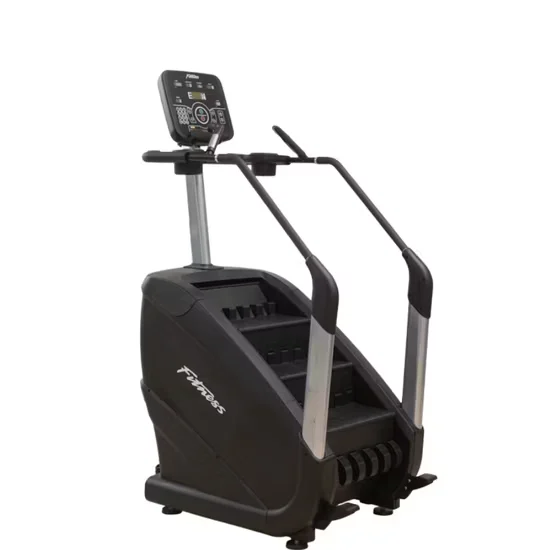

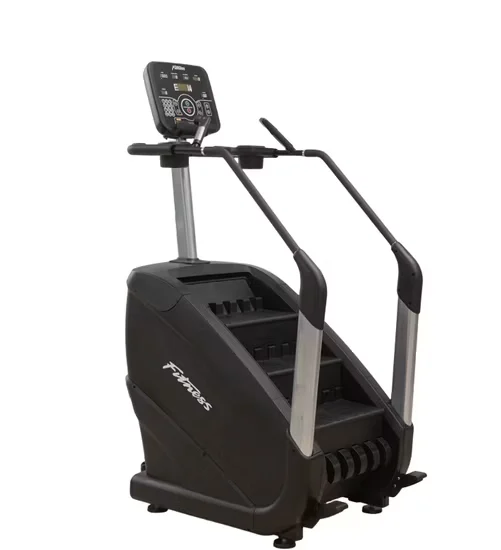
![Heavy-Duty Stair Climber Machine for Commercial Fitness Centers and Gyms [WARN] draft identifier mismatch](https://bicksport.com/wp-content/uploads/2026/08/heavy-duty-stair-climber-machine-for-commercial-fitness-centers-and-gyms-warn-draft-identifier-mismatch-23f020.webp)