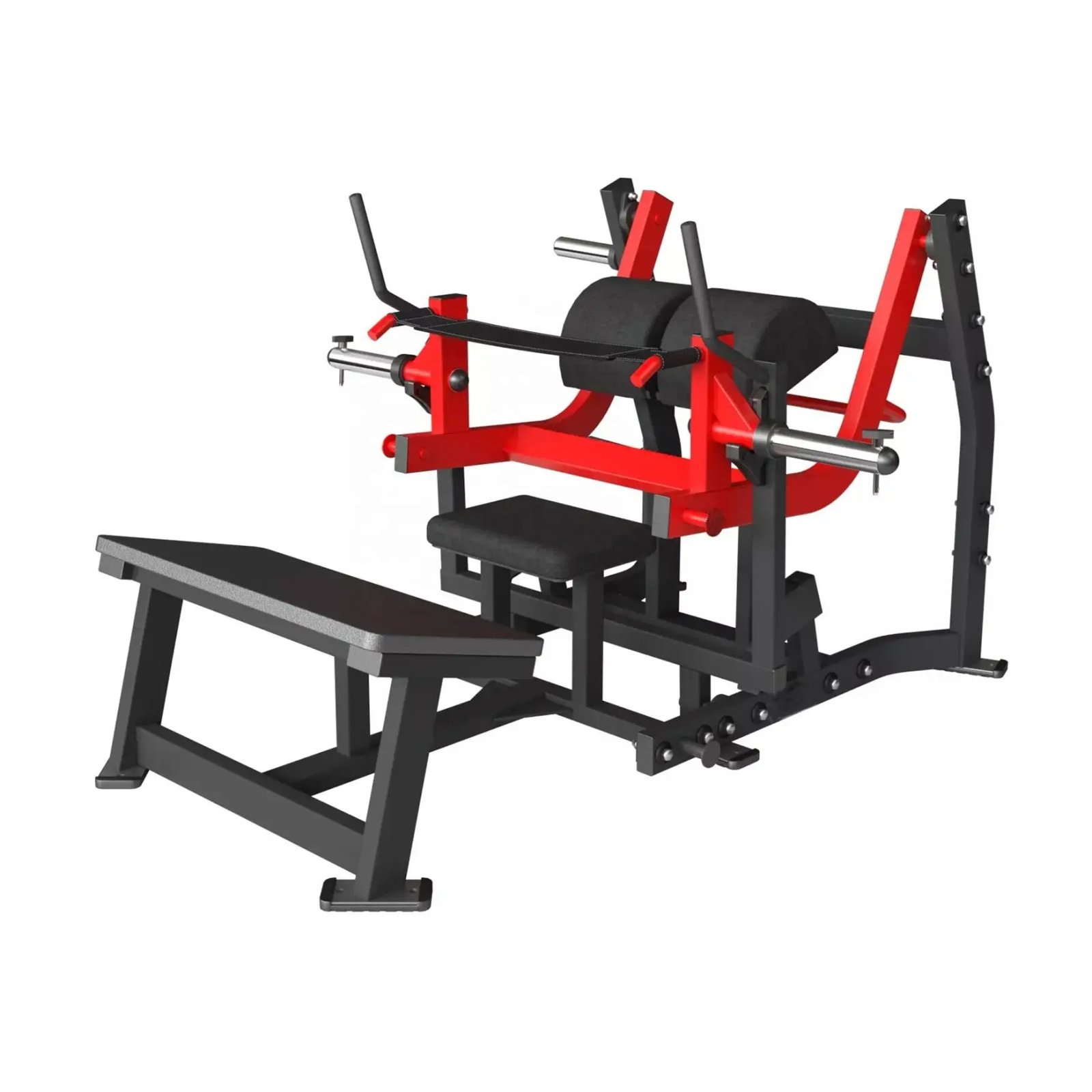
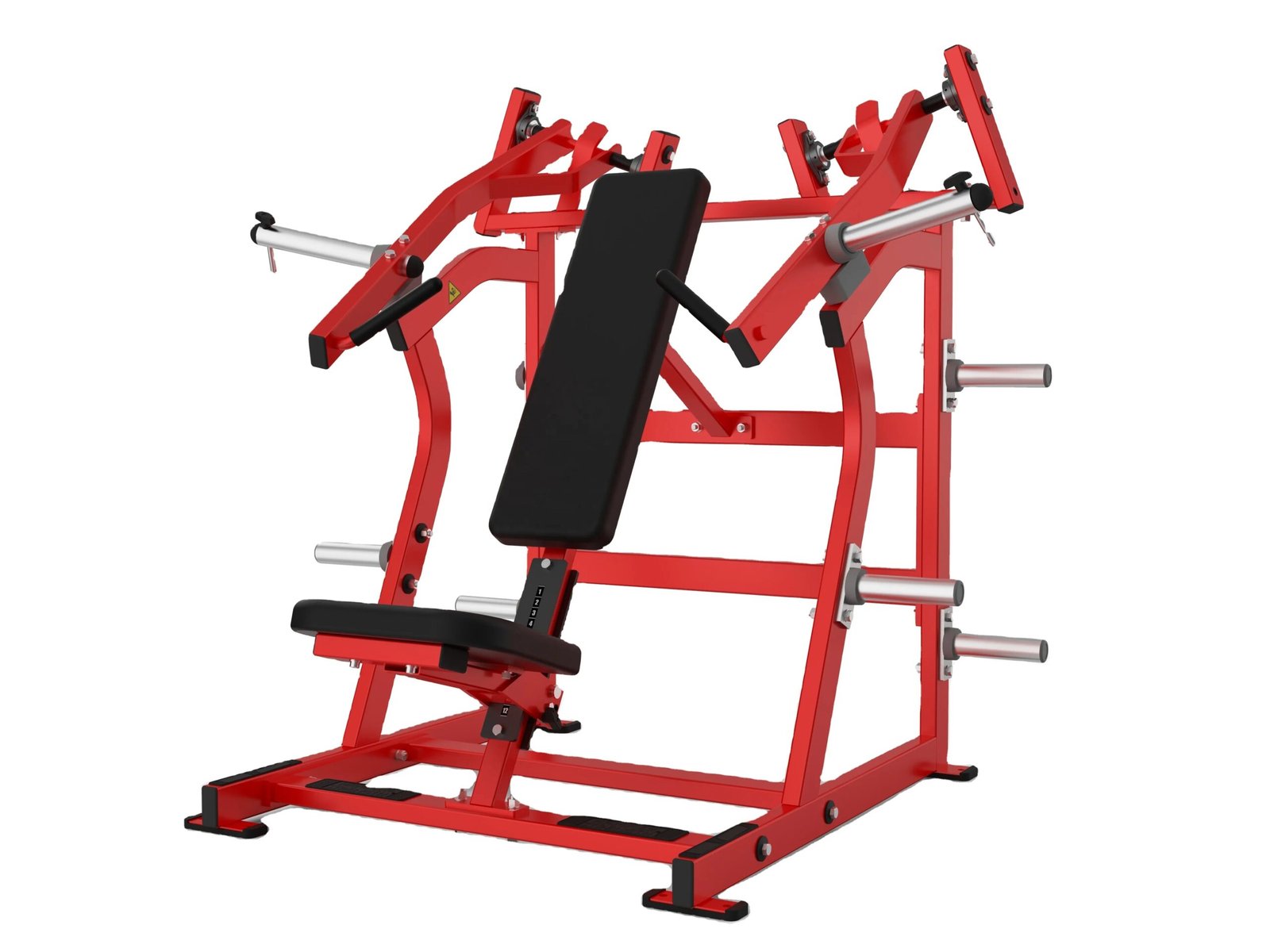
ISO-Lateral Wide Pulldown Gym Strength Machine Equipment
Reinforced Steel Frame — engineered to withstand high-frequency commercial use without flex or wobble under maximum load.
Technical Specifications
| Parameter | Value |
|---|---|
| Product Type | Strength Machine (Lat Pulldown) |
| Model NO. | 5020 |
| Exercise Part | Back |
| Material | Steel |
| Product Dimensions | 180011001761 mm |
| Net Weight | 143kg |
| Age Group | Adult |
| Gender | Unisex |
| Appliance | Community, Gymnasium |
| Standards | ISO 9001, CE |
Application Suitability
| Deployment Scenario | Typical Use |
|---|---|
| International Gym Chain Cardio & Strength Zones | High-frequency member use for back hypertrophy and unilateral training. |
| Corporate Wellness Rooms | Ergonomic back conditioning for diverse employee body types during short breaks. |
| Professional Sports Training Centers | Athlete-grade biomechanical loading for swimming, rowing, and climbing performance. |
| Community Fitness Centers | Durable, low-maintenance strength station for 24/7 public access environments. |
Why Commercial ISO-Lateral Wide Pulldown Machines Fail in High-Traffic Facilities
Pivot bearings and cable systems are the first to fail when light-duty strength equipment is deployed in commercial environments.
Facility operators frequently report that frames flex under heavy loads, pivot points develop play within months, and cable fraying leads to unplanned downtime [NEED_CITE: commercial strength equipment failure modes in high-traffic gyms]. When a commercial ISO-lateral wide pulldown machine is not built with reinforced steel and commercial-grade bushings, member dissatisfaction rises and maintenance costs compound. The difference between a machine that lasts 10,000 hours and one that requires quarterly part replacements comes down to bearing specification and frame welding integrity [NEED_CITE: EN 957 requirements for commercial strength equipment durability].
Biomechanical Positioning in the Strength Zone
The ISO-Lateral Wide Pulldown covers vertical pulling patterns across moderate to high intensity ranges, complementing rowing machines and deadlift platforms in a balanced strength layout. Its independent arm design allows unilateral loading, making it suitable for rehabilitation protocols and athletic conditioning where muscle imbalances must be addressed. The adjustable seat and multiple handle positions accommodate users from the 5th to 95th percentile in body size, ensuring inclusive access in community and corporate fitness environments. A commercial ISO-lateral wide pulldown machine deployed near functional training zones provides a controlled alternative to free-weight pulling movements.
Continuous Operation and Environmental Requirements
This machine is engineered for facilities running 12 to 24 hours daily, where pivot bearings and cable pulleys must endure thousands of repetitions without degradation. Unlike motorized cardio equipment, the ISO-lateral wide pulldown generates minimal ambient noise, making it suitable for deployment on upper hotel floors or shared residential spaces where sound transmission is a concern [NEED_CITE: acoustic considerations for strength equipment in multi-story facilities]. Proper floor leveling and vibration-dampening pads are recommended to prevent frame rock during explosive concentric phases. Voltage and power requirements do not apply to this selectorized or plate-loaded unit, but facilities must ensure adequate overhead clearance for the full range of motion.
Engineering Behind the ISO-Lateral Arm and Cable System
Independent ISO-lateral arms move on sealed commercial-grade pivot bearings, allowing each side to follow a natural biomechanical path rather than forcing a fixed bar trajectory. This reduces shear stress on the shoulder joint during wide-grip pulldowns, a common complaint with traditional lat machines. The reinforced steel frame, weighing 143kg net, provides the mass necessary to resist lateral flex when users load unevenly or perform single-arm work. Cable routing through precision pulleys minimizes friction and wear, extending replacement intervals in high-frequency environments. Ergonomic handle positions—wide, neutral, and close-grip—allow facility operators to serve diverse training preferences without purchasing multiple dedicated machines [NEED_CITE: biomechanical advantages of independent arm strength equipment].
The Hidden Cost of Specifying Below Commercial Grade
When facility buyers select light-duty lat pulldown machines based on initial purchase price, they often face premature bearing failure, cable snap incidents, and frame weld cracks within the first year of continuous operation. Noise from worn pivot points becomes a guest complaint in hotel fitness centers, and member attrition follows when equipment is repeatedly out of service for repairs. Data from equipment service logs shows that commercial ISO-lateral wide pulldown machines with underspecified bearings require three to four times the annual maintenance budget compared to units built with sealed, greased bushings. Voltage mismatches do not apply here, but the operational cost of downtime and member dissatisfaction compounds across every affected unit [NEED_CITE: total cost of ownership for commercial strength equipment].
Why This Product Line Meets Commercial Facility Requirements
Each unit undergoes durability testing aligned with 10,000-hour continuous operation standards, verifying that pivot bearings, cables, and frame welds hold up under realistic gym traffic. The reinforced steel frame and 180011001761 mm footprint are optimized for high-density strength zones, leaving adequate aisle clearance for member flow and spotter access. OEM customization extends to frame color, upholstery, and weight stack configuration, allowing facility operators to match branding and space constraints. Free 3D strength-zone layout planning accounts for equipment sightlines, airflow around heat-generating cardio zones, and ADA-compliant spacing. Technical support responds within 24 hours to commissioning questions, and spare parts availability is documented for long-term fleet maintenance.
Documentation & Test Records
- CE declaration of conformity for strength equipment safety compliance
- EN 957 test report verifying structural integrity and load capacity
- ISO 9001 certificate covering manufacturing quality management systems
- Durability test record documenting pivot bearing and cable lifecycle performance
- Motor and frame specification sheet with welding inspection results
- Installation and commissioning guide with torque specifications and calibration steps
Installation, Commissioning & Maintenance
- Maintain 600mm lateral clearance and 900mm rear access space around the 180011001761 mm frame for safe loading and spotter movement.
- Level the unit on a reinforced concrete subfloor using adjustable foot pads; add vibration-dampening mats if deployed above occupied spaces.
- Inspect cable tension and pulley alignment monthly; replace frayed cables and worn bushings per the spare parts list to maintain smooth operation.
- Clean upholstery and steel surfaces with pH-neutral disinfectant daily to prevent sweat corrosion and upholstery degradation in high-humidity environments.
- Verify weight stack guide rod lubrication every six months to prevent sticking and ensure consistent resistance throughout the range of motion.
Equipment Selection and Deployment Inquiry
Provide your strength zone square footage and equipment count to receive a 3D layout plan that accounts for member flow, sightlines, and ventilation requirements. Specify whether your facility operates 12, 18, or 24 hours daily so that bearing and cable specifications can be matched to your expected usage volume. Indicate deployment floor level and adjacent room types to confirm that noise and vibration transmission meet your building’s acoustic standards. State your target market voltage and plug standards if integrating motorized accessories, and note whether console data tracking is required for your facility management system.
Frequently Asked Questions
Q: What are the benefits of ISO-lateral movement compared to fixed-path lat pulldown machines?
A: Independent arms allow each side to follow a natural biomechanical arc, reducing shoulder joint shear and accommodating limb-length asymmetries. This is particularly valuable in rehabilitation settings and for athletes correcting muscle imbalances. Fixed-path machines force both arms into a single plane, which can aggravate pre-existing shoulder impingement or rotator cuff issues during heavy loading.
Q: How does the independent arm design improve muscle balance and reduce injury risk?
A: Unilateral loading reveals and corrects strength discrepancies between left and right sides that a fixed bar would mask. When one side cannot match the other’s force output, the weaker side is forced to catch up rather than being compensated for, leading to more symmetrical development. This reduces the risk of overuse injuries that arise from chronic imbalances during high-volume training cycles.
Q: What maintenance is required for pivot bearings and cable systems in high-traffic commercial gyms?
A: Sealed commercial-grade pivot bearings typically require inspection every six months, with replacement scheduled based on play or noise development. Cables should be visually inspected weekly for fraying at pulley contact points and replaced immediately if strand breakage is detected. Facilities running 16+ hours daily may need to shorten these intervals based on actual usage volume logged by their maintenance team.
Q: Can this machine be configured for both plate-loaded and selectorized weight systems?
A: Yes, the frame is engineered to accept either plate-loaded horns or a selectorized weight stack, depending on facility preference and member demographic. Plate-loaded configurations are common in athletic performance centers where precise incremental loading is required, while selectorized stacks serve high-traffic commercial gyms where rapid weight changes and ease of use are priorities. Specify your preference during the OEM customization scoping phase.