![Commercial Folding Maple Wood Pilates Reformer for Studio [WARN] draft identifier mismatch](https://bicksport.com/wp-content/uploads/2026/08/commercial-folding-maple-wood-pilates-reformer-for-studio-warn-draft-identifier-mismatch-7b8833.webp)
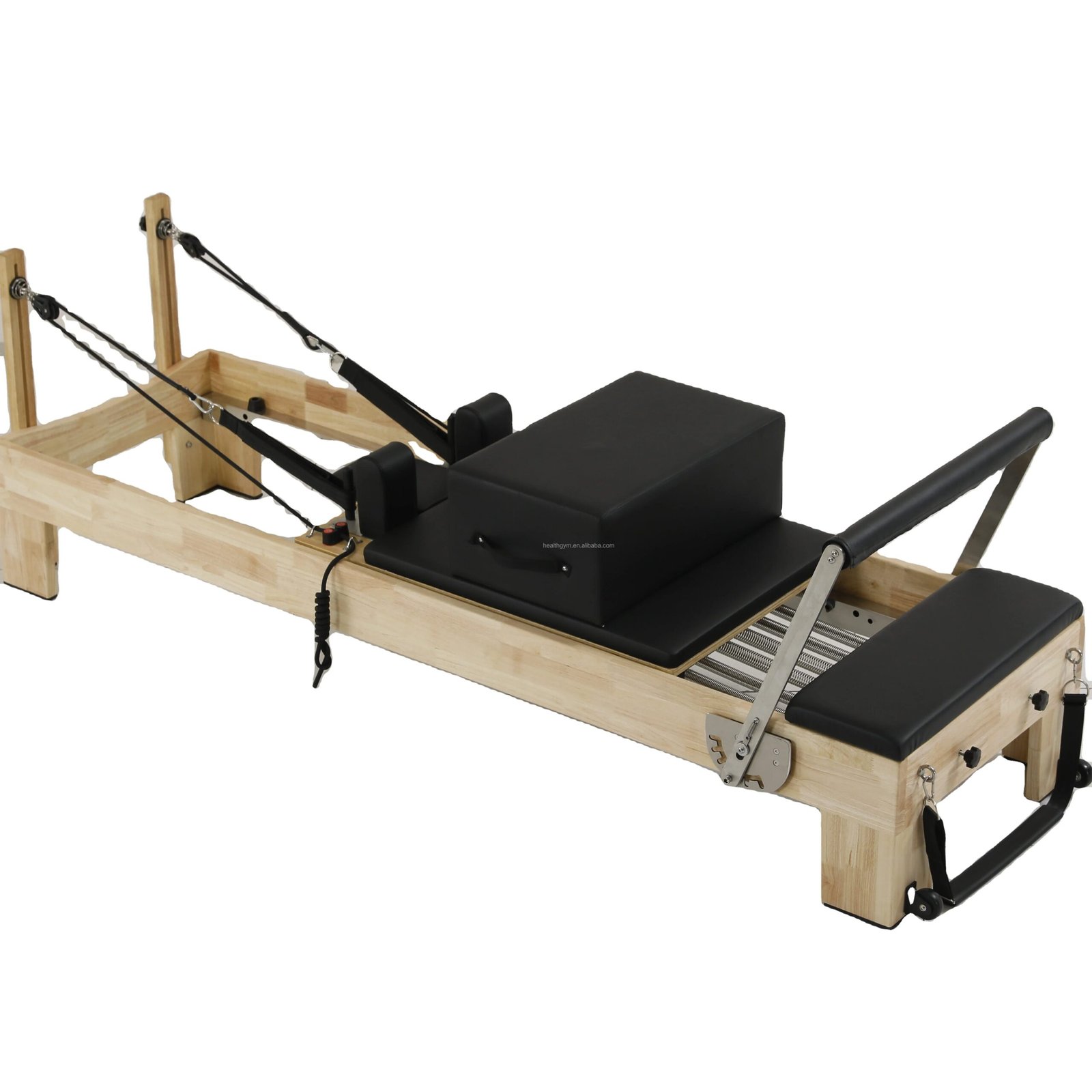
Solid Maple Vibration Damping — Natural wood grain structure absorbs spring resonance before it reaches sub-floors, eliminating the need for rubber isolators in shared studio buildings.
Technical Specifications
| Parameter | Value |
|---|---|
| Product Type | Pilates Reformer |
| Material | Maple Wood |
| Model NO. | SRY-20B |
| Specification | 2400600350mm |
| Net Weight | 100kgs |
| Accessory | Long Box / Jump Board / Platform |
| Color | Solid Color |
| Target User | Adult / Unisex |
| Warranty | 3 Years |
| Customization | Available (Logo, Color) |
Application Suitability
| Deployment Scenario | Typical Use |
|---|---|
| Boutique Pilates studio with shared floor space | Rapid class-to-class turnover using the folding mechanism to clear the floor for open programming. |
| Multi-use fitness facility | Hybrid schedules combining reformer-based sessions with yoga and functional training in the same zone. |
| High-end residential or hospitality wellness suite | Space-constrained environments where equipment must be stored vertically when not in active use. |
| Rehabilitation center | Low-impact resistance training for patients requiring controlled spring tension and stable platform support. |
Why Studio Operators Are Rethinking Permanent Reformer Footprints
A folding chassis allows multi-use spaces to recover floor area in seconds without dragging heavy apparatus across the room.
Traditional reformers occupy permanent square footage and transmit spring resonance through hard floors, triggering noise complaints in shared studio buildings and multi-use facility zones. When a studio runs back-to-back mat classes and reformer sessions, the inability to clear the floor quickly leads to scheduling bottlenecks and lost revenue [NEED_CITE: facility scheduling efficiency in hybrid fitness studios]. Operators are increasingly looking for equipment that supports high-frequency turnover without compromising structural stability.
Positioning Within a Modern Movement Studio
This commercial folding maple wood pilates reformer covers the full spectrum of spring-based resistance training, from rehabilitation-level tension to athletic conditioning loads. In a mixed-apparatus zone, it complements tower units and chair stations by providing the primary horizontal resistance plane. The solid maple frame and generous length accommodate a wide range of user heights, making it suitable for high-traffic group class environments where equipment must adapt to different bodies in rapid succession. Operators can track session counts manually, though the mechanical nature of the springs keeps the focus on tactile feedback rather than digital metrics.
Managing Acoustic Transfer in Shared Studio Environments
The density of solid maple wood inherently dampens the high-frequency vibration generated by spring oscillation during rapid eccentric movements. In multi-tenant buildings where fitness spaces sit above offices or residential units, this natural mass prevents structure-borne noise from traveling through floor joists [NEED_CITE: acoustic transmission of spring-loaded equipment in multi-story buildings]. Facilities do not require specialized isolation pads to achieve acceptable noise levels, provided the sub-floor is level and rigid. Adequate ventilation remains important to control ambient humidity, which directly affects the long-term dimensional stability of the wood frame.
Understanding Frame Mass and Spring Dynamics
The choice of maple wood over steel fundamentally alters the acoustic signature of the equipment. Steel frames tend to ring and transmit harmonic frequencies, while the dense grain structure of maple absorbs and dissipates this energy. The folding mechanism uses a pivot-lock deployment system that allows a single operator to convert the unit for storage or use without excessive physical strain. Spring tension progression across the resistance levels follows a linear path, providing predictable feedback for both instructors and participants. The included accessory ecosystem—long box, jump board, and platform—expands the exercise repertoire without requiring operators to source and store separate apparatus components.
The Hidden Costs of Compromising on Frame Construction
Purchasing lighter, steel-framed reformers often leads to immediate complaints about vibration noise in shared commercial spaces, forcing operators to invest in aftermarket dampening solutions. Units that lack a folding mechanism permanently consume floor area that could otherwise generate revenue through mat-based classes [NEED_CITE: revenue per square foot in hybrid fitness facilities]. Inconsistent spring tension across different resistance levels degrades the instructional experience and can lead to member dissatisfaction when exercises feel unpredictable. Over time, poor wood preparation or moisture content issues in cheaper wooden units result in warping, causing the carriage to track unevenly and requiring premature replacement.
Why This Product Line Supports Long-Term Facility Planning
The inherent vibration damping of the maple frame eliminates the acoustic issues that plague lighter equipment in multi-tenant deployments. The folding mechanism is tested for repeated deployment cycles to ensure the hinges and locks remain secure over years of daily class turnover. Full OEM capabilities allow operators to match the solid color finish to their brand aesthetic across multiple locations. When planning the studio layout, the ability to fold these units allows for tighter storage density and more flexible airflow planning in the active training zone. The three-year warranty and documented spring tension specifications provide a baseline for predictable maintenance scheduling.
Documentation & Test Records
- CE declaration of conformity for commercial fitness equipment safety.
- Dimensional stability report confirming maple wood moisture content and kiln-drying specifications.
- Folding mechanism cycle-test record verifying hinge and lock durability.
- Spring tension rating and progression consistency data across all resistance levels.
- Load rating certification for jump board and platform attachment points.
Installation, Commissioning & Maintenance
- Ensure the floor surface is level to prevent carriage drift and uneven wear on the maple wood rails.
- Maintain consistent studio humidity to prevent the solid maple frame from expanding or contracting.
- Inspect the folding mechanism pivot points and locks weekly for secure engagement during deployment.
- Lubricate the carriage wheels and rail contact points periodically to maintain smooth, quiet operation.
- Verify spring attachment hooks for deformation after high-intensity jump board sessions.
Matching Equipment Specs to Your Facility Requirements
Provide the total studio square footage and intended equipment count to receive a layout plan that accounts for safe clearance around deployed units and folded storage zones. Specify the daily class schedule frequency to confirm the folding mechanism and spring assemblies match your operational intensity. Detail the building’s acoustic requirements and adjacent room usage to validate the suitability of the maple frame for your specific floor type. Indicate your target market to ensure any customized branding or color specifications align with regional aesthetic standards.
Frequently Asked Questions
Q: How does the maple wood frame affect noise compared to steel reformers?
A: Solid maple wood has a dense grain structure that naturally absorbs the high-frequency vibrations generated by spring oscillation. Unlike steel frames, which can ring and transmit sound through hard floors, the wood mass dissipates this energy, making it significantly quieter for studios located in shared buildings or above occupied spaces.
Q: How does the folding mechanism impact daily studio operations?
A: The folding design allows a single instructor to stow the unit vertically, clearing the floor space for mat-based classes or open movement sessions. This capability is critical for boutique studios running hybrid schedules that require rapid conversion between different class formats without equipment relocation.
Q: What maintenance is required to keep the wood frame stable?
A: The primary requirement is maintaining consistent indoor humidity levels to prevent the maple from warping or cracking over time. Operators should also periodically check the carriage rail alignment and apply appropriate lubrication to the wheels to ensure the wood surface remains smooth and free from friction damage.
Q: Are the included accessories rated for dynamic athletic use?
A: The jump board and platform are engineered with attachment points rated for dynamic loading during athletic conditioning sessions. The solid maple frame provides the necessary mass and stability to handle the repetitive impact forces generated during plyometric exercises without shifting or resonating excessively.

![Oak Pilates Reformer Machine with Spine Corrector for Pilates Studio [WARN] draft identifier mismatch](https://bicksport.com/wp-content/uploads/2026/08/oak-pilates-reformer-machine-with-spine-corrector-for-pilates-studio-warn-draft-identifier-mismatch-358fe5.webp)