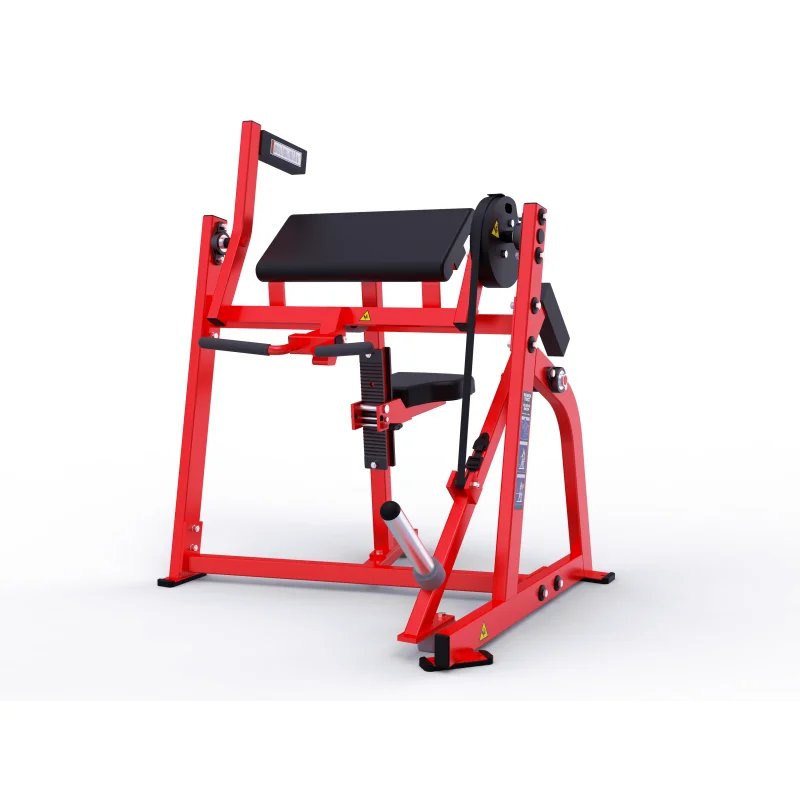
Steel Frame Rigidity — Reinforced steel construction and manual plate-loaded resistance eliminate motor dependency for zero electrical noise in continuous commercial back training.
Technical Specifications
| Parameter | Value |
|---|---|
| Product Type | ISO-Lateral Lat Pulldown Machine |
| Designation | 5015 |
| Exercise Part | Back |
| Power Source | Manual (Plate-Loaded) |
| Frame Material | Steel |
| Product Dimensions | 1833 × 1492 × 1110 mm |
| Net Weight | 145 kg |
| Foldable | No |
| Age Group | Adult |
| Gender | Unisex |
| Certification | ISO 9001, CE |
| OEM/ODM | Available |
| Customization | Available (Frame Color, Upholstery, Branding) |
Application Suitability
| Deployment Scenario | Typical Use |
|---|---|
| Professional gym and health club strength zones | High-frequency lat and upper back training for general membership |
| Community fitness centers and recreational facilities | Durable back training accessible to varied fitness levels |
| Hotel and corporate wellness center strength areas | Low-noise, plate-loaded back work complementing cardio zones |
| Sports performance training centers | Unilateral and bilateral pulling movements for athlete programming |
Why Cable Fraying and Pulley Wear Reach the Manager Before Maintenance Does
A plate-loaded ISO-Lateral path removes the motor and selectorized pin stack from the failure equation.
When a commercial gym runs sixteen hours a day, the cable and pulley system on a lat pulldown machine endures thousands of articulation cycles weekly. Selectorized machines introduce pin-stack friction and internal cable routing that degrades silently until a member snaps a cable mid-set. Plate-loaded systems route the cable externally over heavy-duty pulleys, making wear visible during routine floor walks rather than discoverable only after a failure. The ISO-Lateral Front Lat Pulldown Machine commercial gym equipment uses this external routing so maintenance staff can inspect and replace cables on a predictable schedule instead of reacting to downtime complaints [NEED_CITE: cable and pulley lifespan standards for commercial strength equipment].
Role in the Strength Zone Layout
This ISO-Lateral Lat Pulldown Machine commercial gym equipment covers bilateral and unilateral vertical pulling patterns across beginner to advanced load ranges. In a strength zone, it sits naturally alongside chest-supported row machines and cable crossover stations, filling the vertical pull slot that free-weight bars alone cannot serve safely at high volumes. Its 1833 × 1492 mm footprint fits a standard single-station bay, and the independent arm design accommodates users with wider or narrower shoulder widths without requiring grip adjustment. The manual plate-loaded system means load changes are instantaneous — members add or remove plates without waiting for a pin-stack mechanism.
Continuous Use and Floor-Level Deployment
Because resistance comes from loaded plates rather than an electric motor, this machine produces zero electrical noise and draws no dedicated circuit, which simplifies deployment on upper hotel floors or shared commercial spaces where power allocation is constrained. The primary acoustic concern is plate contact during loading and unloading, which facility operators manage with rubber bumper plates and floor mats. The steel frame requires a level subfloor to keep the pivot bearings aligned; uneven floors transfer lateral stress into the pulley bearings and accelerate wear [NEED_CITE: subfloor flatness tolerance for plate-loaded strength equipment]. Daily operating hours do not degrade performance the way they degrade motorized equipment — the limiting factor is cable and pulley inspection intervals rather than thermal duty cycles.
Manual Resistance and Independent Arm Mechanics Explained
The plate-loaded resistance system delivers a linear load curve: the weight the member adds is the weight they pull, without the friction losses inherent in selectorized pin stacks. The ISO-Lateral design gives each arm an independent pivot, so the pulling path converges naturally toward the torso rather than forcing both arms along a fixed bar. This converging arc reduces shoulder impingement risk during heavy sets because the humerus tracks a path closer to the scapular plane. The 145 kg frame mass provides stability during loaded pulls without requiring floor bolting on most commercial rubber surfaces. Upholstery pads are replaceable, and OEM customization extends to pad density and cover material to match facility branding standards.
The Hidden Cost of Specifying Light-Duty Frames
A frame built with thinner-gauge steel may hold up in a low-traffic studio but flexes perceptibly under heavy loads in a busy gym, which members read as instability and avoid. Pulley housings on light-duty frames shift alignment over months of use, causing cables to track off-center and wear through sheathing prematurely. Facilities that cut cost on frame specification often face a replacement cycle within two years, pulling the machine off the floor for retrofitting or swapping — a downtime event that disrupts member routines and reflects poorly on the operator’s equipment standards [NEED_CITE: frame fatigue testing protocols for commercial strength machines].
Why This Product Line Fits Commercial Deployments
The reinforced steel frame and sealed bearing pivots on this machine are tested for continuous high-frequency use consistent with 10,000-hour durability protocols applied across the product range. Every cardio and strength unit in the family shares the same OEM customization pipeline — frame color, upholstery, and branding — so a facility sources matching aesthetics from one production run. The 3D layout and airflow planning service covers how this machine’s footprint and member clearance zone integrate with adjacent stations, ensuring sightlines and traffic flow meet operational standards. Technical support and spare parts logistics run around the clock, which matters when a cable inspection reveals a replacement is needed before the morning rush.
Documentation & Test Records
- CE declaration of conformity for the ISO-Lateral Lat Pulldown platform
- EN 957 test report covering structural integrity and safety requirements
- ISO 9001 certificate for manufacturing quality management
- Durability test record for frame, pivot bearings, and pulley assemblies
- Spare parts list with cable and pulley replacement specifications
Installation, Commissioning & Maintenance
- Confirm 1833 × 1492 mm footprint plus member clearance zone on level subfloor
- Place rubber mats beneath loading horns to dampen plate contact noise
- Inspect cable routing and pulley alignment before opening to members
- Establish monthly cable sheath and pulley bearing inspection schedule
- Wipe down upholstery pads daily with non-corrosive cleaner to prevent sweat degradation
Planning Your Strength Equipment Inquiry
Share your strength zone square footage and planned unit count to receive a 3D layout showing clearance zones and member flow around each station. Specify whether the deployment floor is above occupied space so we can recommend bumper plate and matting configurations for acoustic control. Confirm target market plate standards — Olympic or standard — so loading horns ship with the correct sleeve diameter. Note any frame color and upholstery requirements so OEM customization aligns with your facility design standards.
Frequently Asked Questions
Q: What is the advantage of ISO-Lateral design over traditional lat pulldown machines?
A: The independent arm mechanism allows each side to move through a natural converging arc rather than forcing both arms along a fixed bar path. This accommodates different shoulder widths, enables unilateral work to address strength imbalances, and keeps the humerus tracking closer to the scapular plane during heavy pulls, which reduces shoulder joint stress.
Q: How does plate-loaded resistance compare to selectorized pin-loaded systems in commercial settings?
A: Plate-loaded systems eliminate the internal cable routing and pin-stack friction that cause silent wear in selectorized machines. Load changes are instant and the external cable path lets maintenance staff inspect wear visually during floor walks, reducing unexpected downtime from cable failure in high-traffic facilities.
Q: What maintenance is required for cables and pulleys in high-traffic gym environments?
A: Cables should be inspected monthly for sheath fraying and strand exposure at pulley contact points. Pulley bearings need periodic spin tests to detect grinding or wobble. Establishing a documented inspection schedule and keeping spare cables and pulleys in stock prevents reactive downtime when wear is detected.
Q: Can the frame color and upholstery be customized to match our facility branding?
A: Yes. Full OEM and ODM customization is available, including frame powder-coat color, pad upholstery material and color, and logo placement. Customization scopes are confirmed during the quotation stage so production tooling aligns with your facility design specifications before the manufacturing run begins.
Q: What space requirements should be considered for ISO-Lateral lat pulldown placement?
A: Beyond the 1833 × 1492 mm machine footprint, operators should allow clearance behind the seat for plate loading and in front for member entry and exit. A 3D layout plan can model these clearance zones against adjacent equipment to ensure smooth traffic flow and unobstructed sightlines across the strength zone.