

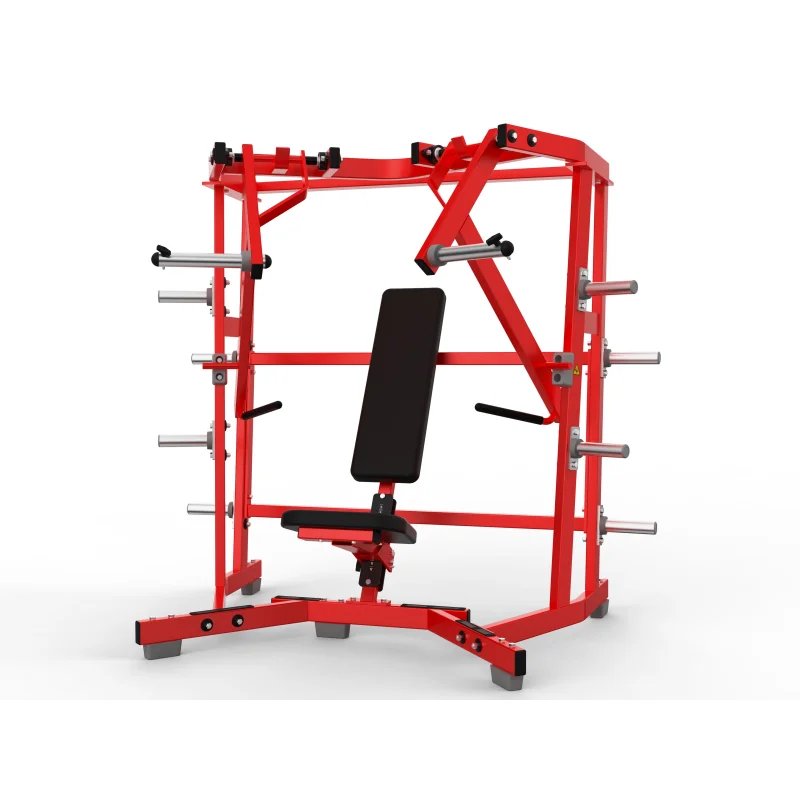
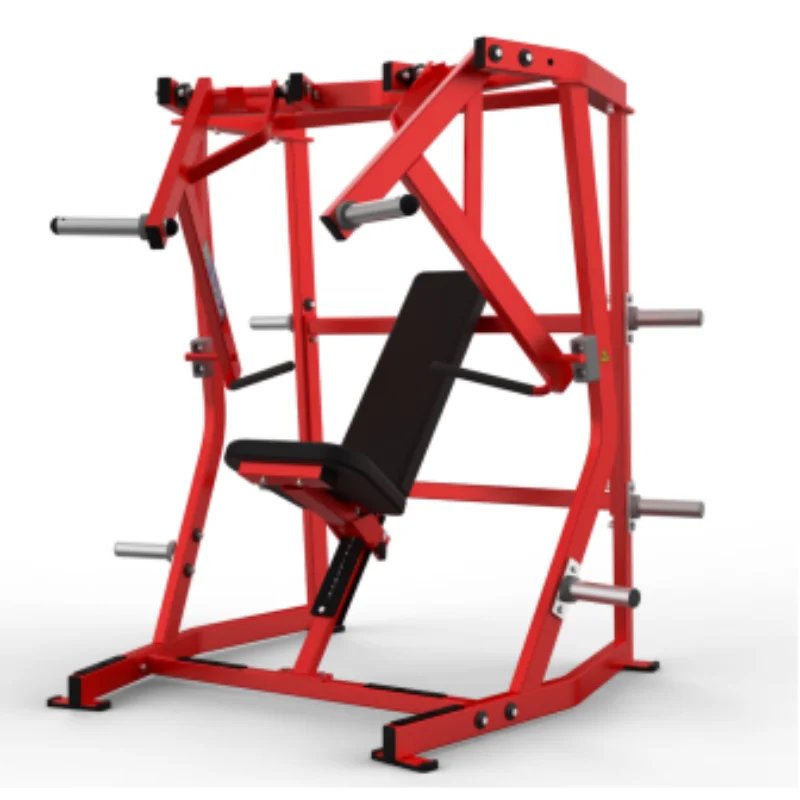
Structural Integrity Verified — ISO-lateral decline bench engineered with reinforced steel frame construction tested for continuous high-frequency commercial facility deployment.
Technical Specifications
| Parameter | Value |
|---|---|
| Product Type | ISO-Lateral Decline Bench |
| Exercise Part | Chest |
| Material | Steel |
| Product Dimensions | 130011501750mm |
| Net Weight | 141kg |
| OEM/ODM | Available |
| Certification | ISO9001, CE |
| Appliance | Community, Gymnasium |
| Fit Area | Professional Gym and Club |
| Transport Package | Plywood Case |
| HS Code | 9506911900 |
| Production Capacity | 500 PCS/Month |
Application Suitability
| Deployment Scenario | Typical Use |
|---|---|
| Professional Gym and Club | Targeted lower chest isolation training for advanced members and personal training sessions |
| Community Fitness Center | Accessible decline pressing movements for diverse membership demographics seeking chest development |
| Corporate Wellness Room | Space-efficient chest training equipment supporting employee fitness programs during high-traffic lunch hours |
| Hotel Fitness Center | Durable strength equipment accommodating travelers with limited workout time seeking efficient chest exercises |
| Sports Performance Training Center | Biomechanically optimized decline angle for athletes requiring sport-specific chest strength development |
Frame Construction Failures That Surface After the Warranty Expires
Reinforced steel frame construction rated for continuous commercial facility operation prevents the flex and weld fatigue that trigger member complaints and equipment replacement cycles.
Commercial strength equipment frames that flex under continuous load create safety risks and member complaints. Most facility managers discover frame integrity issues when members report unusual movement during heavy decline presses or when maintenance teams identify hairline cracks near pivot points. This commercial ISO-lateral decline bench machine addresses structural integrity with commercial-grade steel construction tested for high-frequency public facility use. [NEED_CITE: structural load testing standards for commercial strength equipment frames]
The 141kg net weight indicates substantial steel mass distributed across the 130011501750mm footprint, providing the stability required when users load heavy plates and execute controlled decline movements. Frame rigidity matters most during the eccentric phase of decline pressing, where the structure must resist lateral forces without energy loss or audible flexing that alarms users mid-set.
Positioning Within the Strength Training Zone
The commercial ISO-lateral decline bench machine occupies a specific niche in chest training equipment hierarchies, targeting lower pectoral development through biomechanically optimized decline angles. This equipment complements flat and incline pressing stations, creating a complete chest training progression that addresses all fiber orientations across the pectoralis major. Facilities typically deploy this machine in dedicated free-weight or plate-loaded sections where adjacent equipment supports similar compound movement patterns.
The ISO-lateral independent arm design allows unilateral movement paths, accommodating users with bilateral strength imbalances or those recovering from unilateral injuries who need independent arm loading. This independent arm function also serves advanced lifters seeking unilateral overload protocols that bilateral fixed-path machines cannot provide. The equipment suits moderate to high-density deployment in commercial facilities where turnover rates demand equipment that accommodates rapid weight changes and diverse user anthropometry without complex adjustment sequences.
Environmental Requirements for Continuous Deployment
Commercial facilities operating 16-24 hours daily subject strength equipment to continuous loading cycles that exceed residential use patterns. The ISO-lateral independent arm mechanism requires periodic pivot point inspection to maintain smooth articulation, particularly in high-humidity environments where sweat accumulation accelerates bearing wear. Floor mounting requirements depend on the facility’s vibration isolation standards, with concrete subfloors providing the rigid base necessary for heavy decline pressing without frame resonance transmission to adjacent spaces. [NEED_CITE: facility floor loading requirements for commercial plate-loaded strength equipment]
Ventilation considerations matter less for plate-loaded equipment compared to motorized cardio machines, but ambient temperature and humidity still affect grip surfaces and upholstery longevity. Facilities in tropical climates without climate-controlled strength zones may experience accelerated degradation of contact surfaces and faster corrosion of unpainted steel components. Voltage requirements do not apply to this plate-loaded system, eliminating electrical infrastructure concerns that complicate cardio equipment deployment.
Independent Arm Mechanics and Load Distribution
The ISO-lateral design employs independent pivot points for each arm, allowing natural movement path variation that accommodates individual shoulder mechanics and range-of-motion asymmetries. Unlike fixed-bar decline benches that force bilateral symmetry, this system permits each arm to follow its optimal pressing trajectory, reducing shoulder impingement risk for users with anatomical variations or previous injuries.
The 141kg frame mass provides counterbalance stability during heavy loading, preventing the equipment from lifting or shifting when users position themselves on the decline angle with loaded plates. Pivot point bearings must handle combined axial and radial loads during the pressing movement, with sealed bearing designs reducing maintenance frequency in high-use commercial environments. The steel construction throughout the frame and arm assemblies ensures consistent resistance delivery without the flex that characterizes lighter-gauge materials under load. [NEED_CITE: bearing load specifications for commercial ISO-lateral pivot mechanisms]
The Hidden Costs of Underspecified Frame Construction
Facilities that purchase lighter-gauge strength equipment to reduce initial capital expenditure often face premature replacement costs when frames develop fatigue cracks or pivot mechanisms develop excessive play that compromises movement quality. Members notice equipment degradation through increased noise during use, visible frame movement under load, or the sensation that the machine no longer provides stable resistance delivery.
High-frequency commercial deployment accelerates these failure modes, with facilities experiencing 500+ daily repetitions on popular chest equipment seeing pivot wear and frame stress accumulation far faster than the original equipment specifications anticipated. The commercial ISO-lateral decline bench machine addresses these failure points through reinforced steel construction and commercial-grade pivot assemblies designed for continuous operation rather than light-duty intermittent use. [NEED_CITE: equipment failure rate analysis for commercial strength training zones]
Why This Product Line Addresses Facility Requirements
The 10,000-hour durability testing protocol verifies that pivot points, frame welds, and load-bearing components withstand continuous commercial operation without the degradation patterns that characterize lighter-duty equipment. OEM/ODM customization allows facilities to match branding requirements through logo placement, color specification, and upholstery selection while maintaining the structural specifications that ensure longevity.
The complete six-series cardio family enables facilities to source both cardiovascular and strength equipment from a single manufacturing partner, simplifying procurement logistics and ensuring consistent quality standards across equipment categories. Free 3D layout planning accounts for the 130011501750mm footprint requirements, ensuring adequate user clearance and traffic flow around the decline bench within the broader strength zone configuration. The 24/7 technical support response provides rapid resolution for pivot adjustment questions or component replacement inquiries that arise during equipment operation.
Documentation & Test Records
- CE declaration of conformity verifying European safety and performance compliance standards
- EN 957 test report documenting strength equipment safety requirements and structural testing
- ISO 9001 certificate confirming quality management system implementation across manufacturing processes
- Durability test record showing pivot point and frame performance under continuous loading cycles
- Material specification sheet detailing steel grade and construction specifications for frame components
Installation, Commissioning & Maintenance
- Verify floor levelness across the 1300*1150mm footprint before positioning to prevent frame stress from uneven loading
- Allow 600mm clearance on all sides for user access, plate loading, and safe movement during decline exercises
- Inspect pivot point bearings quarterly for smooth articulation and apply manufacturer-specified lubricant as needed
- Check all frame fasteners monthly for proper torque, particularly around pivot assemblies and seat mounting points
- Clean upholstery and grip surfaces daily with manufacturer-approved disinfectant to prevent sweat-induced material degradation
- Inspect steel frame quarterly for any signs of coating damage or surface corrosion, addressing immediately to prevent spread
Equipment Selection and Deployment Planning
Provide your strength zone dimensions and existing equipment inventory to receive a 3D layout that positions the decline bench within optimal traffic flow patterns and complementary equipment groupings. Specify your facility’s daily operating hours and expected user volume to confirm that the frame construction and pivot specifications match your operational demands.
Communicate your target market and regional preferences to determine whether OEM customization for branding or color specification would support your facility’s positioning strategy. Indicate any adjacent equipment or space constraints that might affect the 130011501750mm footprint deployment or user clearance requirements during peak traffic periods.
Frequently Asked Questions
Q: ISO-lateral vs. plate-loaded decline bench: which suits commercial facilities?
A: ISO-lateral independent arm designs serve commercial facilities better because they accommodate users with strength imbalances and allow unilateral training protocols that fixed-bar systems cannot support. The independent arms also reduce shoulder injury risk by allowing natural movement path variation, making the equipment accessible to broader membership demographics while still serving advanced lifters seeking heavy loading options.
Q: Frame construction standards for high-frequency gym use
A: Commercial facilities require reinforced steel frames that withstand continuous loading cycles without developing flex, audible creaking, or pivot point wear that compromises movement quality. Frame weight correlates with stability and durability, with heavier constructions like the 141kg specification providing the mass necessary for stable decline pressing without frame movement or resonance during heavy repetitions.
Q: OEM/ODM customization options for branding and specifications
A: Facilities can specify logo placement, frame color, and upholstery materials to match their branding requirements while maintaining the core structural specifications that ensure commercial durability. OEM customization also extends to minor specification modifications that accommodate regional preferences or specific facility requirements without compromising the equipment’s fundamental performance characteristics.
Q: Maintenance requirements for commercial strength equipment pivot points
A: ISO-lateral pivot mechanisms require quarterly inspection for smooth articulation, proper lubrication application, and wear assessment that identifies bearing replacement needs before excessive play develops. High-frequency facilities may need monthly pivot checks during peak usage periods, with sealed bearing designs reducing contamination ingress and extending maintenance intervals in challenging environmental conditions.
Q: Space planning for ISO-lateral strength equipment in commercial gym layouts
A: The 130011501750mm footprint requires adequate surrounding clearance for plate loading, user access, and safe movement execution during decline exercises. Facilities must account for the equipment’s height when positioning beneath low ceilings or near overhead obstructions, while also ensuring adjacent equipment placement allows proper traffic flow and doesn’t create congestion during peak training hours.
![Commercial Incline Bench Press Chest Exercise Machine Gym Equipment [WARN] draft identifier mismatch](https://bicksport.com/wp-content/uploads/2026/08/commercial-incline-bench-press-chest-exercise-machine-gym-equipment-warn-draft-identifier-mismatch-d9fa4d.webp)