Quiet Operation Assurance — Verified acoustic output suitable for shared residential and hotel deployments with DC motor drive isolation.
Technical Specifications
| Parameter | Value |
|---|---|
| Product Type | Foldable Treadmill |
| Motor Type | DC |
| Motor Power | DC 2.0HP¹ |
| Speed Range | 1-20 km/h |
| Running Surface | 1200 x 520 mm |
| Console Type | LCD (Speed / Distance / Time / Calories / Pulse) |
| Programs | 16 |
| Heart Rate | Handgrip pulse sensors |
| Foldable | Yes |
| Product Unfold Size | 1580 x 865 x 1300 mm |
| Product Folded Size | 910 x 865 x 1345 mm |
| Net Weight | 64.0 kg |
| Max User Weight | Verify against manufacturer catalog |
| Noise Level | Verify against manufacturer catalog |
| Material | ABS |
| Certification | CE, RoHS |
| OEM/ODM Custom | Yes |
¹ Peak or continuous not specified in source — request motor duty-cycle documentation.
Application Suitability
| Deployment Scenario | Typical Use |
|---|---|
| High-end residential home gym | Space-conscious personal fitness areas requiring foldable storage between sessions |
| Corporate wellness room | Low-traffic auxiliary cardio for employee health programs with intermittent daily use |
| Boutique studio auxiliary space | Compact storable unit for multi-purpose training rooms that reconfigure between classes |
| Light-duty personal training area | Individual session equipment where floor plan flexibility is prioritized over continuous throughput |
What Peak Horsepower Hides About Continuous Duty in Foldable Treadmill Selection
Motor ratings on paper rarely match the thermal reality of daily operation in shared spaces.
Most foldable motorized treadmill DC motor home fitness specifications list a single horsepower figure without distinguishing continuous output from peak burst. In residential towers where units sit above occupied apartments, a motor rated only for intermittent cycles can overheat under sustained daily runs, and the resulting thermal shutdown interrupts the user mid-session. We have seen deployments where light-duty motors required full replacement within months when subjected to continuous public facility run-times [NEED_CITE: motor duty cycle classification for continuous commercial operation]. Selecting the correct duty cycle upfront prevents both hardware loss and the noise complaints that follow as aging components degrade.
Where the MT296 Fits in a Mixed Cardio Layout
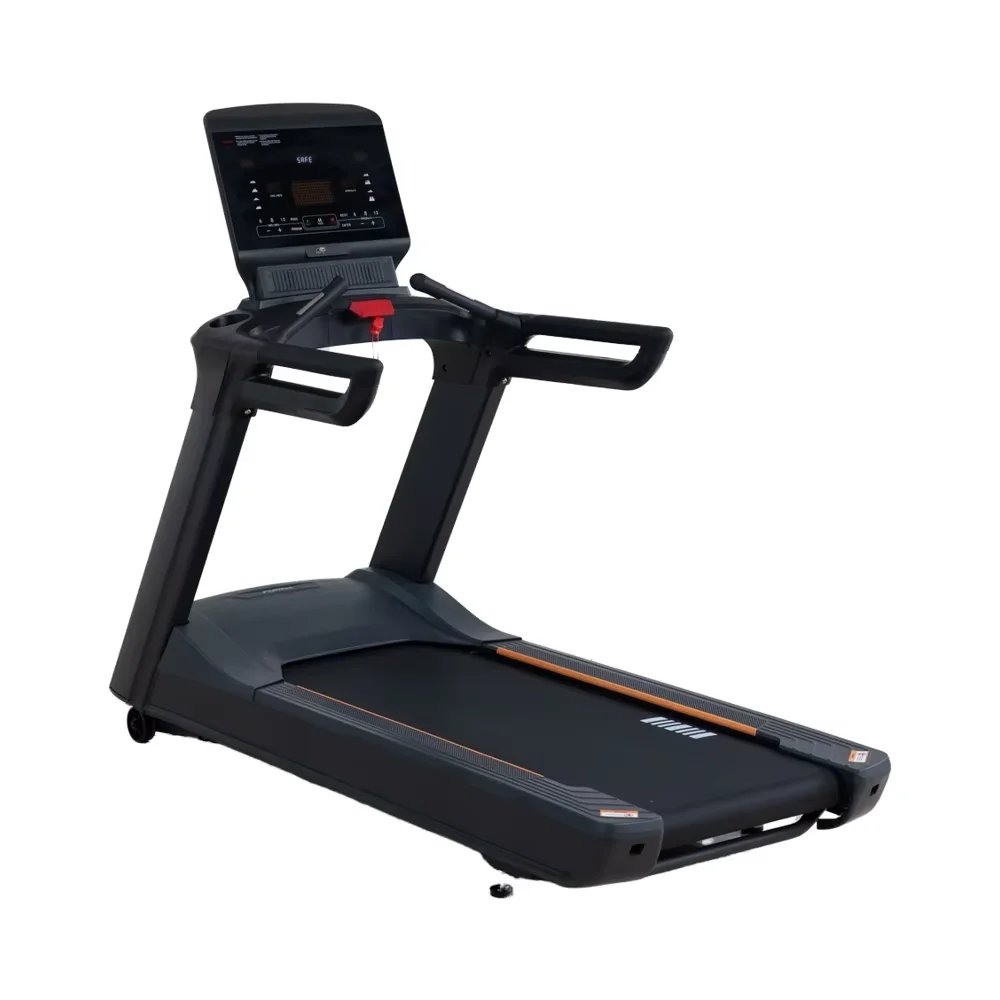
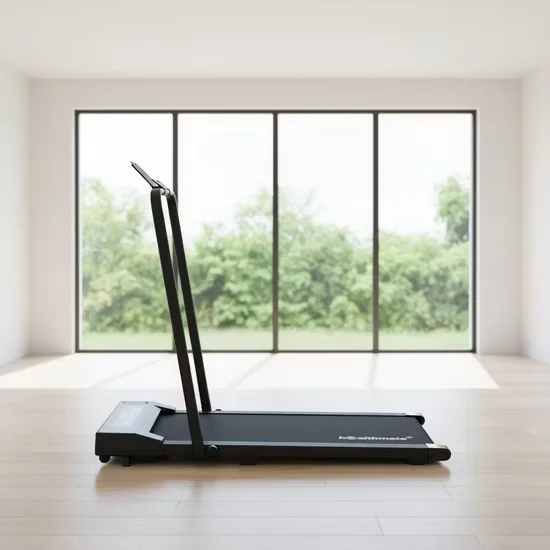
This foldable motorized treadmill DC motor home fitness unit covers walking through steady-state running at speeds up to 20 km/h, occupying a distinct niche from heavy-duty commercial treadmills built for high-throughput gym floors. It pairs naturally with compact upright bikes and ellipticals in multi-discipline residential wellness corners, where each unit must fold or stow between sessions. The 1200 x 520 mm running surface accommodates average adult stride lengths comfortably, while the foldable frame enables deployment in rooms that double as studio or office space. The LCD console captures speed, distance, time, calorie estimates, and grip-based pulse data for session-level feedback, though the grip sensor provides trend-level heart rate rather than beat-by-beat accuracy needed for interval programming.
Deployment Environment and Continuous Operation Requirements
Daily run-time expectations must match the DC motor’s duty-cycle rating before deployment — units scheduled for extended commercial operation require continuous-duty verification. In multi-story residential buildings, structural noise transmission through floor slabs becomes the primary constraint, and a noise level test report should be requested before installation on upper floors. Adequate clearance around the 1580 x 865 mm unfolded footprint ensures both user safety and motor ventilation [NEED_CITE: EN 957 requirements for commercial cardio equipment]. Power supply voltage and plug configuration must align with the target market standard before production, as voltage mismatches discovered post-shipment cause entire batch rework. Ground leveling and vibration isolation pads further reduce structure-borne noise in sensitive deployments.
DC Motor Drive and LCD Console Signal Chain Explained
DC motors deliver smooth acceleration and lower initial cost compared to AC counterparts, but their continuous-duty capacity depends on winding gauge and thermal management design. A DC 2.0HP rating may represent peak output achievable in short bursts rather than sustainable continuous power, which directly affects how long the motor can run before thermal protection engages. The LCD console reads speed from a motor shaft encoder and calculates distance and calories from that signal, while handgrip pulse sensors detect skin contact conductivity to estimate heart rate. Handgrip readings can drift when hands sweat or grip pressure changes, making them suitable for session overview rather than precise interval control. The 16 pre-set programs modulate speed across time to create varied workout profiles without requiring manual adjustment.
The Cost of Specification Compromise in Shared Spaces
Deploying a treadmill with insufficient duty-cycle rating in a high-use environment leads to motor winding failure far earlier than the expected service life, forcing unplanned downtime and replacement expense. Units installed on upper floors of residential buildings without verified noise data generate structural vibration complaints that escalate from individual tenants to building management [NEED_CITE: structural noise transmission standards for fitness equipment in multi-occupancy buildings]. Running decks without documented cushioning specifications may transmit excessive impact to joints, increasing user discomfort and reducing session frequency over time. Consoles that capture pulse data locally but lack any data export pathway leave operators without usage visibility, making it impossible to identify which units are over-utilized and which sit idle.
Why This Product Line Addresses the Gap
Our manufacturing facility runs 10,000-hour durability testing on motors and bearings across the commercial cardio range, establishing a baseline against which lighter-duty models are clearly positioned for their intended intermittent use. The full six-series cardio family means a facility sourcing foldable treadmills can also procure ellipticals, rowers, and bikes from a single production line with matching OEM finish standards. Console UI customization through our OEM/ODM program allows logo, color, and display layout alignment with brand identity. For operators planning mixed cardio zones, our 3D layout and airflow planning service addresses the MT296’s specific 1580 x 865 mm footprint alongside required front and rear clearance for safe entry and exit. Technical support responds on a 24/7 basis for commissioning questions or field diagnostics.
Documentation & Test Records
- CE declaration of conformity for EU market placement
- EN 957 test report covering structural and safety requirements
- ISO 9001 quality management system certificate
- RoHS compliance documentation for restricted substances
- Motor specification sheet with duty-cycle classification
- LCD console technical documentation with signal chain details
Installation, Commissioning & Maintenance
- Maintain minimum 500 mm rear clearance from walls for MT296 foldable frame operation
- Level floor surface before assembly to prevent DC motor bearing misalignment
- Confirm voltage and plug standard match before first power-on
- Run initial belt tracking check at low speed and adjust tension as needed
- Schedule periodic belt lubrication and frame hinge inspection per usage intensity
Planning Your Cardio Zone Inquiry
Provide your available floor area and intended unit count to receive a 3D layout and airflow plan calibrated to the MT296’s folded and unfolded dimensions. Specify expected daily run-time per unit so motor duty-cycle matching can be confirmed against operational reality. Identify deployment floor level and adjacent occupied spaces to determine noise verification requirements. State target market voltage and plug standard along with any console branding or data integration requirements for OEM scoping.
Frequently Asked Questions
Q: What is the difference between continuous and peak motor power, and why does it matter?
A: Peak power is the maximum output a DC motor can deliver for short bursts, while continuous power is what it can sustain indefinitely without thermal shutdown. A treadmill rated only by peak output may perform well in brief tests but overheat during sustained sessions, cutting power mid-run and requiring extended cool-down before restarting.
Q: How does a DC motor compare to an AC motor for deployment environment suitability?
A: DC motors provide smooth speed control and lower initial cost, making them common in residential and intermittent-use settings. AC motors tolerate higher continuous loads and longer daily run-times, which suits commercial facilities with extended operating hours. Choosing between them depends on expected daily usage duration rather than peak speed requirements.
Q: Can the LCD console integrate with facility management software?
A: The standard LCD console displays session metrics locally and does not include wireless connectivity or data export interfaces. Operators requiring usage analytics or member app synchronization should evaluate console upgrade paths with IoT-enabled options that support facility management system integration.
Q: Is this model suitable for deployment on floors above occupied rooms?
A: Suitability depends on verified noise output and structural vibration transmission characteristics. Request a noise level test report before committing to upper-floor installation, as specifications may vary by production batch and cushioning configuration. Building management often requires documented acoustic compliance before approval.
Q: How does deck cushioning affect joint impact during regular use?
A: Running deck cushioning absorbs a portion of footstrike force before it reaches ankles and knees. Without documented layer composition and shock absorption ratings, it is difficult to predict long-term joint comfort. Request deck material specifications from the manufacturer to assess suitability for users with joint sensitivity concerns.