
![2019 Hammer Strength ISO-Lateral Low Row Commercial Gym Machine [WARN] draft identifier mismatch](https://bicksport.com/wp-content/uploads/2026/08/2019-hammer-strength-iso-lateral-low-row-commercial-gym-machine-warn-draft-identifier-mismatch-8dd44a.webp)
2019 Hammer Strength ISO-Lateral Low Row Commercial Gym Machine
Heavy-Duty Frame Integrity — Reinforced steel construction tested for continuous high-frequency use, delivering reliable bilateral back training across professional gym environments.
Technical Specifications
| Parameter | Value |
|---|---|
| Designation | 2019 Hammer Strength ISO-Lateral Low Row 05 |
| Product Type | ISO-Lateral Strength Machine |
| Exercise Part | Back |
| Main Frame Material | Steel |
| Main Frame Color | According to Customer Requirements |
| Cushion Color | According to Customer Requirements |
| Product Dimensions | 1250 × 1056 × 1700 mm |
| Net Weight | 139 kg |
| Age Group | Adult |
| Gender | Unisex |
| OEM/ODM | Acceptable |
| Certification | ISO 9001, CE |
Application Suitability
| Deployment Scenario | Typical Use |
|---|---|
| Professional gym and club | High-volume bilateral back training within commercial strength zones |
| Community fitness center | Durable back exercise station accommodating diverse member fitness levels |
| Gymnasium | Structured strength programming for athletic and general fitness populations |
Why Frames Flex Under Real Gym Traffic and What That Means for ISO-Lateral Low Row Selection
A 139 kg steel frame built for independent arm loading holds alignment where lighter constructions drift off-axis under daily repetition.
Facility operators routinely discover that strength machines rated for light-commercial cycles develop frame flex and cable misalignment within months of continuous member use. When an ISO-Lateral Low Row commercial strength machine sits in a busy back-training corner, the independent arm mechanism doubles the asymmetric loading cycles compared to a fixed-bar design. Weld seams and pivot bearings absorb forces that compound with every unilateral pull, making initial material thickness and joint engineering the real determinants of service life [NEED_CITE: frame fatigue classification for commercial ISO-Lateral equipment]. Operators replacing units prematurely face not only equipment cost but member complaints about uneven resistance feel and the operational disruption of swapping floor positions.
Independent Arm Mechanics in a Shared Strength Zone
The ISO-Lateral Low Row commercial strength machine targets the latissimus dorsi, rhomboids, and mid-trapezius through a converging pull path that suits both hypertrophy and general conditioning programs. Its independent arm design lets each side move on a separate axis, addressing strength imbalances without forcing the dominant side to compensate. In a typical gym floor layout, this unit anchors the back-training cluster alongside pulldown and T-bar stations, serving users from novice to advanced without requiring weight-stack adjustments beyond standard pin selection. The footprint accommodates high-traffic placement where member rotation through the station needs to remain fluid.
Continuous Loading, Ventilation, and Floor Integration
A strength station in a commercial facility may see hundreds of sets per week, and the pivot bearings in an ISO-Lateral mechanism must tolerate that repetition without developing play or grinding. Deployment on upper floors of hotels or mixed-use buildings requires attention to how impact from weight-stack return transmits through the slab — vibration-damping pads beneath the 1250 × 1056 mm base are standard practice [NEED_CITE: vibration transmission standards for upper-floor gym equipment]. Adequate clearance on all sides ensures users can load and unload safely, while ceiling height must accommodate the 1700 mm frame plus overhead reach during full-extension pulls.
How the ISO-Lateral Mechanism Distributes Load Differently
The independent arm design means each side of the ISO-Lateral Low Row commercial strength machine carries its own pivot and cable routing, eliminating the single cross-bar failure point that plagues cheaper fixed-path rowers. Steel frame construction at 139 kg net weight provides the mass needed to resist lateral shift during heavy unilateral pulls. The OEM/ODM option on frame and cushion color lets operators match the unit to facility branding without compromising the structural specification. Because resistance is weight-stack-driven rather than plate-loaded, changeover between users is fast, supporting the throughput demands of peak-hour gym traffic [NEED_CITE: weight-stack cable routing durability under commercial repetition cycles].
What Spec Compromises Cost When Machines Run All Day
A frame specified below commercial thickness tolerances develops audible creak within weeks, triggering member complaints and maintenance tickets that compound across a fleet. Cable routing that lacks sealed pulleys frays under the asymmetric loads inherent to independent arm use, creating replacement cycles that pull machines off the floor repeatedly. Cushion covers rated for residential use crack and peel under gym-environment humidity and sweat exposure, forcing reupholstery expenses that exceed the cost difference of specifying correctly from the start.
Why This Product Line Holds Up in Commercial Deployment
The 139 kg steel frame is designed for the repetition volume that professional gyms generate daily, and the ISO-Lateral independent arm mechanism is tested through extended load cycles before shipping. Full OEM/ODM on frame and cushion color means the ISO-Lateral Low Row commercial strength machine integrates into branded environments without aftermarket painting or reupholstery. CE and ISO 9001 certification supports international procurement, and the unit’s footprint allows planners to map spacing requirements into 3D floor layouts that account for user flow and adjacent equipment clearance.
Documentation & Test Records
- CE declaration of conformity for ISO-Lateral Low Row commercial strength machine
- EN 957 test report covering structural integrity and safety
- ISO 9001 certificate for manufacturing quality management
- Frame material and weld inspection record
- OEM/ODM customization specification sheet
Installation, Commissioning & Maintenance
- Maintain minimum 600 mm clearance around the 1250 × 1056 mm base for safe user access
- Level the steel frame on vibration-damping pads to reduce slab-transmitted noise from weight-stack return
- Inspect independent arm pivot bearings and cable routing quarterly under commercial load
- Wipe cushion surfaces daily with pH-neutral cleaner to prevent sweat-driven material degradation
- Verify weight-stack pin engagement and cable tension during initial commissioning
Equipment Specification and Procurement Path
Provide your strength zone floor area and planned equipment list to receive a 3D layout that positions this ISO-Lateral Low Row commercial strength machine with correct user-flow spacing and adjacent station coordination. Specify your facility’s expected daily member throughput so duty-cycle matching can confirm frame and bearing suitability. Declare target-market voltage requirements if any electronic console integration is planned, and confirm whether OEM color customization applies to frame, cushion, or both.
Frequently Asked Questions
Q: What is ISO-Lateral technology and how does it benefit back training?
A: ISO-Lateral technology allows each arm of the rowing machine to move independently along its own axis. This means the stronger side of a user’s back cannot compensate for the weaker side during a set, promoting balanced muscle development. For facility operators, it also means the machine accommodates a wider range of user strength levels without requiring separate equipment variants.
Q: Can the frame and cushion colors be customized to match our gym branding?
A: Yes, both the main frame color and cushion color are available according to customer requirements through OEM/ODM customization. This allows professional gyms, hotel fitness centers, and corporate wellness facilities to integrate the machine visually with their existing design themes and brand palettes without aftermarket modification.
Q: What is the recommended maintenance schedule for commercial strength equipment?
A: For a weight-stack ISO-Lateral machine in daily commercial use, operators should inspect cable routing and pulley bearings quarterly, check pivot bolt torque semi-annually, and clean cushion surfaces daily. Frame welds should be visually inspected annually. A structured maintenance log tied to usage volume extends service intervals and reduces unplanned downtime.
Q: How does independent arm movement improve exercise safety and effectiveness?
A: Independent arm movement ensures that each side of the body works through the full range of motion under its own load, eliminating the risk that a dominant side masks a weakness or imbalance. This reduces compensatory movement patterns that can lead to overuse injury over time, particularly in high-volume gym environments where members train without direct supervision.
Q: What certifications does this equipment carry for international markets?
A: This ISO-Lateral Low Row carries ISO 9001 certification for manufacturing quality management and CE marking for compliance with European health and safety directives. These certifications support procurement in international markets and provide facility operators with documented assurance of structural testing and production consistency.

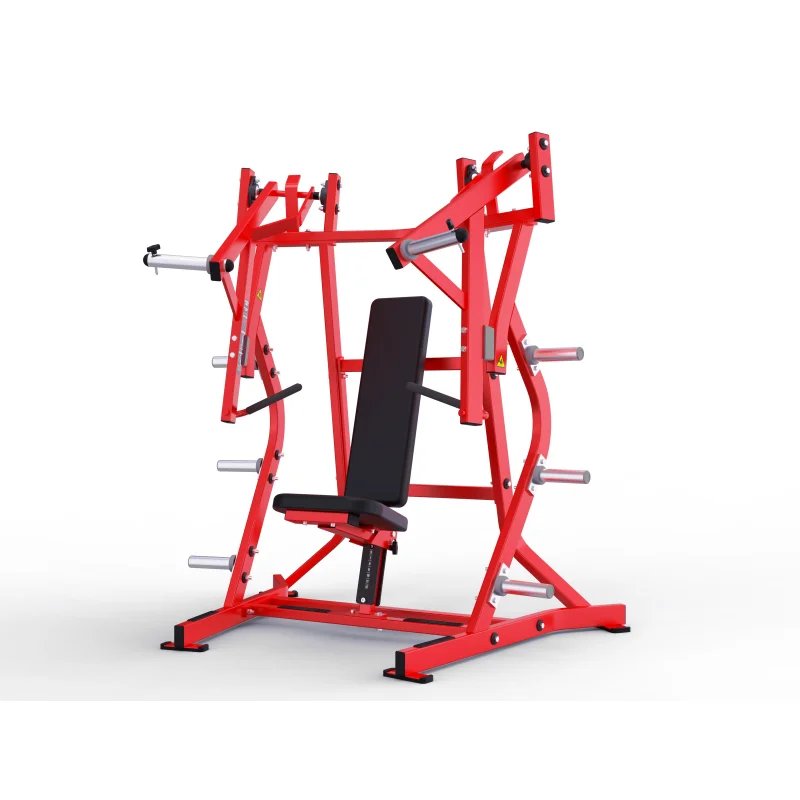
![Plate Loaded ISO-Lateral Bench Press Commercial Gym Equipment [WARN] draft identifier mismatch](https://bicksport.com/wp-content/uploads/2026/08/plate-loaded-iso-lateral-bench-press-commercial-gym-equipment-warn-draft-identifier-mismatch-5afafa.webp)
![Popular Strength Commercial ISO-Lateral Leg Press Gym Equipment [WARN] draft identifier mismatch](https://bicksport.com/wp-content/uploads/2026/08/popular-strength-commercial-iso-lateral-leg-press-gym-equipment-warn-draft-identifier-mismatch-13bd29.webp)