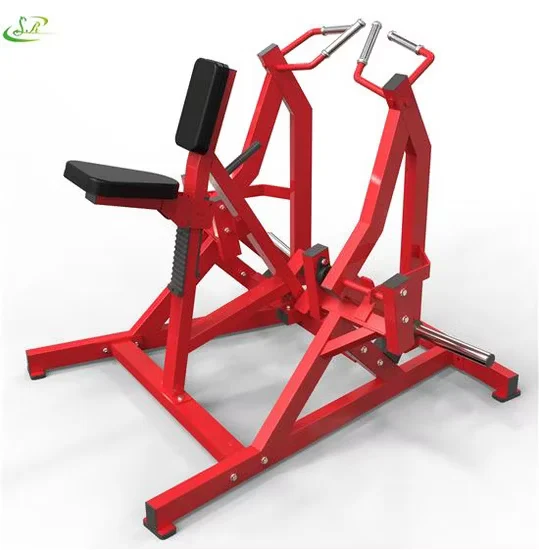
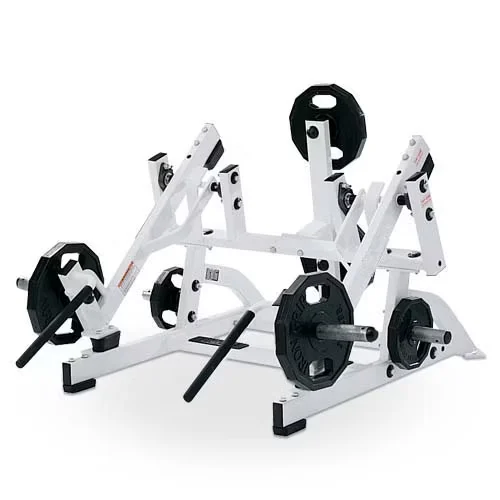
Acoustic Neutrality — Manual resistance architecture eliminates motor noise at the source, enabling deployment on guest-room floors without acoustic complaints.
Technical Specifications
| Parameter | Value |
|---|---|
| Product Type | Strength Training Equipment (Bench Press) |
| Model NO. | 5004 |
| Exercise Part | Chest |
| Power Source | Manual |
| Resistance Type | Plate-loaded (Manual) |
| Material | Steel |
| Product Dimensions | 1323 × 1599 × 1746 mm |
| Net Weight | 140 kg |
| Foldable | No (Unfolded) |
| Age Group | Adult |
| Gender | Unisex |
| Appliance | Gymnasium |
| Certification | RoHS, ISO 9001, CE |
| HS Code | 9506911900 |
| Customization | Available (OEM/ODM) |
| Production Capacity | 500 PCS/Month |
| Transport Package | Plywood Case |
| Origin | China |
Application Suitability
| Deployment Scenario | Typical Use |
|---|---|
| Hotel fitness center on guest room floors | 24/7 guest access for chest pressing without motor noise transferring to adjacent rooms |
| Chain gym cardio-to-strength transition zone | High-frequency plate-loaded chest training between selectorized and free-weight areas |
| Corporate wellness room | Compact footprint chest station for employee strength routines during short breaks |
| High-end residential home gym | Heavy-duty bench press for serious lifters requiring commercial-grade frame stability |
| Sports performance training center | Fixed-path chest loading for athlete hypertrophy and power development cycles |
Why Strength Equipment Noise Travels Further Than You Expect
A 140 kg steel frame absorbs plate-loading vibration before it reaches the floor slab.
When a hotel places its strength zone directly above a ballroom or a co-working lounge, every dropped plate and every frame resonance becomes a maintenance ticket. The Hammer Strength Bench Press Machine avoids the most common source of those tickets: motor hum and internal gearbox vibration. Because the resistance is entirely manual and plate-loaded, the only sound generated during a working set is the clink of plates against the loading horns and the user’s breathing. In multi-story hospitality deployments where acoustic insulation is measured in STC ratings rather than wishful thinking, eliminating electromechanical noise sources is the single most effective intervention a facility planner can make [NEED_CITE: acoustic isolation standards for multi-floor fitness zones in hospitality environments].
Positioning This Press Within a Commercial Strength Floor
The 5004 occupies the middle ground between free-weight benching and selectorized chest machines. It delivers a fixed Hammer Strength movement path that stabilizes the pressing arc, reducing the need for a spotter while still requiring the user to load and unload plates manually. In a typical strength zone layout, this unit pairs with incline and decline variants to cover the full pectoral range, and sits adjacent to shoulder and arm stations so members can rotate through upper-body work without crossing the floor. The 1323 × 1599 mm footprint fits standard commercial spacing grids, and the 140 kg net weight means the unit stays planted during heavy eccentric reps without requiring floor anchoring in most concrete-slab installations. The commercial hammer strength bench press machine accommodates adult users across a wide anthropometric range thanks to the fixed-path geometry, making it suitable for both general-population gym floors and athlete-only performance rooms.
Continuous Loading Cycles and Floor-Level Deployment
A plate-loaded press has no motor duty cycle to worry about, but the frame and pivot bearings still endure thousands of load-unload cycles per day in a busy facility. The all-steel construction and sealed bearing pivots on this model are designed for that kind of repetitive stress without developing the lateral play that causes rattle and knock after a few months of heavy use [NEED_CITE: bearing lifespan under cyclic plate-loaded stress in commercial strength equipment]. Because there is no electrical draw, the unit can be placed anywhere on the floor without proximity to power outlets, which simplifies layout planning and eliminates cable-management hazards. Floor leveling remains important: an uneven slab will cause the frame to rock during heavy presses, accelerating wear on the pivot bushings and creating a perceptible wobble that users notice immediately. The absence of electronic components also means no firmware updates, no data-link troubleshooting, and no console downtime — a meaningful advantage for facilities that lack on-site IT support.
Reading the Steel Gauge and Pivot Engineering
The 140 kg net weight of this commercial hammer strength bench press machine tells you something about the steel gauge and the welding volume in the frame. Heavier frames resist torsional flex when users press asymmetrically or when plates are loaded unevenly on one horn, keeping the movement path consistent rep after rep. The Hammer Strength fixed-path design uses a converging arc that mimics the natural pressing motion of the shoulder joint, which differs from the straight-bar path of a traditional barbell bench and places less shear stress on the anterior deltoid at the bottom of the movement. Plate-loaded resistance also provides a linear load curve — the weight on the bar does not change through the range of motion, unlike selectorized machines where cam profiles alter the feel at different joint angles. This predictability is preferred by experienced lifters and strength coaches who program around known load values. The sealed pivot bearings reduce maintenance to periodic inspection rather than scheduled replacement, which matters in facilities running eighteen-hour days.
What Happens When Frame Gauge Is Value-Engineered Down
A lighter frame saves on raw material cost but introduces flex under load, which translates to lateral wobble during heavy presses and premature bushing wear. In a chain gym running high member throughput, that wobble becomes a complaint within months, and the unit is pulled from the floor for warranty service or replaced entirely [NEED_CITE: warranty claim frequency for underspecified strength frames in high-throughput commercial gyms]. Noise is the secondary cost: a flexing frame transmits vibration into the floor slab, which radiates through the building structure and generates complaints from adjacent tenants or hotel guests. The 140 kg net weight of this unit reflects a frame gauge chosen to resist those failure modes across a commercial deployment lifecycle rather than a light-duty residential one.
Why This Line Fits Multi-Venue Rollouts
The manual, plate-loaded architecture means zero electrical infrastructure is required at the installation point, which simplifies multi-site deployments where power specifications vary between markets. The 1323 × 1599 mm footprint fits the spacing templates used in our 3D cardio and strength zone layouts, allowing planners to model sightlines and member flow before a single unit ships. Full OEM customization — frame color, logo placement, and upholstery material — lets operators maintain brand consistency across dozens of locations without managing multiple vendor relationships [NEED_CITE: OEM lead-time coordination for multi-site commercial fitness rollouts]. The 500 units per month production capacity supports phased openings for hotel groups and gym chains expanding regionally. Each unit ships with commissioning documentation and a spare parts list so on-site teams can handle routine bearing inspections without waiting for a service call.
Documentation & Test Records
- CE declaration of conformity covering structural and mechanical safety requirements
- EN 957 test report validating static and dynamic load performance for strength training equipment
- ISO 9001 certificate confirming quality management system compliance in manufacturing
- RoHS compliance statement restricting hazardous substances in component materials
- Frame and pivot bearing durability test record under cyclic loading conditions
- OEM customization specification sheet covering color, logo, and upholstery options
Installation, Commissioning & Maintenance
- Maintain minimum 600 mm clearance on all sides for safe plate loading and user entry on the 1323 × 1599 mm footprint
- Verify floor level within 3 mm across the full base footprint and install vibration-damping pads if the slab is uneven
- Inspect pivot bearing seals and lateral play quarterly under the 140 kg frame’s expected commercial load cycles
- Clean plate-loading horns and upholstery after each shift to prevent sweat corrosion on steel contact surfaces
- Confirm frame weld integrity and fastener torque annually or after any relocation of the unit within the facility
Equipment Selection and Deployment Inquiry
Provide your strength zone square footage and equipment list to receive a 3D layout that accounts for plate-loading clearance, member flow, and sightline requirements. Specify the deployment floor level and adjacent occupied spaces so acoustic transfer can be assessed even for manual-resistance equipment. Confirm target-market voltage standards if you are also sourcing powered cardio units in the same shipment to avoid plug-adapter complications at the port of entry. State whether OEM frame color, logo, or upholstery customization is required so production lead time can be factored into your opening schedule.
Frequently Asked Questions
Q: How does a Hammer Strength fixed-path press differ from free-weight barbell benching?
A: The converging arc of a Hammer Strength press guides the handles through a path that matches natural shoulder mechanics, reducing the stabilization demand on supporting muscles. Free-weight benching requires the lifter to control bar path independently, which engages more stabilizer musculature but increases injury risk without a spotter. Many commercial facilities deploy both, using the fixed-path unit for higher-volume hypertrophy work and the free-weight bench for strength and athletic performance sessions.
Q: What frame characteristics determine long-term durability in a commercial strength unit?
A: Steel gauge thickness, welding volume at high-stress joints, and the quality of pivot bearing seals are the primary indicators. A heavier net weight generally signals thicker tubing and more gusset reinforcement, which resists torsional flex under asymmetric loading. In high-throughput environments, underspecified frames develop lateral play and audible rattle within months, while properly engineered frames maintain structural rigidity across years of continuous commercial use.
Q: What maintenance does a plate-loaded manual press require compared to motorized equipment?
A: Plate-loaded units eliminate motor servicing, belt replacement, and console firmware updates entirely. Maintenance is limited to periodic pivot bearing inspection, fastener torque verification, and surface cleaning to prevent sweat corrosion. This significantly reduces the total cost of ownership over a multi-year deployment, especially in facilities that lack dedicated maintenance technicians on every shift.
Q: How should strength equipment be positioned relative to cardio and free-weight zones?
A: Plate-loaded presses typically sit between selectorized machines and free-weight areas, forming a progression path from guided to independent movement. Adequate clearance on all sides is essential for safe plate loading and unloading. Facility planners should also consider sightlines and member traffic flow so that users moving between zones do not cross active lifting areas, reducing collision risk and improving overall floor efficiency.
Q: What OEM customization options are available for commercial strength equipment?
A: Frame color, logo application, and upholstery material can all be customized to match facility branding. OEM scoping covers cosmetic and tactile specifications without altering the structural or mechanical engineering of the unit. Operators rolling out multiple locations benefit from this consistency, as members recognize the brand environment regardless of which venue they visit.

![H5027 Commercial Adductor Machine Integrated Gym Trainer for Gyms [WARN] draft identifier mismatch](https://bicksport.com/wp-content/uploads/2026/08/h5027-commercial-adductor-machine-integrated-gym-trainer-for-gyms-warn-draft-identifier-mismatch-7e7237.webp)