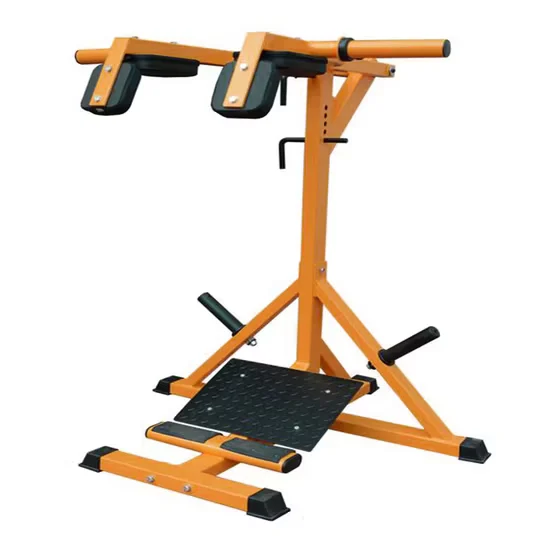
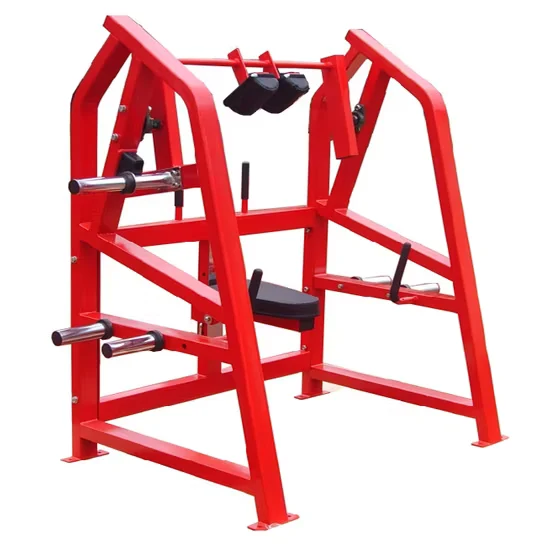
Engineered for Commercial Duty — Plate-loaded resistance eliminates cable and pulley failure points, delivering consistent performance through thousands of daily repetitions in high-traffic gym environments.
Technical Specifications
| Parameter | Value |
|---|---|
| Product Type | Leg Curl Machine |
| Model NO. | 5029 |
| Resistance Type | Plate Loaded |
| Movement Design | ISO-Lateral Independent Arms |
| Frame Material | Steel |
| Product Dimensions | 15501300800mm |
| Net Weight | 128kg |
| Max User Weight | Commercial Grade |
| Exercise Part | Leg |
| Gender | Unisex |
| Age Group | Adult |
| Certification | ISO9001, CE |
Application Suitability
| Deployment Scenario | Typical Use |
|---|---|
| Community fitness centers | Multi-user daily access with plate-loaded durability |
| Commercial gymnasium strength zones | High-frequency hamstring training in supervised environments |
| Hotel fitness facilities | 24-hour self-service operation requiring minimal maintenance |
| Corporate wellness rooms | Employee strength training with adjustable loading |
| Sports performance training centers | Unilateral leg development for athletic conditioning |
Why Plate-Loaded Leg Curl Machines Outlast Selectorized Alternatives in Commercial Facilities
No cables means no emergency service calls during peak hours.
Community fitness centers and commercial gyms face a recurring problem: selectorized machines with cable-pulley systems develop friction points, fray cables, and require scheduled downtime for maintenance. During peak evening hours, a downed leg curl machine means frustrated members and front desk complaints. Plate-loaded designs eliminate the entire cable pathway — the resistance comes directly from weight plates on a guided rod system [NEED_CITE: mechanical reliability comparison between plate-loaded and selectorized resistance systems].
The 128kg steel frame of this commercial plate loaded leg curl machine anchors the unit during heavy loading, preventing the frame flex that lighter machines exhibit when users load multiple plates. When facility operators choose equipment rated for light commercial duty but deploy it in 24/7 community access environments, bearing wear accelerates and pivot points develop play within months.
Positioning the Leg Curl Within a Commercial Strength Zone
This ISO-Lateral leg curl occupies a specific niche in strength zone planning: isolated posterior chain development with independent leg movement. Unlike bilateral machines that force both legs through a fixed movement pattern, the independent arm design allows users to address muscle imbalances — a capability valued by both rehabilitation-focused members and performance athletes. The commercial plate loaded leg curl machine complements compound movement stations like leg presses and squat racks by providing targeted hamstring isolation without spinal loading.
The 15501300800mm footprint fits standard strength zone spacing grids, allowing adjacent equipment placement while maintaining safe loading clearance. Users ranging from recreational gym members to competitive athletes can adjust resistance incrementally by adding or removing standard plates, eliminating the fixed weight stack limitations that frustrate advanced lifters. The machine accommodates various femur lengths through adjustable pad positioning, making it suitable for diverse user populations in community fitness environments.
Continuous Operation Demands and Deployment Environment Requirements
Community fitness centers operating from early morning through late evening subject strength equipment to near-continuous use cycles. Unlike motorized cardio equipment with duty cycle ratings, plate-loaded machines depend on mechanical components — pivot bearings, guide rods, and pad mounting hardware — that must withstand repetitive loading without developing play or noise [NEED_CITE: bearing seal specifications for commercial strength equipment in high-humidity environments].
Deployment on upper floors requires consideration of plate loading noise transmission. While the machine itself operates quietly during the curling motion, users dropping plates onto loading pins creates impact noise that transmits through floor structures. Ground-floor or basement placement eliminates this concern, while upper-floor installations benefit from rubber flooring with acoustic underlayment. The 128kg frame weight provides inherent stability, reducing the need for floor anchoring in most installations, though facilities on raised access floors should verify load-bearing capacity.
Ventilation requirements are minimal compared to motorized equipment, but sweat accumulation on steel frames and pad surfaces demands regular cleaning protocols to prevent corrosion and maintain grip texture. Facilities in coastal or high-humidity environments should specify powder-coated frame finishes and verify that bearing seals resist moisture intrusion.
Decoding the Plate-Loaded Resistance Mechanism and Frame Engineering
Plate-loaded resistance operates on a direct mechanical principle: weight plates slide onto guide rods, and the user’s movement lifts the loaded mass through a pivoting lever system. This eliminates the cable stretch, pulley friction, and selector pin wear that plague selectorized machines under commercial use volumes. The ISO-Lateral independent arm design means each leg operates on its own pivot axis, requiring dual bearing sets and separate guide rod assemblies — effectively doubling the mechanical components compared to bilateral designs.
The 128kg net weight indicates substantial steel tube gauge and reinforcement at stress concentration points: the main pivot bearing housing, the pad mounting brackets, and the plate loading rod supports. Lighter frames in this category often use thinner-walled tubing that develops visible flex under heavy loading, creating an unstable feel that advanced users immediately notice. The 15501300800mm dimension envelope reflects the space required for full range of motion plus plate loading clearance on both sides.
Steel construction with welded joints provides the rigidity necessary for consistent resistance curves throughout the movement arc. When frames flex under load, the effective resistance changes unpredictably, compromising training consistency. The plate-loaded system also allows micro-loading — users can add fractional plates for precise progression, a capability impossible with fixed weight stacks that jump in 5kg or 10lb increments.
The Hidden Costs of Underspecifying Strength Equipment
Facilities that purchase light-commercial rated leg curl machines for community fitness center deployment typically see accelerated wear patterns within the first year. Pivot bearings develop play, creating wobble during the curling motion that users perceive as instability. Pad mounting hardware loosens under repetitive loading, requiring weekly torque checks that maintenance staff often neglect until complaints escalate [NEED_CITE: failure mode analysis of strength equipment bearings in multi-user facilities].
Frame flex under heavy loading creates a secondary problem: the resistance curve becomes inconsistent, and users unconsciously compensate by altering their movement patterns. This leads to reduced training effectiveness and, in some cases, strain injuries that generate liability concerns. When facilities batch-replace underspecified equipment after two years of service, the total cost of ownership exceeds what proper commercial-grade equipment would have cost initially.
Noise complaints represent another hidden cost. Worn bearings squeak during movement, pad mounting hardware rattles, and loose frame connections create audible vibration — all contributing to an environment that feels poorly maintained. Members notice these details and form quality judgments that affect retention decisions.
Why This Product Line Addresses Commercial Deployment Challenges
The 128kg reinforced steel frame addresses the stability requirements that lighter machines fail to meet in high-frequency use environments. Every pivot point and bearing housing is engineered for the repetitive loading cycles that community fitness centers and commercial gyms demand, with sealed bearings that resist dust and moisture contamination common in multi-user facilities.
The plate-loaded resistance system eliminates cable and pulley maintenance entirely — a significant operational advantage for facilities without dedicated equipment technicians. When a selectorized machine’s cable frays, the unit goes offline until parts arrive and a service technician completes the repair. Plate-loaded machines have no such single points of failure; the resistance mechanism consists of weight plates and guide rods that require only periodic cleaning and visual inspection.
ISO-Lateral independent arm design serves the diverse user populations in community fitness centers, from rehabilitation clients working one leg at a time to athletes addressing strength imbalances. The 15501300800mm footprint integrates into standard strength zone layouts, with clearances that allow safe plate loading without encroaching on adjacent equipment traffic patterns. OEM customization options include frame color, pad material specifications, and branding elements that align with facility identity standards.
Documentation & Test Records
- CE declaration of conformity covering mechanical safety requirements
- EN 957 test report validating structural integrity under load
- ISO 9001 certificate for manufacturing quality management
- Frame material specification and weld inspection documentation
- Bearing load rating and seal specification sheets
- Assembly and installation guide with torque specifications
Installation, Commissioning & Maintenance
- Verify 15501300800mm clearance plus 600mm plate loading access on both sides
- Level installation surface and install vibration-damping pads under frame feet
- Inspect all pivot bearings and guide rods for smooth operation before user access
- Establish weekly cleaning protocol for pad surfaces and steel frame contact points
- Schedule quarterly bearing inspection and lubrication per manufacturer specifications
- Verify plate loading rod alignment and retaining clip function monthly
Equipment Selection and Deployment Planning
Provide your strength zone floor plan with total square footage and adjacent equipment list to receive a detailed layout showing clearance requirements, user flow patterns, and plate storage integration. Specify your facility’s daily operating hours and expected user volume to confirm that bearing specifications match your duty cycle requirements.
Indicate deployment floor level and adjacent occupied spaces to determine whether acoustic underlayment is necessary for plate loading noise control. Specify your target market region so that any electrical accessories — if lighting or display features are added — match local voltage standards. State whether pad material customization or frame color matching to existing equipment is required for visual consistency across your strength zone.
Frequently Asked Questions
Q: What advantages does plate-loaded resistance offer over selectorized weight stacks for commercial gym deployment?
A: Plate-loaded systems eliminate cables, pulleys, and selector mechanisms that represent the primary failure points in high-use environments. Without these components, maintenance requirements drop significantly — there are no cables to fray, no selector pins to wear, and no pulley bearings to replace. Users can also micro-load with fractional plates for precise progression, something fixed weight stacks cannot accommodate. The trade-off is that users must manually load plates, which some supervised facilities consider acceptable while high-turnover unsupervised environments may prefer selectorized convenience.
Q: How does ISO-Lateral independent arm design benefit users compared to bilateral leg curl machines?
A: Independent arm design allows each leg to work through its own movement path without the stronger leg compensating for the weaker one. This capability supports rehabilitation protocols where one leg requires isolated work, addresses muscle imbalances that bilateral machines mask, and allows advanced users to perform unilateral training without the stabilization demands of free weight alternatives. For facilities serving diverse populations from rehab clients to competitive athletes, ISO-Lateral machines provide training options that fixed-path bilateral designs cannot match.
Q: What frame weight and stability specifications should buyers evaluate when comparing leg curl machines?
A: Net weight indicates the steel gauge and reinforcement level at critical stress points. Machines under 100kg often exhibit visible frame flex under heavy loading, creating an unstable feel and inconsistent resistance curves. The 128kg weight of this unit reflects reinforced pivot bearing housings and adequate tube wall thickness for commercial loading. Beyond raw weight, examine the bearing seal specifications — sealed bearings resist dust and sweat contamination that accelerate wear in multi-user environments where daily cleaning cannot reach internal components.
Q: What maintenance schedule should facility operators plan for plate-loaded leg curl machines?
A: Plate-loaded machines require less maintenance than selectorized alternatives but still need systematic attention. Weekly cleaning of pad surfaces and frame contact points prevents sweat corrosion. Monthly inspection of plate loading rods and retaining clips ensures safe operation. Quarterly bearing checks identify wear before it creates play or noise. Annual inspection of weld joints and frame connections catches fatigue cracks before they become safety concerns. Facilities in high-humidity environments should shorten these intervals, as moisture accelerates bearing degradation and fastener corrosion.
Q: How should strength zone layouts accommodate plate-loaded leg curl machines for safe user flow?
A: The 15501300800mm footprint requires additional clearance on both sides for plate loading access — typically 600mm minimum to allow users to load plates without blocking adjacent equipment traffic. Position the machine where plate storage racks are within reasonable carrying distance, reducing the distance users transport heavy plates through the facility. Avoid placement in high-traffic walkways where users carrying plates might collide with members moving between stations. Consider sightline requirements so staff can monitor proper usage from central supervision points.
![Commercial Adjustable Abdominal Board 5060 Gym Equipment [WARN] draft identifier mismatch](https://bicksport.com/wp-content/uploads/2026/08/commercial-adjustable-abdominal-board-5060-gym-equipment-warn-draft-identifier-mismatch-d52594.webp)
![Plate Loaded Seated Triceps Extension Gym Equipment 5077 for Commercial Gyms [WARN] draft identifier mismatch](https://bicksport.com/wp-content/uploads/2026/08/plate-loaded-seated-triceps-extension-gym-equipment-5077-for-commercial-gyms-warn-draft-identifier-mismatch-4b61e0.webp)