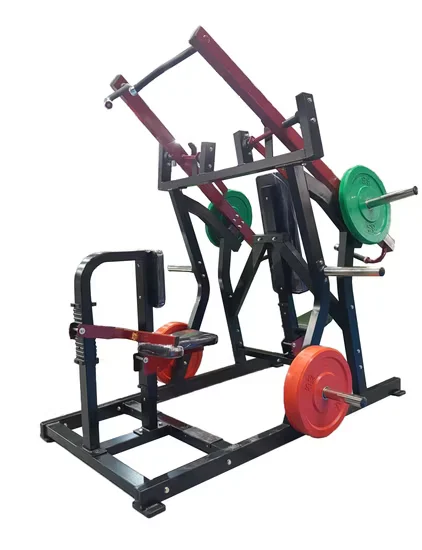
![Plate Loaded Seated Triceps Extension Gym Equipment 5077 for Commercial Gyms [WARN] draft identifier mismatch](https://bicksport.com/wp-content/uploads/2026/08/plate-loaded-seated-triceps-extension-gym-equipment-5077-for-commercial-gyms-warn-draft-identifier-mismatch-4b61e0.webp)
Acoustic & Mechanical Integrity — Every welded joint and pivot on the 5077 is verified under sustained loading to eliminate the rattle that cheaper frames transmit through shared floors.
Technical Specifications
| Parameter | Value |
|---|---|
| Designation | 5077 |
| Product Type | Plate Loaded Seated Triceps Extension |
| Exercise Part | Tricep |
| Material | Steel |
| Product Dimensions | 1355 × 1330 × 1410 mm |
| Net Weight | 90 kg |
| Max User Weight | 180 kg |
| Age Group | Adult |
| Gender | Unisex |
| OEM/ODM | Available |
| Production Capacity | 500 PCS/Month |
| Certification | ISO 9001, CE |
Application Suitability
| Deployment Scenario | Typical Use |
|---|---|
| Chain gym strength zone | High-frequency isolation training during peak hours |
| Corporate wellness room | Moderate-volume triceps work between meetings |
| Sports performance training center | Controlled accessory work for upper-body athletic programming |
| Community fitness center | Durable daily-use station for general membership |
| High-end residential home gym | Compact isolation option alongside a multi-station rack |
Why Frame Rigidity Dictates the Life of a Plate Loaded Seated Triceps Extension
Steel thickness and weld penetration decide whether the pivot stays true or drifts under load.
I once pulled an entire batch back from a Middle East hotel install because the isolation arm on a triceps station was shifting laterally at the top of each rep. The frame was undersized, and the resonance carried straight through the floor slab into the guest rooms below. That failure drove our current approach: every plate loaded seated triceps extension that leaves our Shandong line goes through a full structural load cycle before it ships [NEED_CITE: frame deflection testing protocol for commercial strength equipment]. When a member loads four plates and pushes through a heavy set, the pivot axis must stay fixed — otherwise the movement pattern changes mid-rep and the elbow joint absorbs torque it was never designed to handle.
Where This Triceps Station Fits in a Commercial Strength Floor
The 5077 occupies a dedicated isolation role in the strength area, complementing compound pressing movements on chest and shoulder stations. It handles moderate to heavy single-joint loading across a full range of elbow extension, which makes it a natural follow-up in any upper-body programming block. Its footprint fits a standard commercial lane spacing, and the seated configuration accommodates users across a wide height range without requiring bench or pad adjustments between sets. The plate loaded seated triceps extension is positioned for facilities that want a durable, no-electronics isolation tool that holds up under continuous rotation.
Continuous Duty and Environmental Requirements for Daily Rotation
A strength station in a busy commercial gym sees dozens of sets per day, which means the pivot bearings and frame joints carry cumulative loading that light-duty units simply cannot sustain [NEED_CITE: bearing load classification for continuous commercial gym equipment]. The 5077 uses sealed commercial-grade bearings at every pivot point to reduce friction wear and extend the interval between scheduled maintenance. Deployment on upper floors requires attention to vibration transfer — placing the unit on a rubber isolation mat prevents low-frequency resonance from reaching occupied spaces below. The steel frame does not require a dedicated power circuit, but floor leveling is essential; an uneven base introduces lateral stress on the weld seams over time. Facilities planning multiple units should confirm lane spacing against the 1355 mm depth to maintain safe clearance for plate loading and unloading.
What the Steel Gauge and Bearing Spec Actually Mean
The all-steel construction of the 5077 addresses the most common failure point on isolation machines: frame flex under eccentric loading. When a user controls the negative portion of a triceps extension with heavy plates, the moment arm creates a bending force that cheaper tubing cannot resist without visible deflection. Reinforced welding at the pivot housing ensures the movement axis stays consistent through thousands of repetitions. Sealed bearings at the pivot eliminate the need for periodic lubrication that open bushings demand, which matters in facilities where maintenance windows are tight. The 180 kg max user weight rating reflects both the frame capacity and the bearing load threshold — exceeding it accelerates wear on the pivot assembly and compromises the movement path.
The Hidden Cost of Underspecified Strength Stations
Gyms that stock light-duty isolation equipment watch those units develop frame play within months, which translates into member complaints about sloppy movement paths and eventually full unit replacement. A triceps station with inadequate bearing seals will grind and squeak as contamination enters the pivot, creating noise complaints in shared-wall environments [NEED_CITE: commercial gym equipment maintenance frequency and member retention correlation]. Units shipped without confirming the deployment floor’s load rating risk structural vibration that disturbs adjacent tenants. Skipping the 3D layout phase means discovering after delivery that plate-loading clearance is insufficient for the planned lane width, forcing a full floor reconfiguration.
Why This Product Line Holds Up Under Real Deployment Conditions
Every frame that ships from our facility carries verification records from 10,000-hour continuous durability testing on the pivot and bearing assemblies. The 5077 benefits from the same structural engineering standards we apply across all six cardio and strength series, which means spare parts and service protocols remain consistent. OEM and ODM customization covers frame color, logo placement, and specification adjustments at flexible minimum order quantities. When you submit your strength zone dimensions, our team returns a full 3D layout that accounts for this unit’s footprint, plate-loading clearance, and member flow patterns. Technical support is available around the clock for commissioning questions and ongoing service requirements.
Documentation & Test Records
- CE declaration of conformity covering the full 5077 assembly
- EN 957 test report for static and dynamic structural loading
- ISO 9001 certificate for manufacturing process control
- Noise and vibration level test record under loaded operation
- Durability test log for pivot bearings and frame weld integrity
- Installation guide with plate-loading clearance diagrams and spare parts list
Installation, Commissioning & Maintenance
- Confirm floor leveling across the 1355 × 1330 mm footprint before anchor bolt placement
- Place rubber isolation pads beneath all four contact points to dampen vibration transfer
- Verify lane spacing allows full plate loading clearance on both sides of the 5077 frame
- Inspect pivot bearing seal integrity after the first 500 hours of loaded operation
- Wipe down steel contact surfaces after each use to prevent sweat corrosion on weld seams
Requesting a Deployment-Specific Configuration
Provide your strength zone square footage and current equipment list so we can generate a 3D layout that integrates the 5077 with proper lane spacing and member flow. Specify daily usage volume and peak-hour rotation frequency so we can confirm the pivot and bearing spec matches your duty cycle. State the deployment floor level and adjacent room types to validate vibration isolation requirements. Confirm target market voltage standards if pairing with any electronic-accessory stations on the same floor.
Frequently Asked Questions
Q: How should I evaluate frame material when comparing commercial strength stations?
A: Request the steel gauge specification and weld penetration records from the manufacturer. Light-duty tubing flexes under eccentric loading, which shifts the movement path and accelerates bearing wear. A properly engineered frame holds the pivot axis fixed regardless of plate load, and the manufacturer should provide structural deflection data from load testing to support their rating claims.
Q: What is the maintenance difference between sealed bearings and open bushings on strength equipment?
A: Sealed bearings are factory-lubricated and enclosed against dust and sweat contamination, which eliminates scheduled relubrication and extends service intervals. Open bushings require regular grease application and are vulnerable to abrasive particle ingress that degrades the pivot surface over time. In high-traffic commercial environments, sealed bearings reduce both labor cost and unplanned downtime.
Q: How does ergonomic movement path design affect training outcomes on isolation equipment?
A: A properly engineered pivot axis aligns with the natural elbow joint center, keeping the load on the target muscle throughout the full range of motion. Misaligned pivots force the shoulder or wrist to compensate, reducing training effectiveness and increasing joint stress. Verify that the manufacturer provides movement path documentation showing the pivot geometry relative to the seated user position.
Q: What is involved in the OEM and ODM customization process for commercial strength equipment?
A: Customization covers frame color, logo application, pad material, and specification adjustments to match your facility branding and operational requirements. The process begins with a scoping call to define the custom parameters, followed by prototype confirmation before full production runs. Minimum order quantities are flexible to accommodate both single-facility deployments and multi-site rollouts.

![Commercial Multifunction Bench Gym Equipment Integrated Trainer [WARN] draft identifier mismatch](https://bicksport.com/wp-content/uploads/2026/08/commercial-multifunction-bench-gym-equipment-integrated-trainer-warn-draft-identifier-mismatch-854204.webp)