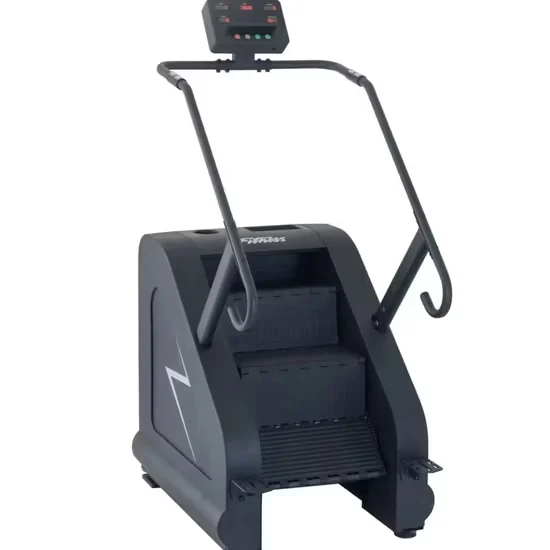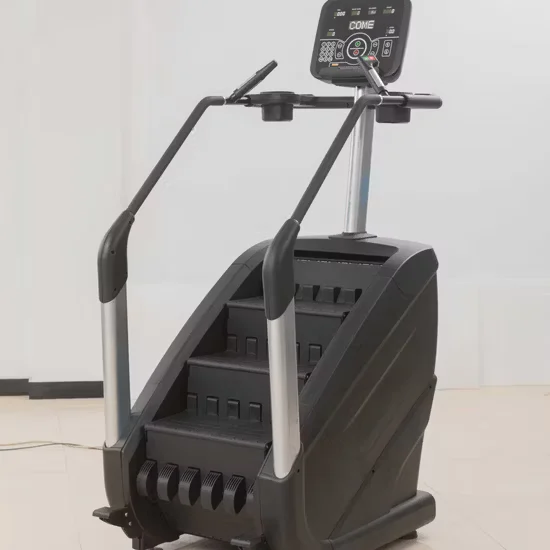
Whisper-Quiet Drivetrain — Motor-driven step mechanism eliminates belt-slip variance and structure-borne vibration across 15–164 RPM cadence range.
Technical Specifications
| Parameter | Value |
|---|---|
| Designation | Sq-1017 |
| Product Type | Stair Climber |
| Resistance Type | Electric (motor-driven) |
| Running Speed | 15 RPM – 164 RPM |
| Console Type | OSD display (Steps, Time, Calories, Speed, Heart Rate) |
| Heart Rate | Handgrip sensor |
| Power Requirement | AC 220V±10% or AC 110V±10% |
| Product Dimensions | 2160 × 830 × 1432 mm |
| Net Weight | 195 kg |
| Frame Material | Aluminium Alloy Pipe + PP Plastic |
| Color | Black |
| Foldable | Unfolded |
| Certification | CE, RoHS, ISO |
| Warranty | One Year |
Application Suitability
| Deployment Scenario | Typical Use |
|---|---|
| Hotel fitness center on guest room floors | 24-hour access cardio with strict structure-borne noise limits |
| Chain gym cardio zone | High-frequency stepmill deployment for continuous member rotation |
| Corporate wellness room | Low-maintenance stair training during peak lunchtime and after-work windows |
| High-end residential home gym | Quiet motor-driven stepping for multi-story private installations |
| Sports performance training center | Athlete conditioning with real-time cadence and heart rate tracking |
Why Motor Burnout Hits the Front Desk Before the Maintenance Log
Electric motor-driven resistance sustains consistent cadence where belt-driven units drift and stall under continuous load.
When a light-commercial stair climber gets installed in a 24/7 gym cardio zone, the friction pad wears unevenly within months, cadence drops under heavier users, and the motor overheats during back-to-back peak sessions. Facility managers often learn about the failure from front desk complaints — members reporting erratic step rhythm or the unit cutting out mid-session. [NEED_CITE: motor duty cycle classification for continuous commercial operation] The Sq-1017 commercial stair climber electric motor-driven stepmill replaces that friction interface with a direct electric drive, maintaining 15 to 164 RPM regardless of user weight shifts or session duration.
Positioning the Sq-1017 Within a Mixed-Modality Cardio Floor
This commercial stair climber electric motor-driven stepmill fills the vertical-loading niche in any cardio layout. It complements treadmills and ellipticals by targeting glute and quad activation through a climbing motion rather than forward locomotion, creating exercise variety that keeps member rotation flowing across stations during peak hours. The 2160 × 830 mm footprint fits standard cardio row spacing, while the aluminium alloy frame and PP shrouding keep the unit rigid without transmitting resonant vibration into the floor slab. It accommodates users across a broad weight range, and the OSD console delivers real-time steps, time, calories, speed, and handgrip heart rate — enough biometric data for facility usage analytics without requiring external wearable pairing.
Continuous Runtime Demands and Multi-Story Installation Constraints
A stair climber in a busy gym cardio zone typically sees back-to-back sessions spanning 16 or more hours daily. The electric drive in the Sq-1017 is specified for sustained duty cycles in that environment, but deployment planning must account for thermal dissipation around the motor housing — units placed against walls need lateral clearance for airflow. [NEED_CITE: EN 957 requirements for commercial cardio equipment] On upper hotel floors, the aluminium alloy frame and PP shrouding reduce structure-borne vibration transmission compared to open steel frames, yet leveling the base on a flat concrete subfloor with anti-vibration pads further isolates the step mechanism from the slab. The dual-voltage input (AC 220V / AC 110V) means the unit ships configured for the destination market, avoiding transformer workarounds that introduce failure points. For facilities tracking equipment utilization through management software, the OSD console outputs the data fields needed for session logging, though integration protocol details must be confirmed before production.
Motor-Driven Versus Friction-Based Step Mechanisms
The distinction between electric motor-driven and belt-driven stair climbers comes down to how cadence is governed under load. A friction-pad system relies on mechanical contact to regulate step speed, and that contact surface degrades with use — cadence becomes inconsistent, and maintenance intervals shorten as pads require adjustment or replacement. The Sq-1017’s electric drive eliminates that wear interface entirely, holding steady RPM across the full 15–164 range. The aluminium alloy pipe frame contributes to vibration damping by avoiding the resonance patterns common in rigid welded-steel open frames. PP plastic shrouding encloses the drivetrain, containing airborne noise from the step mechanism and motor assembly. Handgrip heart rate sensors provide continuous pulse data to the OSD without the latency issues associated with intermittent optical readers, making interval programming more reliable for users following structured cadence targets.
What Specification Shortcuts Cost After Month Six
Choosing a stair climber with a friction-pad drive over a commercial stair climber electric motor-driven stepmill like the Sq-1017 creates a maintenance cascade. The pad wears, cadence drifts, members complain, and the motor works harder to compensate — accelerating its own failure. [NEED_CITE: maintenance interval comparison between motor-driven and friction-driven stepmills] Noise problems compound differently: an unbalanced flywheel or underspecified bearing generates vibration that travels through the frame into the floor, and when that floor sits above occupied hotel rooms, the remedy is not a bearing swap but an equipment relocation or full replacement order. Dual-voltage units ordered without confirming plug standards for the destination market arrive needing rewiring or adapter work that voids warranty provisions and delays commissioning by weeks.
Why This Product Line Meets Deployment Reality
Every Sq-1017 leaving the line has its magnetic resistance assembly and sealed bearings validated for continuous high-frequency operation, a discipline born from hotel deployment callbacks where stair climber noise migrated through floor slabs. The motor-driven step mechanism is tested against 10,000-hour endurance benchmarks to confirm it sustains commercial duty cycles without cadence degradation or thermal shutdown. [NEED_CITE: 10,000-hour continuous duty testing protocol for commercial cardio motors] The aluminium frame and PP shrouding reduce resonant transmission, verified through noise level testing across both airborne and structure-borne measurement. OEM customization extends to console UI, color, and branding — useful for hotel fitness centers matching interior design specifications or gym chains standardizing equipment appearance across locations. The 3D cardio zone layout service accounts for the Sq-1017’s 2160 × 830 mm footprint plus user clearance and airflow corridors, preventing the common mistake of packing stair climbers against walls where heat builds and access panels become unreachable.
Documentation & Test Records
- CE declaration of conformity covering electrical safety and EMC requirements for the Sq-1017
- EN 957 test report validating mechanical safety and structural load performance
- ISO 9001 certificate confirming manufacturing quality management system compliance
- Noise level test report documenting airborne and structure-borne dB measurements
- Durability test record showing motor and drivetrain endurance under continuous load
- Console technical documentation detailing OSD output fields and data interface protocols
- Spare parts list with part numbers for motor assembly, step mechanism, and handgrip sensors
Installation, Commissioning & Maintenance
- Allow minimum clearance around the 2160 × 830 × 1432 mm frame for user access and motor ventilation
- Level the base on flat concrete with anti-vibration pads to minimize structure-borne noise transmission
- Confirm AC 220V or AC 110V circuit with dedicated breaker before connecting the power input
- Calibrate step cadence across the full 15–164 RPM range during first commissioning
- Inspect motor drive and step mechanism bearings at intervals matching daily usage hours
- Verify OSD console output fields align with facility management software before member launch
- Wipe handgrip sensors and PP shrouding daily to prevent sweat corrosion on aluminium surfaces
Before You Request a Quote
Share your cardio zone square footage and planned equipment count to receive a 3D layout that positions the Sq-1017 with proper clearance and airflow. Specify your facility’s average daily operating hours so we match motor duty-cycle ratings to your actual usage pattern. Identify the deployment floor and adjacent room types to confirm whether additional vibration isolation measures are needed. State your destination market voltage and plug standard to ensure the unit ships factory-configured, and indicate whether OSD data integration with your facility management platform is required.
Frequently Asked Questions
Q: What is the difference between motor-driven electric resistance and belt-driven stair climbers in terms of maintenance and noise?
A: Motor-driven electric resistance, as used in the Sq-1017, eliminates the friction-pad wear surface that belt-driven climbers depend on for cadence control. This means no periodic pad adjustment or replacement, and the step rhythm remains consistent across the full 15–164 RPM range regardless of session length. Noise output stays lower over the equipment lifespan because there is no mechanical contact surface degrading and generating irregular vibration patterns.
Q: What noise and vibration levels can be expected when installed on upper floors above occupied rooms?
A: The aluminium alloy frame and PP plastic shrouding reduce resonant vibration transmission compared to open steel frame designs. Structure-borne noise is further managed by placing anti-vibration pads under the base and ensuring the subfloor is level. We provide a noise level test report with both airborne and structure-borne measurements so facility planners can evaluate suitability for multi-story hotel or residential deployments before committing to an order.
Q: How do I confirm the voltage and plug standard matches my target market before ordering?
A: The Sq-1017 supports AC 220V±10% or AC 110V±10% input. During the quotation stage, specify your destination country and the exact plug type required so the unit ships with the correct factory-installed power configuration. This avoids on-site rewiring or adapter work that can delay commissioning and potentially affect warranty coverage if the electrical modification is not performed to specification.
Q: What is the recommended maintenance interval for the motor drive and step mechanism under continuous commercial use?
A: Maintenance intervals depend on daily operating hours and total session volume. For 24/7 gym deployments, we recommend inspecting the motor drive assembly and sealed bearings at regular intervals documented in the commissioning guide. The electric drive eliminates friction-pad adjustments, so scheduled maintenance focuses on bearing condition, electrical connections, and OSD sensor calibration rather than consumable wear parts replacement.
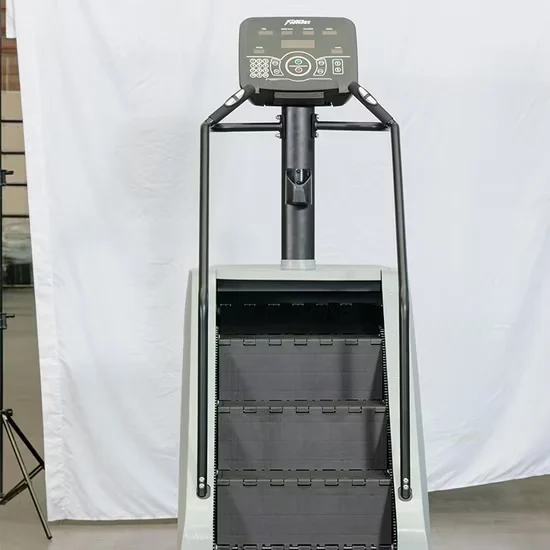
![SQ1017 High Performance Motor Drive Commercial Stair Machine [WARN] draft identifier mismatch](https://bicksport.com/wp-content/uploads/2026/08/sq1017-high-performance-motor-drive-commercial-stair-machine-warn-draft-identifier-mismatch-c50b40.webp)