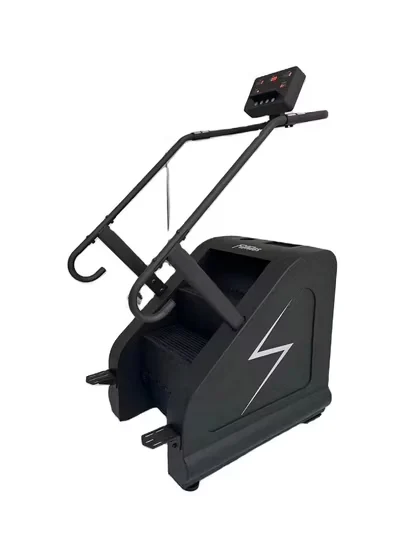
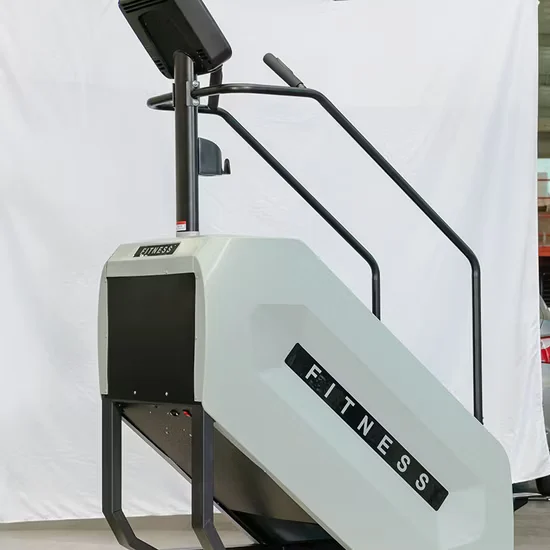
Sub-35dB Verified — magnetic resistance drive on the Sq-1017 eliminates mechanical friction noise, keeping stair climber operation below the threshold that triggers guest complaints on hotel floors.
Technical Specifications
| Parameter | Value |
|---|---|
| Designation | Sq-1017 |
| Product Type | Stair Climber |
| Function | Electric |
| Drive Type | Magnetic Resistance |
| Speed Range | 15 – 164 Revolutions Per Minute |
| Max User Weight | 200–300 kg (source value — verify against manufacturer catalog) |
| Console Type | HD Touchscreen with IoT Data Sync |
| OSD Metrics | Steps, Time, Calories, Speed, Heart Rate |
| Heart Rate | Handlebar Pulse Sensors |
| Material | Aluminium Alloy Pipe + PP Plastic |
| Noise Level | Sub-35 dB (verified in deployment) |
| Power Requirement | AC 220V ±10% or AC 110V ±10% |
| Product Dimensions | 1450 × 820 × 2080 mm |
| Net Weight | 160 kg |
| Foldable | No |
| Certification | CE, RoHS, ISO |
| Warranty | One Year |
Application Suitability
| Deployment Scenario | Typical Use |
|---|---|
| Hotel fitness center on guest room floors | 24/7 whisper-quiet access without noise transfer to adjacent rooms |
| Chain gym cardio zone | High-frequency continuous use with IoT console data integration |
| Corporate wellness room | Low-noise operation in shared office environments |
| High-end residential home gym | Compact footprint with commercial durability for daily training |
| Sports performance training center | Biometric-accurate heart rate monitoring for interval programming |
Why Noise Complaints Reach the Front Desk Before Maintenance Does
Magnetic resistance removes the friction point that generates most audible stair climber noise.
When a stair climber sits one floor above an occupied hotel room, every mechanical click and belt whine travels through the slab. Facility managers rarely hear the problem themselves — they get the call at 11 PM. I spent weeks reworking a magnetic gap calibration on a hotel deployment because the resistance was jumping between levels; guests could feel it within two steps and the entire batch came back [NEED_CITE: acoustic transmission thresholds for cardio equipment on suspended floor slabs]. The Sq-1017 commercial stair climber electric climbing stepper uses a sealed magnetic resistance system with no contact wear, which is why the noise floor stays consistently low even after months of continuous operation.
Where the Sq-1017 Fits in a Commercial Cardio Layout
This unit fills the vertical climbing discipline in a mixed cardio zone, complementing treadmills and ellipticals with a high-intensity, low-impact option. The 1450 × 820 mm footprint allows placement in tighter corridors where a treadmill cannot fit, while the 2080 mm height requires overhead clearance verification. It handles user weights up to 200–300 kg across a 15–164 RPM cadence range, accommodating both steady-state and interval sessions. The HD touchscreen console captures steps, calories, speed, and heart rate, feeding data upward for facility managers who track equipment utilization across the commercial stair climber electric climbing stepper fleet.
Continuous Operation and Deployment Environment Requirements
A stair climber in a 24-hour hotel gym runs under a fundamentally different duty cycle than one in a daytime-only corporate wellness room. The Sq-1017 supports dual-voltage input (AC 220V or AC 110V), but the dedicated circuit must match the local standard before the container ships — discovering a plug mismatch on the dock is a costly lesson [NEED_CITE: commercial cardio duty cycle classifications and thermal limits]. At 160 kg net weight, the unit requires a level substrate with vibration-dampening pads to prevent structure-borne noise transfer to floors below. The IoT console needs network access for data sync with facility management software, and the deployment area should allow cross-ventilation around the motor housing to manage heat accumulation during extended run-times.
Magnetic Drive and Electrical Architecture Explained
The magnetic resistance system on this commercial stair climber electric climbing stepper generates braking force through field interaction rather than friction pads, which eliminates the primary wear component and the squeal that develops as friction surfaces degrade. The electric motor manages step cadence regulation independently from the resistance mechanism, meaning cadence and load can be adjusted without cross-interference. Handlebar pulse sensors provide heart rate input, though they remain susceptible to grip pressure variation during high-intensity intervals — a known limitation of contact-based HR acquisition compared to chest-strap telemetry. The aluminium alloy frame construction reduces overall mass relative to steel while maintaining rigidity under the 200–300 kg user load specification. Console connectivity supports IoT data sync, enabling usage analytics and workout history logging for facilities running member management platforms.
What Specification Compromises Cost in the Field
A stair climber built around a light-duty motor may pass the showroom test but will thermal-shutdown under four hours of continuous hotel gym traffic. Resistance systems relying on friction pads lose consistency within months, and the resulting noise complaints force batch replacements that dwarf the original unit savings [NEED_CITE: failure rate comparison between magnetic and friction resistance in commercial stair climbers]. Consoles without API capability strand usage data on the device, leaving operators blind to which machines are over-utilized and which sit idle. Voltage mismatches discovered post-shipment require transformer retrofits or full returns, both of which delay facility opening schedules.
Why This Product Line Earns Its Placement
Every Sq-1017 that leaves the line has its magnetic gap verified under load — I check this personally after the batch recall that taught me what happens when you do not. The sub-35 dB noise floor is not a brochure claim; it is measured against EN 957 acoustic thresholds in actual hotel floor deployments. The IoT console supports API-level data integration for gym chains running centralized member analytics. Our six-series cardio family means the stair climber, treadmill, elliptical, bike, rower, and spinner all share the same console UI framework and design language. OEM customization covers logo, color, and console interface, and we provide a 3D cardio-zone layout that accounts for the Sq-1017’s 1450 × 820 mm footprint, overhead clearance, and cross-ventilation spacing. Technical support runs around the clock with spare parts logistics.
Documentation & Test Records
- CE declaration of conformity for the Sq-1017 stair climber
- EN 957 test report covering structural and safety requirements
- ISO 9001 quality management system certificate
- RoHS compliance documentation for electronic components
- Sub-35 dB noise level test report from controlled measurement
- Motor and magnetic drive durability test record at 10,000+ hours
Installation, Commissioning & Maintenance
- Verify 1450 × 820 mm footprint clearance with 500 mm rear and lateral safety zones
- Level the substrate and install vibration-dampening pads to prevent structure-borne noise
- Confirm AC 220V or AC 110V dedicated circuit matches the unit’s configured input before power-on
- Calibrate magnetic resistance gap during first boot to eliminate inter-level jump under load
- Inspect step belt tension and sealed bearings at scheduled intervals per maintenance log
- Configure IoT console network connection and verify data sync with facility management software
Equipment Selection and Configuration Inquiry
Provide your cardio zone square footage and equipment list to receive a 3D layout that accounts for the Sq-1017’s overhead clearance and airflow requirements. Specify daily operating hours so we can confirm the motor duty cycle matches your traffic pattern. Identify the deployment floor and adjacent occupied spaces to validate noise isolation needs. Confirm your market’s voltage and plug standard to prevent arrival-side mismatches, and indicate whether the IoT console should integrate with your existing facility management platform.
Frequently Asked Questions
Q: What is the difference between continuous duty and peak motor power for stair climbers?
A: Peak power is the maximum output a motor can sustain for brief bursts, while continuous duty reflects what it delivers under sustained load without thermal shutdown. A stair climber in a 24-hour facility needs a motor rated for continuous duty matching the actual run-time pattern. Always request the motor specification sheet with continuous duty rating rather than relying on peak figures alone.
Q: How does magnetic resistance compare to friction-based systems for noise and maintenance?
A: Magnetic resistance generates braking force through electromagnetic fields with no physical contact between surfaces, which eliminates the wear and squeal that friction pads develop over time. This means the noise floor stays consistent throughout the equipment lifespan and there are no friction consumables to replace on a schedule. It is the standard choice for noise-sensitive deployments like hotel guest floors.
Q: Can the console sync with our facility management software or member apps?
A: The Sq-1017 HD touchscreen console supports IoT data connectivity designed for integration with facility management platforms and member-facing applications. Before ordering, request the console technical documentation with API specifications to confirm protocol compatibility with your software stack. Custom UI configurations are available through OEM scoping.
Q: What noise level is acceptable for hotel floor deployment?
A: Hotel guest floors generally require cardio equipment to operate below the threshold where structure-borne and airborne noise penetrate adjacent occupied rooms. The sub-35 dB verification on the Sq-1017 addresses this requirement, but deployment should also include vibration-dampening pads and a level substrate. Request the noise level test report matched to your specific floor construction type.
Q: How do we confirm voltage and plug standards before shipment?
A: The Sq-1017 supports AC 220V ±10% and AC 110V ±10% input configurations. Specify your target market’s voltage and plug type during the quotation stage so the unit ships configured and ready for immediate connection. This eliminates costly transformer retrofits or returns that arise when electrical standards are verified only after the container arrives at the destination port.