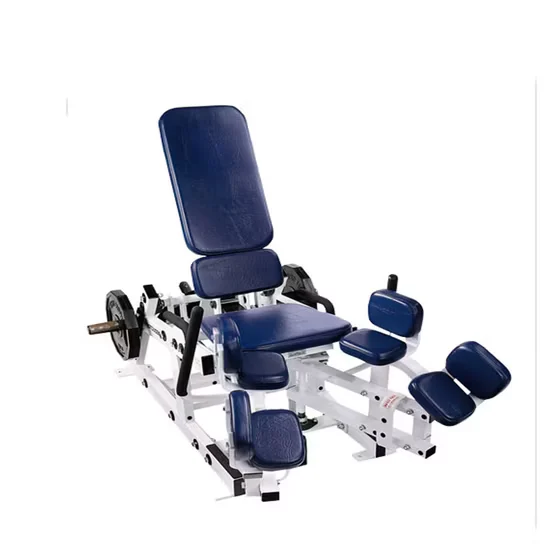
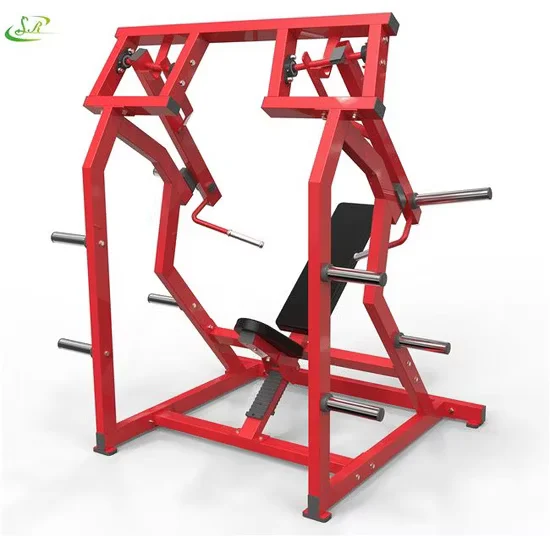
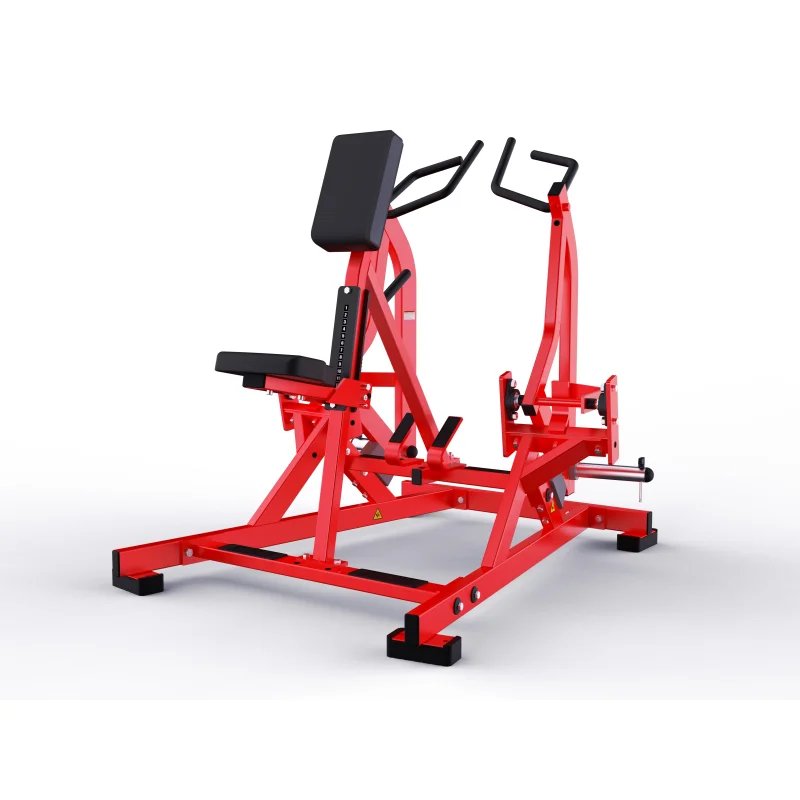
Precision Force Alignment — Steel frame and pulley geometry engineered to maintain consistent resistance trajectory across thousands of repetitions in high-traffic commercial environments.
Technical Specifications
| Parameter | Value |
|---|---|
| Product Type | Pull Over Machine |
| Designation | H-012 |
| Exercise Part | Back |
| Material | Steel |
| Product Dimensions | 1231 × 1360 × 1503 mm |
| Net Weight | 120 kg |
| Certification | ISO 9001, CE |
| Appliance | Community, Gymnasium |
Application Suitability
| Deployment Scenario | Typical Use |
|---|---|
| Chain gym strength zone | High-frequency back training in circuit or split routines |
| Community fitness center | Accessible back strengthening for general membership |
| Corporate wellness room | Compact station complementing functional training areas |
Why Pulley Misalignment Drives Members Away Before Anyone Reports It
A misaligned pulley path on a commercial pull over machine back strength equipment forces compensatory movement patterns that users feel before operators see.
In a busy facility, strength stations cycle through dozens of users daily. When cable routing drifts from the engineered force curve, the exercise stops feeling smooth. Members don’t file maintenance tickets — they simply avoid the machine. I’ve walked past dozens of pull-over stations in Southeast Asian facilities where the weight stack rattled at the top of each rep, the cable visibly sawing against a worn pulley edge. Nobody was using them. The underlying issue is rarely the cable itself; it starts with frame geometry tolerances and pulley bearing quality that degrade under continuous commercial load [NEED_CITE: cable and pulley wear standards for commercial strength equipment].
Where This Station Fits in a Commercial Strength Floor
The H-012 targets latissimus dorsi and upper back musculature through an overhead pulling arc, complementing rowing stations and lat pulldown units already present in most strength zones. It serves intermediate to advanced users who benefit from a fixed-path isolation movement. Positioned between free-weight racks and cable crossover stations, this commercial pull over machine back strength equipment fills the gap for controlled back extension and pullover training without requiring users to handle free-weight dumbbells overhead. The fixed movement path reduces the need for spotters, supporting unsupervised use in community and hotel fitness environments.
Continuous Load and Floor Placement Considerations
At 120 kg net weight, the frame remains stable under dynamic loading without floor anchoring in most commercial installations, though high-traffic zones with uneven flooring benefit from leveling feet adjustments. Facilities on upper floors should verify structural load capacity, as repeated weight stack impacts generate vibration that transfers through concrete slabs [NEED_CITE: vibration transmission thresholds for upper-floor fitness facilities]. Adequate clearance on all sides allows users to load and unload the seat without obstructing adjacent traffic flow. The all-steel construction handles the humidity swings common in tropical climates without the corrosion issues seen in lighter-gauge assemblies.
How Frame Gauge and Pulley Design Shape the Training Feel
The 1231 × 1360 × 1503 mm footprint reflects a frame designed around a specific cable travel distance and weight stack height. A taller frame allows a longer pulley sweep, giving the resistance curve a gradual build rather than an abrupt catch at the bottom of the movement. Steel gauge thickness directly affects frame flex under load — a stiffer frame transfers more of the weight stack’s resistance directly to the user’s muscles rather than dissipating it through frame deflection. Pulley bearing quality determines cable smoothness; sealed bearings resist dust and sweat ingress that accelerate wear in open-pulley designs. The weight stack guidance system, whether selectorized pins or plate-loaded, dictates how precisely users can progress resistance between sessions.
The Hidden Cost of Underspec’d Pulley Hardware
Pulley wheels with unsealed bushings develop lateral play within months in high-humidity environments, causing the cable to track off-center and fray against the wheel housing. Once the cable strands begin to separate, the entire stack feels jerky, and the station becomes unsafe. I’ve seen operators replace cables monthly on machines where the root cause was a worn pulley bearing costing a fraction of the cable replacement [NEED_CITE: pulley bearing failure modes in commercial strength equipment]. The compounding maintenance burden — cable swaps, pulley replacements, downtime — erodes the return on equipment that was initially cheaper to purchase but more expensive to keep operational.
Why This Product Line Addresses the Failure Points
The steel frame construction prioritizes rigidity over weight savings, maintaining pulley alignment through years of commercial use cycles. Full vertical integration from CNC machining to final assembly ensures that frame weld points and pulley mounting holes meet consistent tolerances across production batches. The six-series cardio family allows facilities sourcing this commercial pull over machine back strength equipment to consolidate strength and cardio procurement under one supplier, simplifying spare parts logistics. OEM customization extends to frame color and upholstery, matching facility branding without sacrificing structural specifications. Technical support coverage includes pulley and cable maintenance schedules specific to the installation environment.
Documentation & Test Records
- CE declaration of conformity for commercial strength equipment
- EN 957 test report covering static and dynamic load verification
- ISO 9001 certificate for manufacturing quality management
- Steel frame material specification and weld inspection records
- Pulley bearing and cable tensile test documentation
- Assembly guide with torque specifications for structural fasteners
Installation, Commissioning & Maintenance
- Maintain minimum 600 mm clearance on all sides for safe user access around the 1231 × 1360 mm footprint
- Verify floor levelness before securing frame feet to prevent weight stack binding
- Inspect cable tension and pulley bearing play monthly in high-humidity environments
- Lubricate weight stack guide rods with dry-film lubricant quarterly
- Clean upholstery with non-solvent cleaner to prevent vinyl degradation from sweat exposure
- Check all structural fasteners at manufacturer-specified torque intervals
Before You Specify: What We Need From You
Provide your strength zone floor plan and equipment list so we can confirm the pull-over station’s position within your member traffic flow. Indicate daily usage expectations to determine whether standard or heavy-duty pulley bearings suit your facility. Confirm the installation floor level and adjacent spaces to assess vibration transfer requirements. Specify whether equipment color and upholstery should match existing branding.
Frequently Asked Questions
Q: What determines whether a pull-over frame holds alignment over time?
A: Frame rigidity depends on steel gauge thickness, weld quality at stress points, and the precision of pulley mounting holes. Thicker gauge steel resists deflection under repeated loading, while CNC-machined mounting points ensure pulleys remain coplanar. Frame flex under load causes the cable to track off-center, accelerating wear on both the cable and pulley bearings. Ask for material specifications and weld inspection records.
Q: How often do pulley bearings need replacement in commercial use?
A: Replacement intervals depend on usage volume, environmental humidity, and whether the bearings are sealed. In tropical climates with high humidity, unsealed bearings may develop lateral play within months as moisture and dust penetrate the bearing race. Sealed bearings significantly extend service intervals. Monitor for cable tracking deviation and lateral pulley wobble as early indicators that bearing replacement is due.
Q: What should operators check when inspecting cables for safety?
A: Inspect the full cable length for broken outer strands, particularly where the cable contacts pulley wheels and swivel fittings. Check cable end fittings for deformation or cracking. Run your hand along the cable to feel for diameter changes indicating internal strand failure. Replace cables showing visible separation, kinking, or reduced diameter at any point. Maintain inspection logs to track wear patterns.
Q: How does weight stack guidance affect training smoothness?
A: Weight stacks guided by dual rods resist lateral sway during rapid repetitions, keeping the resistance vector consistent throughout the movement arc. Single-rod or cable-guided stacks may oscillate under dynamic loading, creating a jerky feel that disrupts controlled eccentrics. Rod diameter and surface finish also affect friction — chrome-plated or coated rods reduce drag compared to uncoated steel, delivering a smoother resistance curve.