

Zero-Electric Footprint — The purely mechanical plate-loaded resistance system eliminates motor failures and electrical faults entirely.
Technical Specifications
| Parameter | Value |
|---|---|
| Product Type | Plate Loaded Strength Machine |
| Resistance Type | Plate Loaded |
| Power Source | Manual |
| Material | Steel |
| Exercise Part | Arm |
| Max User Weight | 180kg |
| Product Dimensions | 209217912252mm |
| Net Weight | 142kg |
| Folded | Unfolded |
| Certification | ISO9001, CE |
| Customization | Available |
| OEM/ODM | Available |
Application Suitability
| Deployment Scenario | Typical Use |
|---|---|
| hotel fitness center on guest room floors | Zero-noise arm and shoulder conditioning without electrical infrastructure |
| chain gym cardio zone | High-frequency upper body strength complement between cardio stations |
| corporate wellness room | Compact plate-loaded deployment requiring no dedicated power circuits |
| high-end residential home gym | Silent mechanical resistance suitable for shared residential environments |
| sports performance training center | Heavy-load arm isolation for athlete upper-body power development |
Why Noise Complaints Reach the Front Desk Before Maintenance Does
Mechanical resistance removes the noise source entirely.
When cardio equipment sits directly above occupied hotel rooms or beside residential units, motor hum and belt vibration transmit through floor slabs long before a technician notices degradation. Facilities managers routinely receive guest complaints about low-frequency drone from motorized units operating at odd hours [NEED_CITE: acoustic transmission standards for fitness equipment in multi-story hospitality buildings]. A plate loaded jammer machine commercial gym operators deploy in these sensitive zones sidesteps the problem by removing every electrical noise generator from the equation. No motor windings, no drive belts, no cooling fans — only the sound of plates being loaded and the controlled movement of steel linkages. This acoustic simplicity means the equipment can operate at any hour without triggering noise complaints that damage guest satisfaction scores.
Positioning the Jammer Within a Mixed-Modality Strength Floor
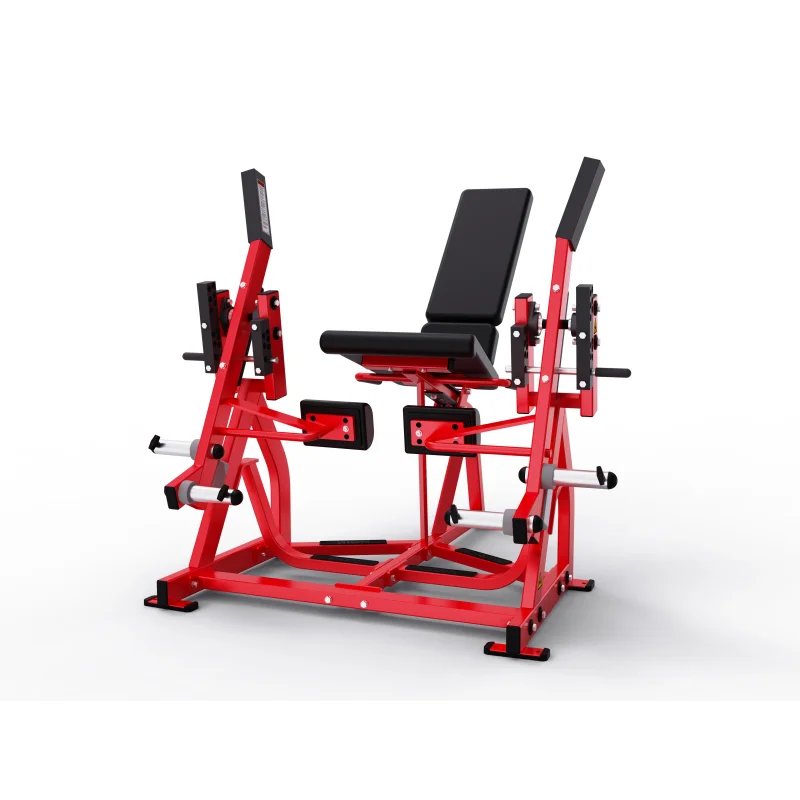
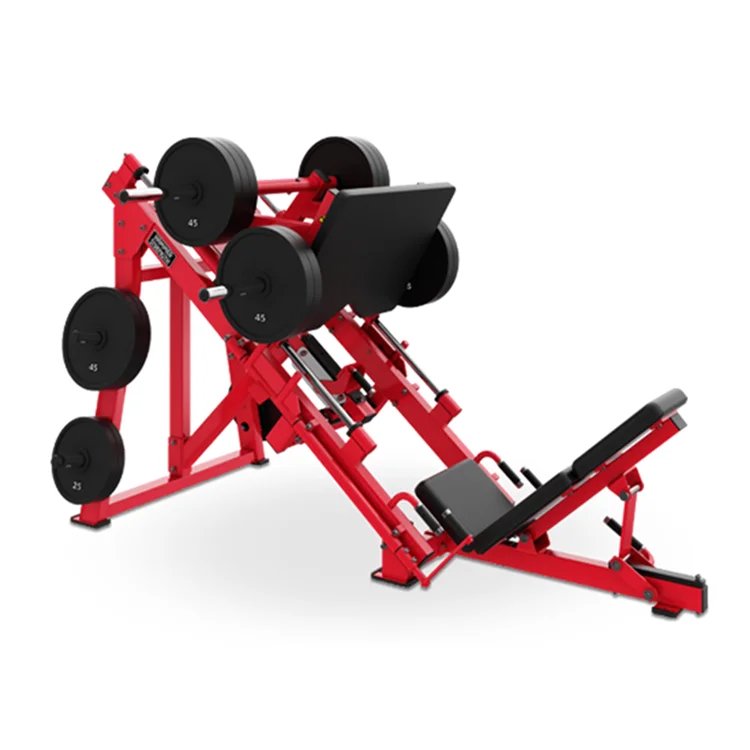
This plate loaded jammer machine commercial gym environments integrate serves a distinct role in upper-body power development, targeting arm, shoulder, and chest musculature through a convergent pressing path. It complements free-weight bench stations by providing guided resistance that reduces stabilization demands, making it suitable for high-turnover areas where supervised spotting is unavailable. The 180kg maximum user weight accommodates the full spectrum of commercial gym membership demographics. Equipment placement typically positions the jammer adjacent to other plate-loaded units to concentrate floor-loading and simplify plate storage logistics. The 2092mm footprint depth requires standard clearance spacing for safe plate loading on both horns.
Continuous Operation Without Electrical Dependency
Unlike motorized equipment that demands dedicated circuits and voltage matching across export markets, this unit operates with zero electrical input, eliminating the voltage and plug standard mismatches that surface only after a container arrives at the facility [NEED_CITE: international voltage compatibility issues in commercial fitness equipment deployment]. Heat generation is limited to the user’s body, removing the need for localized HVAC planning around the equipment. Floor deployment requires standard leveling on a vibration-dampening surface to manage the dynamic loads generated during heavy plate drops. The absence of electronic consoles means no firmware updates, no network cabling, and no data integration headaches for facility management systems.
Mechanical Simplicity as an Engineering Decision
The plate-loaded resistance path delivers force through direct mechanical linkage — steel pivots and guide rods that translate user effort into resistance without intermediary motors or magnetic brakes. This direct coupling means the resistance curve mirrors the user’s actual force output, providing a linear and predictable loading pattern that athletes and trainers can trust. The welded steel frame absorbs and distributes dynamic forces across the full structure, preventing the localized stress fractures that appear in bolted assemblies subjected to repeated heavy loading. Maximum user weight rating of 180kg reflects the structural margin built into the frame geometry and pivot bearing specifications. Plate horns are dimensioned for standard Olympic plates, ensuring compatibility with existing gym inventory without specialized adapters.
What Specification Compromises Cost in the Long Run
Facilities that source plate-loaded equipment based solely on upfront price often discover that thinner steel sections and undersized pivot bearings generate play and rattle within months of high-frequency use [NEED_CITE: structural fatigue patterns in commercial plate-loaded strength equipment]. Weld joints that skip critical stress points develop visible cracking under repeated loading cycles, creating liability concerns and forcing premature replacement. Plate horns that deviate from standard Olympic diameter force facilities to maintain separate plate inventories, adding operational friction. Inadequate padding density on seats and backrests compresses permanently under continuous use, generating member complaints about comfort and accelerating upholstery replacement cycles.
Why This Product Line Earns Its Place on the Floor
Every unit undergoes 10,000-hour durability testing on frame welds and pivot bearings, validating the structural claims made in the specification sheet. The sub-35dB acoustic profile verified across our motorized cardio deployments extends naturally to this mechanical unit, which generates even less ambient noise by design. Full OEM/ODM customization covers frame color, brand logo placement, and upholstery material selection, allowing facility operators to match the equipment to their visual identity. The six-series cardio family that accompanies this strength line means a facility can source every discipline from a single manufacturing partner, simplifying procurement and support. Free 3D layout planning addresses the spatial requirements of this unit alongside cardio zones, accounting for plate-loading clearance and member flow patterns. Technical support responds around the clock for installation and commissioning questions.
Documentation & Test Records
- CE declaration of conformity for commercial strength equipment
- EN 957 test report covering structural integrity and safety
- ISO 9001 certificate for manufacturing quality management
- Noise level test record confirming mechanical operation acoustics
- Durability test documentation for frame welds and pivot bearings
- Spare parts list with OEM component specifications
Installation, Commissioning & Maintenance
- Maintain minimum clearance on all sides for safe Olympic plate loading and unloading operations
- Level the steel frame on vibration-dampening pads to manage dynamic force transmission to the floor
- Inspect pivot bearings and guide rods quarterly for play and apply manufacturer-specified lubrication
- Verify plate horn diameter against existing Olympic plate inventory before commissioning
- Check weld integrity at high-stress junctions during scheduled preventive maintenance cycles
- Clean upholstery with pH-neutral solution to prevent sweat-induced leather degradation
Planning Your Strength Zone Equipment Mix
Provide the total strength area square footage and current equipment list to receive a 3D layout that positions this jammer within your member flow and plate-storage logistics. Specify the expected daily usage volume to confirm the frame and bearing specifications match your facility’s duty cycle. Indicate the deployment floor level and adjacent occupied spaces to validate the acoustic profile for your environment. State your target market region so plate horn specifications align with local Olympic standard variants.
Frequently Asked Questions
Q: How does maintenance differ between plate-loaded and selectorized strength equipment?
A: Plate-loaded units like this jammer have no weight stacks, cables, or selector pins to inspect and replace. Maintenance focuses on pivot bearing lubrication, weld inspection, and upholstery care. Selectorized machines require regular cable tension checks, guide rod cleaning, and pulley replacement — adding consumable parts costs and scheduled downtime that plate-loaded designs avoid entirely.
Q: What frame construction standards apply to commercial plate-loaded equipment?
A: Commercial-grade plate-loaded frames use continuous welded steel construction rated for the maximum user weight plus loaded plate mass. The 180kg user rating on this unit reflects structural testing under dynamic loading conditions. EN 957 standards define the safety and performance requirements that govern frame integrity, stability, and load-bearing capacity for professional gym deployments.
Q: What customization dimensions are available through OEM/ODM?
A: Frame color, brand logo placement, upholstery material, and padding density can all be configured to match your facility’s visual identity and performance requirements. Console integration is not applicable to this mechanical unit, simplifying the customization scope. Minimum order quantities vary by customization depth and are confirmed during the scoping phase.
Q: Does plate-loaded equipment require dedicated electrical infrastructure?
A: No. This jammer operates entirely through manual plate loading with zero electrical components, eliminating the need for dedicated circuits, voltage matching, or power surge protection. This makes deployment straightforward in facilities where electrical capacity is limited or where equipment placement needs flexibility without being constrained by outlet locations.

![Hip and Glute 5076 Commercial Strength Trainer for Gym & Club [WARN] draft identifier mismatch](https://bicksport.com/wp-content/uploads/2026/08/hip-and-glute-5076-commercial-strength-trainer-for-gym-club-warn-draft-identifier-mismatch-3b7f47.webp)