![Corrosion Resistant Mt296 ABS Electric Sports Treadmill for Home Workout [WARN] draft identifier mismatch](https://bicksport.com/wp-content/uploads/2026/08/corrosion-resistant-mt296-abs-electric-sports-treadmill-for-home-workout-warn-draft-identifier-mismatch-4e6d81.webp)
Acoustic Optimization — DC motor paired with a foldable frame keeps operational noise contained in residential and compact commercial environments.
Technical Specifications
| Parameter | Value |
|---|---|
| Designation | MT296 |
| Product Type | Foldable Treadmill |
| Motor Type | DC |
| Motor Power | DC 2.0HP * |
| Speed Range | 1–20 km/h |
| Running Surface | 1200 x 520 mm |
| Console Type | LCD (Speed / Distance / Time / Calories / Pulse) |
| Programs | 16 |
| Product Unfold Size | 1580 x 865 x 1300 mm |
| Product Folded Size | 910 x 865 x 1345 mm |
| Net Weight | 64.0 kg |
| Foldable | Yes |
| Material | ABS |
| Certification | CE, RoHS |
| OEM / ODM | Available |
*Peak or continuous output not specified in source documentation — confirm duty-cycle rating before high-frequency deployment.
Application Suitability
| Deployment Scenario | Typical Use |
|---|---|
| High-end residential home gym | Daily walking and light jogging in apartments where floor space and noise are primary constraints |
| Corporate wellness room | Fold-and-store deployment for multi-purpose rooms with limited dedicated fitness square footage |
| Personal training studio | One-on-one sessions in compact facility layouts where equipment must clear floor area between appointments |
| Hotel fitness center on guest room floors | 24-hour self-service cardio access where sub-35dB neighbor-room noise thresholds must be respected |
What Peak Horsepower Hides About Continuous Duty in a Foldable Motorized Treadmill DC Motor Home Use Scenario
Confirm the duty-cycle rating before assuming peak output equals sustained running capacity.
A DC 2.0HP rating printed on a treadmill nameplate rarely tells the full story. Peak horsepower measures the motor’s maximum burst output during acceleration — not what it delivers when a 90 kg user runs at 14 km/h for forty-five straight minutes. In residential deployments, users rarely push continuous load. But the moment a foldable motorized treadmill DC motor home use unit lands in a hotel fitness center or corporate wellness room with back-to-back users, the gap between peak and continuous output becomes the reason motors overheat and shut down mid-session [NEED_CITE: motor duty cycle classification for continuous commercial operation]. I saw this firsthand when a batch of residential-grade treadmills shipped to a Middle East five-star hotel burned through three motors in three months because the daily runtime far exceeded the duty cycle the DC motor was engineered for.
Where the MT296 Fits in a Mixed Cardio Floor Plan
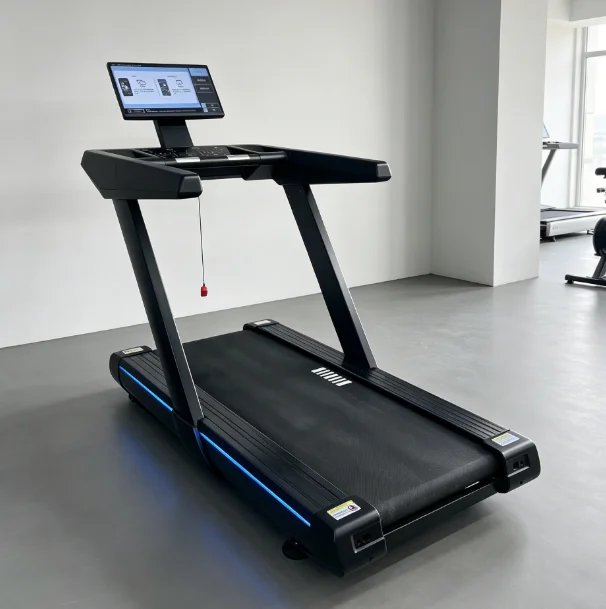
The MT296 occupies the walking-to-moderate-jogging band of the cardio intensity spectrum, complementing heavier commercial treadmill stations reserved for sustained running and sprint intervals. Its 1200 x 520 mm running surface accommodates walking gaits and light jogging comfortably, while the foldable chassis allows facility operators to reclaim floor area during off-peak hours or multi-purpose room conversions. The foldable motorized treadmill DC motor home use unit pairs well with ellipticals and stationary bikes in compact wellness zones where footprint per station is a budgeting constraint. The handgrip pulse sensor provides basic heart rate readouts suitable for self-guided sessions rather than coached interval programming requiring chest-strap accuracy.
Continuous Runtime and Deployment Environment Requirements
A DC motor in this power class performs reliably under light-duty residential cycles — roughly one to three hours of cumulative daily use spread across multiple sessions. Deploying the unit in environments with longer continuous runtimes demands confirmed continuous-duty ratings and dedicated ventilation clearance around the motor housing [NEED_CITE: EN 957 requirements for commercial cardio equipment]. Noise transmission through floor slabs is a function of both motor acoustics and deck vibration, so installations above occupied rooms benefit from anti-vibration pads and leveled subfloors. The ABS frame and foldable hinge mechanism require periodic inspection of locking pins and structural fasteners, especially in high-turnover settings where the unit is folded and unfolded repeatedly. Standard single-phase power supply is sufficient; confirm plug type and voltage match the destination market before container loading.
Reading the Drive and Console Specifications Without Marketing Filters
The DC motor type chosen here prioritizes compact packaging and cost-efficiency over the thermal headroom that AC motors provide in continuous commercial operation. DC motors rely on carbon brushes that wear over time, making brush replacement a scheduled maintenance item absent from brushless AC designs. The LCD console displays speed, distance, time, calories, and pulse across 16 preset programs — a functional readout set for self-directed workouts, though it does not offer touchscreen interfaces, app connectivity, or facility management software integration. Pulse measurement via handgrip sensors delivers acceptable readings at steady-state walking and jogging paces but tends to drift during high-cadence running where hand contact becomes intermittent. The foldable frame introduces a hinge point that reduces overall chassis rigidity compared to fixed-frame commercial units, a tradeoff that matters most at higher speeds and heavier user weights.
The Hidden Cost of Specifying Below the Deployment Reality
Residential-grade motors installed in commercial cardio zones fail not because they are poorly built, but because they were never engineered for the thermal load of continuous public use. Noise complaints escalate from isolated incidents to pattern-level problems when multiple units share a floor with guest rooms or residential apartments, prompting facility managers to replace entire cardio zones rather than individual components [NEED_CITE: acoustic standards for cardio equipment in mixed-use buildings]. Data that stays trapped on an LCD screen with no export pathway leaves corporate wellness operators unable to report usage metrics to management or insurance wellness programs. Voltage mismatches discovered after shipment force expensive rewiring or transformer installations that delay project handover by weeks.
Why Operators Source This Product Line
Biketon Sport engineers every cardio unit against a 10,000-hour continuous-operation benchmark across motors, frames, and sealed bearings. The MT296’s foldable footprint at 910 x 865 mm when stowed allows tight-storage deployments that fixed-frame units cannot accommodate. OEM and ODM customization extends to console UI layout, color matching, and branding — not just logo placement. The six-series cardio family lets a single facility project source treadmills, bikes, ellipticals, rowers, stair climbers, and spinning bikes from one engineering platform. Free 3D cardio-zone layouts cover equipment spacing, airflow corridors, and member traffic patterns for the exact square footage of your project. Post-delivery support includes 24/7 technical response and a documented spare parts supply chain.
Documentation & Test Records
- CE declaration of conformity for the MT296 foldable treadmill platform
- EN 957 test report covering structural and safety requirements
- ISO 9001 quality management certificate for manufacturing operations
- RoHS compliance documentation for material and component sourcing
- Motor specification sheet with duty-cycle and thermal performance data
- LCD console technical documentation including program and pulse sensor details
Installation, Commissioning & Maintenance
- Allow minimum clearance around the 1580 x 865 mm unfolded footprint for user safety and motor ventilation
- Place anti-vibration pads beneath all four leveling feet to isolate deck vibration from floor slabs
- Confirm single-phase voltage and plug type match destination market before connecting to a dedicated circuit
- Verify fold-lock pins engage fully before first powered run and recheck after initial break-in period
- Inspect DC motor brush condition and running belt tension at intervals defined by cumulative runtime
- Wipe LCD console and handgrip pulse sensors after each session to prevent sweat corrosion on contacts
Equipment Selection Next Steps
Share your cardio-zone floor area and unit count to receive a 3D layout with equipment spacing and airflow planning specific to the MT296’s foldable dimensions. Specify expected daily runtime per unit so we can confirm whether the DC motor duty cycle matches your deployment intensity. Identify the installation floor and adjacent occupied spaces to determine whether supplemental vibration isolation is required. Confirm destination market voltage and plug standards to avoid post-shipment electrical rework.
Frequently Asked Questions
Q: What is the difference between peak and continuous motor power, and why does it matter?
A: Peak power measures the motor’s maximum burst output during startup acceleration, while continuous power reflects what it can sustain under load for extended periods. A foldable treadmill rated at DC 2.0HP peak may deliver considerably less during a thirty-minute run. Specifying based on peak alone leads to thermal overload and premature motor failure in high-frequency environments.
Q: How does a DC motor compare to an AC motor in duty cycle and lifespan?
A: DC motors use carbon brushes that wear with runtime and require periodic replacement, making them better suited to light-duty residential cycles. AC motors run brushless with higher thermal tolerance, supporting continuous commercial operation. For deployments exceeding several cumulative hours daily, confirming the DC motor’s rated duty cycle is essential before procurement.
Q: Can the LCD console connect to external apps or facility management software?
A: The MT296 LCD console displays speed, distance, time, calories, and pulse across 16 programs but does not include Bluetooth, Wi-Fi, or data export interfaces. Facilities requiring workout analytics synced to member apps or management dashboards should consider upgrading to a model with an IoT-enabled touchscreen console.
Q: What noise level should I expect in a residential setting?
A: The DC motor and foldable frame assembly are engineered for quiet operation in shared residential environments. Actual noise transmission depends on floor construction, subfloor leveling, and whether anti-vibration pads are installed. Operators deploying above occupied rooms should request a noise level test report matched to their specific floor assembly.
Q: How does the foldable mechanism affect frame rigidity and durability?
A: The foldable hinge introduces a structural joint that reduces overall chassis stiffness compared to a welded fixed-frame design. At walking and light jogging speeds on the MT296, this tradeoff is acceptable for residential and low-frequency use. High-speed running and heavier users benefit from the rigidity of a non-folding commercial frame.
![Hsm Fashion Design Hydraulic Cylinder Household Treadmill MT23B [WARN] draft identifier mismatch](https://bicksport.com/wp-content/uploads/2026/08/hsm-fashion-design-hydraulic-cylinder-household-treadmill-mt23b-warn-draft-identifier-mismatch-66291e.webp)
![Healthmate T04F8 Motorized Treadmill with Manual-Incline for Commercial Gyms [WARN] draft identifier mismatch](https://bicksport.com/wp-content/uploads/2026/08/healthmate-t04f8-motorized-treadmill-with-manual-incline-for-commercial-gyms-warn-draft-identifier-mismatch-b2c8ed.webp)