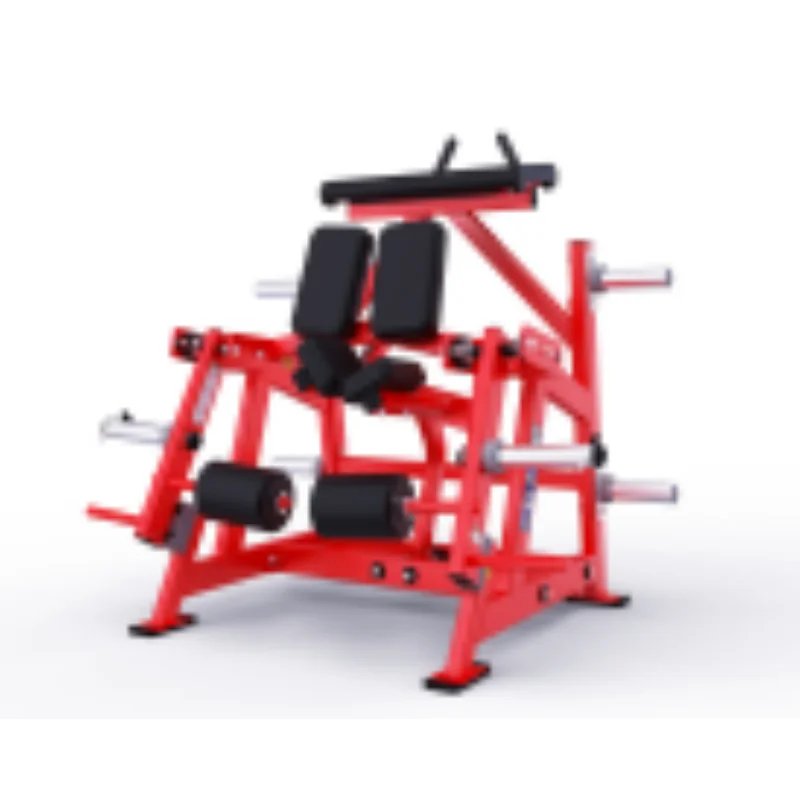
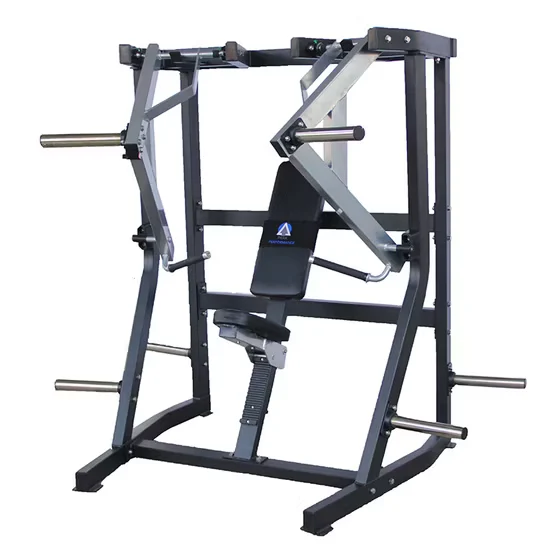
Commercial Durability — Steel frame and sealed bearing assembly tested for continuous high-frequency wrist flexion and extension cycles.
Technical Specifications
| Parameter | Value |
|---|---|
| Designation | 5023 |
| Product Type | Wrist Curl Machine |
| Exercise Part | Wrist Curl |
| Material | Steel |
| Product Dimensions | 5621037443mm |
| Net Weight | 36kg |
| Application | Professional Gym and Club, Community Fitness Center |
| Age Group | Adult |
| Gender | Unisex |
| Production Capacity | 500 PCS/Month |
| Certification | ISO9001, CE |
| OEM/ODM | Available |
Application Suitability
| Deployment Scenario | Typical Use |
|---|---|
| Chain gym strength zone | Dedicated forearm isolation station between compound lift racks |
| Community fitness center | High-traffic accessory equipment for daily member rotation |
| Sports performance training center | Grip strength conditioning for athletes requiring forearm endurance |
| Corporate wellness room | Compact addition to limited floor plans for desk workers targeting forearm fatigue |
| Hotel fitness center | Low-maintenance auxiliary station supplementing primary strength lineup |
What Steel Gauge and Weld Penetration Mean for a High-Traffic Forearm Station
A 36kg net weight on a 562mm footprint means the mass is concentrated in structural steel, not cosmetic shrouds.
When a commercial wrist curl machine gym operators select sees daily traffic from fifty or more members, the pivot points and load-bearing welds experience cyclic stress that quickly exposes shortcuts in fabrication. I have seen lighter frames develop micro-cracks near the fulcrum within months when the steel is too thin or the welds lack full penetration. The 5023 places its mass where it matters: along the primary load path from the weight carriage through the pivot axis to the base [NEED_CITE: cyclic fatigue failure points in selectorized strength equipment frames]. Forearm training generates high repetition counts per session, and each repetition transmits force through the wrist pad and lever arm back into the frame. If the base footprint is narrow relative to the moment arm, the unit rocks during heavy sets, forcing the floor anchors to absorb lateral loads they were not designed to handle.
How This Wrist Curl Unit Fits the Strength Accessory Zone
The 5023 occupies a specific niche in the strength layout: it targets wrist flexors and extensors with isolated, controlled resistance after compound pulling movements have pre-fatigued the larger muscle groups. In a typical commercial wrist curl machine gym configuration, this unit sits adjacent to grip trainers and cable stations rather than competing for floor space with primary racks. The compact 562×1037mm footprint allows placement along walls or in corridor-style training zones where wider machines cannot fit. Users ranging from lighter female members building foundational grip strength to heavier athletes loading the carriage for peak forearm hypertrophy will find the ergonomic pad and handle geometry accommodates different forearm lengths without requiring adjustment between sets.
Continuous Use and Floor Loading Considerations
In facilities running sixteen or more hours daily, the pivot bearings and guide rods on a commercial wrist curl machine gym members rely on must endure thousands of cycles per week without developing play or generating metallic chatter that carries across a quiet training floor [NEED_CITE: bearing lifespan under continuous cyclic loading in strength equipment]. The 36kg frame mass provides stability without requiring permanent floor anchoring in most installations, though high-traffic placements benefit from bolting through the base flanges to prevent walking. Ground leveling is critical: an uneven floor transfers oscillation into the pivot assembly, accelerating wear on the bushings. For upper-floor hotel fitness centers or multi-story commercial buildings, the unit generates negligible impact noise compared to dropping plates on a platform, but the steel-on-steel contact at the weight stack rest point can transmit structure-borne vibration if rubber isolation pads are omitted beneath the base.
Material and Structural Specifications Decoded
The all-steel construction of the 5023 means the frame relies on tubular and plate steel sections rather than cast or stamped components at critical junctions. At 36kg, the frame-to-footprint ratio indicates substantial wall thickness in the primary uprights, which resist the bending moment generated when a loaded carriage reaches full extension. The pivot axis must use sealed bearings or bronze bushings rather than simple bolt-through-holes; the latter develop slop within weeks under commercial repetition volumes. The wrist pad surface area and density determine whether load distributes evenly across the forearm or concentrates pressure on the ulnar and radial bones, causing discomfort that drives members to skip the station. Guide rod diameter and surface finish affect how smoothly the weight carriage travels; undersized rods deflect under load, creating binding that feels like inconsistent resistance through the range of motion. The powder coat thickness and curing process determine whether the finish withstands sweat corrosion and plate contact over years of use [NEED_CITE: powder coat adhesion standards for commercial gym equipment].
What Cutting Corners on Frame Steel Costs Down the Line
Specifying lighter-gauge steel saves on raw material cost per unit but shifts expense into warranty claims and member complaints. Frames that flex under load feel unstable to users, who then avoid the station entirely, leaving the equipment as dead floor space. Pivot bolts working loose from elongated holes create knocking sounds that carry through the facility and signal poor build quality to observant members. Weight carriages that bind on undersized guide rods feel like the resistance is inconsistent, even when the plates are accurately calibrated, eroding trust in the entire strength lineup [NEED_CITE: user perception of equipment quality based on tactile feedback]. Replacing a commercial wrist curl machine gym operators have already installed means pulling floor anchors, patching flooring, and absorbing the downtime while the replacement ships and arrives.
Why This Product Line Addresses Facility-Level Concerns
The 5023 comes from a vertically integrated manufacturing operation that controls every stage from CNC machining through final assembly, meaning dimensional tolerances on pivot bores and guide rod mounts stay consistent across production runs. The 10,000-hour durability testing protocol applied across the cardio range extends to strength equipment bearing surfaces and structural welds. OEM customization covers frame color, logo placement, and pad upholstery to match facility branding without requiring separate sourcing. The six-series product family allows a single supplier relationship to cover both this wrist curl station and the full cardio zone, simplifying procurement and spare parts logistics. Free 3D layout planning accounts for the 562×1037mm footprint alongside member circulation paths, ensuring the station does not create bottlenecks during peak hours. Technical support responds within 24 hours to alignment or adjustment questions that arise during commissioning.
Documentation & Test Records
- CE declaration of conformity covering mechanical safety requirements
- EN 957 test report validating structural integrity under static and dynamic loading
- ISO 9001 certificate confirming quality management system compliance
- Durability test record documenting pivot and guide rod cycle counts
- Material specification sheet detailing steel grade and powder coat parameters
- Installation guide with floor anchoring and leveling procedures
Installation, Commissioning & Maintenance
- Maintain 600mm clearance on all sides of the 562×1037mm footprint for safe loading and unloading
- Level the base using adjustable feet before anchoring to eliminate pivot binding
- Inspect pivot bearings and guide rod lubrication at monthly intervals under commercial use volumes
- Wipe down wrist pad and handles after each use to prevent sweat corrosion on steel contact points
- Verify weight carriage travel smoothness weekly and adjust guide rod alignment if binding occurs
- Check all fastener torque quarterly to prevent frame loosening from vibration
Sizing Your Inquiry for Accurate Specification Matching
Provide the planned strength zone square footage and adjacent equipment list so we can generate a 3D layout showing the 5023 placement relative to member flow paths and structural columns. Specify the expected daily user count to confirm whether standard bearing packages suit your traffic volume or whether upgraded bushings are warranted. Indicate the deployment floor level and room construction type so we can advise on vibration isolation requirements. State your target market voltage if the unit will integrate with electronically loaded resistance variants in future expansions. Clarify whether OEM color matching to existing equipment is required so we can quote powder coat and upholstery options in the initial proposal.
Frequently Asked Questions
Q: What structural differences separate commercial wrist curl machines from residential models?
A: Commercial units use thicker steel sections, sealed bearings at pivot points, and larger-diameter guide rods to withstand thousands of weekly cycles without developing play. Residential frames typically rely on lighter gauge tubing and simple bushings that degrade quickly under high-frequency use, leading to knocking sounds and inconsistent resistance feel that drive gym members away.
Q: How should the steel frame and contact surfaces be maintained?
A: Monthly inspection of pivot bearings for play, quarterly fastener torque checks, and daily wiping of the wrist pad and handles prevent sweat corrosion and premature wear. Guide rods require periodic lubrication with dry-film products that do not attract dust. Powder coat damage should be touched up immediately to prevent rust propagation through the steel substrate.
Q: Does the 5023 require permanent floor installation?
A: The 36kg mass provides adequate stability for most applications without anchoring, but high-traffic placements benefit from bolting the base flanges to concrete to prevent walking. Adjustable feet compensate for minor floor irregularities. Wood or raised flooring requires load distribution plates to prevent point loading damage beneath the base contact areas.
Q: What customization options are available through OEM programs?
A: Frame powder coat color, logo application on the upright, pad upholstery material and color, and packaging branding can all be specified to match facility identity. Console integration is not applicable to this purely mechanical unit. Minimum order quantities vary by customization depth, with standard color changes available at lower thresholds than full rebranding packages.