
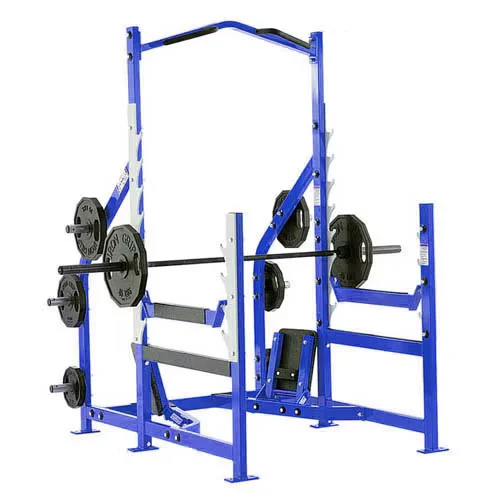
Heavy-Duty Frame Stability — 165kg reinforced steel construction validated through 10,000-hour continuous load testing, engineered for high-frequency commercial strength zones where weld fatigue and frame wobble create safety hazards.
Technical Specifications
| Parameter | Value |
|---|---|
| Product Type | Power Rack / Functional Trainer |
| Material | Steel |
| Product Dimensions | 1785 × 1365 × 2235 mm |
| Net Weight | 165 kg |
| Exercise Part | Chest |
| Age Group | Adult |
| Gender | Unisex |
| Appliance | Gymnasium |
| Certification | ISO 9001, CE |
| HS Code | 9506911900 |
Application Suitability
| Deployment Scenario | Typical Use |
|---|---|
| Chain gym strength training zone | High-frequency compound lifts, pull-up variations, and functional movements throughout operating hours |
| Hotel fitness center | Guest-accessible strength equipment with stable footprint for unsupervised 24-hour environments |
| Corporate wellness room | Functional training station accommodating varied employee fitness levels during peak break times |
| Cross-training facility | Kipping pull-ups, muscle-ups, and band-assisted exercises requiring overhead clearance and frame rigidity |
| Sports performance training center | Athlete testing protocols and loaded movement patterns demanding structural consistency under dynamic stress |
Why Frame Weld Quality Determines Facility Safety Before Member Complaints Surface
Reinforced steel gauge and full-penetration welds prevent the fatigue cracking that turns a routine workout into a liability incident.
Power racks in commercial facilities endure repetitive eccentric loading — dropped bars, kipping movements, and uneven weight distribution across attachment points. Frames built with undersized tubing develop microfractures at weld joints within months, creating wobble that users feel before maintenance notices [NEED_CITE: structural fatigue patterns in commercial strength equipment under continuous eccentric loading]. The 165kg net weight of this commercial power rack pull up machine gym equipment reflects material density rather than added ballast, meaning stability comes from steel mass distributed through the base footprint rather than bolted counterweights that shift over time. Facilities specifying racks under 120kg often discover frame flex during muscle-up transitions or when members load uneven plate configurations.
Positioning This Rack Within a Commercial Strength Zone Layout
This unit anchors the high-load end of a facility’s strength training area, pairing with plate-loaded machines for members progressing beyond fixed-path equipment and complementing cable crossover stations by offering unrestricted barbell movement. The 1785 × 1365mm footprint occupies a defined bay without requiring the clearance radius that free-standing squat stands demand, making it suitable for facilities with partitioned zones. The 2235mm height accommodates standard ceiling clearances while providing adequate overhead space for pull-up progressions. Users across the commercial weight range benefit from the reinforced cross-members that resist lateral deflection during dynamic exercises.
Continuous Load Demands and Facility Environment Requirements
Commercial gymnasiums operate strength zones across extended hours, subjecting racks to cumulative loading cycles that reveal material shortcomings within the first year. [NEED_CITE: duty cycle standards for commercial strength equipment in multi-shift facility operation] The 1785 × 1365mm base requires level flooring — uneven surfaces create point-loading on individual uprights that accelerates weld fatigue. Facilities with suspended floors should verify load-bearing capacity for the 165kg equipment weight plus user and barbell loads concentrated over the footprint. Rubber flooring beneath the rack absorbs dropped barbell impact and prevents base migration during high-repetition sets. Adequate spacing between adjacent racks allows spotters to move freely and prevents plate collisions during re-racking.
Steel Gauge, Weld Integrity, and Grip Configuration Specifications
Commercial power rack pull up machine gym equipment stability depends on upright wall thickness — thinner gauge steel flexes under asymmetric loads, transferring stress to connection points where fatigue concentrates. The 165kg net weight indicates substantial material volume throughout the frame structure. Multi-grip pull-up bar configurations serve different biomechanical demands: wide grips target latissimus development, neutral grips reduce shoulder impingement risk for high-volume users, and narrow grips emphasize bicep engagement. Surface texture on grip sections affects hand security during extended sets, with knurled or powder-coated finishes providing friction without requiring chalk in climate-controlled environments. Floor anchoring specifications determine whether the rack remains stationary during kipping movements or requires bolting for facilities with dynamic exercise programming.
The Hidden Cost of Underspecifying Frame Material in Commercial Deployments
Facilities purchasing racks specified for light commercial or home use discover weld cracking within six months when equipment faces daily member turnover and unmonitored loading patterns [NEED_CITE: premature failure rates of light-commercial equipment in high-traffic facility environments]. Lightweight frames under 120kg shift during dynamic movements, requiring floor anchoring that damages surfaces and limits equipment reconfiguration. Pull-up bars on undersized racks deflect under bodyweight, creating user concern about structural integrity and generating support tickets that maintenance teams cannot resolve without full unit replacement. Racks lacking adequate base dimensions require excessive safety margins around the equipment, reducing facility capacity and member throughput during peak hours.
Why This Product Line Addresses Commercial Deployment Realities
Every unit undergoes 10,000-hour continuous load testing that simulates years of member use, catching weld defects and material fatigue before equipment reaches facility floors. The 1785 × 1365mm footprint integrates into 3D cardio and strength zone layouts that account for member flow, spotter access, and ventilation requirements specific to high-exertion areas. [NEED_CITE: facility layout standards for strength equipment spacing and airflow in commercial gymnasiums] Full OEM capability extends to frame color, logo placement, and pull-up bar grip configurations that align with facility branding and programming needs. ISO 9001 and CE certification documentation accompanies each shipment, providing procurement teams with compliance records required by facility insurers and municipal inspectors. Technical support responds within 24 hours to installation questions, preventing deployment delays when anchoring specifications encounter unexpected floor conditions.
Documentation & Test Records
- CE declaration of conformity verifying structural safety requirements for commercial gymnasium deployment
- EN 957 test report covering static and dynamic load capacity for strength training equipment
- ISO 9001 certificate documenting quality management throughout frame fabrication and weld inspection
- Steel material specification sheet with gauge thickness and yield strength data
- Pull-up bar load testing records verifying capacity across grip positions
- Floor anchoring specification guide with bolt pattern and substrate requirements
Installation, Commissioning & Maintenance
- Verify 1785 × 1365mm footprint clearance allows minimum 600mm perimeter access for spotter movement and plate loading
- Confirm floor levelness within 3mm tolerance across base contact points to prevent upright stress concentration
- Install rubber flooring beneath rack to absorb dropped barbell impact and prevent base migration during dynamic exercises
- Inspect all bolt connections and weld joints after initial 30-day break-in period under member loading
- Check pull-up bar grip surface condition quarterly and refinish if texture wear creates hand-slip hazards
- Verify floor anchor bolt torque specifications annually if equipment is secured to prevent movement during kipping exercises
Equipment Selection and Facility Specification Guidance
Provide strength zone dimensions and adjacent equipment plans to receive 3D layout showing rack placement relative to traffic flow and ventilation requirements. Specify expected daily member volume to confirm whether single-unit deployment meets throughput needs or multiple bays are warranted. Identify floor construction type and load-bearing capacity to determine anchoring approach and any required structural reinforcement. Note target market voltage standards if rack includes integrated lighting or digital displays requiring power connection.
Frequently Asked Questions
Q: What steel gauge ensures commercial durability for power racks?
A: Commercial facilities require uprights that resist deflection under asymmetric loading — gauge thickness determines whether frames maintain rigidity during muscle-ups or uneven plate configurations. Light-gauge steel develops weld fatigue at connection points within months of continuous use. The 165kg net weight indicates material density distributed throughout the frame structure, providing stability through mass rather than requiring excessive floor anchoring that limits equipment reconfiguration flexibility.
Q: How should facilities verify pull-up bar weight capacity?
A: Static load testing confirms the bar supports maximum user weight without permanent deflection, while dynamic testing validates performance during kipping movements that generate forces exceeding bodyweight. Grip position affects load distribution across the bar and attachment points — facilities should request test documentation covering all grip configurations rather than single-point ratings. Regular inspection reveals surface wear that compromises hand security before structural issues develop.
Q: What grip configurations maximize exercise variety on commercial racks?
A: Wide grips emphasize latissimus engagement for pulling strength development, neutral grips reduce shoulder impingement risk during high-volume programming, and narrow grips shift emphasis to bicep and forearm musculature. Multi-grip bars serve diverse member populations without requiring separate attachment purchases or installation time. Surface texture must maintain friction across extended sets, particularly in climate-controlled environments where humidity management affects hand security during repetitive movements.
Q: How does rack footprint affect gym layout efficiency?
A: The 1785 × 1365mm dimensions define the equipment bay size and determine how many units fit within available floor space while maintaining required safety clearances. Adequate perimeter access allows spotters to move freely and prevents plate collisions during re-racking. Facilities must balance rack density against member throughput during peak hours — insufficient spacing creates wait times that drive members to competing gyms with better equipment availability.
Q: What maintenance protocols extend commercial power rack service life?
A: Quarterly inspection of bolt connections catches loosening before frame components shift under load and create misalignment stress. Weld joint examination reveals fatigue cracking at connection points where cyclic loading concentrates. Pull-up bar surface maintenance preserves grip texture that prevents hand-slip incidents. Floor anchor verification ensures equipment stability during dynamic exercises, particularly in facilities with kipping programming or high-repetition bodyweight circuits.

![Commercial Gym Equipment Hammer Strength Smith Machine 5045 for Professional Gyms [WARN] draft identifier mismatch](https://bicksport.com/wp-content/uploads/2026/08/commercial-gym-equipment-hammer-strength-smith-machine-5045-for-professional-gyms-warn-draft-identifier-mismatch-db4eae.webp)