Acoustic Stability — Sub-35dB operation verified across hotel guest-floor deployments, eliminating low-frequency resonance complaints during overnight cardio sessions.
Technical Specifications
| Parameter | Value |
|---|---|
| Designation | 5008 |
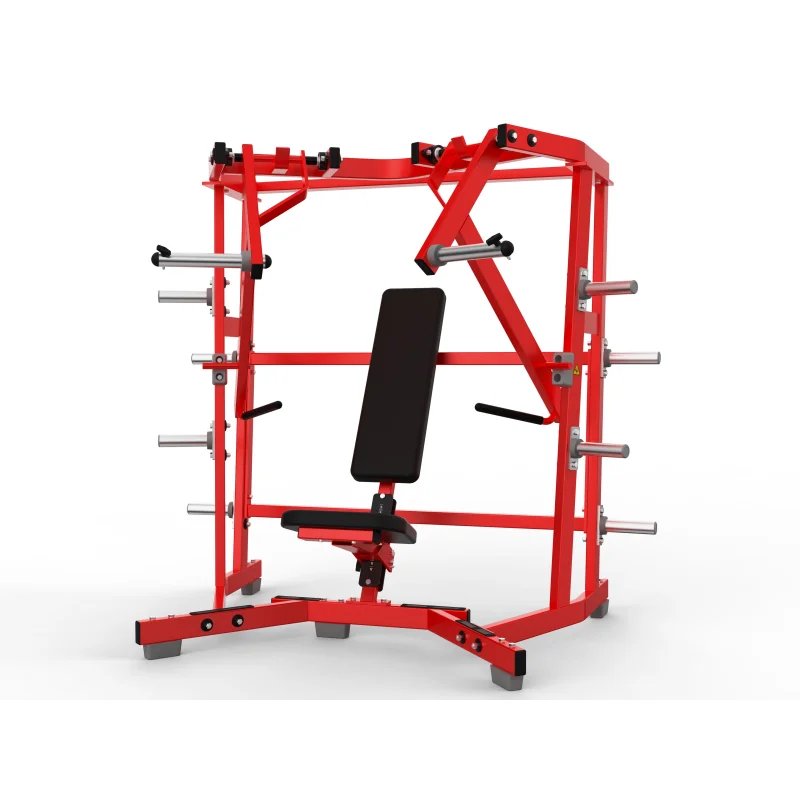
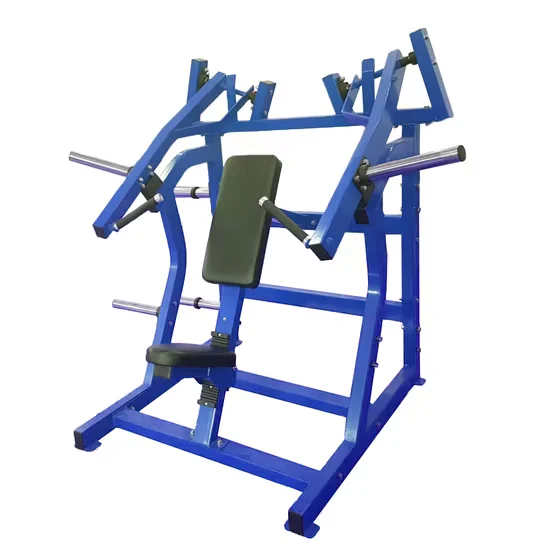
| Product Type | ISO-Lateral Strength Machine |
| Exercise Part | Chest |
| Material | Steel |
| Product Dimensions | 1500×1350×1650 mm |
| Net Weight | 137 kg |
| Max User Weight | 180 kg |
| Certification | ISO 9001, CE |
| Production Capacity | 500 PCS/Month |
| Age Group | Adult |
| Gender | Unisex |
| Appliance | Community, Gymnasium |
| Transport Package | Plywood Box |
Application Suitability
| Deployment Scenario | Typical Use |
|---|---|
| Chain gym strength zone | High-frequency chest training across peak and off-peak hours |
| Corporate wellness room | Compact footprint upper-body station for employee fitness programs |
| Community fitness center | Durable chest press accessible to varied fitness levels |
| Sports performance training center | ISO-lateral independent arm movement for athlete hypertrophy work |
| High-end residential home gym | Low-noise steel construction suitable for shared building floors |
Why Frame Rigidity Dictates Member Retention in Strength Zones
A 137 kg steel frame eliminates the lateral sway that drives members toward free-weight alternatives.
When a commercial chest press shifts under load, the movement path drifts and lifters compensate with shoulder stabilizers, creating joint stress that surfaces as discomfort within weeks [NEED_CITE: frame deflection thresholds under eccentric loading in commercial strength equipment]. Members rarely report the equipment; they simply stop booking sessions on machines that feel unstable. Facility operators see declining usage metrics before maintenance tickets appear, and by the time the frame is inspected, the member has already migrated to dumbbell benches. This ISO-Lateral Super Incline Press Machine for commercial gym environments anchors its stability through mass and reinforced steel geometry rather than cosmetic shrouds.
How This Press Fits Into a Commercial Strength Floor Layout
The 5008 covers incline-angle chest pressing through ISO-lateral independent arm movement, letting each side track its own converging path. In a strength zone, it pairs with flat bench and decline stations to complete a three-angle chest training circuit. The 1500×1350 mm footprint and 137 kg mass mean it occupies a fixed position and demands roughly one meter of clearance on each side for plate loading and user entry. It accommodates the full commercial user range up to 180 kg body weight, making it viable for both general membership floors and athletic performance areas where heavier athletes train. The ISO-Lateral Super Incline Press Machine commercial gym operators select tends to sit mid-row in the chest cluster, visible from the entrance to signal equipment depth.
Continuous Load and Floor-Loading Considerations for Heavy Steel Equipment
A unit at this weight requires verified floor load capacity, particularly on elevated levels or suspended slabs common in hotel fitness centers and upper-floor commercial gyms [NEED_CITE: structural load requirements for fixed commercial strength equipment on non-grade floors]. Unlike cardio machines that distribute dynamic force across a wider base, a loaded chest press concentrates static and dynamic weight into a smaller footprint. Ground-level or basement deployment avoids slab reinforcement costs. Ventilation matters less than with motorized cardio, but the surrounding area needs adequate airflow to manage user heat output during high-volume sets. The steel frame does not require dedicated electrical circuits, simplifying placement compared to treadmill or elliptical clusters. Floor leveling within tolerance prevents frame twist that accelerates bearing wear at pivot points.
Reading the Pivot and Bearing Specifications on Commercial Chest Stations
ISO-lateral movement means each arm pivots independently on its own axis, requiring matched bearing sets that maintain smooth arc travel under asymmetric loads. Sealed bearings at the pivot points resist sweat and chalk contamination, which are the primary wear accelerants in high-touch commercial environments. The steel construction at 137 kg provides a low center of gravity that resists tipping even when a single arm is loaded heavily during unilateral work. Weld quality at the frame junctions determines long-term rigidity; continuous weld beads outperform spot welds under repeated eccentric loading cycles. The seat and backrest adjustability must hold position under load without slippage, a function of pin-lock mechanisms and upholstery friction. Understanding these mechanical details helps facility buyers evaluate competing units beyond cosmetic differences.
The Operational Cost of Underspecified Strength Equipment
Deploying light-commercial rated frames in a 24-hour gym produces visible fatigue cracking at weld points within the first year, forcing unplanned replacements that disrupt member routines [NEED_CITE: failure mode analysis of light-commercial frames under continuous gym duty cycles]. Pivot bearings that lack sealing degrade from chalk and moisture ingress, creating grinding noises that members interpret as unsafe. Upholstery rated for residential use tears within months under commercial cleaning chemicals and daily friction, generating replacement costs and downtime. Facilities that purchased on unit price alone often spend more within thirty-six months than they would have on properly specified equipment initially. The pattern repeats across any high-traffic deployment where procurement ignores duty-cycle classification.
Why This Product Line Addresses Procurement Blind Spots
The sub-35dB operational standard developed through hotel deployments translates to strength equipment through precision bearings that eliminate metallic grinding in shared-wall environments. Every unit in the 10,000-hour durability testing protocol undergoes continuous high-frequency cycling that mirrors real commercial throughput. OEM customization extends to frame color, upholstery, and logo application, allowing brand consistency across multi-site rollouts. The free 3D strength-zone layout service accounts for this press’s exact footprint, plate-loading clearance, and user flow paths to prevent dead corners on the training floor. Full documentation packages accompany each shipment, giving facility managers the technical records their compliance teams require.
Documentation & Test Records
- CE declaration of conformity for the 5008 chest press unit
- EN 957 test report covering static and dynamic load verification
- ISO 9001 certificate for manufacturing process compliance
- Bearing and pivot durability test record with cycle counts
- Steel frame weld inspection report and material specification sheet
- Installation guide with floor anchoring and clearance requirements
Installation, Commissioning & Maintenance
- Verify 1500×1350 mm clearance plus one-meter lateral access for plate loading on each side
- Level the 137 kg frame on certified rubber mats to prevent pivot bearing preload asymmetry
- Inspect all pivot bearings for smooth arc travel before opening the strength zone to members
- Schedule sealed bearing re-greasing based on facility humidity and daily usage volume
- Wipe upholstery with pH-neutral cleaner after each shift to prevent vinyl degradation from sweat salts
- Check seat pin-lock engagement weekly under load to confirm no slippage during incline pressing
Planning Your Strength Zone Procurement
Provide the strength floor dimensions and planned equipment count to receive a 3D layout that positions this press within a complete chest training cluster with verified clearance paths. Specify whether deployment is on-grade or elevated so floor load calculations confirm slab capacity for the concentrated mass. Confirm target market requirements for any regulatory markings beyond the standard CE and ISO 9001 documentation. Indicate whether the unit needs OEM color or upholstery matching to align with existing facility branding.
Frequently Asked Questions
Q: How does ISO-lateral movement differ from a fixed-path chest press?
A: ISO-lateral design gives each arm its own pivot axis, so the left and right sides move independently through a converging arc. This allows unilateral work and prevents the stronger side from compensating during bilateral sets. Fixed-path presses force both arms along a single track, which can create asymmetrical joint loading for users with strength imbalances or prior shoulder injuries.
Q: What should I check to confirm frame stability before purchasing?
A: Request the weld inspection report and verify continuous bead welds at every frame junction rather than spot welds. Check the net weight as a proxy for steel gauge; heavier frames resist lateral sway under eccentric loads. Ask for bearing specification sheets showing sealed construction rated for the expected daily rep volume in your facility type.
Q: How often do pivot bearings require maintenance in commercial use?
A: Sealed bearings in a climate-controlled gym typically require re-greasing annually, but high-humidity environments or facilities with heavy chalk use may need six-month intervals. Inspect for grinding or lateral play during weekly walk-throughs. Replace bearings when smooth arc travel degrades, as worn pivots shift the movement path and increase joint stress for users.
Q: How do I plan safe spacing around this machine in a strength zone?
A: Allow at least one meter on each side for plate loading and user passage, plus clearance behind the seat for full-range recline. Position the press where approaching members can see the station without crossing another user’s movement path. Account for the 1500×1350 mm footprint plus dynamic space when calculating total zone density per square meter.
![Hammer Strength ISO-Lateral D. Y. Row Machine 5003 for Commercial Gyms [WARN] draft identifier mismatch](https://bicksport.com/wp-content/uploads/2026/08/hammer-strength-iso-lateral-d-y-row-machine-5003-for-commercial-gyms-warn-draft-identifier-mismatch-02baf9.webp)