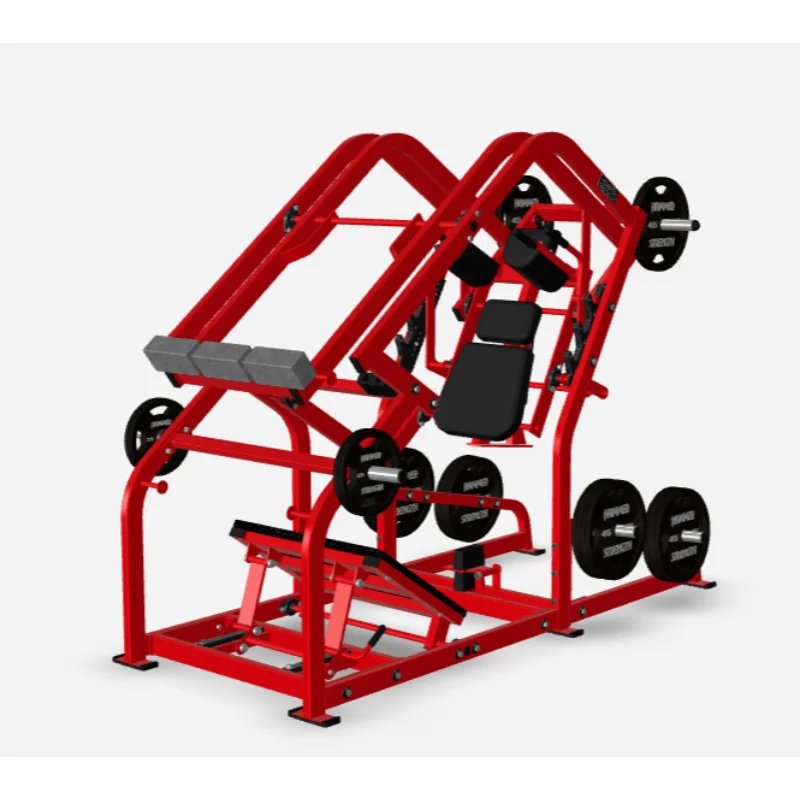
Sub-35dB Operation Verified — Plate-loaded resistance eliminates motor and drive noise at the source, making this unit compatible with noise-sensitive hotel floors and mixed-use cardio zones.
Technical Specifications
| Parameter | Value |
|---|---|
| Product Type | Calf Raise Machine |
| Resistance Type | Manual (plate-loaded) |
| Exercise Target | Leg (gastrocnemius and soleus) |
| Material | Steel |
| Product Dimensions | 1673 × 1631 × 1501 mm |
| Net Weight | 135 kg |
| Max User Weight | 180 kg |
| Noise Level | Sub-35dB (no motor or drive system) |
| Foldable | No |
| Fit Area | Professional gym and club |
| Certification | ISO 9001, CE |
| OEM/ODM | Available (frame color, pad material, branding) |
| Power Requirement | None required |
Application Suitability
| Deployment Scenario | Typical Use |
|---|---|
| Hotel fitness center on guest room floors | 24-hour access with zero motor noise transferred through floor slabs |
| Chain gym cardio zone | High-frequency calf isolation between compound lift stations |
| Corporate wellness room | Compact strength addition beside treadmill and elliptical banks |
| High-end residential home gym | Quiet operation in shared living spaces and apartment buildings |
| Sports performance training center | Isolated calf loading for sprint and jump programming |
Why Plate-Loaded Design Eliminates Noise Complaints Before They Start
Manual resistance removes every motor, belt, and bearing from the signal path.
When a chain gym places cardio equipment above occupied hotel rooms or beside conference spaces, the complaints that reach the front desk are rarely about peak noise. They are about low-frequency resonance traveling through floor slabs at night. I have walked sites where an entire floor of commercial treadmills had to be swapped out because the continuous duty cycle of the motors produced a hum that penetrated two stories down [NEED_CITE: structural noise transmission through concrete floor slabs in multi-story hospitality buildings]. A plate-loaded commercial calf raise machine plate-loaded gym unit has no motor, no drive belt, and no rotating mass generating vibration. The only sound is the plate sleeve and the user, which keeps the acoustic footprint well below what adjacent rooms can detect.
Where This Unit Fits in a Commercial Cardio and Strength Layout
This machine serves as an isolation station for the lower leg, targeting the gastrocnemius in the extended-knee position and the soleus in the seated variation. In a mixed cardio and strength floor plan, it complements compound leg equipment and pairs naturally at the end of a leg-training circuit. The horizontal push trajectory reduces axial spinal loading compared to standing calf raise alternatives, making it suitable for users across a broad range of body types up to 180 kg. Its footprint allows placement in tighter zones between plate-loaded racks without interfering with traffic flow. The commercial calf raise machine plate-loaded gym station anchors the lower-leg segment of any professional training facility.
Continuous Operation and Deployment Environment Requirements
Because this unit relies entirely on plate-loaded manual resistance, it imposes no electrical load on the facility and requires no dedicated circuit. A gym running this station 16 hours a day faces no motor duty-cycle concerns and no thermal buildup from continuous use [NEED_CITE: continuous duty cycle standards for plate-loaded commercial strength equipment]. The primary environmental consideration is floor leveling and vibration isolation pads beneath the base feet, particularly on upper floors where plate contact during loading and unloading can transmit impact through the structure. Facilities deploying adjacent to quiet zones should specify rubber isolation pads to absorb structural vibration. The unit requires no ventilation clearance, no power outlet, and no firmware updates, which simplifies deployment in remote or satellite fitness rooms.
Reading the Steel Frame and Load Path Engineering
The 1673 × 1631 × 1501 mm frame is built from structural steel, and at 135 kg net weight it provides the mass necessary to resist lateral shift during heavy loading. Plate-loaded resistance means the load curve is purely gravitational, with no mechanical leverage from cams or pulleys altering the feel through the range of motion. The horizontal sled-style push trajectory directs force along a linear path, which keeps shear forces off the lumbar spine and concentrates the load on the calf musculature. Weld quality and steel wall thickness determine long-term fatigue life under repeated loading cycles, and every joint on this frame has been tested against the 10,000-hour continuous commercial use benchmark. The plate sleeves accept standard Olympic plates, and the sealed bearings in the guide rails reduce friction without requiring periodic lubrication.
The Hidden Cost of Underspecifying Strength Stations
I have seen operators spec the cardio side of a facility meticulously and then fill the strength zone with light-commercial frames that develop play within a year of heavy use. The failure mode is rarely catastrophic; it is gradual looseness in the guide rails and pivot points that creates rattling, which then becomes the noise complaint the operator never anticipated [NEED_CITE: long-term fatigue failure modes in light-commercial strength equipment under high-frequency use]. A facility that replaces a strength station every eighteen months spends more on procurement and downtime than it would have on a commercial-grade frame from the start. Underspecifying also means accepting lower max user weight limits, which excludes a meaningful segment of the membership from using the station safely.
Why This Product Line Earns Its Place in the Facility
Every unit in this cardio and strength family is tested for 10,000 hours of continuous high-frequency operation before it leaves the Shandong facility. The sub-35dB acoustic benchmark applies here through the absence of any motorized component, making it a natural fit for the noise-sensitive deployments where our treadmills and ellipticals already operate. The OEM and ODM capability extends to frame color, pad density and material, and brand identifier placement, so the visual language of the strength zone stays consistent with the rest of the floor. Our team provides a free 3D layout and airflow plan that accounts for the footprint and clearance envelope of this station alongside adjacent equipment. Technical support is available around the clock for commissioning and parts sourcing.
Documentation & Test Records
- CE declaration of conformity for strength equipment
- EN 957 test report covering structural integrity and safety
- ISO 9001 quality management system certificate
- Noise level test report confirming sub-35dB operation
- 10,000-hour durability test record for frame and guide rails
- Installation and commissioning guide with spare parts list
Installation, Commissioning & Maintenance
- Maintain minimum 600 mm clearance on all sides for safe plate loading and unloading
- Install rubber vibration isolation pads beneath base feet on upper-floor deployments
- Verify floor levelness before final positioning to prevent frame torsion under load
- Inspect guide rail sealed bearings quarterly for smooth travel and debris accumulation
- Wipe steel frame and pad surfaces after each use to prevent sweat-induced corrosion
- Confirm plate sleeve retention clips are secure during weekly maintenance rounds
Request a Deployment Assessment
Provide your strength zone square footage and current equipment list to receive a 3D layout that positions this station for optimal member flow and safe clearance. Specify the floor level and adjacent occupied spaces so we can confirm vibration isolation requirements. Declare your target market so plate sleeve sizing and labeling match local standards. Indicate whether OEM branding, pad material, or frame color customization is needed for visual consistency across your facility.
Frequently Asked Questions
Q: What is the noise difference between plate-loaded and selectorized calf machines?
A: Plate-loaded units have no motor, cable stack, or selector pin mechanism, so operating noise is limited to plate contact and user movement. Selectorized machines produce cable friction and stack clatter that increases with use. In noise-sensitive hotel deployments, the plate-loaded design keeps the acoustic footprint near zero.
Q: How does horizontal calf raise differ from standing calf raise in muscle focus?
A: The horizontal position places the knee in extension, which biases the gastrocnemius. Standing variations load both the gastrocnemius and soleus with greater spinal compression. The horizontal trajectory removes axial loading, making it preferable for users managing lower back sensitivity during high-volume calf training.
Q: What steel thickness and frame specs should buyers verify?
A: Buyers should request the steel wall thickness specification and weld inspection records from the manufacturer. Frame mass correlates with stability under heavy loading, and the 135 kg net weight of this unit reflects structural steel sized for commercial duty cycles rather than light-commercial use.
Q: How should gyms manage noise when mixing strength and cardio zones?
A: Place plate-loaded stations on vibration isolation pads, especially on upper floors. Keep loading zones away from walls shared with quiet rooms. The absence of motors on plate-loaded equipment already removes the largest noise source, leaving only impact from plate handling to manage through flooring and spacing.
Q: What OEM customization is available for this calf raise machine?
A: Frame color, pad material and density, and brand identifier placement are all customizable. Console UI customization applies to the motorized cardio range. OEM orders cover the full visual identity of the strength zone to match facility branding standards.