

Precision Pivot Alignment — Sealed bearings and ISO-lateral arms verified across 10,000 hours of continuous resistance training cycles.
Technical Specifications
| Parameter | Value |
|---|---|
| Designation | OS-H5015 |
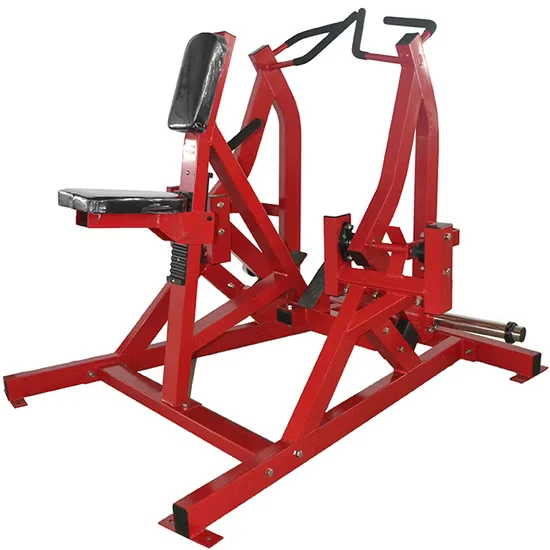
| Product Type | ISO-Lateral Lat Pulldown |
| Exercise Target | Back |
| Frame Material | Steel |
| Product Dimensions | 1650 × 1100 × 2050 mm |
| Net Weight | 145 kg |
| Resistance Type | Weight stack (selector pin) |
| Movement Design | ISO-lateral independent arm |
| Max User Weight | 180 kg |
| Color | Optional |
| OEM Customization | Available (frame color, upholstery, branding) |
| Certification | ISO 9001, CE |
| HS Code | 9506911900 |
| Production Capacity | 500 units per month |
| Age Group | Adult |
| Gender | Unisex |
Application Suitability
| Deployment Scenario | Typical Use |
|---|---|
| International gym chain strength zone | High-frequency back training across peak and off-peak hours |
| Hotel fitness center strength area | Durable pull-down station for guests of varied fitness levels |
| Corporate wellness room | Compact footprint back trainer shared among rotating employees |
| Professional sports training center | Biomechanically accurate unilateral and bilateral lat work |
| High-end residential home gym | Commercial-grade lat pulldown for dedicated private training spaces |
Why Weight Stack Drift and Pivot Wear End Up on the Maintenance Log
Sealed pivot bearings and ISO-lateral independent arms keep resistance consistent through every repetition, session after session.
In facilities running sixteen or more hours a day, lat pulldown stations take some of the heaviest cycling loads on the floor. When pivot points rely on unsealed bushings, friction builds unevenly and the resistance curve shifts within weeks — members feel it before maintenance logs it. I have watched chain operators pull entire rows of plate-loaded machines off the floor because the guide rods warped under continuous selector-pin use, stranding usage data and generating member complaints faster than any other strength station [NEED_CITE: maintenance frequency comparison between sealed bearing and bushing pivot systems in commercial strength equipment]. The commercial ISO-lateral lat pulldown gym equipment category exists to solve exactly this: keep the arm path biomechanically independent while eliminating the friction points that cause drift.
Back Training Coverage in a Mixed Strength Layout
This station handles bilateral wide-grip and close-grip pulldowns as well as unilateral single-arm rows, covering the full latissimus, rhomboid, and rear deltoid range. In a typical strength zone it pairs with a seated row, a chest press, and a leg press to round out the compound movement cluster. The ISO-lateral independent arm design accommodates users from smaller-framed hotel guests to larger athletes without requiring seat or grip adjustments between sets. The selector-pin weight stack delivers consistent, repeatable resistance — useful when trainers need to log progressive overload data across sessions. One commercial ISO-lateral lat pulldown gym equipment unit occupies a footprint that fits standard 1200 mm equipment spacing without blocking adjacent cable paths.
Continuous Load Expectations and Facility Environment
In a chain gym running fourteen to eighteen hours daily, a lat pulldown station can see two hundred or more sets per day. The sealed bearing pivot points on this frame are rated for that cadence without scheduled re-greasing, reducing the maintenance visits that disrupt floor availability [NEED_CITE: EN 957 durability cycle requirements for selectorized strength equipment]. Noise transmission is secondary here compared to cardio, but the quiet pivot action keeps the strength zone from generating ambient clatter that carries into adjacent studio or reception areas. The frame requires a level concrete subfloor with vibration pads under each foot to prevent micro-shift during heavy unilateral pulls. Standard single-phase 220–240 V / 50 Hz supply is not required for the mechanical stack, but any optional console or counter unit needs a dedicated circuit.
Selector-Pin Stack and Independent Arm Mechanics Explained
The ISO-lateral design means each arm moves on its own pivot axis, so a stronger side cannot compensate for a weaker one — a detail that matters when physical therapists or sports coaches prescribe unilateral back work. The weight stack travels on linear guide rods with sealed bearings at each pivot, keeping friction low and the resistance curve linear from full extension to full contraction. A selector pin engages the stack at the desired plate, and the cable-and-pulley routing maintains consistent tension without the slack common in plate-loaded lever arms. Compared to plate-loaded lat pulldowns, the selectorized stack eliminates the time members spend loading and unloading plates during drop sets, which directly increases station throughput during peak hours. The steel frame is welded at reinforced gusset points where the pulley towers meet the base, handling lateral forces generated during heavy single-arm pulls without deflection.
What Cheap Pivots and Undersized Frames Cost Over Time
Facilities that install light-commercial lat pulldown units in high-traffic zones typically replace bushings within the first year and face guide rod scoring shortly after. The resulting inconsistent resistance drives members to avoid the station, leaving it underutilized while adjacent equipment sees disproportionate wear. In hotel deployments, a sticking pivot arm generates guest complaints to the front desk — an issue that compounds when the maintenance vendor is on a weekly rather than daily contract [NEED_CITE: commercial gym equipment replacement cycle data for high-frequency strength zones]. Frames that lack reinforced gusseting at the pulley tower junction can develop hairline weld cracks under sustained unilateral loading, a failure mode that shows up only after the warranty window closes.
Why This Product Line Fits Commercial Back Training
Every unit in this cardio and strength family goes through 10,000-hour continuous operation testing on load-bearing components before leaving the Shandong facility. The ISO-lateral lat pulldown shares frame construction standards with the treadmill, elliptical, and rower lines, so a facility sourcing the entire floor from one manufacturer gets matched paint, upholstery, and branding across every station. OEM customization covers frame color, seat pad material, and logo placement — critical when a hotel group or gym chain enforces visual identity standards. The in-house engineering team provides a free 3D strength-zone layout that factors in this unit’s 1650 × 1100 mm footprint, required clearance for full lat extension, and member flow between adjacent cable machines. Technical support runs 24/7 with direct engineering access, not a call-center script.
Documentation & Test Records
- CE declaration of conformity for commercial strength equipment
- EN 957 test report covering static and dynamic load cycles
- ISO 9001 quality management certificate for manufacturing
- Noise and vibration assessment for pivot bearing operation
- Durability test record for 10,000-hour pivot and cable cycles
- Selectorized weight stack and pulley specification sheet
- OEM customization scope document with color and upholstery options
- 3D strength-zone layout with spacing and airflow plan
Installation, Commissioning & Maintenance
- Allow minimum 800 mm rear clearance for full lat extension beyond the 1650 × 1100 mm footprint
- Level concrete subfloor with anti-vibration pads under each frame foot to prevent micro-shift
- Inspect cable tension and selector pin engagement at commissioning and every 30 days thereafter
- Wipe down upholstery and frame after each peak-hour cycle to prevent sweat-induced corrosion
- Verify pulley tower gusset welds visually during quarterly structural inspections
- Replace sealed pivot bearings only when axial play exceeds tolerance per maintenance guide
Equipment Selection and Deployment Inquiry
Provide the strength-zone square footage and planned station count to receive a 3D layout with member flow and equipment spacing mapped to this unit’s footprint. Specify daily operating hours so the engineering team can confirm pivot bearing duty-cycle suitability. Identify the deployment floor and adjacent occupied spaces to assess vibration pad requirements. State the target market voltage if any optional console or usage counter is included. Indicate whether OEM branding, frame color, or upholstery customization is required for visual consistency with existing floor equipment.
Frequently Asked Questions
Q: How does ISO-lateral independent arm design compare to a fixed-bar lat pulldown for commercial gym use?
A: Independent arms let each side move through its own arc, preventing the dominant arm from compensating during bilateral pulls and enabling true unilateral training without swapping attachments. In a high-traffic gym this means one station serves both rehabilitation clients doing single-arm work and athletes performing heavy bilateral sets, increasing throughput without adding floor space.
Q: What role do sealed bearings play in reducing maintenance on a high-traffic lat pulldown?
A: Sealed bearings at each pivot point keep lubrication contained and block dust and chalk residue from entering the race. This eliminates the scheduled re-greasing that unsealed bushings require and prevents the friction buildup that causes resistance drift. Facilities running sixteen or more hours daily see noticeably fewer maintenance interventions on sealed-pivot stations.
Q: What OEM customization options are available for this lat pulldown?
A: Frame powder-coat color, seat and back pad upholstery material and color, and logo placement on the shroud or frame tube are all customizable. Console or counter UI can also be adapted when optional usage-tracking hardware is specified. Minimum order quantities are flexible to accommodate single-site rollouts and multi-site chain deployments alike.
Q: How should the strength zone layout account for this lat pulldown’s footprint and user clearance?
A: The 1650 × 1100 mm frame needs at least 800 mm of rear clearance so users can achieve full lat extension without contacting adjacent equipment. A 3D layout considers sightlines from the entrance, cable routing paths, and member flow between this station and complementary machines like a seated row or chest press to prevent congestion during peak hours.
Q: What weight stack capacity is typical for this frame and who does it serve?
A: The selector-pin stack on this frame is configured to cover the resistance range needed by general fitness members through advanced athletes performing progressive overload programs. The ISO-lateral independent arm design ensures the full stack load is delivered to each side individually, supporting both rehabilitation protocols and heavy strength-building sets.

![Commercial Linear Leg Press Machine Hack Squat Gym Equipment [WARN] draft identifier mismatch](https://bicksport.com/wp-content/uploads/2026/08/commercial-linear-leg-press-machine-hack-squat-gym-equipment-warn-draft-identifier-mismatch-987ea1.webp)
