

Heavy-Duty Steel Frame — tested for continuous high-frequency operation across international fitness facility deployments.
Technical Specifications
| Parameter | Value |
|---|---|
| Designation | OS-H5013 |
| Product Type | Seated Biceps Curl (Strength Equipment) |
| Material | Steel |
| Resistance Type | Weight Stack |
| Movement Path | Fixed Pivot, Seated Biomechanics |
| Exercise Target | Biceps |
| Max User Weight | 180 kg |
| Product Dimensions | 1455 × 1476 × 2133 mm |
| Net Weight | 135 kg |
| Color | Optional |
| OEM | Available |
| Certification | ISO 9001, CE |
Application Suitability
| Deployment Scenario | Typical Use |
|---|---|
| International gym chain strength zone | High-traffic bicep isolation station complementing free-weight areas |
| Corporate wellness center | Compact strength circuit for time-constrained employee workouts |
| Professional sports training center | Controlled bicep overload for athletic conditioning programs |
| Five-star hotel fitness center | Low-maintenance strength station for guest self-service use |
| Community recreation facility | Durable, fixed-path equipment suitable for unsupervised public access |
What Pivot Point Wear Reveals About Frame Engineering
Reinforced pivot points and sealed bearings separate machines that last a year from those that last a decade.
Every commercial gym has that one cable station where the pivot arm develops lateral play within months. The bushing wears unevenly, the upholstery shifts off-center, and members start avoiding the seat. With a commercial seated biceps curl machine operating at high repetition counts throughout the day, pivot integrity determines whether the unit stays in rotation or gets tagged out-of-service. Frame gauge, bearing specification, and weld quality at the pivot junction are where light-commercial designs fail first [NEED_CITE: pivot bearing wear standards for commercial strength equipment].
How the OS-H5013 Fits Within a Strength Zone Layout
The OS-H5013 occupies a defined footprint in any commercial strength circuit, delivering isolated bicep engagement through a fixed seated movement path. It complements compound pulling stations such as lat pulldowns and cable rows, giving members a dedicated isolation tool after multi-joint work. Positioned along a wall or inline with other selectorized units, the 1455 × 1476 mm footprint requires standard clearance spacing on three sides for safe loading and unloading. The seated configuration accommodates users across a wide height range without requiring grip-width adjustment, making this commercial seated biceps curl machine practical for facilities with high member turnover and minimal staff supervision.
Continuous Rotation Demands on Seated Strength Stations
Facilities running sixteen or more operating hours daily place sustained load on every pivot and bearing surface. The OS-H5013’s steel frame and sealed bearing assembly are built for this duty cycle, though deployment environment still matters. Level flooring prevents lateral drift under asymmetric loading, and rubber isolation mats reduce vibration transfer to adjacent equipment. In facilities above occupied spaces — hotel fitness rooms over guest floors, for instance — vibration damping at the base becomes important to avoid low-frequency complaints [NEED_CITE: vibration transmission thresholds for strength equipment on upper floors]. Adequate ventilation around the weight stack channel prevents dust accumulation that accelerates guide rod wear.
Reading the Specs That Actually Govern Strength Machine Longevity
Frame gauge and pivot bearing type tell you more than net weight alone. A 135 kg net weight in the OS-H5013 reflects substantial steel mass distributed through the main upright and lever arm — mass that resists flex under heavy stack loads and repeated cycling. The fixed movement path eliminates the adjustment variables of free-standing curl stations, concentrating engineering effort on pivot durability rather than range-of-motion mechanisms. Weight stack guidance relies on precision guide rods; when these are properly hardened and sealed, friction stays low and the selector pin tracks smoothly over thousands of repetitions. Upholstery attachment points on the seat and backrest are stress concentrators — double-stitched vinyl over high-density foam resists the sweat and friction typical of commercial use. Color customization is available to match facility design schemes, and OEM branding options allow operators to align the unit visually with house standards.
What Happens When Frame Specs Are Underestimated
Gyms that install light-commercial strength machines in high-traffic zones typically see pivot slop develop within the first year. The arm wobbles mid-repetition, the seat pad migrates off its mount, and the stack rattles inside its shroud. Members notice, complain, and migrate to the free-weight section. The unit gets pulled from the floor for warranty work, creating a gap in the circuit. Worse, when multiple units from the same under-specified batch degrade simultaneously, the facility faces a full-row replacement instead of a scheduled rotation [NEED_CITE: premature failure rates in light-commercial strength equipment under continuous use].
Why This Product Line for Commercial Strength Deployments
The OS-H5013 comes from a vertically integrated manufacturing operation covering frame fabrication, assembly, QC testing, and CNC machining under one roof. Every unit passes durability verification consistent with 10,000-hour continuous operation benchmarks applied across the product range. OEM customization extends to frame color, upholstery, and logo application at flexible minimums, so the commercial seated biceps curl machine can match existing facility aesthetics without bespoke engineering. The manufacturer provides 3D strength-zone layout planning that accounts for the 1455 × 1476 × 2133 mm envelope, member traffic flow, and safe clearance between adjacent stations. ISO 9001 production processes and CE marking ensure documentation consistency across export markets. Technical support is available around the clock for commissioning and field issues.
Documentation & Test Records
- CE declaration of conformity for strength equipment export compliance
- EN 957 test report covering structural and safety performance
- ISO 9001 certificate for production quality management
- Frame durability test record for continuous commercial operation
- Pivot bearing wear specification and maintenance schedule
- Spare parts list with component diagrams
Installation, Commissioning & Maintenance
- Maintain minimum 600 mm clearance on all sides around the 1455 × 1476 mm footprint
- Install on level flooring with rubber isolation mat to dampen vibration transfer
- Verify weight stack selector pin engagement before releasing to member use
- Inspect pivot bearings and guide rods at 90-day intervals under high-frequency operation
- Wipe upholstery and frame contact points daily with non-corrosive cleaner
- Check all fastener torque at commissioning and again after 30 days of use
Requesting the Right Configuration for Your Facility
Provide your strength zone square footage and equipment list to receive a 3D layout plan with clearance and traffic-flow mapping. Specify daily operating hours so the deployment recommendation matches your actual duty cycle. Confirm target market voltage requirements if any powered accessories are involved. Indicate whether OEM color and branding customization is needed to match existing facility standards.
Frequently Asked Questions
Q: What frame gauge and load rating apply to this seated biceps curl for commercial use?
A: The OS-H5013 uses a steel frame engineered for the 180 kg maximum user weight standard applied across the commercial range. The frame is tested for continuous high-frequency loading consistent with 10,000-hour durability benchmarks. Load rating and frame specifications are documented in the product test record provided with each shipment.
Q: What pivot bearing type is used, and what is the maintenance cycle?
A: Sealed bearings are used at the main pivot to resist dust and moisture ingress common in gym environments. Under standard commercial operation, inspection is recommended at 90-day intervals, with replacement scheduled based on observed play. The maintenance schedule document specifies torque values and replacement part numbers.
Q: What OEM customization options are available for this unit?
A: Color, logo placement, and upholstery material can all be customized to match facility design requirements. Minimum order quantities are flexible and confirmed during the quotation stage. Console UI customization applies to powered product lines; this mechanical unit focuses on frame and finish customization aligned with your branding standards.
Q: How should this machine be positioned within a high-traffic strength zone?
A: Allow minimum clearance on three sides for safe user entry and exit, and position the unit along a wall or inline with other selectorized stations. The 3D layout service accounts for the OS-H5013 footprint, member flow patterns, and adjacent equipment spacing to maximize utilization without congestion in the strength area.
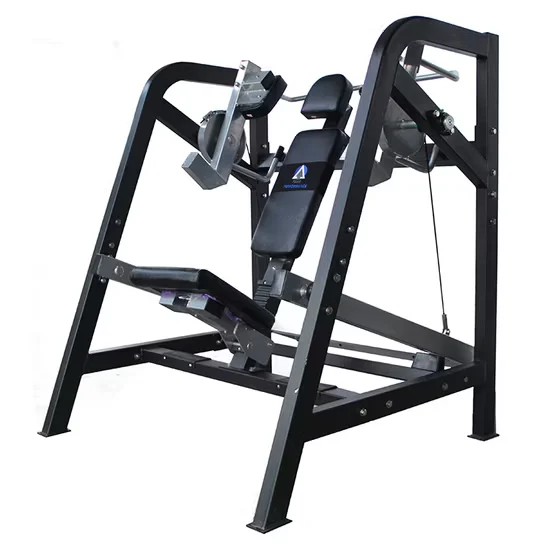
![**过程:** 1. **分析输入**: * 采集原标题:`Multi Function Strength Gym Equipment Smith Machine` * 产品草稿:`product_mode: designation`,`identifier: 5045`。 * 客户档案:Biketon Sport(有氧/商用/静音/IoT)。 2. **Gate & 优先级检查**: * 原标题不为空。 * `product_mode` 为 `designation`,但原标题中**没有型号**。 * 规则要求:“型号段从【采集原标题】原样复制... 若【产品草稿】identifier 与原标题型号不一致 → 以原标题为准,并在标题下另起一行输出 [WARN] draft identifier mismatch”。 3. **词汇来源锁 & 规则应用**: * 由于原标题没有型号(5045),我**绝对不能**在标题中加入“5045”。 * 可用词汇:`Multi Function`, `Strength`, `Gym Equipment`, `Smith Machine`。 * 根据规则 `1-bis`,长度不足50时优先补回**应用场景词**。 * 根据规则 `2`,主关键词 `commercial Smith machine multi-function strength equipment` 尽量在前35字符内。 * 根据规则 `3`,客户是商用/力量设备制造商,适用词汇:`Commercial Grade` / `Gym Equipment`。 4. **构建标题**: * 尝试结合主关键词和应用场景词:`Commercial Multi Function Smith Machine Strength Gym Equipment` (62 chars)。 * 检查词汇来源:`Commercial` (来自SEO/档案/允许补的场景词), `Multi Function` (原标题), `Smith Machine` (原标题), `Strength` (原标题), `Gym Equipment` (原标题)。 * 检查长度:62字符(符合 50-70 要求)。 * 前35字符:`Commercial Multi Function Smith M` (包含了 commercial, multi function, smith machine 核心词)。 5. **WARN 检查**: * `product_mode` 是 `designation`,说明草稿认为应该有型号。但原标题没有。这属于“不一致”(一个有一个没有),必须输出 WARN。 6. **最终输出格式**: * 第一行:标题 * 第二行:[WARN] draft identifier mismatch Commercial Multi Function Smith Machine Strength Gym Equipment [WARN] draft identifier mismatch](https://bicksport.com/wp-content/uploads/2026/08/e8bf87e7a88befbc9a-1-e58886e69e90e8be93e585a5efbc9a-e98787e99b86e58e9fe6a087e9a298efbc9amulti-function-strength-gym-equipment-smith-machine-baadbf.webp)
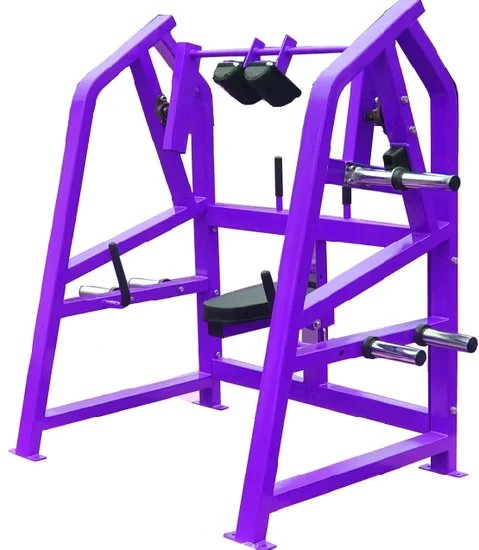
![Commercial Adjustable Bench Steel Gym Equipment for Fitness Center Use [WARN] draft identifier mismatch](https://bicksport.com/wp-content/uploads/2026/08/commercial-adjustable-bench-steel-gym-equipment-for-fitness-center-use-warn-draft-identifier-mismatch-5b67c3.webp)