
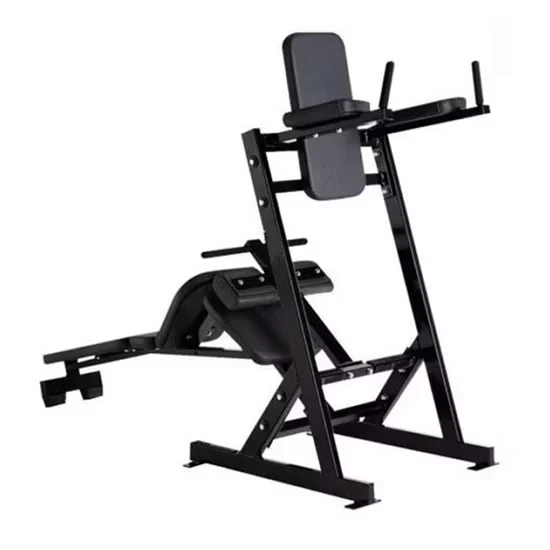
Continuous Load Endurance — Structural pivot assemblies and reinforced joints tested through sustained repetition cycles to eliminate flex under high-frequency facility deployment.
Technical Specifications
| Parameter | Value |
|---|---|
| Designation | 5074 |
| Exercise Part | Abdominal, Knee |
| Material | Steel |
| Product Dimensions | 2165 × 1020 × 1815 mm |
| Net Weight | 98 kg |
| Max User Weight | Adult / Unisex |
| Certification | ISO 9001, CE |
| OEM/ODM | Available |
| Fit Area | Professional Gym and Club |
| Appliance | Community, Gymnasium |
| HS Code | 9506911900 |
| Production Capacity | 500 PCS/Month |
| Transport Package | Plywood Case |
Application Suitability
| Deployment Scenario | Typical Use |
|---|---|
| Chain gym cardio zone | Dedicated core and knee isolation station within multi-station strength areas |
| Hotel fitness center on guest room floors | Low-noise abdominal training unit positioned near occupied rooms without generating vibration complaints |
| Corporate wellness room | Compact core training option for employees during short break windows |
| Community fitness center | High-traffic abdominal station built for continuous member rotation throughout operating hours |
| Sports performance training center | Biomechanically guided knee and core conditioning for athlete programming |
Why Structural Rattle Reaches Members Before Maintenance Notices
Light-duty core stations deployed in commercial facilities often develop pivot play and frame resonance within months of continuous member rotation, generating metallic noise that travels across the gym floor and triggers equipment swap requests before the maintenance team flags a ticket.
The commercial abdominal work station machine addresses this through a welded steel chassis with reinforced pivot joints designed to absorb repetitive loading cycles without developing structural flex. Every bearing surface and connection point is specified for sustained public-facility duty rather than intermittent home use. When a hotel fitness center places core training equipment on the same floor as guest rooms, any vibration or rattle transmits through the slab and reaches the front desk as a noise complaint [NEED_CITE: structural vibration transmission standards for fitness equipment on occupied floors]. Facilities that previously cycled through lighter alternatives report that the downtime and member frustration compound faster than the replacement cost itself.
Role Within a Multi-Station Strength Zone
This commercial abdominal work station machine occupies a specific biomechanical niche — isolating the abdominal and knee muscle groups through a seated, guided movement path that removes compensatory sway from the equation. In a strength zone layout, it pairs with free-weight compound stations and cable systems by offering a controlled isolation option for members who need targeted core engagement without spinal loading. Its 2165 × 1020 mm footprint fits within standard multi-station spacing grids, preserving sightlines and airflow between units. The seated entry accommodates a wide range of user heights and body types, allowing members to self-load without requiring spotter assistance or technique coaching at the station.
Sustained Rotation and Environmental Tolerances
In a high-traffic commercial facility, a core station may see dozens of users per day, each applying dynamic load through the pivot mechanism. The steel frame and sealed bearing assemblies are rated for continuous rotation without the thermal buildup or lubrication breakdown that lighter-duty units experience under similar throughput [NEED_CITE: commercial fitness equipment duty cycle standards for continuous public use]. Deployment on upper floors requires attention to vibration isolation — a rubber mat beneath the 98 kg unit decouples structural resonance from the slab. The station does not draw electrical power, eliminating voltage compatibility concerns entirely and simplifying placement in facilities where dedicated circuits are already allocated to motorized cardio equipment. Adequate clearance on all sides ensures safe mounting and dismounting during peak traffic periods.
Steel Chassis and Pivot Engineering Breakdown
The frame is constructed from structural-grade steel, chosen for its yield strength under the repeated eccentric loading that abdominal and knee exercises produce. Reinforced pivot joints use sealed bearings to maintain smooth articulation across thousands of cycles without developing the lateral play that causes rattling in budget-tier stations. The guided movement path constrains the user to a biomechanically aligned trajectory, reducing shear forces on the lumbar spine and knee joint that occur when members attempt unguided floor-based core work. Weld integrity at high-stress junctions is inspected against commercial fatigue standards, not residential benchmarks [NEED_CITE: welding inspection standards for commercial gym equipment frames]. The 98 kg net weight provides a stable base that resists tipping during vigorous use without requiring floor anchoring in most standard commercial installations.
The Hidden Cost of Specification Compromise
Facilities that source core stations built to residential weight ratings routinely face frame cracking and pivot seizure within the first year of commercial deployment. The repair calls interrupt member programming and create dead zones on the gym floor while units await parts. Noise from loose pivot hardware drifts into adjacent group exercise rooms and spa zones, generating cross-department complaints that escalate beyond the fitness manager’s control [NEED_CITE: facility maintenance cost comparison between commercial-grade and light-duty fitness equipment]. Member attrition follows when core training equipment feels unstable or unsafe, particularly among newer members who lack the confidence to troubleshoot an unfamiliar station. Sourcing a unit engineered for commercial throughput from the outset eliminates this replacement cycle entirely.
Why This Product Line Earns Floor Space
Every unit in this cardio and strength family undergoes structural and mechanical endurance testing calibrated for continuous high-frequency facility operation. The abdominal work station benefits from the same steel fabrication standards and QC protocols applied across all six equipment series, meaning facilities can source an entire floor from one production line with consistent build quality. OEM customization extends to frame color, upholstery, and facility branding — allowing operators to match the station visually to existing equipment fleets without sourcing from a separate vendor. The 2165 × 1020 × 1815 mm footprint is documented in the complimentary 3D layout service, which models equipment spacing, airflow corridors, and member traffic flow to prevent congestion around the core training zone. Technical support remains available around the clock for commissioning questions or maintenance guidance specific to this station’s pivot and bearing assemblies.
Documentation & Test Records
- CE declaration of conformity covering mechanical safety requirements for this abdominal station
- EN 957 test report validating structural integrity and user safety under load
- ISO 9001 certificate confirming quality management across the manufacturing process
- Durability test record documenting pivot and frame performance under repeated cycles
- Material specification sheet detailing steel grade and welding standards
- Installation and commissioning guide with spacing and anchoring recommendations
Installation, Commissioning & Maintenance
- Maintain minimum clearance around the 2165 × 1020 mm footprint for safe user mounting and dismounting
- Place on a level surface with a vibration-dampening mat to decouple the 98 kg frame from floor resonance
- Inspect all pivot bolts and bearing assemblies for torque specification before first member use
- Lubricate sealed bearing pivot joints at intervals defined by facility traffic volume
- Wipe upholstery and steel contact surfaces daily with non-corrosive cleaner to prevent sweat-induced oxidation
- Verify frame alignment and pivot smoothness quarterly as part of scheduled preventive maintenance
Planning Your Core Training Zone Deployment
Share your strength zone square footage and adjacent equipment list to receive a 3D layout that positions this station within proper traffic flow and sightline parameters. Specify the expected daily user count so the deployment plan accounts for rotation density around the unit. Confirm whether the installation floor sits above occupied spaces, which determines whether additional vibration isolation is recommended. Indicate any facility branding or color matching requirements so OEM specifications are finalized before production begins.
Frequently Asked Questions
Q: What construction standards differentiate this commercial abdominal station from light-duty alternatives?
A: The frame uses structural-grade steel with reinforced welds at every high-stress junction, and sealed bearings at the pivot points to maintain smooth articulation through thousands of daily cycles. Residential-grade stations typically use thinner tubing and unsealed bushings that develop play and noise within months of commercial use. The 98 kg net weight reflects material density calibrated for stability under continuous public facility loading rather than intermittent home exercise.
Q: How does the guided movement path protect users during abdominal and knee training?
A: The seated biomechanical path constrains movement to a fixed trajectory that isolates the target muscle groups while minimizing compensatory sway. This reduces shear loading on the lumbar spine and knee joint that commonly occurs during unguided floor exercises. Users of varying fitness levels can self-load safely without requiring a spotter or prior technique instruction at the station.
Q: Is customization available for frame color, upholstery, and facility branding?
A: Full OEM and ODM capability covers frame color, upholstery material, and logo placement to align with facility design standards. Operators can match the station visually to existing equipment fleets from other manufacturers or maintain a consistent brand identity across an entire floor fit-out. Minimum order quantities and lead times for customized units are confirmed during the quotation stage.
Q: What certifications accompany the equipment for international import clearance?
A: Each unit ships with a CE declaration of conformity and an EN 957 test report covering mechanical safety and structural performance requirements. The manufacturing facility holds ISO 9001 certification, which is included in the documentation package. Additional compliance documents can be prepared based on the destination market’s specific import regulations upon request during the order process.
Q: How does this station perform under continuous high-frequency commercial use?
A: The steel frame and sealed pivot assemblies are engineered for sustained rotation across dozens of daily users without developing structural flex or bearing noise. Facilities that previously deployed residential-rated core stations report frame cracking and pivot seizure within the first year, generating maintenance tickets and member complaints. This unit is built to commercial throughput expectations, eliminating premature replacement cycles.
![Huiyang 5081 Half Rack Power Cage Gym Machine [WARN] draft identifier mismatch](https://bicksport.com/wp-content/uploads/2026/08/huiyang-5081-half-rack-power-cage-gym-machine-warn-draft-identifier-mismatch-004de5.webp)
![OS-H5067 Adjustable Bench Incline Flat Decline Strength Equipment for Commercial Gyms [WARN] draft identifier mismatch](https://bicksport.com/wp-content/uploads/2026/08/os-h5067-adjustable-bench-incline-flat-decline-strength-equipment-for-commercial-gyms-warn-draft-identifier-mismatch-7c4e84.webp)
![OS-H5084 Half Rack Commercial Gym Equipment [WARN] draft identifier mismatch](https://bicksport.com/wp-content/uploads/2026/08/os-h5084-half-rack-commercial-gym-equipment-warn-draft-identifier-mismatch-2989a4.webp)