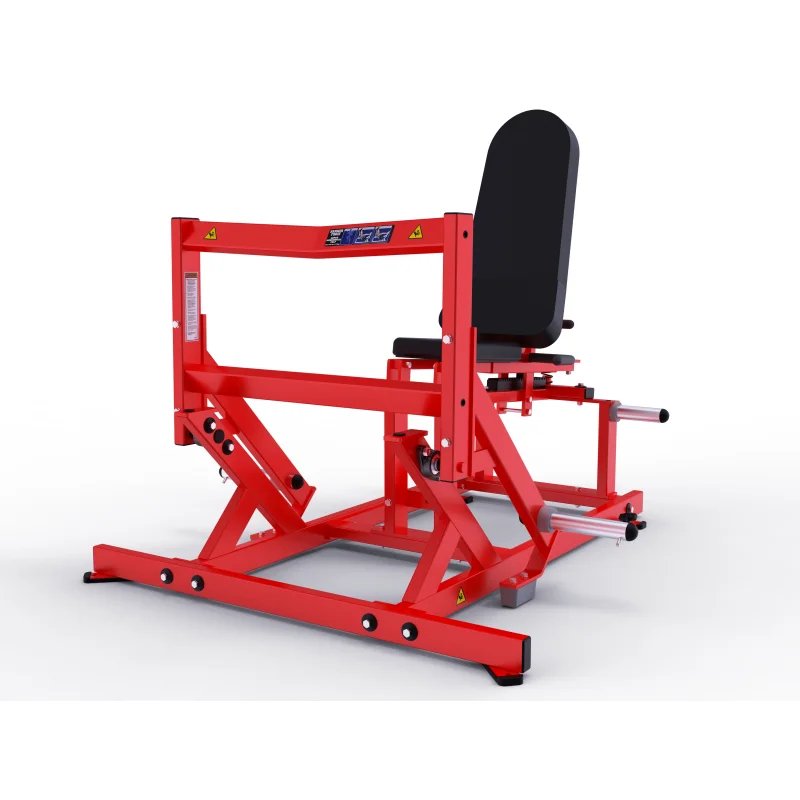
![Huiyang 5081 Half Rack Power Cage Gym Machine [WARN] draft identifier mismatch](https://bicksport.com/wp-content/uploads/2026/08/huiyang-5081-half-rack-power-cage-gym-machine-warn-draft-identifier-mismatch-004de5.webp)
Structural Rigidity Verified — Steel uprights and reinforced cross-members resist lateral deflection during heavy barbell loading in professional strength zones.
Technical Specifications
| Parameter | Value |
|---|---|
| Designation | 5081 |
| Product Type | Half Rack |
| Frame Material | Steel |
| Product Dimensions | 1434 × 1675 × 2296 mm |
| Net Weight | 152 kg |
| Power Source | Manual |
| Foldable | No (Unfolded) |
| Max User Weight | Not specified |
| Customization | Available (color, branding, accessories) |
| OEM/ODM | Available |
| Certification | ISO 9001, CE |
| Age Group | Adult |
| Gender | Unisex |
| Origin | Dezhou, Shandong, China |
| Production Capacity | 500 PCS/Month |
Application Suitability
| Deployment Scenario | Typical Use |
|---|---|
| Professional gym and club strength zone | Heavy compound lifts, rack pulls, and accessory barbell work during peak member hours |
| Community fitness center | Multi-user squat and pressing movements with adjustable safety spotter arms |
| Hotel fitness facility | Low-maintenance manual training station for guests performing power lifts and rack-based exercises |
| Sports performance training center | Athlete testing and progressive overload programming with stable upright support |
| Corporate wellness room | Functional strength circuits in compact footprint where full power cage clearance is unavailable |
Why Frame Flex Undermines Member Confidence in Commercial Strength Zones
Welded steel geometry eliminates the lateral sway that erodes trust during heavy sets.
When a half rack shifts or oscillates under load, lifters compensate instinctively — altering bar path, reducing working weight, or avoiding the station altogether. I have seen facility operators cycle through multiple rack suppliers before finding frames that do not transmit vibration through the floor plate during drop sets. A commercial half rack power cage gym installation must absorb repetitive shock without transferring energy to adjacent equipment or structural flooring. [NEED_CITE: structural vibration transfer thresholds for commercial strength equipment on upper floors]
The uprights on this unit are fabricated from steel section stock with reinforced gusseting at high-stress junctions. The 152 kg net weight anchors the base against rotational forces generated during unracking and re-racking sequences.
Positioning Within a Multi-Station Strength Floor
This commercial half rack power cage gym model occupies a middle ground between open squat stands and enclosed full cages. It suits facilities that need barbell containment and spotter arm protection without the spatial enclosure that limits user flow during busy periods. The 1434 × 1675 mm footprint allows placement along perimeter walls or as an island station with adequate clearance on three sides.
The open-front design pairs well with adjacent plate-loaded machines, dumbbell benches, and cable columns. Users performing Olympic lift variations benefit from the unrestricted overhead path, while the uprights provide reliable J-hook and safety arm mounting points. The frame accommodates lifters across a broad height range through adjustable bar catch and spotter positions.
Continuous Deployment and Facility Environment Requirements
Manual operation eliminates electrical dependencies — no dedicated circuits, no motor maintenance schedules, no control board failures during peak hours. The unfolded configuration arrives ready for bolt-down or floor-plate weighting without assembly-stage stability compromises. [NEED_CITE: floor loading requirements for static strength equipment exceeding 150 kg]
Facility planners should verify ceiling clearance against the 2296 mm frame height, accounting for overhead bar path during pull-ups or high-rack pulls. Rubber flooring beneath the station absorbs dropped-plate shock and prevents base migration on polished concrete. Cross-ventilation around the rack zone reduces humidity accumulation from prolonged training sessions, protecting steel finishes from sweat-borne corrosion.
Interpreting the Steel Frame and Manual Drive Specifications
Steel construction in strength equipment hinges on section profile, wall thickness, and weld penetration depth. Flat-rolled tubing with internal gussets resists torsional twisting better than open-channel sections under asymmetric loading — a critical factor when lifters shift weight laterally during front squats or single-arm landmine presses. The 152 kg mass indicates substantial material volume distributed across base, uprights, and cross-members.
Manual power source means zero electrical failure points: no solenoids to stick, no wiring to fray, no firmware to update. Resistance is entirely external — plates loaded onto the barbell — so the rack itself functions as a structural support system rather than a resistance generator. This simplifies maintenance to periodic bolt torque checks and upright inspection for surface wear at J-hook contact points. The unfolded, non-foldable design prioritizes permanent installation rigidity over space-saving portability.
What Spec Sheet Omissions Cost Down the Line
Racks that list steel construction without specifying gauge or weld certification leave buyers vulnerable to premature fatigue cracking at stress risers. I recall a batch of community center racks where upright base plates separated after eight months of daily drop-set use — the welds had shallow penetration and lacked reinforcement beads. [NEED_CITE: fatigue failure patterns in welded steel fitness equipment frames]
Insufficient base mass causes rack walk: incremental migration across the floor with each heavy unrack, eventually pulling anchor bolts or misaligning safety arms. Weight-rated spotter arms that deflect under load create dangerous bar-drop scenarios. Facilities replacing entire rack fleets after member injuries face far greater cost than specifying adequate gauge and weld standards at procurement.
Why This Production Line Fits Facility Rollouts
Components are tested for 10,000+ hours of continuous high-frequency use, covering the repetitive shock cycles that rack joints endure across years of commercial deployment. The full six-series cardio and strength family lets operators source complementary equipment from one manufacturing line, reducing freight consolidation complexity. OEM customization extends to frame color, logo application, and accessory mounting configurations — matching rack aesthetics to existing floor branding.
The 152 kg footprint and 1434 × 1675 mm base dimensions feed directly into 3D layout planning, ensuring adequate user clearance and airflow between stations. Production capacity of 500 units per month supports multi-venue rollouts without extended lead times. [NEED_CITE: commercial fitness equipment procurement lead time benchmarks]
Documentation & Test Records
- CE declaration of conformity covering structural and mechanical safety requirements
- EN 957 test report for stationary training equipment strength and stability
- ISO 9001 certificate confirming quality management system compliance
- Steel material specification sheet detailing grade and section properties
- Weld quality inspection records for frame junctions and base plate attachments
- Assembly and commissioning guide with bolt torque specifications
Installation, Commissioning & Maintenance
- Verify floor load capacity for 152 kg static mass plus dynamic barbell impact forces
- Allow minimum 600 mm clearance on three sides for safe bar loading and user movement
- Anchor base plates to concrete substrate using expansion bolts rated for shear loading
- Inspect all bolted connections and re-torque to specification after first 30 days of use
- Wipe uprights weekly with pH-neutral cleaner to prevent sweat-induced surface corrosion
- Check J-hook and spotter arm mounting hardware monthly for wear and secure engagement
Planning Your Strength Equipment Inquiry
Share your facility floor plan with rack count and adjacent station types to receive a 3D layout covering clearance zones and member traffic flow. Specify daily usage intensity — whether the rack serves supervised training sessions or unsupervised open-gym access — to confirm accessory and safety arm configuration. Identify deployment floor level and adjacent occupied spaces so base isolation and flooring requirements align with vibration control needs. State your target market voltage standards if integrating electronic accessories or lighting, and indicate whether console-based data tracking is planned for adjacent cardio stations.
Frequently Asked Questions
Q: What steel grade and thickness are used in the frame construction?
A: The frame is fabricated from structural-grade steel section tubing. Exact gauge and alloy specifications are confirmed during the quotation phase based on load requirements and deployment environment. Material certificates accompany each production batch, detailing section dimensions, wall thickness, and tensile properties for structural verification.
Q: Can the half rack be customized with facility branding and color matching?
A: Yes. OEM and ODM options include powder-coat color selection, logo application on uprights or cross-members, and custom accessory mounting configurations. Color samples are provided for approval before production begins, ensuring the finish matches existing facility branding and adjacent equipment aesthetics across the strength training zone.
Q: What accessories are compatible with this power cage model?
A: Compatible accessories include adjustable J-hooks, safety spotter arms, pull-up bars, landmine attachments, and band peg mounting points. Accessory compatibility is confirmed during the specification phase to ensure mounting hole patterns and upright profiles align with selected add-ons. Custom accessory packages can be configured for specific training methodologies.
Q: How does the unfolded design benefit commercial deployment timelines?
A: The unfolded configuration ships as a pre-welded structural assembly requiring only base anchoring and accessory mounting on site. This eliminates multi-stage frame assembly, reduces installation labor hours, and ensures weld integrity is verified at the factory rather than in the field. Facilities can commission the rack immediately upon delivery and floor preparation.
Q: What quality control testing is performed before shipment?
A: Each unit undergoes visual weld inspection, dimensional verification against engineering drawings, and static load testing at rated capacity. Surface finish is checked for coating uniformity and adhesion. Bolt hole alignment and accessory mounting point tolerances are measured to ensure field assembly proceeds without rework or component modification.