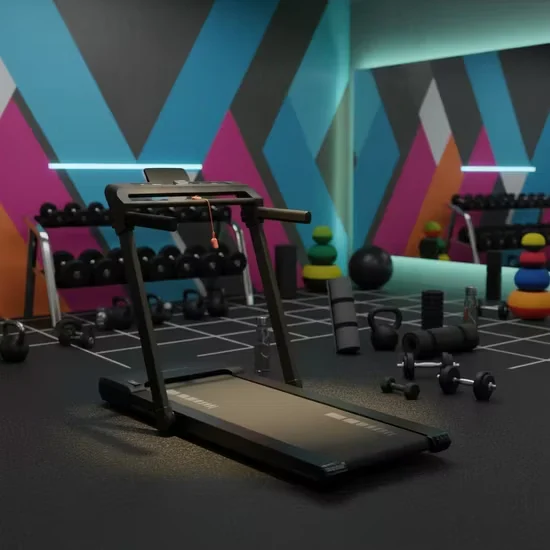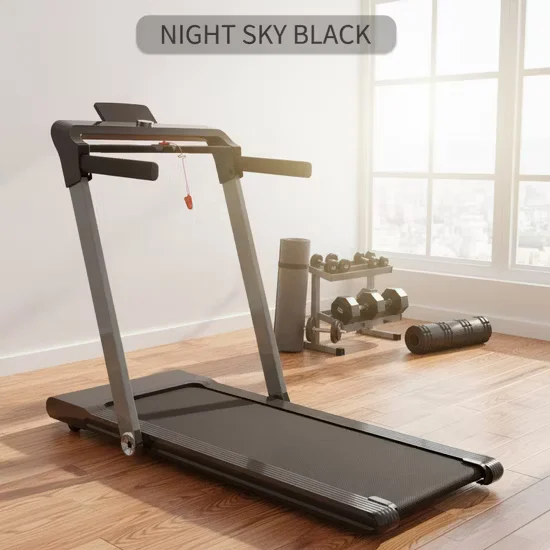
Space-Conscious Residential Cardio — A foldable frame and DC motor architecture deliver essential walking and running metrics while reducing the storage footprint when not in active use.
Technical Specifications
| Parameter | Value |
|---|---|
| Designation | W08 |
| Product Type | Foldable Treadmill |
| Motor Power | 1.5HP (peak or continuous not specified in source) |
| Speed Range | 1–16 km/h |
| Running Surface | 1200 x 450 mm |
| Console Type | LCD (Speed / Distance / Time / Calories) |
| Programs | 16 preset programs |
| Product Unfold Size | 1500 x 740 x 1150 mm |
| Product Folded Size | 1810 x 740 x 220 mm |
| Net Weight | 42.0 kg |
| Material | ABS |
| Foldable | Yes |
| Certification | CE, RoHS |
| OEM Custom | Yes |
| ODM Custom | Yes |
Application Suitability
| Deployment Scenario | Typical Use |
|---|---|
| High-end residential home gym | Daily walking and light jogging in apartments where floor space and acoustic discretion are primary concerns |
| Corporate wellness room | Stowable cardio unit for employees during breaks in limited-area office fitness spaces |
| Boutique studio warm-up zone | Compact pre-session cardio for members before strength or group training classes |
Why Compact Homes Still Deserve Serious Walking Machines
Most residential cardio complaints trace back to two problems: noise migrating through floor assemblies and machines that dominate a room even when idle.
When a foldable electric treadmill home walking machine sits in an apartment above occupied units, motor vibration and footfall impact transfer through the slab. I have seen entire batches of light-duty treadmills pulled from residential deployments because the hinge mechanism rattled after a few months of folding and unfolding, and the motor whine at low speeds disturbed neighbors during early morning sessions. The W08 addresses this through a DC motor drive that operates at a lower acoustic profile than typical AC commercial motors, paired with a foldable frame that tucks into a 220 mm profile against a wall [NEED_CITE: acoustic transfer paths in multi-story residential fitness deployments]. The 42.0 kg net weight also means the unit does not require reinforced flooring, which is a common oversight when operators specify commercial-grade machines for upper-floor residential installations.
Positioning This Foldable Treadmill Within a Mixed Cardio Zone
The W08 covers steady-state walking through moderate-paced running at speeds up to 16 km/h, fitting the low-to-moderate intensity band that makes up the majority of daily residential cardio use. In a mixed equipment layout, it complements higher-intensity units like rowing machines or stair climbers by occupying the warm-up and active recovery segment. The 1200 x 450 mm running surface accommodates users of average height for walking and jogging, though taller users performing full-stride running may find the belt length restrictive. Its foldable design means the machine claims zero permanent floor space when stored, which matters in residential and corporate wellness rooms where every square meter serves multiple purposes. The 16 preset programs provide enough intensity variation for personal use without the complexity of networked consoles, keeping the interface approachable for casual users. This foldable electric treadmill home walking machine fits naturally into environments where equipment must earn its footprint every day.
Noise Transfer and Deployment Environment Considerations
A DC motor at this power class generates noticeably less acoustic output than an AC motor rated for continuous commercial duty, making it suitable for deployment on residential floors where sound travels through structural connections. However, the 1.5HP rating requires clarification on whether it represents continuous or peak output, because a motor running near its ceiling for extended sessions will generate more heat and noise over time [NEED_CITE: motor duty cycle classification for intermittent versus continuous operation]. The foldable hinge mechanism introduces a second noise source — each fold and unfold cycle stresses the joint, and repeated use can loosen fasteners if not periodically checked. Voltage and plug compatibility must be confirmed before production, as residential power standards vary across markets and a mismatch discovered after delivery delays deployment by weeks. Floor leveling matters more here than with heavier commercial units, because the lighter 42.0 kg frame transmits vibration more readily if the surface is uneven.
DC Motor Architecture and Running Surface Trade-offs
The DC motor drive in the W08 is fundamentally different from the AC induction motors found in full commercial treadmills. DC motors deliver smooth torque at low speeds, which is where most residential walking occurs, and they operate at lower noise levels because the commutation produces less electromagnetic hum. The trade-off is thermal capacity: a DC motor at this power class cannot sustain the same continuous load as a 3HP or 4HP AC motor without overheating. The 16 preset programs distribute intensity across the session, which helps prevent sustained peak loads on the motor. The 1200 x 450 mm running surface is a deliberate compromise — longer and wider belts add weight and require a larger motor to drive them, which would push this unit out of the residential category. The LCD console tracks speed, distance, time, and calories, providing the core metrics users need without the cost and complexity of a touchscreen. The ABS material construction keeps weight manageable for the foldable mechanism to function reliably over repeated cycles [NEED_CITE: material fatigue testing for foldable treadmill hinge assemblies].
The Cost of Specifying Below the Use Case
When a light-duty treadmill with an underspecified motor gets placed in a setting that demands daily use, the failure pattern is predictable: the motor overheats during sustained sessions, the belt deck loses alignment, and the foldable hinge develops play that creates rattling during operation. I have watched residential deployments cycle through two or three units in a single year because the initial specification prioritized purchase price over duty cycle matching. Noise complaints from neighboring units compound the problem, because by the time maintenance is called, the relationship with affected residents is already damaged [NEED_CITE: residential noise complaint escalation patterns in shared living fitness spaces]. The data gap matters too — when a console cannot export usage records, facility managers in corporate wellness environments have no visibility into equipment utilization, making it impossible to justify replacement or expansion decisions.
Why This Product Line Fits Residential and Light Commercial Briefs
The W08 sits within a broader cardio family engineered for environments where acoustic discretion and space efficiency drive the specification. Our manufacturing facility in Shandong runs durability testing protocols that inform how we match motor duty cycles to expected usage patterns, and the W08 is positioned for intermittent personal use rather than all-day commercial operation. The foldable frame design reduces storage depth to 220 mm, which directly addresses the spatial constraints in apartment home gyms and compact corporate wellness rooms. OEM and ODM customization extends to console UI, color, and logo, allowing integrators to match the unit to branded residential environments. The 3D cardio zone layout service covers sightline and airflow planning, ensuring that when multiple units are deployed in a shared space, the arrangement accounts for ventilation and user privacy. Technical support covers commissioning guidance specific to the voltage and plug standards of the target market.
Documentation & Test Records
- CE declaration of conformity covering electrical safety and EMC requirements
- RoHS compliance documentation confirming restricted substance limits
- Noise level test report documenting acoustic output across the speed range
- Durability test record for the foldable hinge mechanism under repeated cycles
- Motor specification sheet detailing power output characteristics
- Console technical documentation with LCD display parameters
Installation, Commissioning & Maintenance
- Allow minimum clearance around the 1500 x 740 mm unfolded footprint for safe mounting and dismounting
- Level the floor surface before placement to prevent vibration transfer through the 42.0 kg frame
- Confirm voltage and plug standard match before connecting the DC motor to the power supply
- Inspect foldable hinge fasteners and lubricate pivot points at regular intervals per the maintenance schedule
- Clean the LCD console with non-abrasive solutions to maintain display legibility over time
- Check running belt tension and alignment on the 1200 x 450 mm surface after the initial break-in period
Planning Your Next Cardio Deployment
Share the room dimensions and intended daily usage duration so we can confirm whether the DC motor duty cycle aligns with your operational pattern. Specify the deployment floor level and adjacent occupied spaces so we can assess acoustic requirements and recommend appropriate vibration isolation. Confirm the target market voltage standard and plug type before the production order is finalized. Indicate whether console usage data needs to integrate with a facility management system, as this affects the specification path for this foldable electric treadmill home walking machine.
Frequently Asked Questions
Q: What is the difference between peak and continuous motor power, and how does it affect treadmill lifespan?
A: Peak power is the maximum output a motor can deliver in short bursts, while continuous power is what it can sustain without overheating. A 1.5HP rating listed without clarification could represent either value. Running a motor consistently near its peak rating accelerates thermal degradation of internal components, shortening the unit’s operational life. Requesting the manufacturer’s motor specification sheet with duty cycle data clarifies which rating applies.
Q: How does a DC motor compare to AC in noise output and duty cycle for home use?
A: DC motors generally produce less electromagnetic noise at low speeds, which is where most residential walking and light jogging occurs. They also offer smoother torque delivery at these speeds. However, DC motors have lower thermal capacity than AC motors, meaning they are better suited for intermittent personal sessions rather than continuous all-day operation in shared facilities.
Q: What maintenance does a foldable treadmill hinge mechanism require over time?
A: The hinge is a mechanical joint that experiences stress with every fold and unfold cycle. Fasteners can loosen, pivot points need periodic lubrication, and wear surfaces should be inspected for play or deformation. A hinge that develops excessive movement will create rattling during operation, which is particularly problematic in noise-sensitive residential environments.
Q: How does running surface size affect workout comfort and safety for different user heights?
A: A 1200 x 450 mm belt accommodates walking and jogging for users of average height comfortably. Taller users performing full-stride running may find the length restrictive, which can alter gait and increase fall risk. Matching running surface dimensions to the expected user population is a critical step in equipment selection that often gets overlooked during specification.

![MT296 Electric Treadmill Exercise Machine for Fitness Training [WARN] draft identifier mismatch](https://bicksport.com/wp-content/uploads/2026/08/mt296-electric-treadmill-exercise-machine-for-fitness-training-warn-draft-identifier-mismatch-ed9f4c.webp)