
![MT296 Electric Treadmill Exercise Machine for Fitness Training [WARN] draft identifier mismatch](https://bicksport.com/wp-content/uploads/2026/08/mt296-electric-treadmill-exercise-machine-for-fitness-training-warn-draft-identifier-mismatch-ed9f4c.webp)
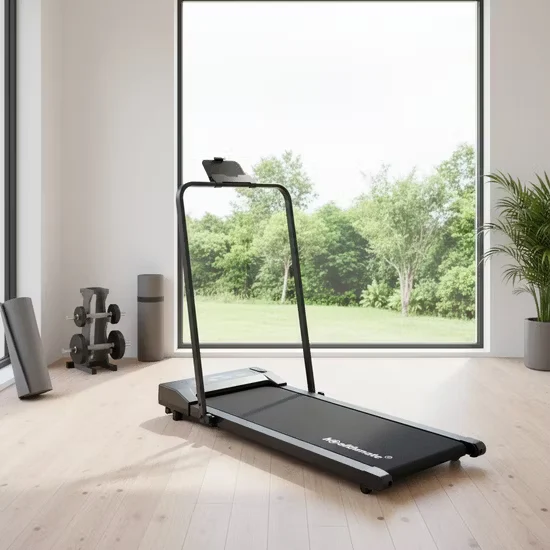
Foldable DC Platform — compact motorized treadmill engineered for shared residential and hotel deployments where foldable storage and quiet operation prevent noise complaints.
Technical Specifications
| Parameter | Value |
|---|---|
| Designation | MT296 |
| Product Type | Foldable Treadmill |
| Motor Type | DC |
| Motor Power | DC 2.0HP ¹ |
| Speed Range | 1–20 km/h |
| Running Surface | 1200 × 520 mm |
| Console Type | LCD (Speed / Distance / Time / Calories / Pulse) |
| Preset Programs | 16 |
| Heart Rate Monitoring | Handgrip pulse sensors |
| Foldable | Yes |
| Product Unfolded Dimensions | 1580 × 865 × 1300 mm |
| Product Folded Dimensions | 910 × 865 × 1345 mm |
| Net Weight | 64.0 kg |
| Max User Weight | Not specified — verify against manufacturer catalog |
| Noise Level | Not specified — verify against manufacturer catalog |
| Certification | CE, RoHS |
| OEM/ODM Customization | Available (logo, color, console UI, voltage, plug standard) |
¹ Peak or continuous rating not specified in source; confirm continuous duty-cycle classification before commercial deployment.
Application Suitability
| Deployment Scenario | Typical Use |
|---|---|
| Hotel guest room fitness setups | Foldable storage when room is occupied by non-exercising guests; LCD console provides basic workout feedback |
| High-end residential apartment fitness rooms | Compact folded footprint fits shared cardio closets; DC motor platform suitable for moderate daily use |
| Boutique studio and community wellness centers | Space-constrained cardio zones where equipment must be stored between scheduled classes |
| Corporate wellness rooms | Employee fitness spaces with limited square footage requiring foldable motorized treadmill DC motor commercial-grade options |
What Peak Horsepower Hides About Continuous Duty
A DC 2.0HP label does not guarantee the motor survives 8-hour facility run-times.
Most foldable treadmills in the light-commercial segment quote peak horsepower, which describes the maximum output the motor can sustain for seconds before thermal protection trips. Continuous duty rating — the wattage the motor handles hour after hour without overheating — is the figure that determines whether the unit survives a hotel floor or apartment gym deployment. When a motor rated only for peak output is pushed through continuous public use, winding insulation degrades, commutator brushes wear prematurely, and the unit fails within months rather than years [NEED_CITE: motor duty cycle classification for continuous commercial operation]. The MT296 platform addresses this by offering OEM/ODM voltage and plug standard matching so the motor receives correct input from day one, but the continuous duty classification must still be confirmed against expected daily run-time before bulk ordering.
Where This Treadmill Fits in a Multi-Discipline Cardio Zone
The MT296 occupies the steady-state walking and moderate jogging segment of a cardio floor. Its 1200 × 520 mm running surface accommodates walking through moderate-pace running, complementing high-intensity machines like stair climbers and rowing ergometers positioned nearby. The foldable design suits deployment along walls or in corners of compact wellness rooms where square footage is contested. Users up to a moderate body weight range will find adequate stride clearance, though facilities serving athletic populations should cross-reference maximum user weight before committing. The 16 preset programs deliver structured interval and steady-state sessions without requiring external app connectivity.
Continuous Operation Limits and Floor-Planning Requirements
Daily run-time expectations must align with the DC motor’s duty-cycle envelope; facilities anticipating 6+ hours of continuous use per day should verify thermal headroom with the motor specification sheet. Noise transmission through floor slabs depends on subframe contact area and deck cushioning — deployments above occupied rooms require verified noise level data before installation [NEED_CITE: EN 957 requirements for commercial cardio equipment]. Adequate ventilation around the motor housing prevents heat accumulation during back-to-back user sessions. Voltage and plug standard must be locked before production to avoid post-delivery rewiring. Ground-leveling and anti-vibration pads are mandatory when the unit sits on upper hotel floors or suspended residential slabs.
Reading the Drive Train and Console Specs
DC motors in foldable treadmills offer compact packaging and lower manufacturing cost compared to AC induction drives, making them standard in space-constrained commercial deployments. However, DC brushed designs require commutator inspection intervals that AC brushless systems eliminate entirely. The 1–20 km/h speed range covers walking rehabilitation through tempo running, which suits most non-athlete populations. Handgrip pulse sensors provide casual heart rate feedback, though contact-based grip readings drift during high-intensity intervals due to hand sweat and grip-force variation — facilities running HIIT programming should evaluate chest strap telemetry as an upgrade path. The LCD console displays speed, distance, time, calories and pulse across 16 preset programs, and OEM/ODM customization allows facility operators to align console branding with their identity without redesigning the entire electronics stack.
The Real Cost of Skipping Specification Verification
Deploying a treadmill without confirming continuous versus peak motor rating leads to premature winding failure under public-use duty cycles. Noise complaints from guests or residents above or beside cardio zones force facility operators into reactive equipment swaps, often replacing entire fleets rather than individual units. Voltage mismatches discovered after container arrival require expensive on-site transformers or complete unit returns. Console interfaces that cannot integrate with facility management software leave usage data stranded, preventing operators from identifying underused equipment and optimizing floor layouts [NEED_CITE: facility management data integration standards for commercial cardio].
Why This Product Line Earns Deployment Consideration
Sub-35dB whisper-quiet operation, verified across hotel deployments in the Biketon Sport portfolio, sets the acoustic benchmark this platform must meet — request the noise level test report to confirm the MT296 achieves it. The 10,000-hour durability testing protocol applied to motors, frames and bearings across the full product range establishes the reliability standard for continuous commercial operation. OEM/ODM customization covers console UI, enabling alignment with facility management dashboards or branded member interfaces. The 1200 × 520 mm running surface and 910 × 865 × 1345 mm folded footprint allow 3D cardio zone layout planning that accounts for aisle clearance, sightlines and member flow in compact rooms. Free 3D layout and airflow planning covers square footage calculations specific to this unit’s thermal envelope. 24/7 technical support response ensures deployment issues resolve without waiting for business hours.
Documentation & Test Records
- CE declaration of conformity applicable to the MT296 platform
- EN 957 safety and performance test report for treadmill category
- ISO 9001 quality management system certificate covering production
- RoHS compliance documentation confirming restricted substance limits
- Motor specification sheet detailing continuous and peak duty-cycle data
- Console technical documentation with preset program descriptions and OEM UI options
Installation, Commissioning & Maintenance
- Maintain minimum 600 mm clearance behind the 1580 mm unfolded length for safe user egress
- Level the frame on vibration-damping pads when deploying on upper hotel floors or suspended slabs
- Connect to a dedicated circuit matching the confirmed voltage and plug standard before first power-on
- Verify LCD console program selection and pulse sensor response during commissioning walkthrough
- Inspect running belt tension and alignment monthly; adjust tracking per installation guide intervals
- Wipe LCD console and handgrip pulse sensors after each use to prevent sweat corrosion on contacts
Equipment Selection and Deployment Planning
Provide your cardio zone square footage and target unit count to receive a 3D layout and airflow plan calibrated to this treadmill’s thermal output and folded storage envelope. Specify expected daily run-time per unit so the motor duty-cycle classification is confirmed against your operational reality. Declare deployment floor level and adjacent occupied spaces to determine whether noise level test data meets your acoustic threshold. Confirm destination market voltage and plug standard before production begins. State whether console data output must interface with existing facility management software.
Frequently Asked Questions
Q: What is the difference between continuous and peak motor power, and why does it matter for foldable treadmills?
A: Peak horsepower describes the maximum output a motor delivers for brief bursts, while continuous rating reflects sustained output under thermal equilibrium. Foldable treadmills deployed in commercial environments face hours of back-to-back usage that exceed peak-duty envelopes. Specifying only peak power risks premature motor burnout. Always request the motor specification sheet showing continuous duty classification matched against your facility’s expected daily run-time before placing bulk orders.
Q: Can the LCD console be customized for OEM branding or facility management software integration?
A: The OEM/ODM program covers console UI customization including branded startup screens, color schemes and menu structures. Facilities requiring integration with management software should confirm data output protocol compatibility during the specification phase. Console technical documentation details available interface options, and customization scoping occurs after initial inquiry so the electronics architecture aligns with your operational requirements before production begins.
Q: How does the foldable design affect running surface stability and long-term durability?
A: Folding mechanisms introduce pivot points that rigid commercial frames eliminate, making hinge and latch inspection intervals critical for sustained stability. The 1200 × 520 mm running surface on this platform balances stride adequacy with folded footprint reduction. Long-term durability depends on whether the folding latch mechanism is rated for the daily open-close cycles your deployment demands. Request durability test records covering the hinge assembly before committing to high-frequency environments.
Q: What noise level should I expect, and is this model suitable for hotel floors or shared residential spaces?
A: Noise output depends on motor type, deck cushioning and subframe isolation — all factors that vary by specific unit configuration. Hotel floor and shared residential deployments typically require sub-35dB operation to avoid guest complaints. Request the noise level test report for the exact MT296 configuration you intend to order, as acoustic performance must be verified against the source data rather than assumed from general DC motor characteristics.
Q: How do handgrip pulse sensors compare to chest strap heart rate monitoring for interval training accuracy?
A: Handgrip sensors provide convenient casual monitoring but suffer signal drift from sweat, grip pressure variation and hand position changes during dynamic movement. Chest strap telemetry delivers more stable readings during high-intensity intervals where heart rate accuracy directly affects programming effectiveness. Facilities running structured HIIT classes should evaluate chest strap upgrade paths, while casual wellness environments typically find handgrip sensors adequate for basic pulse feedback displayed on the LCD console.

![Healthmate T12F1 Motorized Foldable Treadmill with LCD Screen [WARN] draft identifier mismatch](https://bicksport.com/wp-content/uploads/2026/08/healthmate-t12f1-motorized-foldable-treadmill-with-lcd-screen-warn-draft-identifier-mismatch-f5795e.webp)
![MT296 Anti-Tipping ABS Incline Electric Treadmill for Aerobic Exercise [WARN] draft identifier mismatch](https://bicksport.com/wp-content/uploads/2026/08/mt296-anti-tipping-abs-incline-electric-treadmill-for-aerobic-exercise-warn-draft-identifier-mismatch-a52682.webp)