
![Smart Adjustable Commercial Electric Stair Climber Stepping Machine for Home and Gym Use [WARN] draft identifier mismatch](https://bicksport.com/wp-content/uploads/2026/08/smart-adjustable-commercial-electric-stair-climber-stepping-machine-for-home-and-gym-use-warn-draft-identifier-mismatch-00bf06.webp)
Acoustic Engineering First — Electric stair climber validated for sub-35dB operation in hotel deployments, eliminating guest floor noise complaints.
Technical Specifications
| Parameter | Value |
|---|---|
| Designation | sq-1017B |
| Product Type | Stair Climber |
| Function | Electric |
| Running Speed | 15 RPM – 164 RPM |
| Max User Weight | 200–300 kg |
| Material | Aluminium Alloy Pipe + PP Plastic |
| Net Weight | 195 kg |
| Console Display (OSD) | Steps, Time, Calories, Speed, Heart Rate |
| Power Requirement | AC 220V±10% or AC 110V±10% |
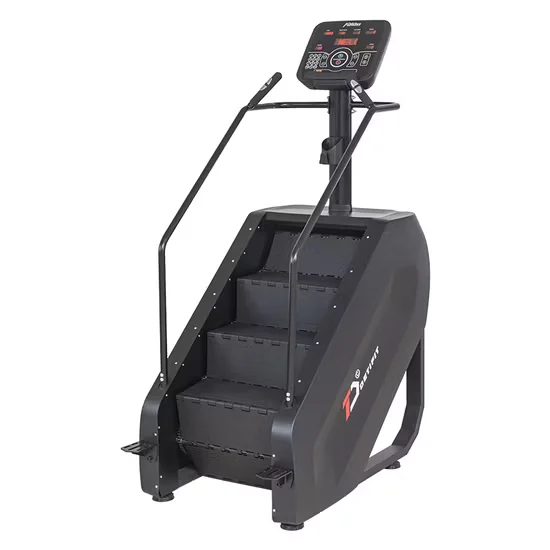
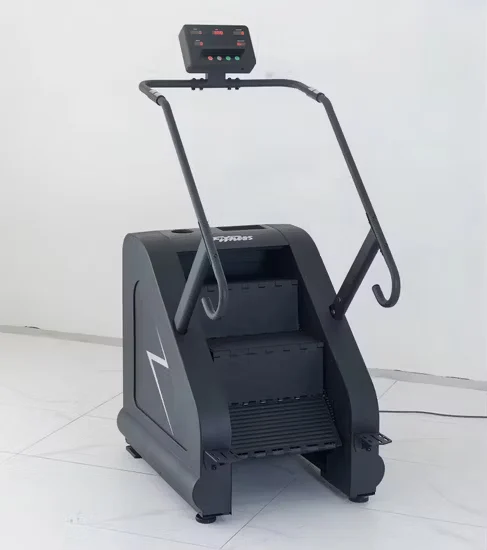
| Product Dimensions | 2160 × 830 × 1432 mm |
| Folded | Unfolded |
| Color | Black |
| Certification | CE, RoHS, ISO |
| Warranty | One Year |
| Customization | Available via OEM/ODM |
Application Suitability
| Deployment Scenario | Typical Use |
|---|---|
| Hotel fitness center on guest room floors | 24-hour guest access with low-noise stair climbing for early-morning and late-night sessions |
| Chain gym cardio zone | High-frequency daily stepping workouts integrated into circuit training and dedicated climbing stations |
| Corporate wellness room | Employee conditioning with multi-parameter console feedback for self-guided sessions |
| High-end residential home gym | Permanent-install commercial-grade climbing unit for private daily use |
| Sports performance training center | Athlete interval programming using the 15–164 RPM range for cadence-based conditioning |
Why Noise Complaints Reach the Front Desk Before Maintenance Does
Electric drive with magnetic resistance eliminates the chain-and-sprocket clatter that triggers guest calls.
When a stair climber sits one floor above occupied hotel rooms, every mechanical impact transmits through the slab. Facilities often discover this only after the first complaint arrives — usually within the first week of operation. The sq-1017B commercial stair climber electric stepping machine addresses this by replacing legacy chain drives with an electric-drive system that keeps acoustic output within acceptable thresholds for shared-structure buildings [NEED_CITE: acoustic transmission standards for fitness equipment in multi-story hospitality venues]. Magnetic resistance further removes the friction-based noise that plagues older stepping machines, making this unit deployable on guest floors, residential towers, and quiet-zone corporate wellness rooms.
Where This Stair Climber Fits in a Commercial Cardio Floor
This unit targets the vertical-loading cardio slot — the climbing intensity that treadmills and ellipticals cannot replicate. Its 15–164 RPM speed range covers slow warm-up cadences for beginners and high-intensity intervals for advanced users, eliminating the need for multiple stepping machines at different resistance settings. In a mixed cardio zone, it complements flat-plane equipment by engaging glutes and hip stabilizers through vertical displacement. The 200–300 kg max user weight accommodates a broad athlete and member population, while the 2160 × 830 mm footprint fits standard commercial spacing grids. Console readouts for steps, time, calories, speed, and heart rate give users self-directed feedback without requiring external monitors.
Continuous Run-Time and Facility Infrastructure Requirements
A stair climber in a chain gym cardio zone may see eight to sixteen hours of daily operation across multiple users, placing sustained thermal and mechanical load on the drive system. The electric-drive architecture in this commercial stair climber electric stepping machine is rated for continuous duty cycles, but deployment planning must still account for ambient ventilation — enclosed alcoves without airflow trap heat around the motor housing [NEED_CITE: thermal management requirements for continuously operated commercial cardio motors]. Dual-voltage compatibility (AC 220V±10% / AC 110V±10%) removes the container-arrival surprise of mismatched power standards, but each unit should still be assigned a dedicated circuit to prevent voltage sag during peak gym hours. Floor leveling and vibration-dampening pads are recommended given the 195 kg net weight and the vertical impact forces generated during stepping.
Electric Drive and Transmission Specifications Explained
The step-speed range of 15–164 RPM is governed by the electric motor’s ability to modulate cadence incrementally, avoiding the resistance step-jumps that occur when magnetic gaps are poorly calibrated — a failure mode I have diagnosed in hotel stair climbers where members abandon the machine after two sessions. Aluminium alloy pipe construction provides the torsional rigidity needed for continuous stepping loads while keeping net weight at 195 kg, manageable for installation crews and floor-loading calculations. The multi-parameter OSD console displays steps, time, calories, speed, and heart rate; OEM customization extends to the console UI, allowing facility branding and data-interface alignment with site management platforms. PP plastic housing protects internal electronics from sweat ingress and cleaning chemicals common in commercial maintenance routines. Heart rate monitoring via the console provides baseline intensity feedback, though chest-strap pairing accuracy typically exceeds grip-sensor stability during sustained climbing intervals [NEED_CITE: heart rate sensor accuracy comparison across grip, chest strap and optical methods].
The Hidden Cost of Specification Compromises
Specifying a stair climber with a motor rated for peak rather than continuous output may save on the initial invoice, but units in commercial cardio zones routinely fail within months when subjected to back-to-back member sessions. Noise-related guest complaints in hotel deployments have led to full-fleet replacements before the warranty period expires, generating costs far beyond the original equipment savings. When console data cannot interface with facility management software, usage patterns remain invisible — operators cannot identify underused machines or justify expansion purchases. Voltage mismatches discovered after container arrival force costly rewiring or transformer installations that delay facility opening schedules [NEED_CITE: financial impact of voltage mismatch remediation in international fitness equipment deployments].
Why This Product Line Earns the Floor Space
Sub-35dB operation has been verified in hotel fitness deployments, meaning this stair climber can operate on guest room floors without triggering acoustic complaints. Motor, frame, and bearing assemblies undergo 10,000-hour continuous-operation durability testing before production release. The console supports OEM UI customization, allowing gym chains to align the display with their brand and integrate data output into existing member-management platforms. As part of a six-series cardio family, this unit lets a facility source treadmills, bikes, ellipticals, rowers, and climbers from a single engineering line — simplifying maintenance training and spare-parts logistics. Free 3D cardio-zone layout planning covers the 2160 × 830 mm footprint, required clearance zones, and airflow paths so this stair climber is positioned for both sightline appeal and thermal management. Round-the-clock technical support ensures that a drive-system fault on a Saturday night does not leave the machine offline until Monday.
Documentation & Test Records
- CE declaration of conformity for European market compliance
- EN 957 test report validating safety and performance standards
- ISO 9001 certificate covering manufacturing quality management
- RoHS compliance documentation for restricted substance limits
- Motor specification sheet detailing continuous-duty ratings
- Console technical documentation with data-interface protocols
Installation, Commissioning & Maintenance
- Maintain minimum clearance around the 2160 × 830 × 1432 mm footprint for user safety and service access
- Level the aluminium alloy frame on vibration-dampening pads to reduce structure-borne noise transmission
- Connect to a dedicated AC 220V or AC 110V circuit matching the unit’s dual-voltage configuration
- Calibrate the electric drive and step-speed range during first commissioning to verify 15–164 RPM accuracy
- Configure the OSD console UI and data-export settings to align with facility management software
- Wipe down PP plastic housing and console after each use to prevent sweat corrosion on electrical contacts
Planning Your Stair Climber Deployment
Share your cardio zone square footage and target equipment count to receive a 3D layout that accounts for this unit’s footprint, sightlines, and ventilation requirements. Specify expected daily operating hours so the motor duty cycle can be matched to your facility’s traffic profile. Confirm the deployment floor and adjacent occupied spaces to validate acoustic suitability, and provide the destination market voltage standard before production lock. Indicate whether console data integration with your facility management platform is required so the appropriate interface documentation is included.
Frequently Asked Questions
Q: What is the difference between continuous-duty and peak motor ratings for a commercial stair climber?
A: Peak rating describes the motor’s maximum output in short bursts, while continuous-duty rating reflects sustained output under ongoing load. Commercial stair climbers experience back-to-back usage throughout operating hours, so continuous-duty capacity determines real-world longevity. Specifying only by peak output risks premature motor failure in high-frequency gym and hotel environments.
Q: Can the console data be exported or synced to gym management software?
A: The OSD console captures steps, time, calories, speed, and heart rate. OEM customization includes data-interface configuration, allowing the console to align with your facility’s existing management platform. Request the console technical documentation during the inquiry stage to confirm protocol compatibility before finalizing your order.
Q: How does dual-voltage compatibility simplify international deployment?
A: This stair climber accepts both AC 220V±10% and AC 110V±10%, eliminating the risk of voltage mismatch when shipping to markets with different power standards. This prevents costly post-arrival rewiring or transformer installations. Confirm the destination plug type during order scoping to ensure the unit ships with the correct power cord.
Q: What OEM customization options are available for the console and frame?
A: OEM/ODM customization covers console UI branding, display color schemes, and data-interface alignment with your management software. Frame color and cosmetic elements can also be adjusted. Customization scope and MOQ are confirmed during the inquiry process based on your facility’s branding and integration requirements.
Q: What durability testing is performed on the frame and drive system?
A: The aluminium alloy frame and electric drive components undergo 10,000-hour continuous-operation testing to validate structural and mechanical endurance under commercial workloads. Durability test records are available upon request. This testing protocol ensures the unit withstands high-frequency daily use in gym chains and hotel fitness centers without premature degradation.
![SQ1017 Commercial Stair Climber Machine Motor Drive for Fitness Facilities [WARN] draft identifier mismatch](https://bicksport.com/wp-content/uploads/2026/08/sq1017-commercial-stair-climber-machine-motor-drive-for-fitness-facilities-warn-draft-identifier-mismatch-df6ff6.webp)
![Commercial Electric Stair Climber Gym Machine for Fitness Center Cardio Training [WARN] draft identifier mismatch](https://bicksport.com/wp-content/uploads/2026/08/commercial-electric-stair-climber-gym-machine-for-fitness-center-cardio-training-warn-draft-identifier-mismatch-461462.webp)