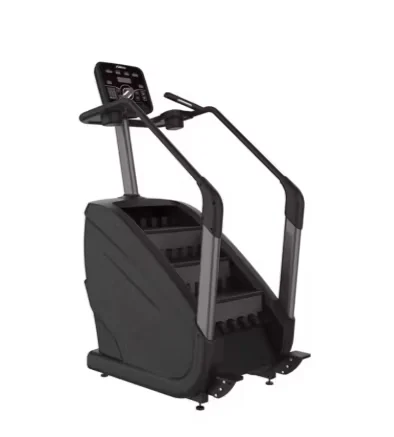
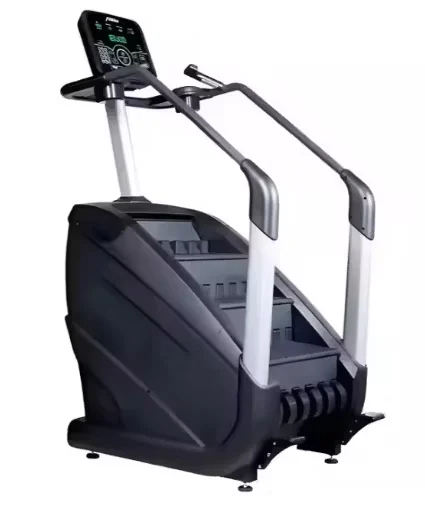
![SQ1017 Commercial Stair Climber Machine Motor Drive for Fitness Facilities [WARN] draft identifier mismatch](https://bicksport.com/wp-content/uploads/2026/08/sq1017-commercial-stair-climber-machine-motor-drive-for-fitness-facilities-warn-draft-identifier-mismatch-df6ff6.webp)
Continuous-Duty Motor Drive — Engineered for 10,000+ hours of high-frequency stair climbing cycles, validated under commercial load conditions that exceed standard gym deployment demands.
Technical Specifications
| Parameter | Value |
|---|---|
| Designation | SQ1017 |
| Product Type | Stair Climber |
| Drive Type | Motor Drive |
| Running Velocity | 15 – 164 steps/min |
| Step Area | 560 × 235 × 220 mm |
| Mains Input | AC220V±10% / AC110V±10% |
| Console Display | Time, Climb, Calories, Steps, Heart Rate |
| Product Dimensions | 1450 × 820 × 2080 mm |
| Net Weight | 148 kg |
| Material | Steel Pipe + PP Plastic |
| Folded | Unfolded |
| Certification | CE |
Application Suitability
| Deployment Scenario | Typical Use |
|---|---|
| Hotel fitness center on guest room floors | 24-hour access cardio with sub-35dB operational compliance for adjacent occupied rooms |
| Chain gym cardio zone | High-frequency member throughput during peak hours with continuous-duty motor reliability |
| Corporate wellness room | Employee fitness programs with IoT console data tracking for participation analytics |
| High-end residential home gym | Private installation requiring quiet operation and compact vertical footprint |
| Sports performance training center | Athlete conditioning with precise step-rate control and heart rate monitoring |
Why Stair Climber Motors Fail Before the Warranty Expires
The motor drive must sustain thermal equilibrium under back-to-back user sessions, not just pass a bench test.
When a commercial stair climber motor drive electric stepper enters a facility rated for sixteen-hour daily operation, the gap between peak output rating and continuous duty becomes visible within the first quarter. Light-duty motors thermal-throttle during the third consecutive HIIT session, forcing the control board into protective shutdown mid-climb [NEED_CITE: motor duty cycle classification for continuous commercial operation]. Facility operators then face member complaints about equipment availability and maintenance calls that trace directly to an undersized drive unit specified for home use but deployed in a public cardio zone.
Positioning the Stair Climber Within a Cardio Layout
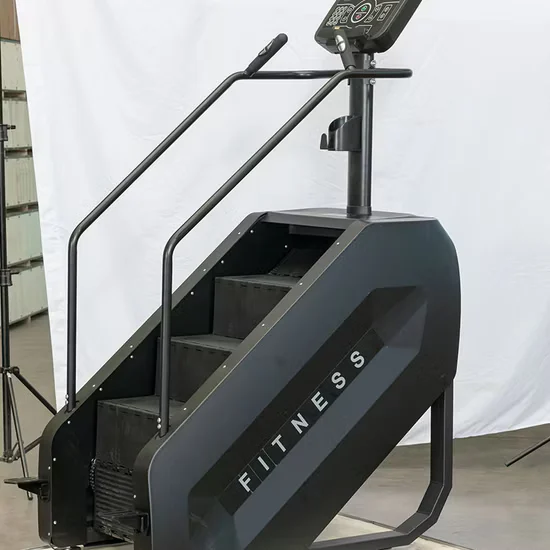
The SQ1017 occupies the vertical climbing niche in a mixed-modality cardio floor, complementing treadmills and ellipticals by engaging posterior-chain musculature through a distinct loading pattern. Its 1450 × 820 mm footprint fits standard commercial spacing grids, and the 2080 mm height requires overhead clearance verification before installation. Step-rate coverage from 15 to 164 steps/min accommodates steady-state warm-ups through high-cadence intervals. The steel pipe frame at 148 kg anchors the unit without additional floor fastening on level concrete substrates. The commercial stair climber motor drive electric stepper serves users across a broad weight range within the commercial category limit, with the step area dimensions accepting standard athletic footwear placement.
Continuous Run-Time and Environmental Deployment Factors
Facilities running cardio zones from early morning through late evening demand a motor drive that dissipates heat across extended duty cycles without thermal degradation. The dual-voltage input (AC220V±10% / AC110V±10%) removes the voltage mismatch risk that surfaces only after international containers clear customs [NEED_CITE: international voltage standard compliance for fitness equipment deployment]. Sub-35dB noise performance matters most when the unit sits on a guest room floor or above occupied commercial space, where low-frequency vibration transmits through structural slabs. Dedicated circuit provisioning prevents voltage sag when multiple units start simultaneously during morning peak hours. Console data output requires facility management software integration planning before equipment arrives on site, ensuring usage analytics feed into operational dashboards without post-installation rework.
Decoding the Drive Train and Control Electronics
Motor-driven stair climbers eliminate the mechanical linkage complexity found in hydraulic or friction-based alternatives, trading those maintenance variables for electronic commutation precision. The electric drive system delivers consistent resistance across the full 15–164 steps/min velocity band without the lag characteristic of pneumatic resistance chambers. The OSD console surfaces time, climb count, calories, steps, and heart rate simultaneously, giving operators a data layer for usage pattern analysis. Heart rate input through contact sensors on the handlebars provides adequate reliability for general cardio tracking, though chest-strap telemetry remains the reference standard for interval programming accuracy [NEED_CITE: heart rate measurement accuracy standards in commercial fitness equipment]. The steel pipe and PP plastic construction balances structural rigidity against the 148 kg shipping and positioning weight, with the unfolded configuration requiring permanent floor placement rather than periodic relocation.
The Hidden Cost of Specifying Below Commercial Grade
Selecting a stair climber rated for light commercial or home duty cycles in a chain gym environment produces a predictable failure arc: motor winding insulation degrades under sustained thermal load, the control board registers overcurrent faults with increasing frequency, and the unit enters rotation-out-of-service status within months of deployment [NEED_CITE: commercial versus light-commercial equipment lifespan under continuous operation]. Noise complaints from adjacent hotel rooms trigger guest compensation protocols that exceed the equipment purchase differential between grades. Console systems lacking data export capability create operational blind spots, preventing facility managers from identifying underutilized units or optimizing floor layouts based on actual member traffic patterns. Voltage mismatches discovered post-delivery force transformer procurement or equipment return, both carrying costs that dwarf specification-stage verification effort.
Why This Product Line Earns Floor Space
The motor drive undergoes continuous-load validation aligned with 10,000-hour durability protocols applied across the entire commercial cardio range. Sub-35dB acoustic performance has been verified in hotel floor deployments where guest room proximity demands rigorous noise control. The IoT-ready console architecture supports data integration with facility management platforms, converting raw usage metrics into operational intelligence. Full OEM customization extends to console UI design, allowing branded interface experiences for chain operators. The 1450 × 820 mm footprint integrates into 3D cardio-zone layouts that account for member sightlines, airflow circulation, and equipment spacing requirements specific to climbing machines. Technical support availability covers commissioning through long-term parts sourcing.
Documentation & Test Records
- CE declaration of conformity for SQ1017 commercial deployment
- EN 957 test report covering structural and operational safety requirements
- ISO 9001 certificate validating manufacturing process control
- Noise level test report confirming sub-35dB operational compliance
- Motor specification sheet with continuous-duty rating documentation
- Console technical documentation with data interface specifications
Installation, Commissioning & Maintenance
- Verify 1450 × 820 × 2080 mm clearance including overhead and lateral safety margins before positioning
- Confirm AC220V or AC110V circuit availability with dedicated breaker matching the dual-voltage motor input
- Level the steel pipe frame on vibration-dampening pads to prevent low-frequency transmission to floors below
- Calibrate step-rate response across the 15–164 steps/min range during first-power commissioning sequence
- Configure console data output parameters to match facility management software integration requirements
- Schedule periodic inspection of motor drive components and step mechanism wear surfaces per usage intensity
Request a Deployment-Ready Specification Package
Provide your cardio zone square footage and planned equipment count to receive a 3D layout incorporating stair climber spacing, airflow pathways, and member circulation patterns. Specify expected daily operating hours so motor duty-cycle matching aligns with your facility’s throughput demands. Identify the installation floor level and adjacent room usage to confirm acoustic compliance requirements. State your target market voltage standard and plug type to ensure electrical configuration accuracy before production. Indicate whether console data integration with your existing gym management platform is required for operational analytics.
Frequently Asked Questions
Q: How does motor drive compare to hydraulic or friction-based stair climbers in commercial durability?
A: Motor-driven systems eliminate hydraulic fluid degradation and friction-pad wear cycles that demand scheduled replacement in high-throughput environments. The electric drive maintains consistent resistance delivery across the full velocity range without the warm-up lag or temperature-dependent behavior characteristic of hydraulic systems. Maintenance intervals extend significantly when mechanical contact points are replaced by electronic commutation, reducing both parts inventory requirements and technician visit frequency for facility operators managing multiple cardio units.
Q: What is the difference between continuous-duty and peak motor ratings for high-frequency facility use?
A: Peak rating describes the motor’s maximum output during brief acceleration bursts, while continuous-duty rating reflects sustained thermal equilibrium under uninterrupted load. Facilities with back-to-back user sessions require continuous-duty specifications that prevent thermal throttling during peak hours. Specifying by peak rating alone risks mid-session shutdown events when the motor winding temperature exceeds safe operating thresholds during the third or fourth consecutive climbing session.
Q: Can the console sync with gym management software and member apps for usage analytics?
A: The OSD console outputs time, climb count, calories, steps, and heart rate data through interfaces that support integration with facility management platforms. Operators planning data-driven floor optimization should request console technical documentation during the specification phase to verify protocol compatibility with their existing software stack. Early confirmation prevents post-installation discovery of data format mismatches that require middleware development or manual data extraction workarounds.
Q: How does dual-voltage input simplify international deployment and avoid voltage mismatch?
A: The AC220V±10% and AC110V±10% input range accommodates both European and North American electrical standards within a single unit configuration. This eliminates transformer procurement, prevents equipment damage from incorrect voltage application, and removes the customs-clearance delays that occur when plug and voltage specifications require post-shipment verification. Operators deploying across multiple international locations standardize on one equipment specification regardless of destination market electrical infrastructure.
Q: What noise level can be expected in hotel or residential floor installations?
A: The motor drive system operates within sub-35dB parameters validated in actual hotel floor deployments where guest rooms occupy adjacent and below-floor positions. This acoustic performance addresses the specific complaint pattern where low-frequency vibration transmits through structural concrete to occupied spaces. Facility planners should verify floor construction characteristics and consider vibration-dampening pad specification during installation planning to maintain noise compliance under varying structural conditions.
![Ergonomic Electric Stair Climber Machine for Workouts [WARN] draft identifier mismatch](https://bicksport.com/wp-content/uploads/2026/08/ergonomic-electric-stair-climber-machine-for-workouts-warn-draft-identifier-mismatch-eec5a4.webp)